
Bathroom Renovation Cost: From $2,500 Refresh to $40K Remodel
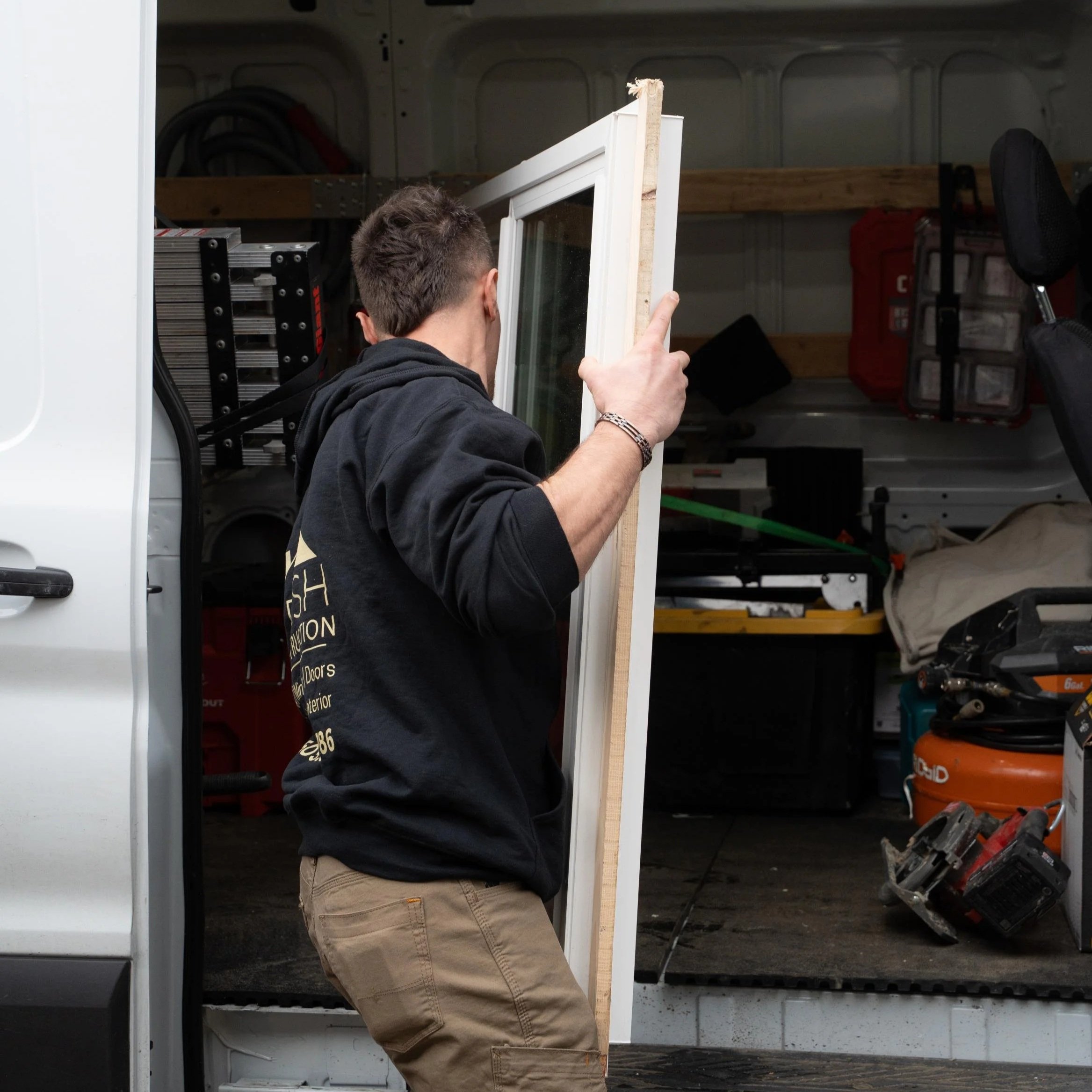
A contractor carries materials into a workspace, representing bathroom renovation projects where costs vary widely based on scope, from simple cosmetic updates to full remodels involving plumbing, tile, and structural changes.
The bathroom hasn't been updated since the mid-1990s. The vanity is oak with a cultured marble top. The tile is beige. The fixtures are brass. Nothing is broken, but nothing works well, and the room feels outdated every time the door opens. The question is how much to spend and what that money actually buys.
Bathroom renovation costs swing wider than almost any other home project because the scope can range from "swap the vanity and repaint" to "tear it down to the studs and start over." A $5,000 refresh and a $35,000 remodel are both called "bathroom renovation" — but they're completely different projects.
Tier 1: Cosmetic Refresh ($2,500-$7,000)
The quick version. No walls moved. No plumbing relocated. No tile removed. This tier updates the visible surfaces and fixtures while leaving the bones alone.
What's included: New vanity with countertop ($500-$2,000). New faucet ($150-$400). New toilet ($200-$600). New lighting fixture ($100-$500). New mirror ($100-$400). Fresh paint. New hardware (towel bars, toilet paper holder). Possibly new vinyl or luxury vinyl plank flooring over the existing subfloor.
What's not included: Tile work, shower replacement, plumbing relocation, electrical upgrades, or any work inside the walls.
Who this is for: Homeowners who want the bathroom to look and feel better without the disruption and cost of a full renovation. This tier works well for guest bathrooms, half baths, and pre-sale cosmetic updates.
Timeline: 2-5 days.
Tier 2: Mid-Range Renovation ($12,000-$22,000)
This is where most Portland bathroom projects land. New surfaces, updated fixtures, and some work inside the walls — but the layout stays the same. The toilet stays where it is. The shower stays where it is. The vanity might grow or shrink, but the plumbing connections stay in place.
What's included: Everything in Tier 1, plus: new shower/tub surround or tile ($2,000-$6,000 installed), new shower valve and trim ($400-$1,000), new tile floor ($1,000-$3,000), updated electrical (GFI outlets, exhaust fan, possibly recessed lighting), new baseboards and trim.
What drives the cost: Tile is the biggest variable. A standard ceramic subway tile shower costs $2,000-$4,000 installed. A custom tile pattern with accent bands, niches, and mixed materials costs $4,000-$8,000+. The tile labor rate in Portland runs $8-$15/sq ft for basic patterns and $15-$25/sq ft for complex work.
What surprises show up: When the old tile comes off, the backer board and possibly the framing behind it may have moisture damage. Portland bathrooms with inadequate exhaust fans accumulate moisture in the wall cavity for years. Mold on framing and rotted studs at the shower base are common discoveries. Budget a $1,000-$3,000 contingency for what's behind the walls.
Timeline: 2-4 weeks.
Tier 3: Full Gut Remodel ($25,000-$40,000+)
Everything comes out. Tile, vanity, toilet, tub or shower, drywall, flooring — down to the studs. New plumbing layout if the fixtures are moving. New electrical throughout. Waterproofing from scratch. Custom tile. Premium fixtures. This is the renovation that transforms a 1990s bathroom into a 2025 bathroom.
What's included: Complete demolition and disposal. New plumbing rough-in (may include moving supply lines and drain locations). New electrical (dedicated circuits, exhaust fan, lighting plan, heated floor). Waterproofing membrane (Kerdi or equivalent) on all wet surfaces. Custom tile work. New vanity (potentially custom). New shower enclosure (possibly curbless or glass-enclosed). New toilet. All fixtures, trim, and accessories.
What pushes past $40K: Expanding the bathroom footprint (moving walls), adding a second sink, converting a tub to a large walk-in shower, radiant floor heating, and premium tile materials (natural stone, large-format porcelain). Each adds $2,000-$8,000 to the project.
What Portland adds to the cost: Pre-1978 homes require EPA lead-safe work practices during demolition. Older plumbing (galvanized supply, cast iron drains) often needs upgrading while the walls are open. These aren't optional upgrades — they're code requirements and practical necessities that older Portland homes trigger automatically.
Where the Money Actually Goes
| Category | Cosmetic Refresh | Mid-Range | Full Gut |
|---|---|---|---|
| Demo & Disposal | $0–200 | $500–1,500 | $1,500–3,000 |
| Plumbing | $0–500 | $800–2,500 | $2,500–6,000 |
| Electrical | $0–300 | $500–1,500 | $1,500–3,500 |
| Tile (Material + Labor) | $0 | $3,000–8,000 | $5,000–12,000 |
| Vanity + Countertop | $500–2,000 | $1,000–3,000 | $2,000–6,000 |
| Fixtures + Hardware | $300–1,000 | $800–2,000 | $1,500–4,000 |
| Paint + Trim | $200–500 | $300–800 | $500–1,200 |
| Flooring | $300–800 | $1,000–3,000 | $1,500–4,000 |
| Contingency | $0 | $1,000–3,000 | $2,000–5,000 |
Tile and plumbing dominate the mid-range and full-gut budgets. Combined, they account for 40-55% of the total project cost on most Portland bathroom renovations.
Bathroom Renovation FAQs
Portland-Specific Cost Factors
Older Portland homes add wrinkles to bathroom renovations that newer construction doesn't have. Galvanized supply pipes in homes built before 1970 are likely corroded on the inside — flowing water through pipes with 50+ years of mineral buildup doesn't make sense when the walls are already open. Replacing galvanized with copper or PEX while the bathroom is torn apart adds $1,500-$4,000 but eliminates a problem that would otherwise require tearing into walls again in a few years.
Cast iron drain lines are the other common discovery. They last 50-80 years, and most Portland homes with original cast iron are reaching the end of that window. Cast iron doesn't fail quietly — it cracks, leaks into subfloor cavities, and feeds mold growth under the house. Replacing a section of cast iron drain under a bathroom costs $800-$2,500 during a renovation. Doing the same work after the bathroom is finished costs double because the new floor and vanity have to come back out.
Ventilation matters more in Portland than in drier climates. A bathroom without a functioning exhaust fan accumulates moisture in the wall cavity every time the shower runs. That moisture feeds mold and softens framing over years. Oregon code requires a fan that moves at least 50 CFM for a standard bathroom. Upgrading to a continuous-duty fan with a humidity sensor adds $200-$400 to the electrical budget and prevents the moisture damage that caused the last renovation's hidden costs.
Permits in Portland require separate plumbing and electrical inspections if the scope involves those trades. Inspection scheduling adds time to the project — typically 1-3 days of waiting per inspection. A good contractor builds inspection windows into the timeline so the project doesn't stall.
Setting Realistic Expectations
A $5,000 budget buys a cosmetic refresh that makes the bathroom look better. A $15,000 budget buys new surfaces that change how the room feels. A $30,000 budget buys a complete transformation. Know which tier fits the budget before getting quotes, and every conversation with contractors will be more productive.