
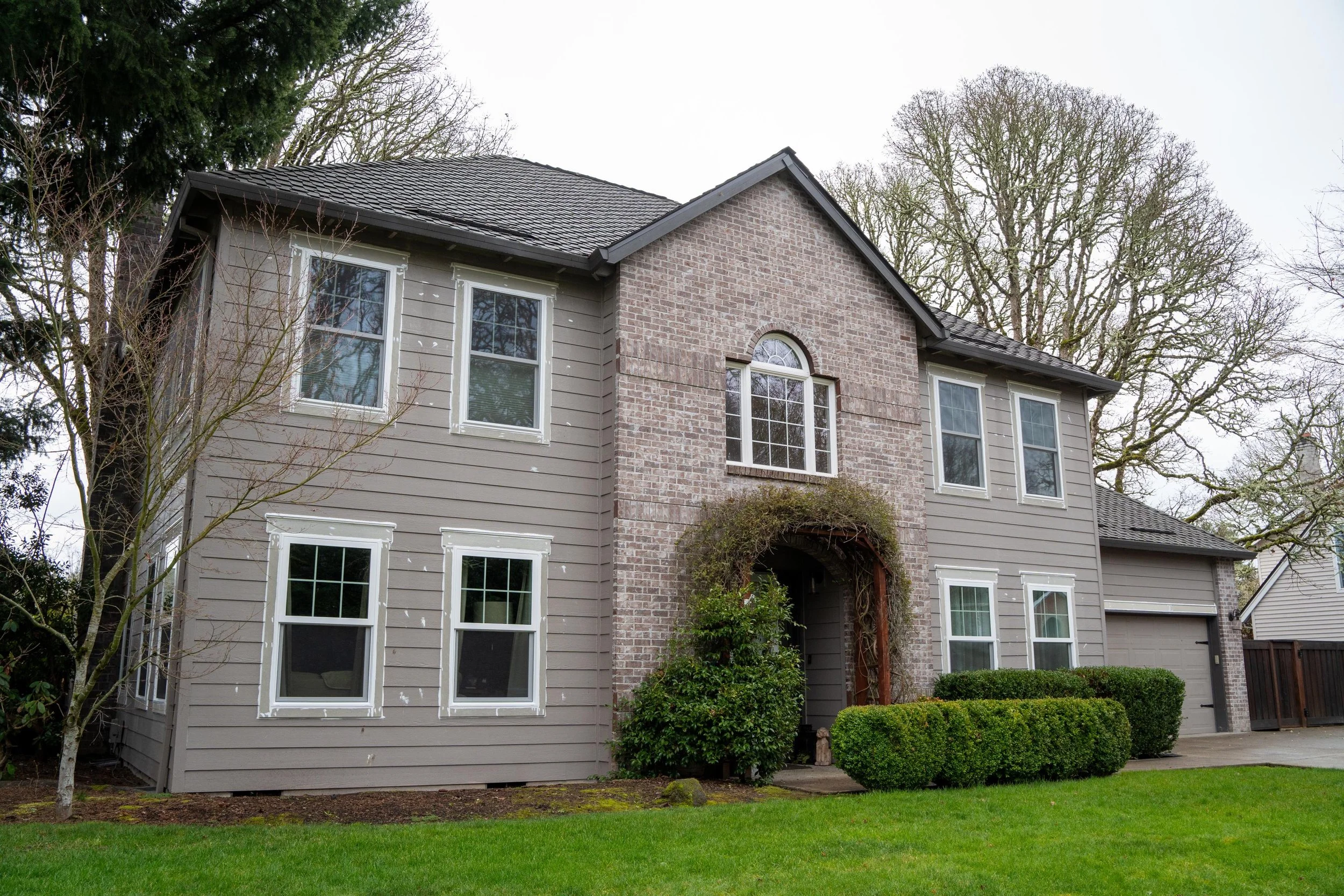
Historic Home Exterior Renovation in Portland, OR
Craftsman Bungalows, Four-Squares & Tudor Revival Homes. Period-Appropriate Materials. EPA Lead-Safe Certified. We Know What NOT to Do to Portland's Older Homes. Licensed OR #241979.

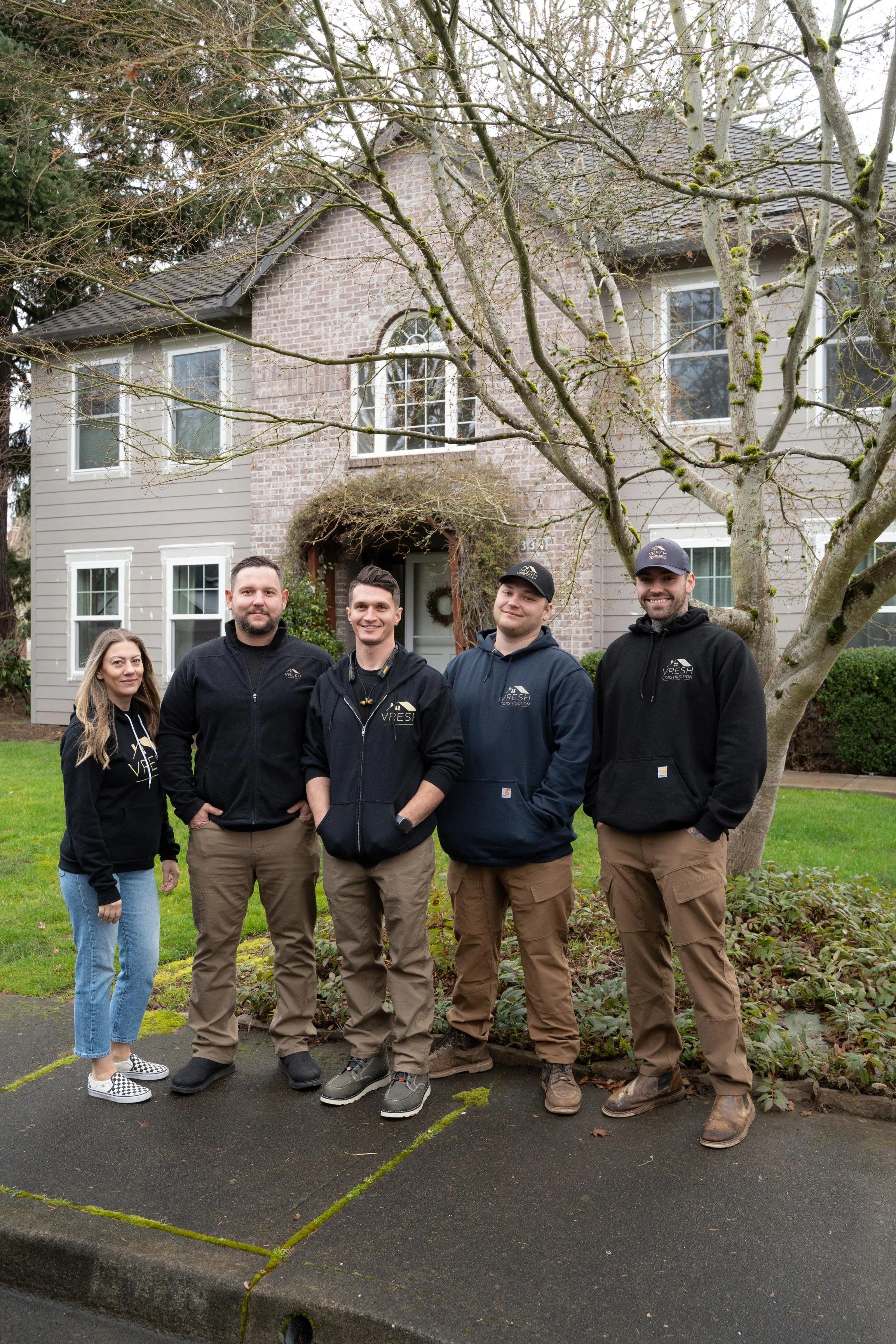
Portland is one of the most architecturally intact cities in the Pacific Northwest — entire neighborhoods of Craftsman bungalows, Prairie four-squares, Tudor revival homes, and colonial revival residences built between 1900 and 1940. These homes are not interchangeable with a 1985 ranch. They require contractors who understand their construction history, their original materials, and the specific considerations that preserve architectural character and structural integrity.
VResh Construction works on Portland's historic homes regularly. We understand the construction methods — old-growth Douglas fir framing, balloon framing on some 1910s homes, and non-standard stud spacing. We know the EPA Lead-Safe requirements that apply to virtually every renovation on these properties. And we know what not to do: the siding choices, window profiles, and trim details that are inappropriate for a 1922 bungalow and permanently diminish its value.
EPA Lead-Safe Certified
Federal law for pre-1978 homes — most Portland contractors are not certified
Portland Historic Home Experience
Craftsman, four-square, Tudor revival, colonial revival
Licensed & Insured
OR #241979 | WA #VRESHCL776ND
Period-Appropriate Materials
5–10 Year Workmanship Warranty
On all historic home renovation work
(503) 272-6436 — Call or Text, Available 24/7
We answer calls and texts at any hour. For storm damage, active leaks, or structural emergencies, calling directly is the fastest path to a response.
What's Different About Working on Portland's Historic Homes
Lead Paint — Federal Law, Not Optional
Pre-1940 Portland homes have lead-based paint on virtually every painted surface. Pre-1978 homes have a high probability of lead paint. The EPA Lead Renovation, Repair, and Painting Rule requires contractors who disturb these surfaces to be Lead-Safe Certified, follow specific containment and cleanup protocols, and provide written documentation.
VResh Construction is EPA Lead-Safe Certified. Most Portland general contractors and siding installers are not. Violation carries fines of up to $37,500 per day per violation.
Ask any contractor to show you their EPA RRP certification before they work on a pre-1978 home. If they cannot produce it, do not hire them.
Original Construction Techniques Differ
Old-growth Douglas fir framing (extraordinarily dense — standard drill bits dull quickly), let-in diagonal corner bracing instead of modern shear panels, balloon framing on some 1910s–1920s homes, and non-standard stud spacing all affect how wall penetrations, window replacements, and structural repairs must be approached.
A contractor not familiar with these construction systems may make assumptions that create problems — incorrect header sizing, inappropriate attachment methods, or misidentification of structural elements.
Window Profiles and Sizes Are Often Non-Standard
Original Portland bungalow windows have specific proportions, muntin profiles, and glass configurations — 6-over-6 or 4-over-4 divided lights, specific sash ratios, and rough opening dimensions that do not match any standard catalog window size.
Replacing these with standard-size vinyl windows in inappropriate profiles permanently alters the home's character. It is one of the most common and most regretted renovation mistakes on Portland historic homes.
VResh works with Marvin Elevate and Ultimate to source replacement windows in period-appropriate profiles, non-standard sizes, and wood species that match the original character.
Old-Growth Wood Is Worth Preserving
Pre-1940 Douglas fir framing has a grain density that modern lumber cannot approach — 25–30 rings per inch vs. 5–8 in modern plantation lumber. When structurally sound, this wood is worth preserving rather than replacing.
When old-growth framing is compromised and must be replaced, we use the best available structural lumber and document the replacement.
Window Profiles and Sizes Are Often Non-Standard
Original Portland bungalow windows have specific proportions, muntin profiles, and glass configurations — 6-over-6 or 4-over-4 divided lights, specific sash ratios, and rough opening dimensions that do not match any standard catalog window size.
Replacing these with standard-size vinyl windows in inappropriate profiles permanently alters the home's character. It is one of the most common and most regretted renovation mistakes on Portland historic homes.
VResh works with Marvin Elevate and Ultimate to source replacement windows in period-appropriate profiles, non-standard sizes, and wood species that match the original character.
Siding Profiles Must Match Architectural Period
Craftsman bungalows were sided in cedar shingles, cedar lap siding, or a combination of both. Replacing with a wide horizontal vinyl or fiber cement lap profile inappropriate to the period is a value-destroying mistake.
Period-appropriate replacement siding for Portland Craftsman: cedar shingles, narrow-reveal cedar lap, or James Hardie HardieShingle or HardiePlank in profiles that match the original exposure. We advise on appropriate material selection.
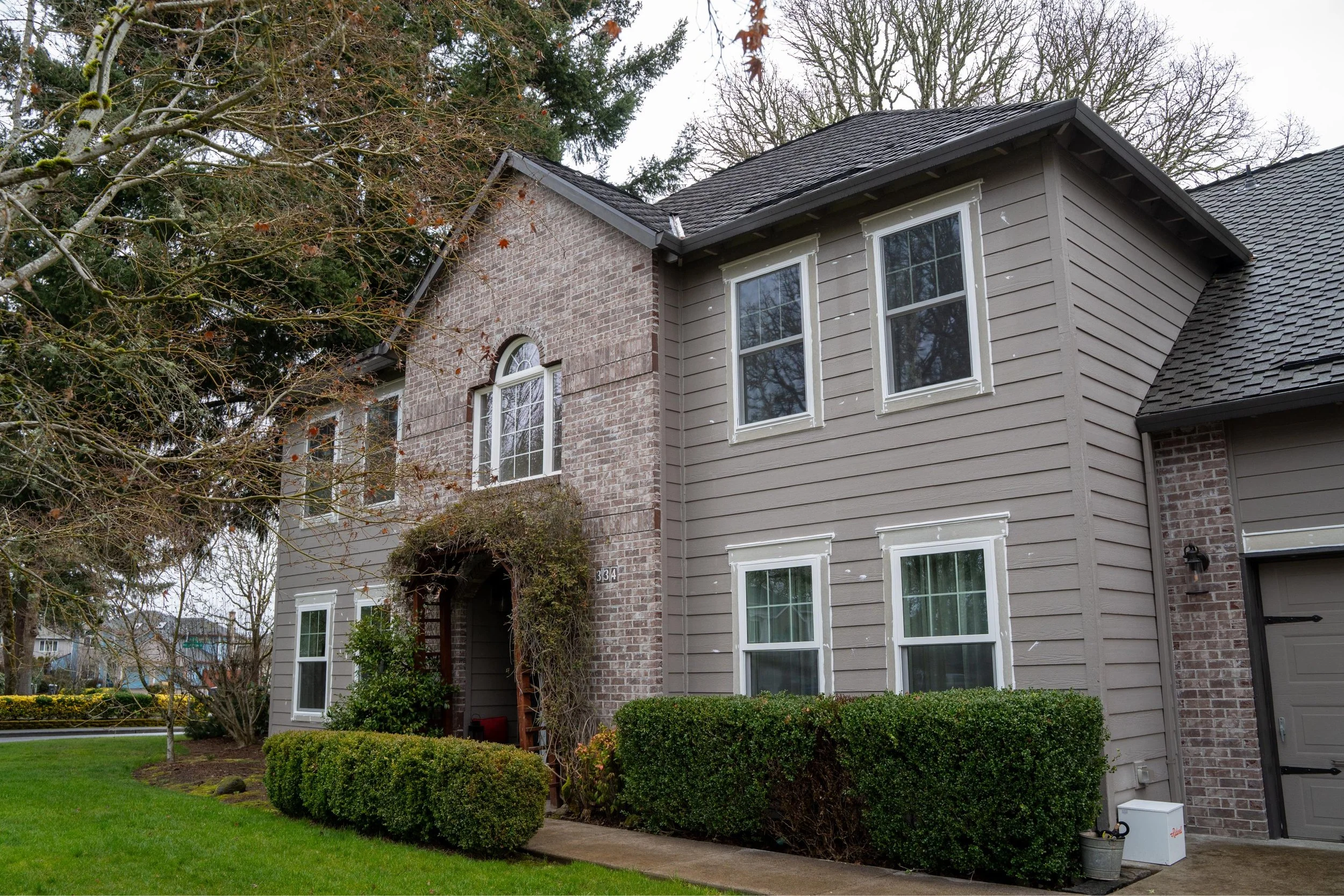
Exterior Services for Portland's Historic Homes
Siding Replacement and Repair
Cedar shingle and narrow-reveal lap siding replacement in period-appropriate profiles. James Hardie HardieShingle and HardiePlank in cedar-grain textures for lower-maintenance alternatives. All WRB, flashing, and substrate work per current code.
We specifically advise against wide-format modern lap profiles on bungalows and four-squares where they are architecturally inappropriate.
Window Replacement
Marvin Elevate and Ultimate for period-appropriate wood interior character in non-standard sizes with correct muntin profiles. Milgard Essence as a more accessible alternative. We measure original rough openings exactly and source windows that fit and look correct.
Dry rot repair at window corners and rough openings — extremely common on Portland historic homes after decades of moisture exposure at improperly flashed window perimeters.
Dry Rot Repair
Structural dry rot repair using epoxy consolidant and filler for restoration of original wood where appropriate. Full framing replacement where structural members are too compromised to consolidate.
Pre-1940 Portland homes frequently have dry rot at window sills, bottom-course siding, porch framing, and any location where wood meets a horizontal surface retaining moisture.
Porch Repair and Restoration
Portland Craftsman porch repair and restoration including porch decking, columns, railings, frieze board, and porch ceiling. Period-appropriate profiles and materials matched to the original character.
Porch framing on older Portland homes is a frequent dry rot location due to moisture accumulation at post bases, ledger connections, and beam ends under the porch roof.
Serving Portland Metro Area
VResh Construction provides window replacement, siding installation, roofing, dry rot repair and full exterior renovation services throughout the Portland metro area and Southwest Washington.
Portland Metro — Oregon
Southwest Washington
Extended Service Areas


Client's Talk
We have a wealth of experience working as main building contractors on all kinds of projects, big and small, from home maintenance and improvements to extensions, refurbishments and new builds.
Portland Historic Home Neighborhoods — VResh Service Guide
-
One of Portland's largest intact historic districts — roughly 3,000 homes built primarily between 1900 and 1940. Colonial revival, Tudor revival, Prairie four-square, and Craftsman bungalow styles predominate.
-
Many Irvington homes are on the Historic Resource Inventory. While most are not formally landmarked, the neighborhood's character preservation is a community priority. Period-appropriate materials are strongly advisable.
-
Window replacement maintaining divided light profiles, cedar siding repair and replication, porch column and frieze restoration, and extensive dry rot at window perimeters.
-
Laurelhurst (1909–1930s development) features English Tudor, Colonial revival, and large Craftsman homes. Eastmoreland has similar period stock with an emphasis on larger lots and more formal architecture.
Eastmoreland is a formal historic district — exterior alterations may require design review. Confirm your property's status before planning work.
Common repair needs: Roof replacement matching original shingle profiles, wood window repair or period-appropriate replacement, masonry repointing, and chimney work.
-
Ladd's Addition is one of Portland's oldest planned neighborhoods (developed 1891–1940s). A formal historic district — exterior alterations require design review from Portland's Bureau of Development Services.
Bungalow style predominates. Work here requires careful attention to period-appropriate materials and, for formal landmark properties, compliance with the Secretary of the Interior's Standards.
-
Victorian-era and Edwardian homes (1880s–1910s) alongside early Craftsman. Some of Portland's oldest residential properties.
These are the homes most likely to have multiple layers of lead paint and the most complex original construction. Balloon framing, old-growth fir, and non-standard window sizes are common.
We are experienced with Victorian-era renovation — including appropriate cornice detail, fish-scale shingle siding profiles, and decorative trim replication.
-
Pre-1940 housing stock is less dense in the south metro but concentrated in older Lake Oswego neighborhoods near State Street. Tudor revival and Colonial revival styles are most common.
Lead paint protocols apply equally here — pre-1978 in any jurisdiction means EPA RRP compliance.
The Most Common Mistakes on Portland Historic Homes — And How to Avoid Them
Installing Wide-Format Vinyl Siding
The single most value-destroying and character-destroying renovation choice for a Portland bungalow or four-square. Wide horizontal vinyl lap profiles are architecturally incompatible with pre-1940 Portland residential styles. They cover original details (belt courses, decorative shingles, window surrounds), cannot be painted to match period colors, and are immediately identifiable as inappropriate by knowledgeable buyers. The right choice: narrow-reveal cedar lap, cedar shingles, or James Hardie HardieShingle and narrow HardiePlank in profiles that match the original character.
Replacing Divided-Light Windows With Undivided Glass
Original Portland bungalow windows have divided lights — multiple panes of glass within each sash, creating a pattern of small squares or rectangles. Replacing these with a full-glass modern sash (even in a traditional-looking frame) visually changes the home significantly. Quality manufacturers like Marvin and Andersen offer simulated divided light (SDL) options that replicate the original pattern with a modern insulating glass unit. True divided lights (TDL) are available for the most exacting restoration applications.
Painting Over Original Wood Siding Without Addressing Underlying Moisture
Paint applied over siding that has unaddressed moisture infiltration behind it will fail within 1–3 years, regardless of paint quality. The most common scenario with Portland historic homes: bottom-course siding repainted repeatedly while the underlying moisture intrusion (no WRB, failed flashing, standing water at the foundation) continues unchecked. The right approach: identify and correct the moisture source, replace compromised boards, install proper flashing and drainage, then paint.
Ignoring Porch Framing Rot
Portland Craftsman porches are one of the most moisture-compromised structural systems on historic homes. Post bases that have no standoff from the porch decking, beam ends embedded in masonry columns without drainage, and porch ledger connections without flashing all concentrate rot in the structural elements that carry the porch roof. Porch repairs that address only visible surface deterioration while leaving compromised structural framing in place are a temporary fix. We fully assess the porch framing condition during the estimate visit.