
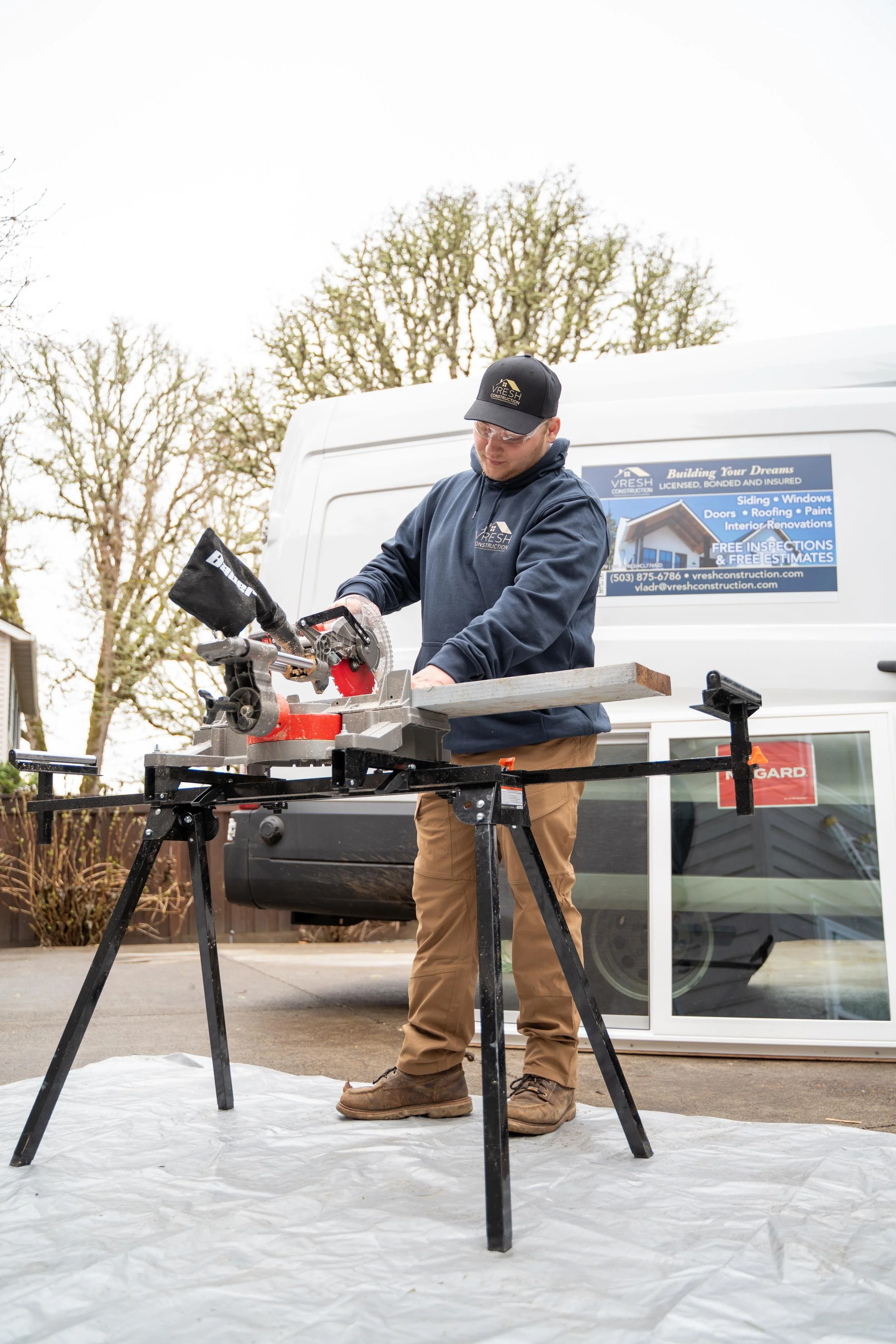
Dry Rot Repair in Portland, OR — Fixed, Not Hidden
We Find the Moisture Source. Remove All Compromised Material. Make the Structural Repair. Reinstall Correctly. EPA Lead-Safe Certified for Pre-1978 Homes. Licensed OR #241979.

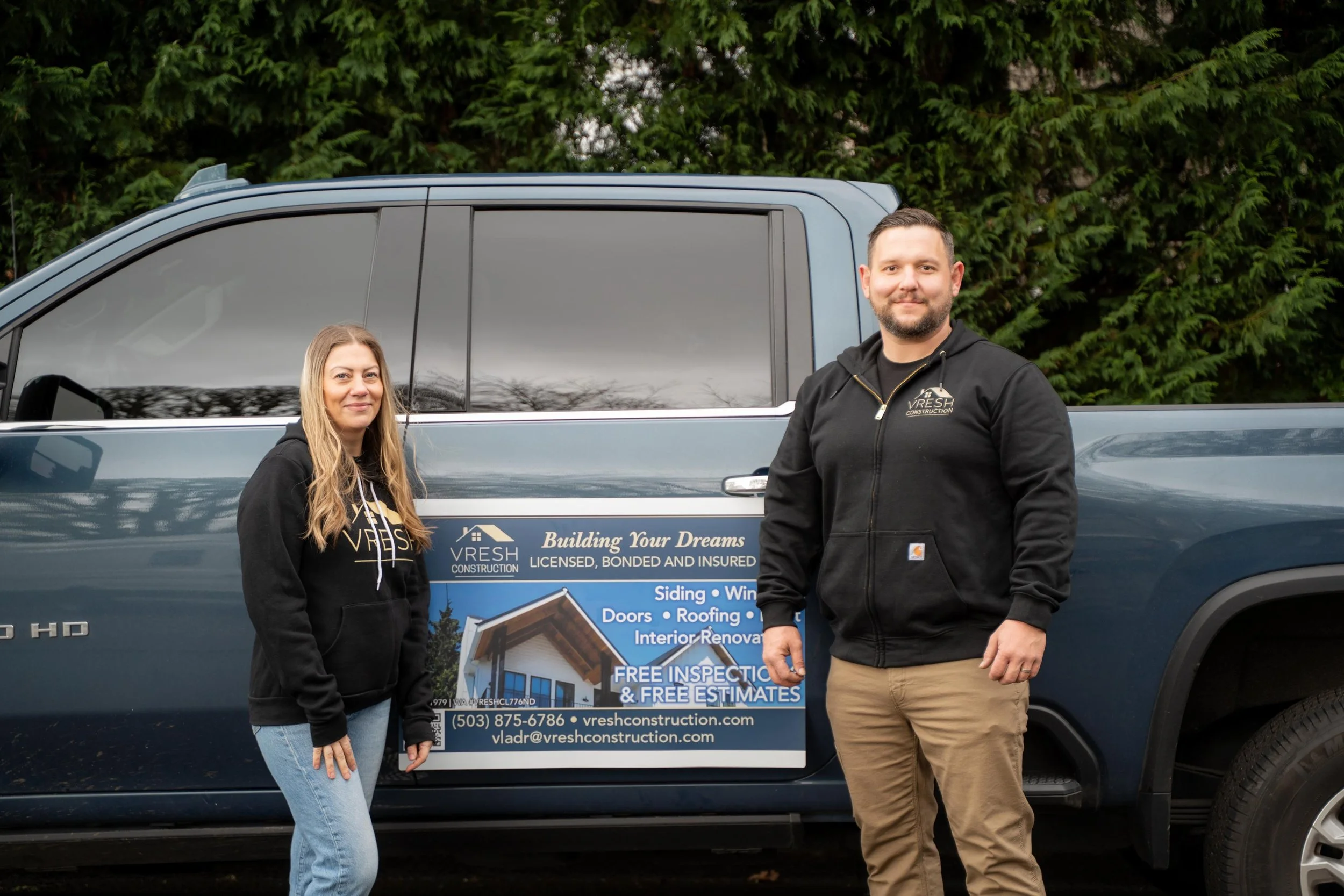
Dry rot is one of the most common — and most commonly mishandled — problems in Portland-area homes. Most contractors' approach to dry rot they encounter during a siding or window project is to work around it, patch over it, or install the new material on top of whatever is there. That approach predictably fails: the rot continues to spread behind the new installation, the structural integrity of the wall system continues to degrade, and the homeowner eventually faces a far larger and more expensive repair.
VResh Construction does not patch over dry rot. We identify the moisture source, remove all structurally compromised material, perform the structural repair with proper materials, correct the moisture pathway, and reinstall the exterior cladding with flashing and techniques that prevent the problem from recurring. It is more work. It is also the only approach that actually fixes the problem.
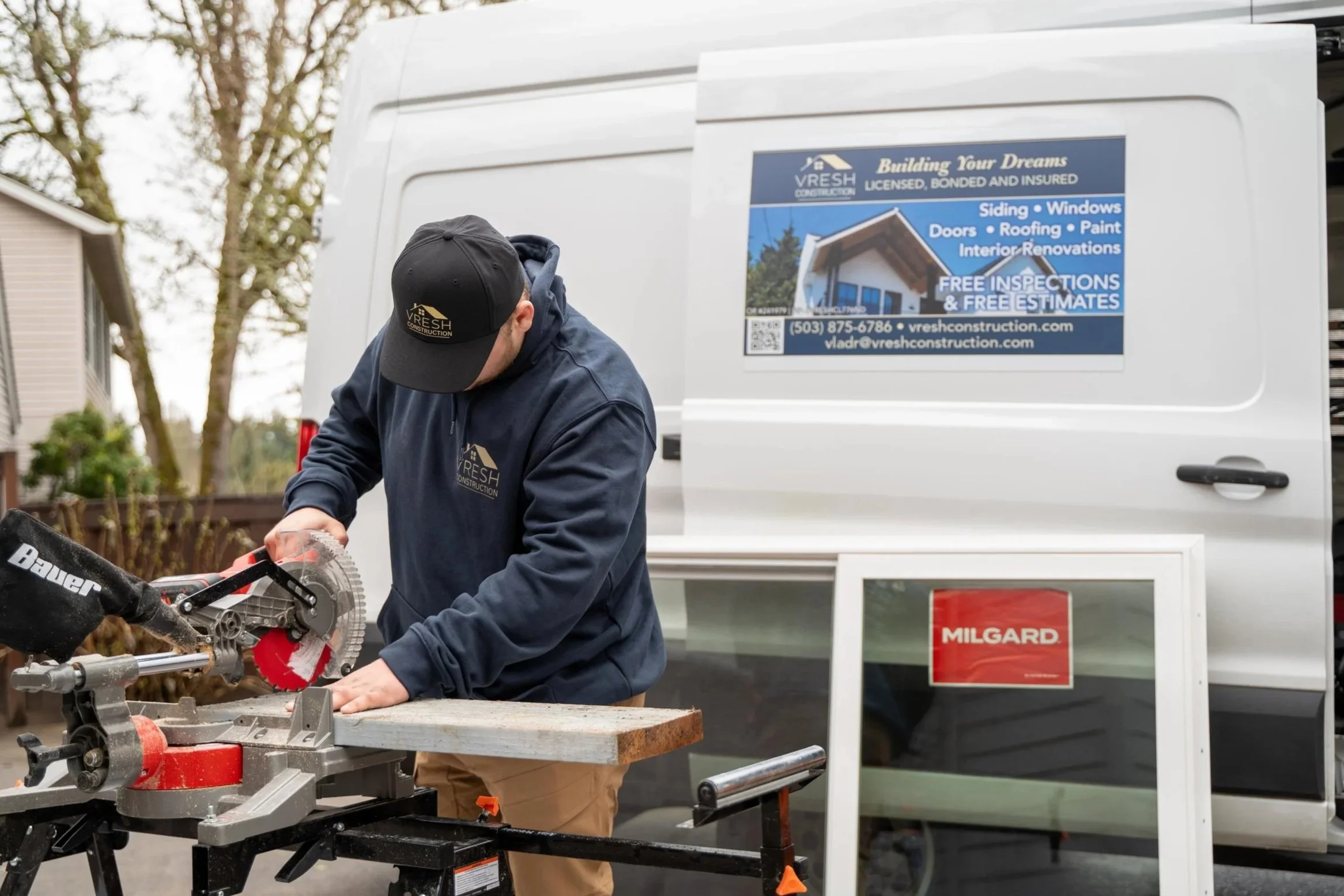
Moisture Source First
We identify the water entry pathway before any repair begins
Structural Repair Always
All compromised material removed — not patched over
EPA Lead-Safe Certified
Pre-1978 homes handled with full RRP compliance
Licensed & Insured
OR #241979 | WA #VRESHCL776ND
Written Assessment
Document all damage found and repairs performed
5–10 Year Workmanship Warranty
On all structural repair and reinstallation work
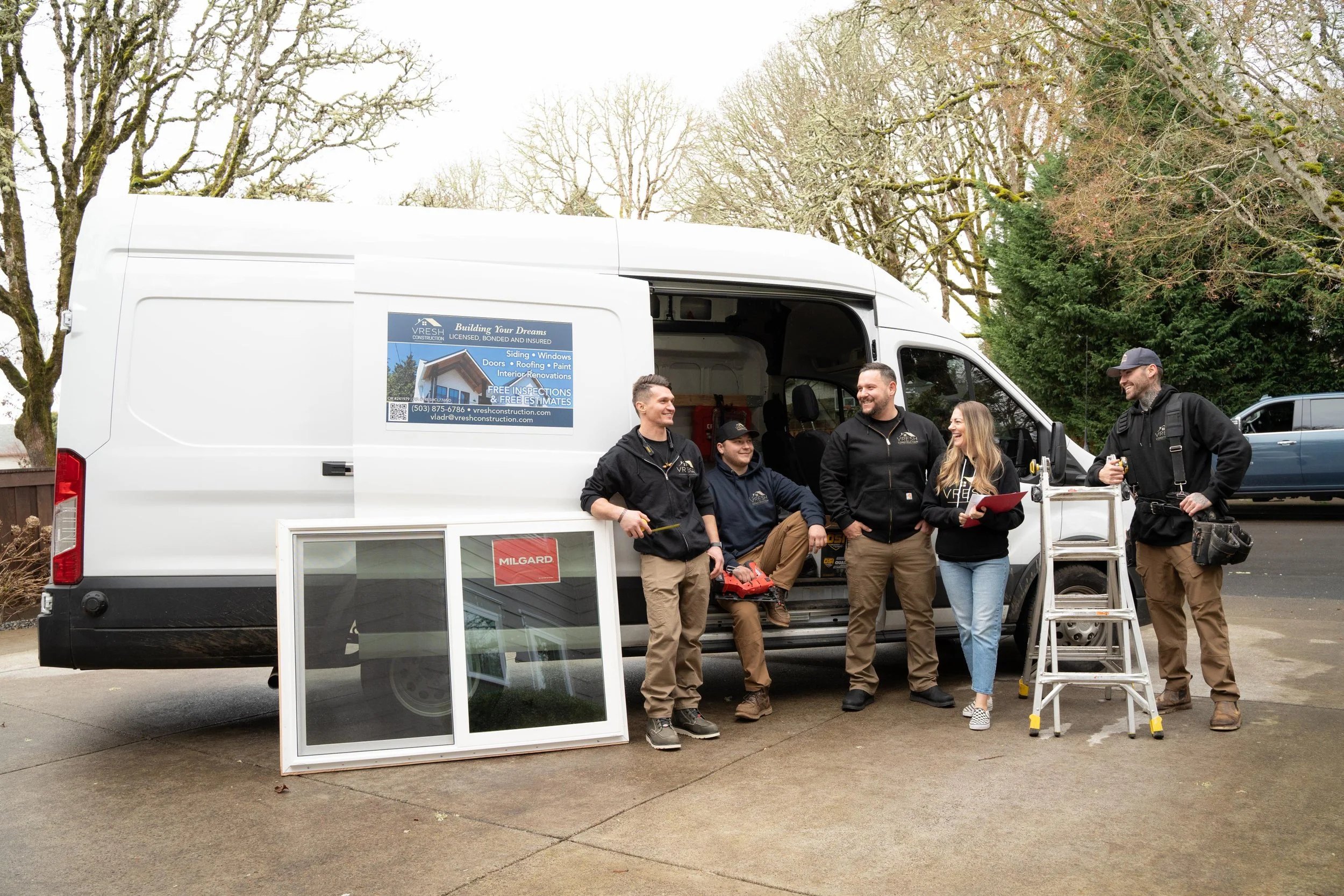
(503) 272-6436 — Call or Text, Available 24/7
We answer calls and texts at any hour. For storm damage, active leaks, or structural emergencies, calling directly is the fastest path to a response.
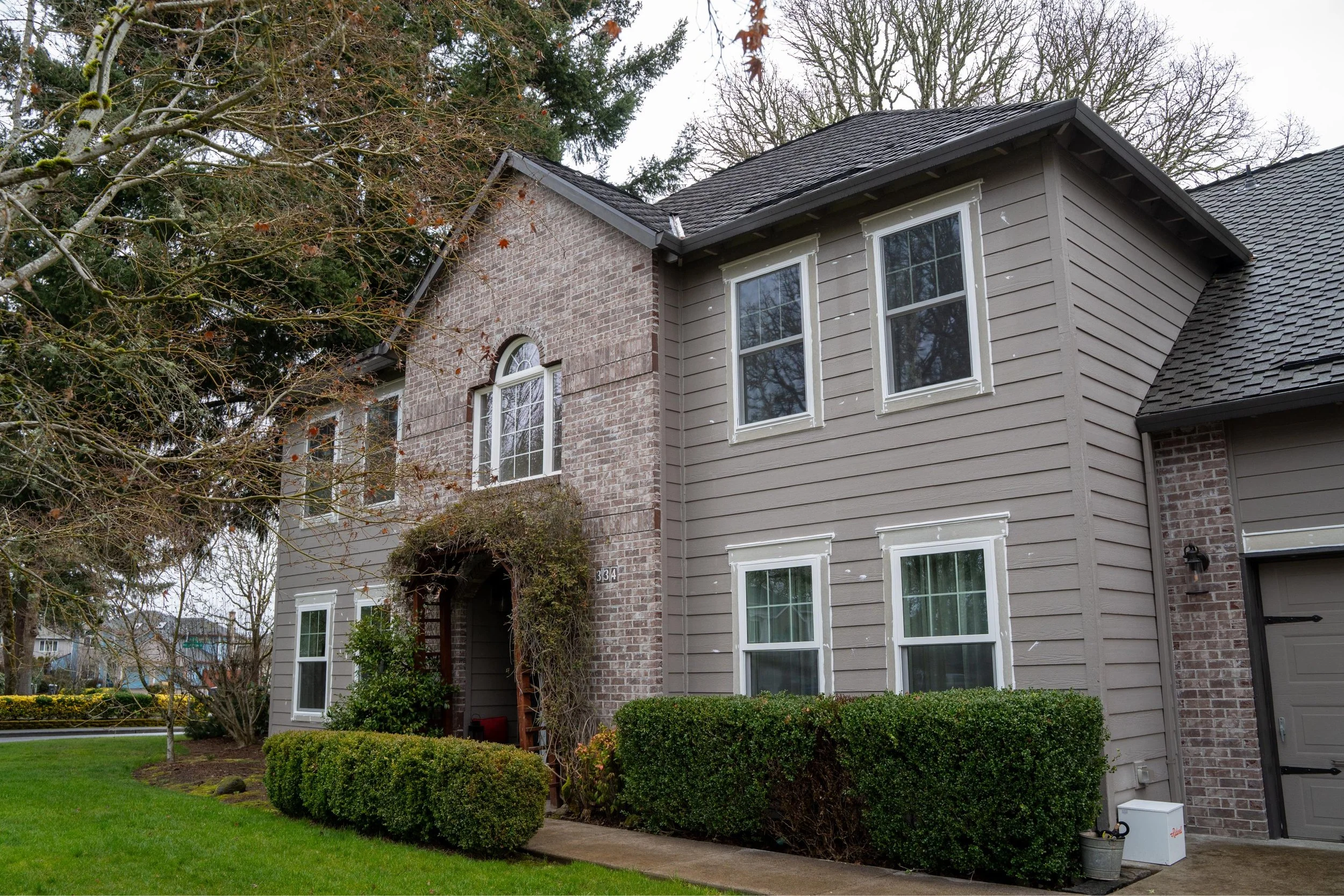
"Dry rot" is somewhat misleading as a name — it is actually caused by moisture, not by dryness. The term refers to wood decay caused by certain fungi that digest the cellulose and lignin in wood, breaking down its structural integrity. The fungus only needs a wood moisture content above approximately 19–20% to begin growing. In Portland's climate, where ambient humidity is high for 6–8 months of the year and where exterior siding systems are subject to sustained rain-driven moisture, reaching this threshold is not difficult when a moisture barrier or flashing has failed.
What Is Dry Rot — And Why Is It So Common in Portland?
Why Portland Homes Are Particularly Vulnerable
Portland's housing stock is older — a large percentage of homes were built between 1940 and 1990 with original wood siding, original building paper, and original window and door flashing that has degraded over decades.
Portland's annual rainfall of 37+ inches, with most precipitation occurring as sustained, wind-driven rain, creates sustained pressure on exterior envelope details that were often marginal even when new.
Portland's characteristic overcast, cool, and damp winters keep moisture in wall systems longer — wet wood dries slowly in low-UV, high-humidity conditions.
Many Portland homes have been repainted rather than properly maintained — degraded flashing and caulk failures hidden under fresh paint, and rot behind surfaces that look fine from the outside.
Where Dry Rot Most Commonly Occurs on Portland Homes
Window and door corners — failed head flashing or caulk failures allow water to run into the rough opening and saturate the structural framing
Bottom siding courses — inadequate clearance from grade leads to splash-back saturation and wicking from soil moisture
Roof-to-wall intersections — missing kickout flashing allows roof runoff to run directly into the wall cavity
Deck ledger connections — deck flashing failures saturate the rim joist and band joist behind the ledger
Under-trim locations — water gets behind trim boards and sits against the sheathing, especially on north-facing elevations
Garage door headers and trim — sustained exposure to splash-back and roof drip edge runoff
Our Dry Rot Repair Process — Start to Finish
Every dry rot repair we perform follows the same systematic process. We do not skip steps, and we do not perform step 5 (reinstallation) before steps 1 through 4 are complete. This is the part that separates a real repair from a cover-up.
⚠️ What Happens When Rot Is Patched Over Rather Than Repaired
We see this in a significant percentage of Portland homes that call us for a second opinion or for a redo of previous work. Dry rot that has been patched over with wood filler, Bondo, or epoxy consolidant — without removing the compromised material and correcting the moisture source — continues to spread beneath the patch.
Typical timeline: Patched rot becomes structurally significant again within 3–7 years. By that point, the rot has typically spread to adjacent framing members that were not originally compromised.
The result is a larger, more expensive repair than would have been required with proper repair the first time. We have performed structural repairs at homes where a prior contractor's "repair" cost $800 and the subsequent proper repair (years later) cost $6,000+ because the rot spread into adjacent framing.
This is why we do not patch. We remove and replace.
Signs Your Home May Have Dry Rot — What to Look For
Visible Warning Signs
Soft, spongy, or crumbling wood at any exterior trim, window frame, door frame, or siding surface when probed with a screwdriver
Paint bubbling, blistering, or peeling in a localized area on the exterior — especially at window corners, bottom siding courses, or areas adjacent to rooflines
Staining or discoloration on exterior siding or trim, particularly dark water staining below windows or above the foundation
Interior water staining near windows, at baseboards, or on lower walls adjacent to exterior surfaces
Visible fungal growth (often appears as white, gray, or brownish growth) on wood surfaces
Bottom siding course that sounds hollow when tapped, or visually shows separation from the wall.
Many dry rot problems develop gradually and are not visible from the outside until they are significant. Here are the warning signs that should prompt a professional inspection:
Situations That Should Prompt a Dry Rot Inspection
Your home was built before 1980 and has never had a professional moisture inspection.
You are planning a siding replacement, window replacement, or deck replacement — the ideal time to inspect what's underneath.
You have visible efflorescence (white chalky deposits) on your foundation or concrete near the soil line.
Your deck has been in place for more than 15 years without a ledger inspection.
You notice a musty odor in a first-floor room adjacent to an exterior wall.
The prior siding or window contractor mentioned "some rot, but we worked around it."
Dry Rot Repair on Portland's Pre-1978 Homes
Dry rot repairs on homes built before 1978 carry an additional consideration that most Portland contractors are not equipped to handle correctly: lead-based paint. When dry rot repair work disturbs painted surfaces — which it invariably does — federal EPA RRP rules require the contractor to be Lead-Safe Certified, follow specific containment and cleanup protocols, and provide written documentation of compliance. VResh Construction is EPA Lead-Safe Certified. Most Portland repair contractors are not.
This matters not just legally but practically. Lead dust generated during siding removal, window removal, and trim removal on pre-1978 homes can contaminate interior surfaces, soil, and landscaping. A non-certified contractor performing dry rot repair on an older Portland home without following RRP protocols exposes your family, their crew, and adjacent neighbors to lead hazards.


Client's Talk
We have a wealth of experience working as main building contractors on all kinds of projects, big and small, from home maintenance and improvements to extensions, refurbishments and new builds.
Serving Portland Metro Area
VResh Construction provides window replacement, siding installation, roofing, dry rot repair and full exterior renovation services throughout the Portland metro area and Southwest Washington.
Portland Metro — Oregon
Southwest Washington
Extended Service Areas
Concerned About Dry Rot? Let's Take a Look — Free.
If you've seen soft spots in your trim, paint peeling at window corners, staining at your siding's bottom course, or anything else that concerns you — schedule a free on-site assessment. We determine the extent of the damage, identify the moisture source, and provide a written estimate for proper repair. No obligation, no pressure.