
Interior Door Replacement in Portland, OR
Prehung Door Installation. Slab Door Replacement. Pocket Doors. Barn Doors. Closet Doors. Every Door Plumb, Level, and Operating Correctly. Licensed OR #241979.


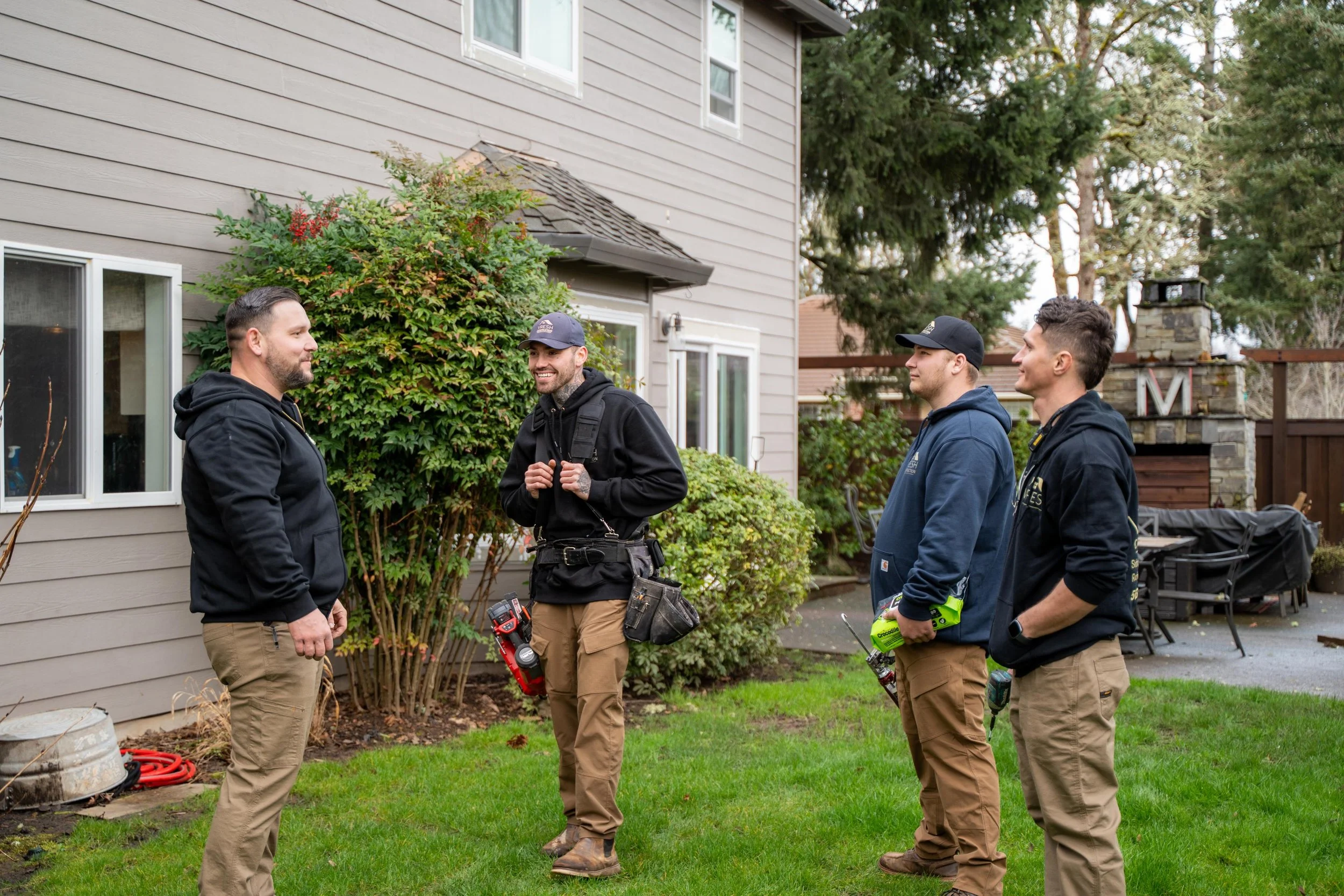
An interior door that binds, doesn't latch, swings open on its own, or has visible daylight gaps is more than a nuisance — it is a sign that either the door was installed incorrectly, or the rough opening has moved since installation. VResh Construction installs interior doors correctly: level and plumb in the rough opening, properly shimmed, with hardware set for smooth, reliable operation. We install prehung door units, slab doors in existing frames, pocket doors, barn doors, and all types of closet doors.
Interior Door Types We Install
Prehung Interior Doors
A prehung door is a complete unit — door slab, hinges, and jamb — delivered as an assembly. Prehung installation involves removing the existing door and jamb, shimming the new unit level and plumb in the rough opening, and installing the casing trim.
Prehung installation is appropriate when the existing jamb is damaged, out of plumb, or when changing the door size or swing direction. It is the most common interior door replacement type.
We install both hollow-core (standard, lightweight) and solid-core (heavier, better sound isolation, premium feel) prehung units. For primary bedrooms, offices, and home theaters, solid-core is a significant quality upgrade.
Slab Door Replacement
A slab door is the door panel alone — installed into an existing frame by transferring the hinges from the old door or routing new hinge mortises. Slab replacement is appropriate when the existing jamb is sound, and the replacement door is the same size as the original.
We re-use or replace hardware as appropriate and adjust the strike plate for correct latch engagement.
Barn Doors and Sliding Interior Doors
Surface-mounted sliding barn doors are a popular design choice that works well in Portland's older homes,, where wall thicknesses make pocket doors difficult. The track mounts to the wall above the opening; the door slides to one side rather than swinging.
We install barn door hardware and doors for openings of all sizes. Note that barn doors do not seal the opening fully — they are a design choice, not a privacy solution equivalent to a swinging door.
Pocket Doors
Pocket doors slide into the wall rather than swinging into the room — ideal for tight spaces, bathrooms, and anywhere a swinging door creates a layout problem. Pocket door installation requires opening the wall to install the pocket frame and header.
We install pocket door kits in both new openings (as part of a remodel) and as replacements for existing pocket doors with damaged or worn hardware.
Closet Doors
We install bifold, bypass (sliding), and hinged closet doors. For bedroom closets being upgraded as part of a remodel, we can also install custom closet systems in combination with door replacement.

(503) 272-6436 — Call or Text, Available 24/7
We answer calls and texts at any hour. For storm damage, active leaks, or structural emergencies, calling directly is the fastest path to a response.
Interior Door Replacement — What We Do
Hollow-Core vs. Solid-Core — Which Is Right for Each Room?
Interior Door Hardware — A Practical Guide
Passage Hardware (Non-Locking)
Standard for hallway and living space doors — lever or knob that operates the latch from both sides without a lock. The most common interior hardware type.
Lever handles are recommended over knobs for ADA accessibility and general ease of use — particularly important in homes where older family members live. Lever handles are now the default choice on most Portland new construction and renovation.
Privacy Hardware (Bedroom and Bathroom)
Lever or knob with a push-button or turn lock on the interior side and an emergency release (pinhole) on the exterior. Standard for bedrooms, bathrooms, and home office doors.
Finish consistency matters in an open floor plan — mixing satin nickel and oil-rubbed bronze hardware on visible doors looks unintentional. We advise on finish consistency across the project.
Dummy Hardware (Closet and Cabinet Doors)
Non-functional lever or knob with no latch mechanism — for closet doors, wardrobe doors, and decorative bi-fold doors where the door does not need to stay closed by itself.
Bi-fold doors use a different hardware track and pivot system — we assess existing or new bi-fold hardware at the estimate.
Pocket and Barn Door Hardware
Pocket door hardware is built into the wall cavity — a track system, guide, and edge pull. The hardware must be installed with the framing before the drywall.
Barn door hardware is surface-mounted on an exposed track — significantly easier to retrofit than pocket doors, as no wall cavity work is required. The track must attach to structural backing (studs or a header) — not just to the drywall.
Interior Door Soundproofing — What Actually Works
One of the most common requests on interior door replacement projects is improved sound isolation — between a home office and common areas, between a bedroom and a noisy street-facing room, or in multi-generational homes. Here is what actually makes a difference.
Door Core Matters Most
Solid-core doors provide dramatically better sound attenuation than hollow-core. A solid-core door (typically MDF or particleboard core) with proper seals can reduce sound transmission by 10–15 STC points compared to a hollow-core door in the same frame.
Solid wood doors (true stile-and-rail construction) perform similarly to solid-core MDF. The audible difference between solid wood and solid MDF core on sound isolation is minimal — the door seal quality matters more.
What Does Not Work
Adding weatherstripping to a hollow-core door — you gain a little from sealing the gaps, but the hollow core still transmits sound readily.
Surface-mounted soundproofing panels — these are primarily a recording studio solution and look out of place in a residential interior.
Thicker doors alone — a 1-3/4 inch hollow-core door is not significantly better than a 1-3/8 inch hollow-core door for sound isolation.
Seals and Sweeps Are Critical
A door with gaps at the perimeter — under the door, at the latch side, or at the head — transmits sound through those gaps regardless of core density. Sound travels through air.
Acoustic seals on all four sides of the door (head, jambs, and threshold sweep), combined with a solid-core door, provide meaningful sound isolation. We install acoustic threshold sweeps and compression seals on doors where sound isolation is the priority.
Serving Portland Metro Area
VResh Construction provides window replacement, siding installation, roofing, dry rot repair and full exterior renovation services throughout the Portland metro area and Southwest Washington.
Portland Metro — Oregon
Southwest Washington
Extended Service Areas


Client's Talk
We have a wealth of experience working as main building contractors on all kinds of projects, big and small, from home maintenance and improvements to extensions, refurbishments and new builds.
Interior Door Styles for Portland Home Types
Craftsman Bungalows (1905–1940)
Original interior doors in Portland bungalows are typically 5-panel stile-and-rail doors in old-growth fir with a distinctive proportion — tall and narrow with a raised center panel. Replacing these with hollow-core flush doors (the standard builder door) is one of the most character-reducing renovation choices in a historic home.
Period-appropriate replacements: 5-panel or 3-panel pine or MDF doors painted to match trim. For homes where the original fir doors are intact and merely warped or damaged, consider repair over replacement — original old-growth fir has a grain character that new lumber cannot match.
Contemporary and Modern New Construction
Flush doors in solid-core MDF are the standard. Taller door heights (8-foot doors) have become the norm on new Portland construction — they look proportionally correct with contemporary ceiling heights of 9–10 feet.
Modern barn doors and pivot doors are popular accent choices for home offices and primary suites. We install these as part of interior renovation projects.
Mid-Century Ranch and Contemporary Homes (1950–1980)
Flush-panel doors are architecturally appropriate for these homes — the minimalist flat panel door matches the low-profile, horizontal character of the architecture. Solid-core flush doors in a painted finish are the correct specification.
Louvered bifold doors for closets were standard in mid-century construction. Modern replacement: bypass sliding doors (cleaner and lower maintenance than bifolds) or barn-door style for larger openings.
Pocket Doors
Pocket doors slide into the wall cavity — they disappear completely when open, making them ideal for tight spaces where a swinging door would conflict with furniture or traffic. Common in older Portland homes (1910s–1930s) between the parlor and dining room.
New pocket door installation requires framing work before drywall — the wall cavity must accommodate the door width plus the pocket frame hardware. Retrofitting a pocket door into an existing drywalled wall is feasible but requires opening the wall on one or both sides.