Fence Installation in Portland, OR

New Fence Construction. Fence Replacement. Fence Repair. Cedar, Composite, and Vinyl. Posts Set for Portland's Wet Ground Conditions. Licensed OR #241979

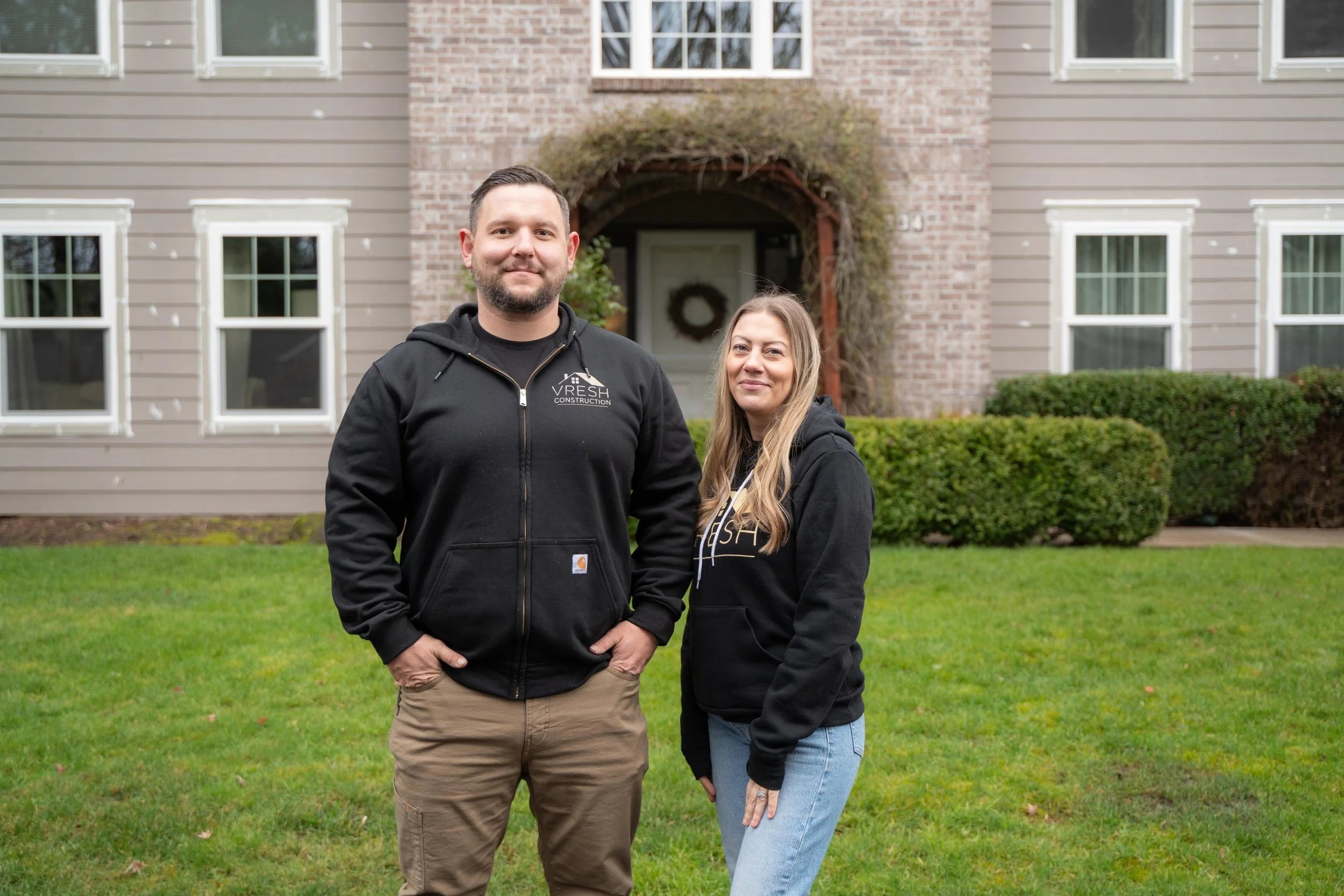
A man and woman standing on a lawn in front of a house, both wearing black hoodies with a construction company's logo.

Portland's persistent ground moisture is the primary enemy of residential fencing. Wood fence posts that are set without proper rot protection in Portland's clay soil will begin to fail at grade within 5–10 years — the classic Portland fence problem is not the boards falling down, it is the posts rotting off at the soil line while the boards remain intact. VResh Construction sets posts with concrete footing, proper post depth, and rot-resistant posts where appropriate — because the post is the structural foundation of the entire fence.
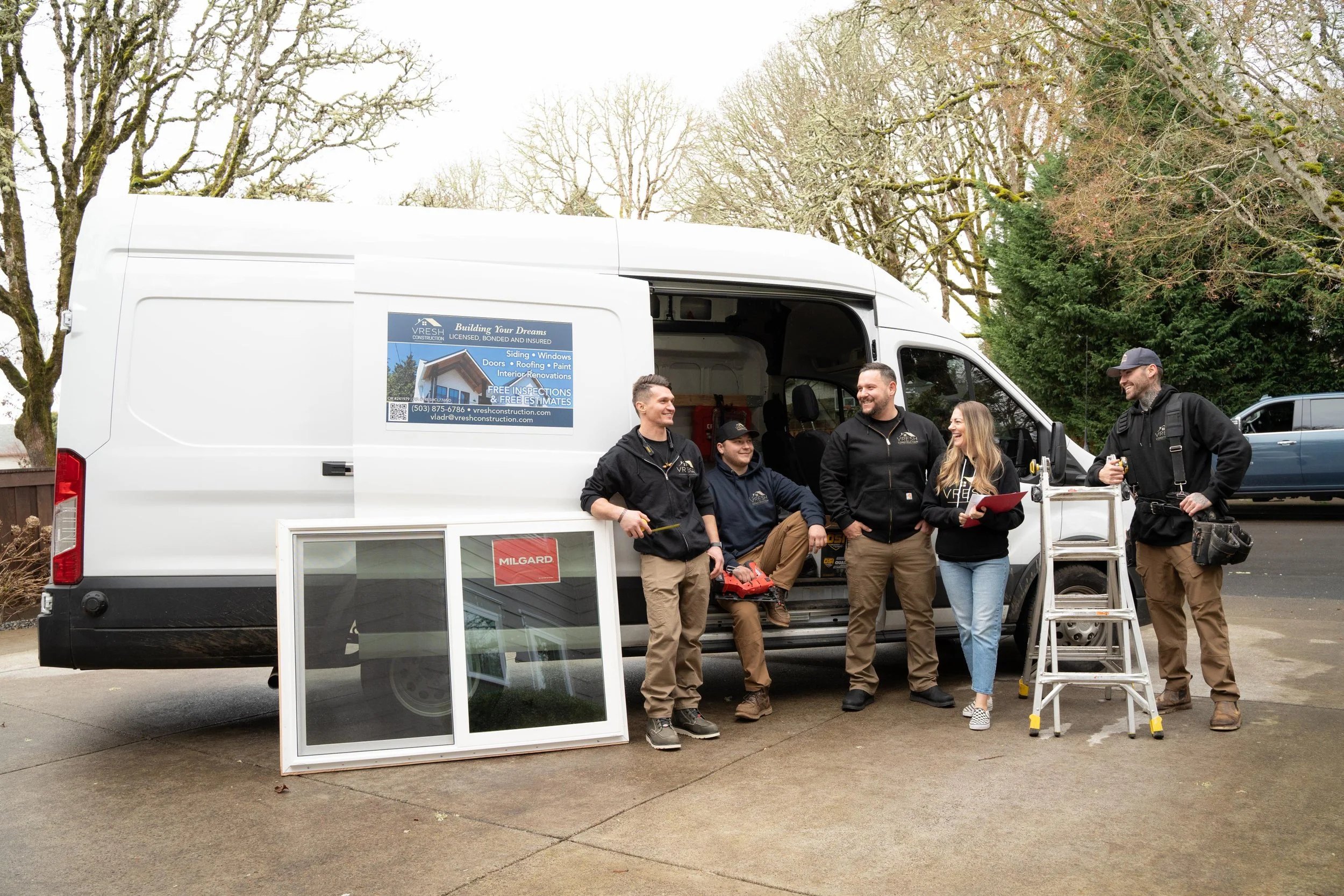
Group of five people standing and sitting near a white service van outdoors, with a window frame leaning against the van. The van has advertising for home renovation services. Two people are holding tools, and one is holding a clipboard and tokens. Trees are visible in the background.

(503) 272-6436 — Call or Text, Available 24/7

We answer calls and texts at any hour. For storm damage, active leaks, or structural emergencies, calling directly is the fastest path to a response.

Fence Types and Materials We Installnow

Cedar Board-on-Board Fencing

Cedar board-on-board is the most common privacy fence in Portland — overlapping vertical boards that provide a uniform appearance from both sides and complete privacy. Western red cedar is naturally rot-resistant and takes paint or stain well.

Cedar fences require staining or sealing every 3–5 years in Portland's climate for optimal service life. Unstained cedar will weather to a silver-grey — acceptable aesthetically but less protected against moisture penetration.

Best for: Most Portland residential privacy fence applications. Good balance of cost, aesthetics, and service life when properly maintained.

Composite and Vinyl Fencing

Composite and vinyl fencing does not rot, does not require painting or staining, and holds its appearance for decades. The upfront cost is higher than wood, but the lifetime maintenance cost is significantly lower.

Composite fence systems (Trex Seclusions and similar) use the same technology as composite decking — wood fiber and recycled plastic — and are a premium choice for homeowners who want a fence that does not require maintenance.

Vinyl fencing is an option for lower-maintenance picket and privacy fence styles.

Pressure-Treated Lumber Fencing

Pressure-treated pine or fir for fence boards — more rot-resistant than untreated wood, lower cost than cedar for large linear footage. Pressure-treated boards are appropriate for full fence replacement where budget is a primary consideration.

Posts should always be pressure-treated (rated for ground contact — look for UC4B or UC4C rating for below-grade applications). Pressure-treated posts dramatically outlast untreated or cedar posts in Portland's clay soil.

Our Fence Installation Process
#
Item
What We Do — And Why It Matters
1
Layout and call 811
Locate all underground utilities before any digging begins. Call 811 is required by law before any excavation in Oregon. We handle this as part of every fence project.
2
Post hole excavation
Dig post holes to minimum depth — typically one-third of the post length below grade (a 6-foot above-grade fence requires holes approximately 2 feet deep, plus a few inches for concrete). In Portland's frost depth is minimal, but adequate depth in unstable soil is essential for a fence that doesn't lean within a few years.
3
Post setting with concrete
Set posts in concrete — not just tamped earth. Concrete footing holds the post plumb and prevents the post base from moving in Portland's saturated clay soil. Concrete should extend slightly above grade and be sloped away from the post to shed water.
4
Post cure time
Allow concrete to cure before attaching rails and boards — at minimum 24 hours, preferably 48. Boards attached before concrete has cured can pull posts out of plumb.
5
Rail and board installation
Install horizontal rails between posts and vertical boards to the specified style (board-on-board, dog-ear, shadowbox, etc.). All cut ends back-primed with exterior primer before installation.
6
Gate installation
Install gate frame with diagonal brace, hinges, and latch. Gates that sag are almost always the result of an unsupported frame — a diagonal tension rod or brace from the bottom hinge to the top latch corner is the correct solution.
7
Top cap and post caps
Install top cap rail and post caps. Post caps protect the end grain of posts from water infiltration — one of the most commonly omitted items in budget fence installations.
8
Stain or seal (optional)
Apply initial stain or sealant coat to cedar or wood fencing as an add-on service. We recommend staining at installation for optimal first-coat penetration.

Fence Styles Available in Portland

In our experience across hundreds of Portland-area roofing projects, roof leaks concentrate at predictable locations — almost always at transitions, penetrations, and flashing details rather than in the middle of a shingle field. Here is where we look first, and why.

Board-on-Board Privacy Fence

Alternating vertical boards that overlap — provides complete privacy from both sides and a consistent appearance. The most popular residential privacy fence in Portland. Available in cedar, pressure-treated, or composite.

Height: typically 6 feet for privacy. Posts at 6–8 foot centers.

Dog-Ear Privacy Fence

Standard vertical-board fence with boards cut at 45-degree angles at the top corners. More economical than board-on-board — boards do not overlap so fewer linear feet of material are needed. Provides full privacy but single-sided appearance.

Shadowbox Fence

Alternating boards on opposite sides of the rails — similar effect to board-on-board but with gaps between boards that allow air circulation and partial sight-line. A good middle ground between privacy fence and open fence for properties where air movement matters.

Picket Fence

Traditional open-top fence with spaced vertical pickets — typically 36–42 inches in height. Used in front yards and along property lines where privacy is not the goal but boundary definition is. Cedar or pressure-treated, painted or stained.

Classic Portland bungalow neighborhoods often have picket fence profiles that we can match for additions and repairs.

Split Rail and Ranch Rail

Rustic open fence style with horizontal rails through or over round posts. Used for property boundary definition, garden borders, and rural-feel properties. Not a privacy fence.

Cedar split rail is the authentic material — pressure-treated is more durable in Portland ground conditions.


Close-up of beige quotation marks on a dark background.

Client's Talk

We have a wealth of experience working as main building contractors on all kinds of projects, big and small, from home maintenance and improvements to extensions, refurbishments and new builds.

Fence Repair vs. Full Replacement

Fence Condition
Repair or Replace?
Why
Posts are rotted at grade, boards are sound
Post replacement
Re-use existing boards with new concrete-set posts. Much less expensive than full replacement when boards are in good shape.
Several boards are cracked or missing, posts are solid
Board replacement
Spot-replace damaged boards. Posts and rails set the structure — boards are easy to swap.
Gate is sagging or dragging
Gate rebuild or replacement
Usually a frame or hinge issue — fix the frame first before replacing the full gate.
Posts are solid but the whole fence leans in one direction
Assess cause
A fence that leans may have posts that were never concreted, or concrete that has shifted. We diagnose before recommending.
Widespread rot in posts and boards throughout
Replace
When structural and surface failure is widespread, full replacement is more cost-effective than ongoing repairs.

Serving Portland Metro Area

VResh Construction provides window replacement, siding installation, roofing, dry rot repair and full exterior renovation services throughout the Portland metro area and Southwest Washington.

Portland Metro — Oregon

Portland, OR
Oak Grove, OR
Cedar Mill, OR
King City, OR
Happy Valley, OR
Clackamas, OR
Milwaukie, OR
Gresham, OR
Wood Village, OR
Scappoose, OR
Sandy, OR
Newberg, OR
Estacada, OR
Lake Oswego, OR
Beaverton, OR
Hillsboro, OR
Tigard, OR
Sherwood, OR
West Linn, OR
Oregon City, OR

Southwest Washington

Vancouver, WA
Battle Ground, WA
Woodland, WA
Camas, WA
Ridgefield, WA
Washougal, WA
Kalama, WA

Extended Service Areas

Longview, WA
Kelso, WA
Salem, OR
Seaside, OR
Lincoln City, OR
Long Beach, WA
OUR FAQS

Fence FAQs — Portland Homeowners

How much does fence installation cost in Portland, OR?
Cedar board-on-board privacy fencing typically runs $30–$55 per linear foot installed, including posts and concrete. Composite fencing runs $45–$80+ per linear foot. A standard 150 linear foot Portland property fence in cedar runs $4,500–$8,250 in materials and labor. Gates add $400–$900 each.
My fence posts are rotting but the boards are still good — can I just replace the posts?
+
Yes — post replacement without replacing boards is a practical repair when the boards are structurally sound and the fence owner wants to extend the life of the existing fence. We remove old posts, set new pressure-treated posts in concrete, and re-attach the existing boards. This is significantly less expensive than a full fence replacement.
Do I need a permit to install a fence in Portland?
+
Privacy fences under 6 feet in height along side and rear property lines generally do not require a permit in Portland. Fences in front yards or corner lot sight-line zones, fences over 6 feet, and any fence near a property line with an easement or setback issue may require a permit or variance. We assess permit requirements at the estimate stage.
How do I know where my property line is?
+
Your property corners are marked by survey stakes — usually metal rebar or iron pipes near the corners of your lot. If these have been removed or buried, a property survey is the only definitive answer. We position fences based on the homeowner's representation of the property line and recommend a survey if there is any uncertainty. Fence disputes with neighbors over property lines are one of the most common and most avoidable homeowner problems in Portland.
How long does a cedar fence last in Portland, OR?
+
A properly installed cedar fence — pressure-treated posts in concrete, cedar boards and rails, post caps installed — will last 15–25 years in Portland's climate with proper maintenance (sealing or staining every 3–5 years). The posts in a well-built fence often outlast the boards by a decade. Unstained cedar boards begin to show weathering within 3–5 years but remain structurally sound much longer. The most common failure mode is post rot when posts were set without concrete or when post caps were omitted and end grain absorbed water for years.
Can you install a fence on a slope?
+
Yes — sloped lots are common in Portland, particularly in hillside neighborhoods. We handle sloped installations in two ways: raked panels (the top of the fence follows the slope grade) or stepped panels (the fence drops in level increments). Raked panels provide a continuous top line that follows the slope. Stepped panels maintain a level top on each panel with gaps at the bottom between steps. The choice depends on the degree of slope, fence style, and homeowner preference. We advise at the estimate visit.
What happens if my neighbor disputes where the property line is?
+
We install fences based on the homeowner's representation of the property line. If there is any dispute or uncertainty about the property line location, we strongly recommend commissioning a property survey before fence installation begins. Removing and relocating a fence after installation is expensive and entirely avoidable. A survey runs $500–$1,500 for most Portland residential lots and is good insurance against a neighbor dispute.
Can you match my existing fence style for an extension?
+
Yes — we match existing fence profiles, board dimensions, rail spacing, and post styles for fence extensions and repairs. Bring us a photo of your existing fence or we can assess on-site. For cedar fences, new boards will not match the color of weathered existing boards immediately — they will weather to a similar tone over 1–2 seasons, or you can stain everything to a uniform color after the extension is installed.