
Egress Window Installation in Portland, OR

Required for Basement and Below-Grade Bedrooms. Structural Opening Enlargement. Window Well Installation. Full Oregon Code Compliance. Permits Handled. Licensed OR #241979.

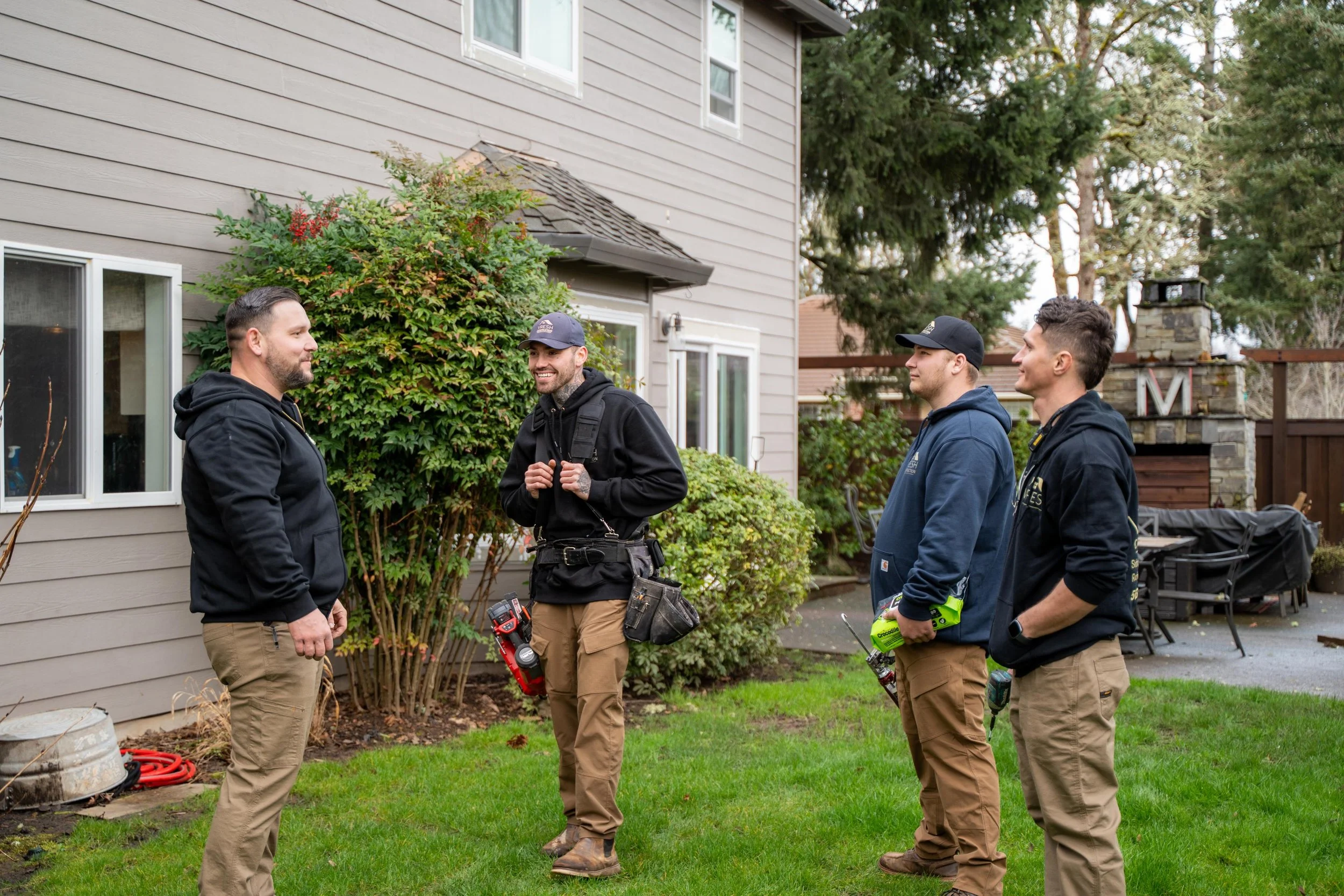
Four men in work attire standing outside near a house, engaged in conversation. They are holding tools, and there is a backyard with green grass, bushes, and outdoor furniture in the background.

The Oregon Residential Code requires every bedroom to have an emergency escape and rescue opening—an egress window. For basement bedrooms and converted below-grade spaces, the existing window is almost always too small, and the rough opening must be structurally enlarged to meet code. VResh Construction handles the full scope: structural rough opening work, window well excavation and installation, window installation with proper flashing, interior finishing, and permit management.

Egress compliance is also a disclosure issue in Oregon home sales. A below-grade bedroom without egress must generally be disclosed as a non-conforming bedroom, which affects how it is counted and can affect appraised value. Most homeowners who call us are either finishing a basement and doing it right from the start, or correcting a non-compliance before listing a home for sale.

Group of five people standing and sitting near a white work van, talking and smiling, with window and ladder nearby, outdoors in front of trees.

(503) 272-6436 — Call or Text, Available 24/7

We answer calls and texts at any hour. For storm damage, active leaks, or structural emergencies, calling directly is the fastest path to a response.
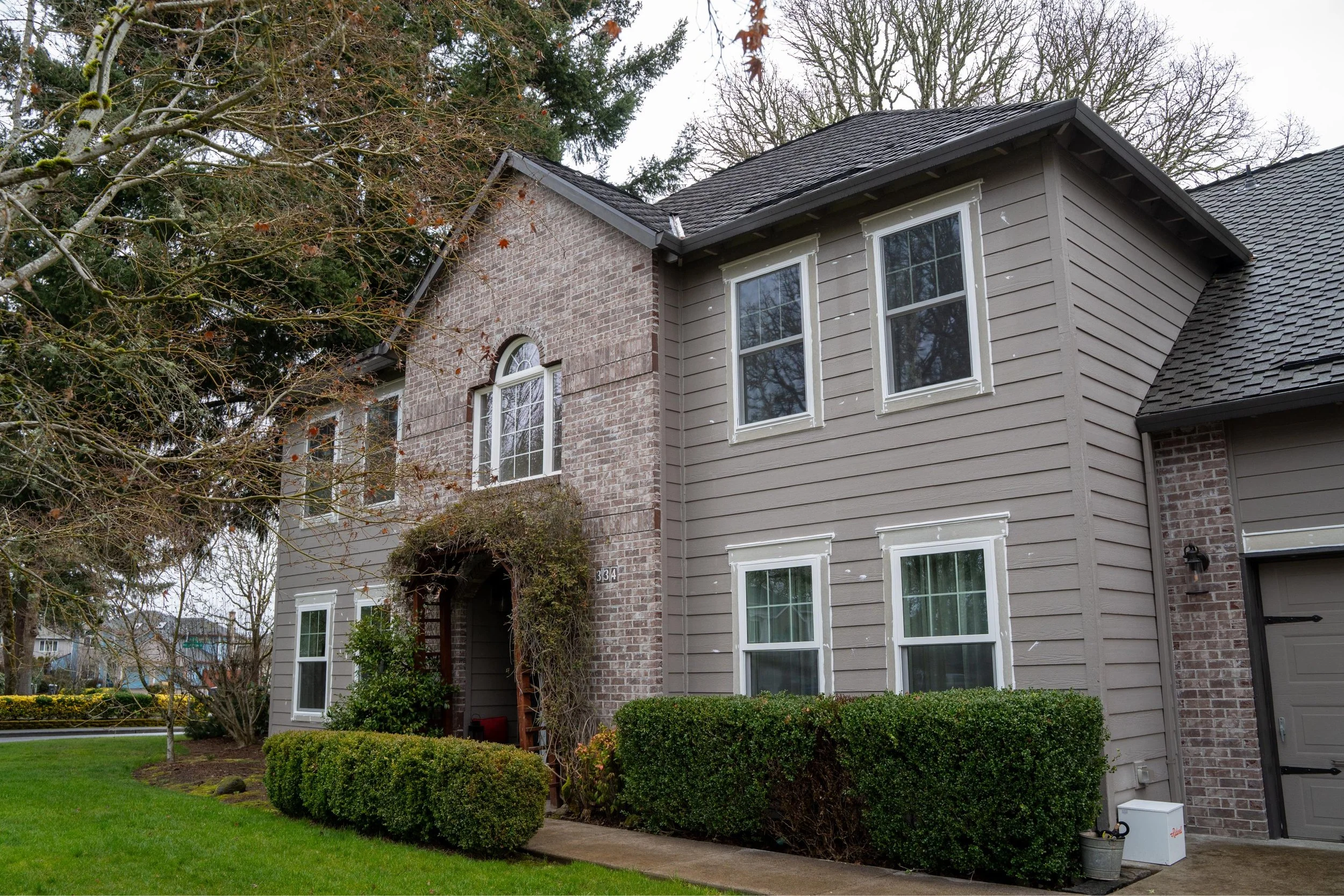
Oregon Egress Window Requirements — What the Code Requires

Most original Portland basement windows built before 1980 have a net clear opening of 1.5–3 sq ft — well below the 5.7 sq ft minimum. Enlargement is almost always required.

Minimum Egress Window Dimensions (Oregon Residential Code)

Minimum net clear opening area: 5.7 sq ft (grade-floor opening: 5.0 sq ft)

Minimum net clear opening height: 24 inches

Minimum net clear opening width: 20 inches

Maximum sill height above finished floor: 44 inches

"Net clear opening" means the actual openable area when fully open — not the glass size, frame size, or rough opening size.

Window Well Requirements (for below-grade windows)

Minimum window well floor area: 9 sq ft. Minimum 36 inches in both width and projection from the wall.

Window wells deeper than 44 inches from the egress window sill require a permanently attached ladder.

Drainage at the window well base is required — a gravel bed or connection to a drainage system to prevent water accumulation.

Egress Window Installation — What the Project Involves

#
Item
What We Do — And Why It Matters
1
On-site assessment and measurement
Measure the existing rough opening, calculate the net clear opening of the existing window, and determine the enlargement needed. Identify the wall assembly: wood-frame, concrete masonry unit (CMU), or poured concrete. Wall type determines structural approach and cost.
2
Structural design
For openings in load-bearing walls, determine the header size required to carry the load above the enlarged opening. For concrete or CMU foundations, determine the cutting approach. May require structural engineer review depending on jurisdiction and wall system.
3
Permit application
Apply for the building permit. Egress projects involving structural work require permits in all Portland-area jurisdictions we are aware of. We manage the application and plan review process.
4
Lead testing (pre-1978 homes)
Test disturbed painted surfaces. Follow EPA RRP containment and cleanup protocols throughout. Provide written compliance documentation.
5
Exterior excavation (below-grade)
Excavate the window well area to the required depth and dimensions. Install window well form (prefabricated steel or masonry) and backfill. Install drainage gravel at the base.
6
Rough opening enlargement
Cut and remove wall or foundation material to achieve the required rough opening size. Wood-frame walls: install temporary support, remove existing framing, install structural header and king/jack studs, re-sheathe. Concrete/CMU: concrete saw cutting and removal.
7
Window installation with full flashing
Install an egress-compliant window unit using our standard window installation process: sill pan, drainage plane integration, head flashing, air sealing, and exterior caulk.
8
Interior finishing
Drywall, trim, and paint around the new rough opening. Deep sill framing for the typical deep window sill on below-grade installations.
9
Building inspection
Schedule and pass the required building inspection. Provide the homeowner with copies of the permit and the passed inspection record.
10
Window well cover (optional)
Install a clear polycarbonate window well cover to prevent debris and water accumulation. Recommended for all below-grade window wells.

Serving Portland Metro Area

VResh Construction provides window replacement, siding installation, roofing, dry rot repair and full exterior renovation services throughout the Portland metro area and Southwest Washington.

Portland Metro — Oregon

Portland, OR
Oak Grove, OR
Cedar Mill, OR
King City, OR
Happy Valley, OR
Clackamas, OR
Milwaukie, OR
Gresham, OR
Wood Village, OR
Scappoose, OR
Sandy, OR
Newberg, OR
Estacada, OR
Lake Oswego, OR
Beaverton, OR
Hillsboro, OR
Tigard, OR
Sherwood, OR
West Linn, OR
Oregon City, OR

Southwest Washington

Vancouver, WA
Battle Ground, WA
Woodland, WA
Camas, WA
Ridgefield, WA
Washougal, WA
Kalama, WA

Extended Service Areas

Longview, WA
Kelso, WA
Salem, OR
Seaside, OR
Lincoln City, OR
Long Beach, WA

The Full Scope of Egress Window Installation

Egress window installation is not a window replacement — it is a construction project that includes a window replacement at the end. The window is typically the least complicated part. Here is what the work actually involves.

Step
Process
Description
1
Structural assessment
Determine what is in the wall or below-grade location where the new egress window will be installed. In a basement wall, identify the foundation type (poured concrete, concrete block, brick), wall thickness, and any below-grade drainage conditions.
2
Permit and engineering
Pull the required building permit. Egress windows that require cutting into a load-bearing foundation wall or removing structural framing may require engineering sign-off on the header design. We include permit costs in the written estimate and handle all permit applications.
3
Saw cutting or demolition
For below-grade egress windows, saw-cut the foundation wall opening. For above-grade installations, remove the existing window and enlarge the rough opening to egress dimensions. Structural header installation over the new opening.
4
Window well installation (below-grade)
Install a window well sized to code minimums so a person can safely exit and stand in the well. Attach the well securely to the foundation wall and install drainage gravel at the bottom.
5
Window well drain
Install a subsurface drain in the window well that connects to the perimeter drain or exits to grade. This prevents water buildup and reduces the risk of basement water intrusion during heavy rainfall.
6
Waterproofing at cut foundation
Apply a waterproofing membrane at the foundation cut and integrate it with existing below-grade waterproofing systems. Proper flashing and sealing help prevent water infiltration around the new window opening.
7
Window installation
Install the egress window unit according to manufacturer specifications, ensuring correct sill height, required clear opening size, and proper flashing and air sealing for code compliance.
8
Interior finish
Install interior drywall, trim, and paint around the new opening to restore the interior space to a clean and finished condition.
9
Inspection
Schedule and pass the building inspection. Egress window installations require official inspection to verify code compliance before the project is considered complete.

Window Well Requirements and Options

Minimum Code Requirements (Oregon)

Oregon Residential Code requires that window wells for egress windows provide a minimum of 9 square feet of area, with a minimum horizontal projection and width of 36 inches. This is the floor — a larger well is significantly more functional and comfortable as an emergency escape.

Window well covers are permitted and commonly installed in Portland to prevent debris and water accumulation, but must be openable from the inside without a key, tool, or special knowledge.

Window Well Material Options

Galvanized steel wells are the most common — cost-effective, code-compliant, and widely available in standard sizes.

Composite (polypropylene) wells are the premium option—they do not rust or dent and maintain their appearance much longer than galvanized steel in Portland soil contact.

Custom masonry or concrete wells are an option for high-end applications where the window well is a visible architectural feature.

Window Well Drainage — Critical in Portland

Portland receives 36+ inches of rainfall annually, much of it sustained and heavy. A window well without drainage will fill with water. That standing water creates hydrostatic pressure at the new window — and even well-installed egress windows are not designed for sustained submersion.

We strongly recommend a subsurface drain in every window well we install. The drain connects to the footing drain or exits to grade away from the foundation. This is not optional — the installation must perform correctly in Portland conditions.


Close-up of golden quotation mark symbols

Client's Talk

We have a wealth of experience working as main building contractors on all kinds of projects, big and small, from home maintenance and improvements to extensions, refurbishments and new builds.

Egress Window FAQs — Portland Homeowners

How much does egress window installation cost in Portland, OR?
Egress window installation in a wood-frame basement wall typically runs $2,000–$3,500 for structural work, window well, window, and interior/exterior finishing. Egress work in poured concrete or CMU foundation walls runs $3,000–$6,000+, depending on wall thickness, condition, and excavation requirements. Free written estimate after on-site assessment. [FLAG — Verify with Vlad]
My basement bedroom has a small window. Does it have to be enlarged for egress?
+
If the existing window meets Oregon net clear opening requirements — 5.7 sq ft, 24-inch minimum height, 20-inch minimum width, maximum 44-inch sill height — it may already comply. Most original Portland basement windows do not. We measure the actual net clear opening at the free estimate visit and compare it to the current code. If it falls short, we explain exactly what enlargement is needed.
Do all basement bedrooms need egress windows?
+
Yes — Oregon residential code requires every sleeping room to have a code-compliant emergency escape opening. This applies to basement bedrooms, finished basement spaces used for sleeping, and any below-grade room where a person regularly sleeps. An exception applies to sprinklered buildings, but most Portland single-family homes are not sprinklered.
We are selling our home — does the non-egress basement bedroom need to be disclosed?
+
This is a question for your real estate agent and attorney, as Oregon disclosure requirements are specific. Generally, Oregon disclosure forms ask sellers to identify known code compliance issues, and a below-grade bedroom without egress is a known non-conforming condition. Correcting the egress before listing is often the cleaner approach and removes the issue from the disclosure conversation. We can typically complete an egress project in 3–5 days.
Does an egress window project require a building permit?
+
Yes — in all Portland-area jurisdictions we are aware of. Structural work and new openings in any home require a permit. We handle permitting as part of the project scope, including managing the plan review process and scheduling the required inspections.
Can an egress window be installed in any basement wall?
+
Most basement walls can accommodate an egress window, but the complexity and cost vary significantly based on foundation type. Poured concrete foundations require diamond saw cutting — specialized equipment that cuts a clean opening. Concrete block foundations can be cut, or blocks can be removed — concrete blocks are somewhat easier to modify. Brick foundations are the most complex — brick removal requires careful structural assessment to ensure the wall remains stable. We assess the foundation type and advise on the full scope at the estimate visit.
Will an egress window affect my basement's moisture situation?
+
Done correctly — with proper waterproofing at the foundation cut, a properly drained window well, and a correctly installed window unit — an egress window should not worsen basement moisture. Done incorrectly — without waterproofing, without drainage, or with a window unit that is not properly sealed — it absolutely can. This is why egress window installation is not a job for a general handyman or a company that installs windows but does not understand below-grade waterproofing. We approach every egress installation as a moisture management project.
Does adding an egress window add to my home's value?
+
Yes — an egress window converts an unoccupiable basement room into a legally habitable bedroom or living space, which adds directly to appraised square footage. In Portland's market, a legal basement bedroom adds $15,000–$40,000 to a home's appraised value in most neighborhoods. The egress window installation is typically $3,000–$6,000 — one of the highest-ROI single improvements available to Portland homeowners with unfinished basements.
How do I know if my existing basement window qualifies as egress?
+
An existing basement window meets the Oregon egress code if it has at least 5.7 square feet of net clear opening area, a minimum clear opening height of 24 inches, a minimum clear opening width of 20 inches, and a maximum sill height of 44 inches from the floor. If your existing window falls short on any of these dimensions, it does not qualify — a new egress window installation is required to call the space a bedroom legally. We measure and assess at the estimate visit.