
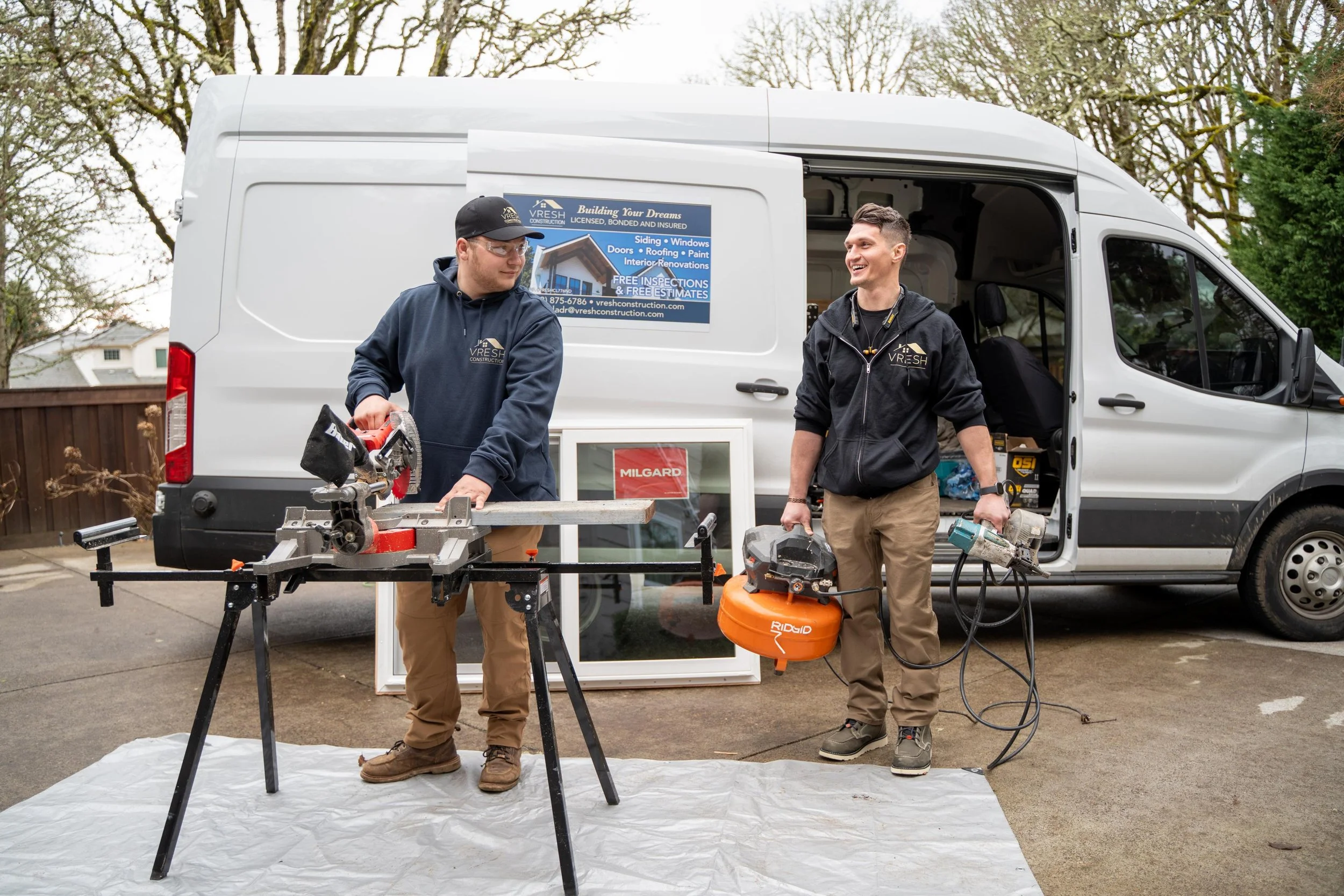
Patio Covers in Portland, OR
Attached and Freestanding Styles. Solid Roof, Pergola & Lattice. Properly Flashed Ledger Connections — Not Just Bolted to the Wall. Licensed OR #241979.

Portland's climate creates one of the strongest value cases for a patio cover in the country. An uncovered patio in Portland is unusable for 6–7 months of the year. A properly built covered patio extends your outdoor living season dramatically and becomes one of the most-used areas of your home. VResh Construction builds patio covers, pergolas, and other covered outdoor structures designed for the Pacific Northwest's sustained rainfall — not just for summer.
The most critical element of any attached patio cover is the ledger connection and flashing where the structure meets the house. An improperly flashed ledger connection is the same failure point that causes the dry rot damage we repair regularly on Portland decks and porches. Water running down the wall behind the ledger board, with nowhere to go, saturates the rim joist and rim-joist framing and begins a rot cycle that is invisible until it becomes expensive. We flash every attached patio cover ledger properly.
Ledger Flashing Always Included
The most common failure point on attached patio covers
Moisture Management Background
Same drainage expertise we apply to exterior walls
Licensed & Insured
OR #241979 | WA #VRESHCL776ND
Permits Handled
Most attached patio covers require a building permit
Pre-1978 Home Experience
5–10 Year Workmanship Warranty
(503) 272-6436 — Call or Text, Available 24/7
We answer calls and texts at any hour. For storm damage, active leaks, or structural emergencies, calling directly is the fastest path to a response.
The Ledger Connection — Why Most Patio Cover Problems Start Here
The ledger board is the horizontal framing member that attaches the patio cover structure to the house wall. When an attached patio cover is improperly flashed at the ledger, water running down the wall cannot escape — it collects behind the ledger board, soaks into the rim joist framing, and begins rotting the structural connection between the cover and the house.
We see this failure regularly on existing Portland patio covers and decks built by contractors who did not understand or follow proper ledger flashing practices. The rot is typically discovered 5–15 years after installation, when the cover begins to pull away from the house, or when we remove siding for other repairs and find framing damage underneath.
Proper ledger flashing uses a continuous through-wall flashing that directs water from behind the ledger to the exterior, where it can drain away from the structure. This is not an expensive add-on — it is the correct way to attach any structure to a house in the Pacific Northwest, and VResh does it on every project.
Patio Cover Styles We Build
Solid Roof Patio Covers
A fully covered structure with a solid roof — typically matching the main house roofing material (shingles, metal panel, or corrugated roofing). Provides complete rain protection. The most functional choice for Portland's climate and the most-used style we build.
Requires proper structural design (beam sizing, post spacing, load calculation), a properly flashed ledger connection to the house, and gutters to manage roof drainage away from the patio and the house.
May require a building permit depending on size and jurisdiction — we handle permitting when required.
Cost range: $8,000–$25,000+, depending on size, materials, and complexity. Final pricing comes from an on-site assessment.
Pergolas
An open-frame overhead structure with rafters or lattice that provides partial shade and visual definition without full rain coverage. Very popular in Portland for the aesthetic and the character they add to outdoor living spaces.
Pergolas are not a rain cover — they provide character and partial shade. For a functional outdoor room in Portland, a solid roof cover is more practical. Many Portland homeowners add a retractable fabric or polycarbonate panel system to a pergola for weather flexibility.
We build wood (Doug fir, cedar) and composite pergolas. All ledger connections are properly flashed.
Cost range: $6,000–$18,000+, depending on size and materials. Final pricing comes from an on-site assessment.
Lattice and Open-Roof Covers
Lattice-topped covers provide more shade than a pergola while allowing airflow. Better for privacy screening and growing climbing plants.
The same flashing requirements apply to all house connections.
Freestanding Structures
Freestanding patio covers and pergolas do not attach to the house, avoiding the ledger flashing issue entirely. They do require proper footing design and post anchoring to handle Portland's wind loading.
Freestanding structures are a good option when attaching to the house is not practical or when the desired location is away from the house wall.
Patio Cover Installation — What We Do
Patio Cover Material Comparison
How a Patio Cover Extends Your Outdoor Season in Portland
Without a cover, a Portland patio is usable roughly 4–5 months per year. With a solid roof cover, that number rises to 10–11 months. Add an infrared heater, and you have a year-round outdoor room. Here is what actually extends usability:
The Key Additions for Portland Outdoor Rooms
Solid roof
The foundation — full rain protection is the non-negotiable baseline for Portland.
Gutters on the patio cover: A covered patio without gutters creates a waterfall at the roofline edge during heavy rain. Every VResh patio cover includes gutters routed away from the patio surface and away from the foundation.
Ceiling fan
Moves air in summer and circulates heat from an overhead heater in fall and spring.
Windbreak panels
Reduces wind exposure on west-facing or exposed properties. We can incorporate lattice panels or clear polycarbonate windbreaks into the structural design.
Infrared heater
Extends the shoulder season from spring through late fall. Infrared heaters warm objects and people rather than air — they work well in partially open covered spaces where a standard radiant heater would just heat escaping air.
Exterior lighting
Extends usability after dark — critical for the short fall and winter days when dinner is after sunset.
Light-Transmitting Roof Options — Polycarbonate and Glass
Twin-Wall Polycarbonate
Provides full rain protection while allowing substantial natural light — critical on north-facing patios or under tree cover where a solid opaque roof would make the space feel dark.
Twin-wall polycarbonate provides both UV filtering and a degree of thermal insulation. Quality panels maintain clarity for 10–15 years before yellowing. Avoid single-layer corrugated panels that yellow within 3–5 years.
A practical, cost-effective choice for homeowners who want light transmission and weather protection without the cost of tempered glass.
Tempered Glass
The premium option — maximum transparency, maximum weather protection, cleanest aesthetic. Required for outdoor living rooms where visual quality and the sense of open sky are design priorities.
Significantly heavier than polycarbonate and requires a more robust, engineered framing structure. Higher cost — typically 2–3x polycarbonate for materials alone.
Best for high-end renovation projects where the outdoor room is a primary design feature.


Client's Talk
We have a wealth of experience working as main building contractors on all kinds of projects, big and small, from home maintenance and improvements to extensions, refurbishments and new builds.
Patio Cover Permits in Portland Metro — What You Need to Know
-
Attached patio covers require a building permit when the roof area exceeds 200 square feet or when the cover is attached to the house structure. Freestanding structures under 200 square feet typically do not require a permit, but must meet setback requirements.
Plan review is required for all permitted structures. We confirm the current Portland BDS review time for residential accessory structures when we scope your project.
We handle permit applications, plan preparation, and inspection scheduling for all applicable projects.
-
Threshold and review requirements vary by jurisdiction. Washington County generally follows the same thresholds as Portland. Clackamas County may have different requirements depending on the specific city (Lake Oswego, West Linn, and Milwaukie each have their own building departments).
We assess permit requirements at the estimate visit for each specific jurisdiction and include permit costs and timeline in the written estimate.
-
Many Portland-area neighborhoods with active HOAs require design review approval before construction of any accessory structure — separate from city permit requirements. If you are in an HOA, confirm approval requirements with your HOA board before signing a contract.
We can provide drawings and material specifications needed for HOA design review submissions.
Serving Portland Metro Area
VResh Construction provides window replacement, siding installation, roofing, dry rot repair and full exterior renovation services throughout the Portland metro area and Southwest Washington.