Exterior Painting in Portland, OR

Full Surface Prep. Back-Priming All Cuts. Correct Caulk Application. Quality Finish Coat. Integrated with Siding, Trim, and Repair Work.

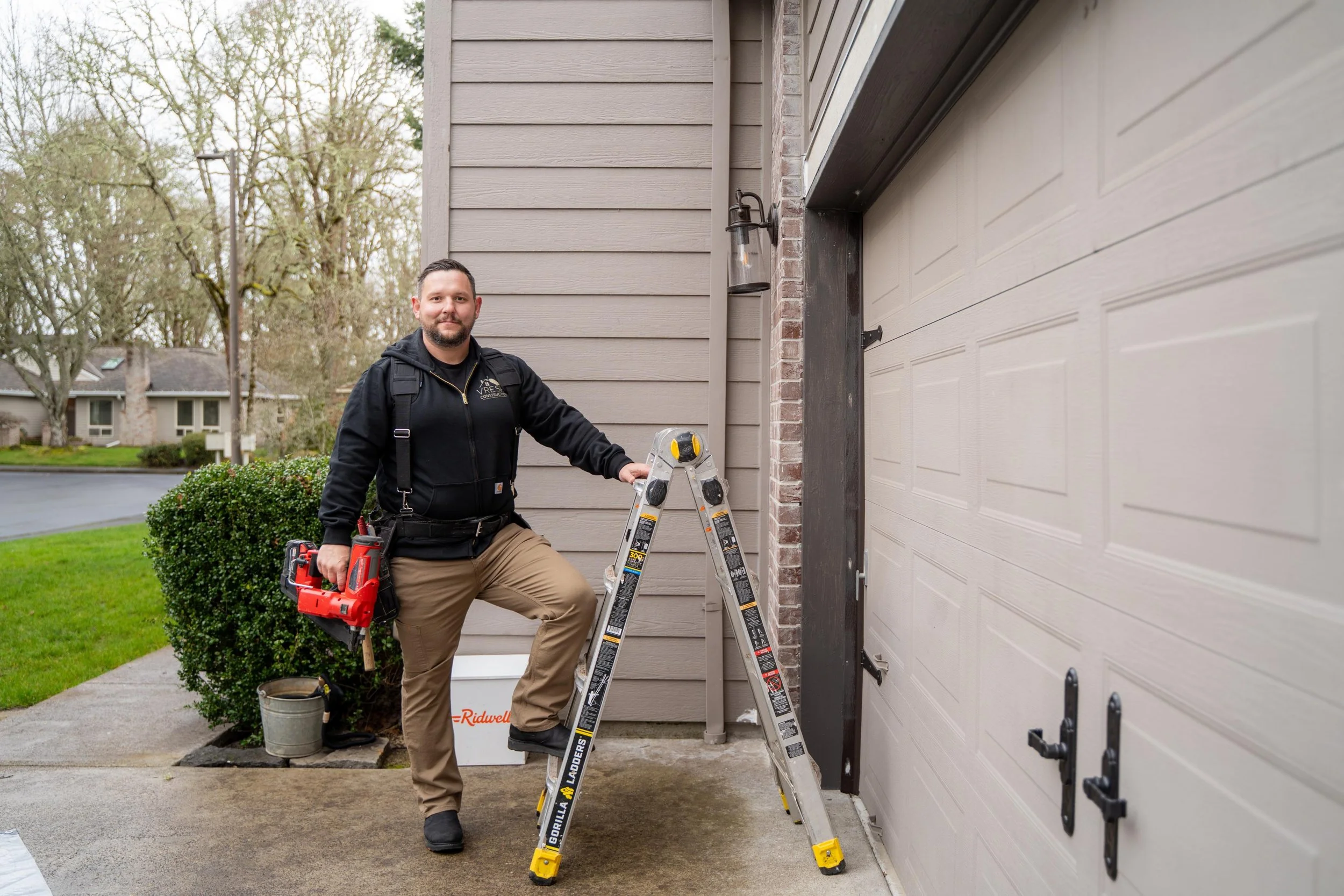
A handyman standing outdoors next to a ladder, holding a cordless power drill, in front of a garage door, with a house and trees in the background.

Exterior paint does two things: it makes your home look good, and it protects the underlying wood and fiber cement from moisture. Most exterior paint failures in Portland are not product failures — they are preparation failures. Paint applied over inadequately cleaned surfaces, over deteriorating existing paint, without back-priming field cuts, without correct caulk at all joints, or with the wrong product for the climate will fail within 3–5 years regardless of brand. VResh Construction treats exterior painting as part of the moisture management system, not as a cosmetic finish applied after construction.
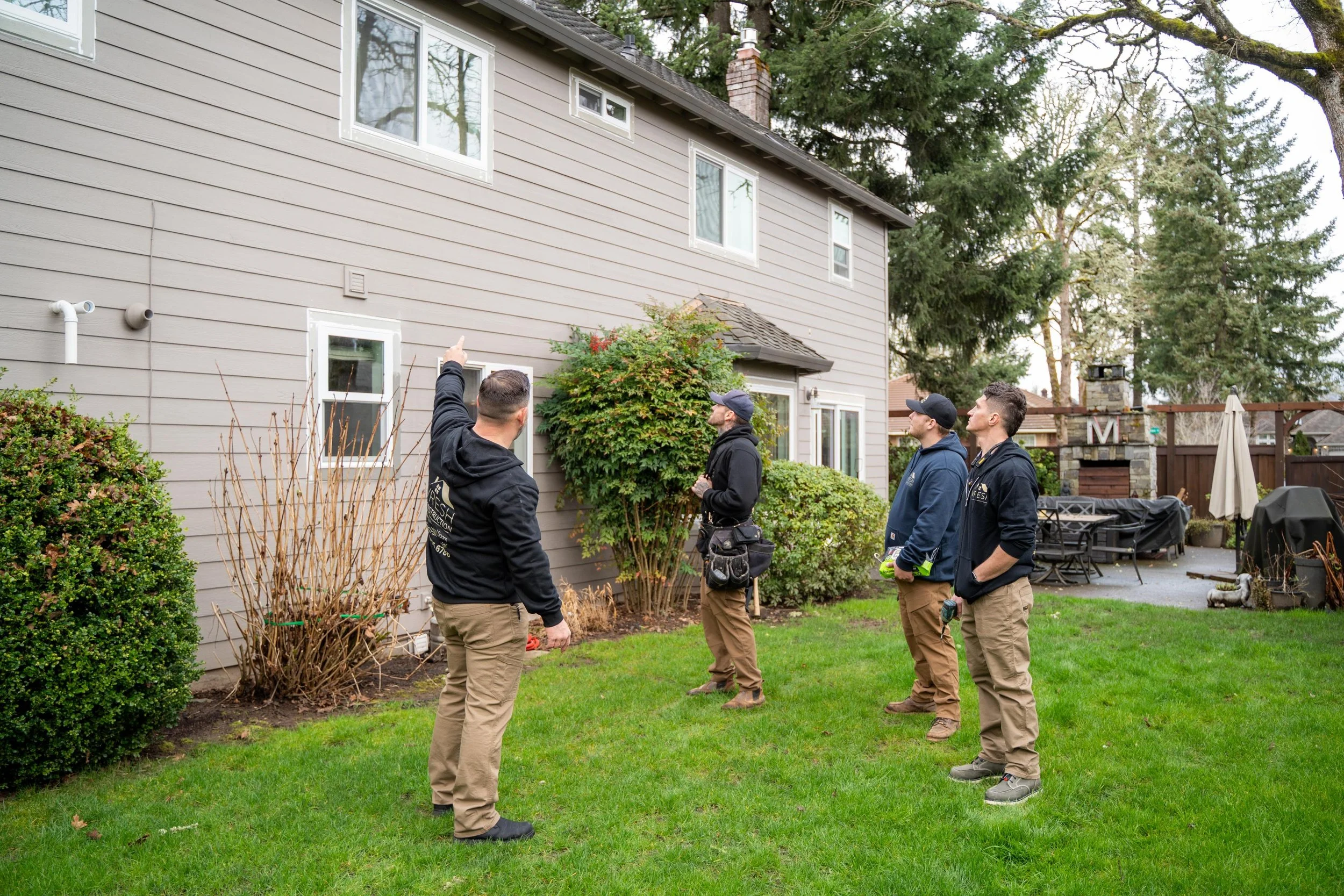
Four men wearing work uniforms are standing on a lawn near a grey house, listening to one man explaining something and pointing towards the house. The scene appears to be a discussion or inspection outdoors.

(503) 272-6436 — Call or Text, Available 24/7

We answer calls and texts at any hour. For storm damage, active leaks, or structural emergencies, calling directly is the fastest path to a response.

Exterior Painting Process — What We Do on Every Project
#
Item
What We Do — And Why It Matters
PREPARATION — THE FOUNDATION OF A LASTING PAINT JOB
1
Surface cleaning
Pressure-wash all surfaces to be painted — removing dirt, mildew, chalking, and surface contamination. Allow adequate dry time before any paint application. Painting over wet or contaminated surfaces is the single most common cause of early paint failure in Portland's climate.
2
Scrape and sand
Remove all failing, peeling, or flaking paint down to a sound substrate. Feather edges of remaining paint. Spot-prime all bare wood. Paint applied over loose existing paint peels with the existing paint, not years later.
3
Lead test (pre-1978 homes)
Test all disturbed surfaces for lead. Follow EPA RRP containment, work practice, and cleanup protocols throughout. Provide written documentation of compliance. Required by federal law — most exterior painters in Portland are not certified.
4
Caulk inspection and removal
Remove all failed caulk at joints, window and door perimeters, and trim intersections. Assess whether caulk failure is isolated or indicates a flashing failure behind the joint. Replace with appropriate exterior caulk — product selection depends on the materials being joined (different caulks for fiber cement, wood, and metal trim).
5
Minor repairs
Fill nail holes, repair cracks in wood or fiber cement, and replace failed caulk backer rod. Minor surface repairs done correctly at this stage prevent paint bridging failures later.
PRIMING — THE MOST SKIPPED AND MOST IMPORTANT STEP
6
Back-prime all field cuts
Every cut end of any wood or fiber cement board installed or repaired must be back-primed with an appropriate exterior primer. Cut ends absorb moisture at 10–20 times the rate of face-grain surfaces. Failing to back-prime is one of the most common contractor shortcuts and causes end-grain rot on otherwise intact boards.
7
Spot prime all bare surfaces
Prime all bare wood, fiber cement, and previously uncoated surfaces with an appropriate exterior primer. Do not apply a finish coat over bare substrates.
8
Full prime coat (new siding)
For new siding or full re-sides, apply a full prime coat over the entire surface before finish. Priming in conditions above 40°F and when no rain is expected for at least 24 hours.
FINISH COAT
9
Product selection
Product selection is determined by substrate (James Hardie has specific recommended coatings; wood and vinyl have different requirements), exposure (south and west elevations take more sun and need UV-resistant products), and sheen (flat for siding, semi-gloss for trim is standard in Portland).
10
Application
Apply finish coat by brush, roller, or airless spray, depending on surface profile and project scope. Spray applications require masking of all non-painted surfaces and are typically faster on large flat areas. Brush and roller are used for textured surfaces, precision areas, and smaller scopes.
11
Second coat (if required)
Most exterior paint jobs benefit from two finish coats for full hide and durability. We specify the number of coats in the written estimate before any work begins — not as an upsell mid-project.
12
Cleanup and inspection
Remove all masking, clean all surfaces adjacent to the work, and walk through with the homeowner. All overspray and drips are addressed before we leave.
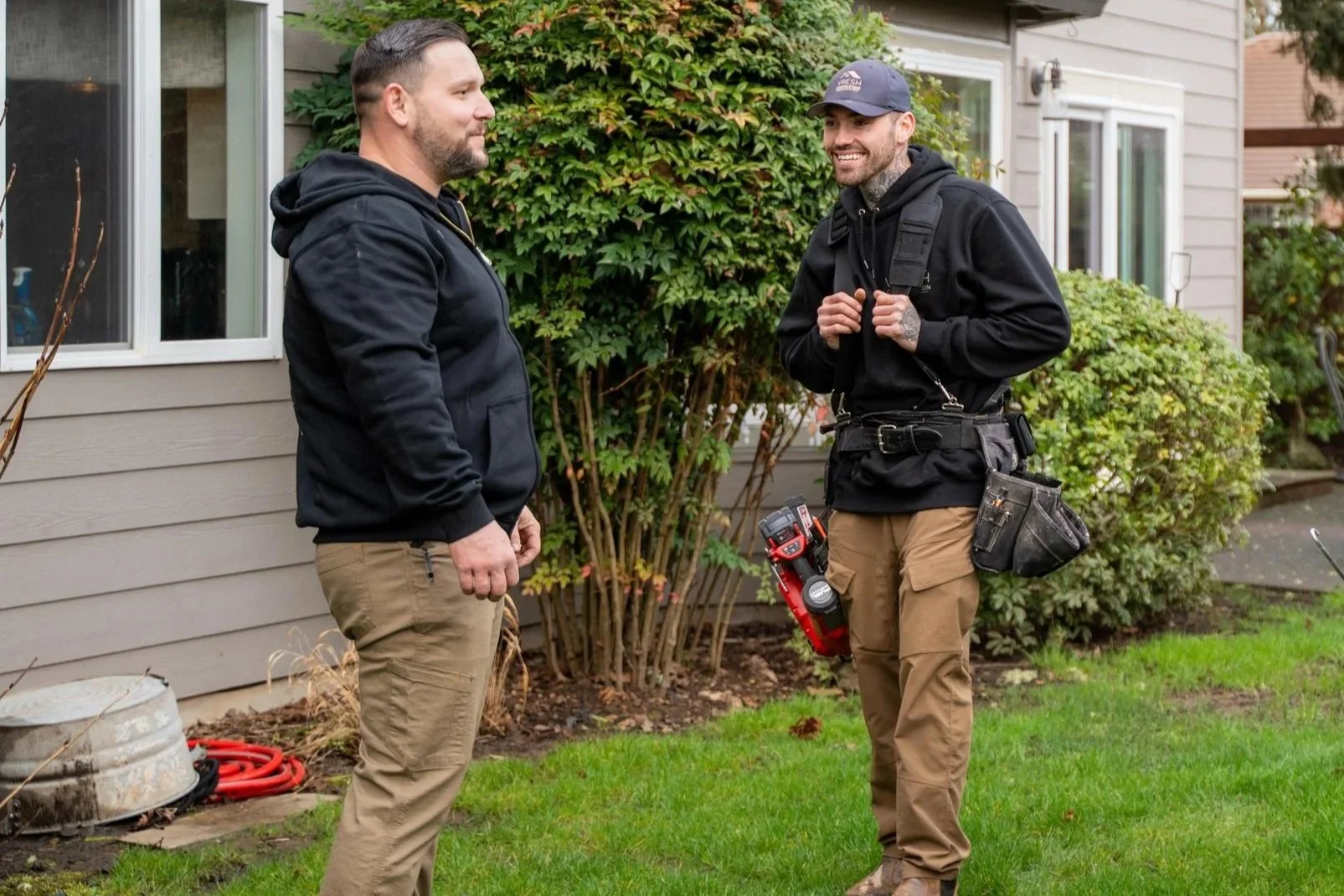
Two men in work clothes standing and talking in a backyard with green bushes and a house in the background.

Exterior Painting on Pre-1978 Portland Homes

Portland has a large pre-1978 housing stock. Lead-based paint was in common use until 1978, and federal law requires contractors who disturb these surfaces — through scraping, sanding, or paint removal — to be EPA Lead-Safe Certified, follow specific containment and cleanup protocols, and provide written documentation. VResh Construction is EPA Lead-Safe Certified. Most Portland painting contractors are not. This is not optional legal compliance for a pre-1978 home — it is federal law. Ask any contractor to show you their EPA certification before they scrape, sand, or disturb painted surfaces on an older home.

When to Repaint vs. When to Replace Siding

Siding Condition:
Paint or Replace?
Why
Paint is peeling but siding is structurally sound
Paint
Peeling paint on sound siding is a prep and application issue — strip, prime, and repaint correctly.
Bottom courses are soft or spongy
Replace those boards + paint
Rot has reached the wood. Painting over rot does not fix it — remove and replace rotted boards first.
Hairline cracks in fiber cement face
Paint — monitor
Surface cracks in Hardie that do not penetrate the board can be primed and painted. Monitor for expansion.
Wood siding with widespread end-grain rot
Replace
Widespread end-grain rot indicates systemic moisture failure — painting over it is not cost-effective.
Vinyl siding with faded color but intact boards
Paint (specialty product) or replace
Vinyl can be painted with a bonding primer + vinyl-safe paint — a cost-effective alternative to replacement if the profile is sound.
Cedar siding that has never been painted, dry and cracked
Paint immediately
Unprotected cedar dries and checks. Flexible exterior paint can help prevent further moisture damage if applied now.
Close-up of beige quotation marks on a black background.

Client's Talk

We have a wealth of experience working as main building contractors on all kinds of projects, big and small, from home maintenance and improvements to extensions, refurbishments and new builds.

Serving Portland Metro Area

VResh Construction provides window replacement, siding installation, roofing, dry rot repair and full exterior renovation services throughout the Portland metro area and Southwest Washington.

Portland Metro — Oregon

Portland, OR
Oak Grove, OR
Cedar Mill, OR
King City, OR
Happy Valley, OR
Clackamas, OR
Milwaukie, OR
Gresham, OR
Wood Village, OR
Scappoose, OR
Sandy, OR
Newberg, OR
Estacada, OR
Lake Oswego, OR
Beaverton, OR
Hillsboro, OR
Tigard, OR
Sherwood, OR
West Linn, OR
Oregon City, OR

Southwest Washington

Vancouver, WA
Battle Ground, WA
Woodland, WA
Camas, WA
Ridgefield, WA
Washougal, WA
Kalama, WA

Extended Service Areas

Longview, WA
Kelso, WA
Salem, OR
Seaside, OR
Lincoln City, OR
Long Beach, WA
OUR FAQS

Exterior Painting FAQs — Portland Homeowners

How much does exterior painting cost in Portland, OR?
+
Exterior painting costs vary based on home size, number of stories, surface condition, and the amount of prep work needed. A typical Portland single-story ranch (1,200–1,600 sq ft siding area) with average prep needs runs $3,500–$6,500 for full paint (prime + 2 finish coats). Two-story homes run $5,500–$10,000+. Homes requiring extensive scraping, spot repairs, or lead-safe protocols add cost. We provide a free written estimate itemized by prep, prime, and finish.
How long does exterior paint last in Portland?
+
In Portland's climate — high UV on south/west exposures, sustained moisture on north/east exposures — properly applied exterior paint on well-prepared surfaces lasts 7–12 years for most wood and fiber cement substrates. Paint on improperly prepped surfaces, or paint applied without priming bare substrates, typically fails within 3–5 years. James Hardie ColorPlus factory finish carries a 15-year fade warranty.
Does my home need to be re-sided before painting?
+
Not necessarily. If the siding itself is structurally sound, well-adhered, and the substrate is intact, repainting is appropriate. If siding is rotting, delaminating, or has moisture damage, those issues should be addressed first.
Can I paint James Hardie siding that is currently in factory primer?
+
Yes — James Hardie primed siding is designed to be field-painted. Apply the finish coat within 90 days of installation for best adhesion. We use compatible coating products per manufacturer recommendations.
What is the best exterior paint for Portland homes?
+
For most Portland homes, 100% acrylic exterior paint is standard (flat/low-sheen for siding, semi-gloss for trim). Sherwin-Williams Emerald Exterior and Duration perform well in the Pacific Northwest. For James Hardie fiber cement, follow manufacturer recommendations. Cedar siding may be better served with a penetrating stain.
Do you do exterior painting as a standalone project or only with other work?
+
We do both. Exterior painting is often part of a siding, dry rot repair, or window project, but we also take standalone projects.
How do you handle painting in occupied homes?
+
We work around your schedule — no need to vacate. Spray days require windows/HVAC closed. Pre-1978 homes may have temporary restricted access per EPA RRP protocols.
Can you paint my trim a different color from my siding?
+
Yes — two-tone paint schemes are common. We carefully mask all transitions and can coordinate color selection or provide sample boards for your home.