EPA Lead-Safe Rules for Sliding Door Work in Portland Homes
Quick Answer: A federal rule requires paid contractors to use lead-safe work practices on renovation work disturbing painted surfaces in homes built before 1978. EPA names window replacement and demolition of painted surfaces generally as always covered regardless of square footage, and pulling painted jamb and casing out to replace a sliding door is demolition of painted surfaces, so a door project is realistically covered from the first cut rather than after some threshold is crossed.
Painted trim, not the door itself, is what puts a sliding door project under a federal rule most homeowners have never heard of until it comes up. A sliding door installed today has nothing to do with lead paint; the painted jamb and casing being cut into and removed to get the old one out is a different story in a lot of older housing stock, and whether that specific work falls under the rule depends on the home's construction date, not on how new the replacement door itself is or how much painted surface the crew ends up disturbing.
What the Rule Actually Covers
The EPA's Renovation, Repair and Painting rule requires that paid work disturbing painted surfaces in housing built before 1978 be performed under lead-safe practices by a certified firm, with a certified renovator involved in the work. The rule is tied to the age of the home's original construction, not to whether a specific area has been repainted since, since newer paint layers can sit directly over older, lead-containing layers underneath.
Certified firm and certified renovator: A firm performing this work needs its own firm certification under the authorized lead-safe renovation program, and the work needs to be performed by, or directly overseen by, an individual who holds the renovator certification specifically, which involves training in lead-safe containment and cleanup practices.
Ask directly whether the crew doing the work includes a certified renovator, not just whether the company holds firm certification. Both pieces matter, and a written estimate can state both.
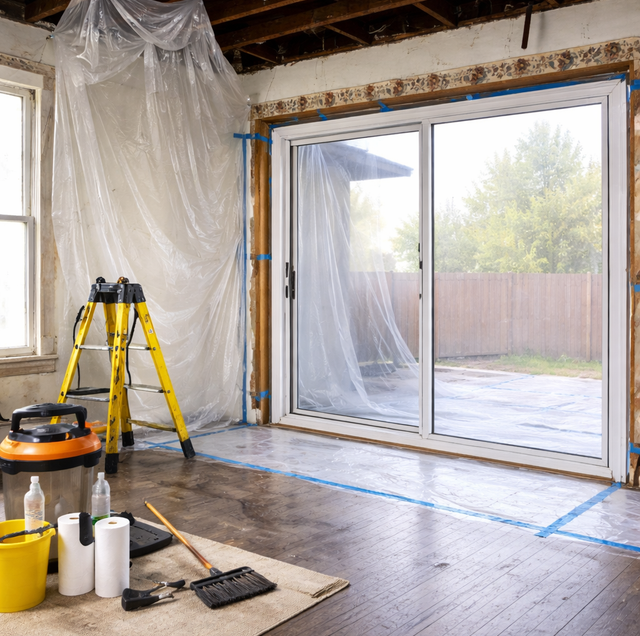
Work-area containment: Before removing the old door and trim, the work area gets sealed off with plastic sheeting to contain paint chips and dust generated by cutting or removing painted material, rather than letting debris spread into the rest of the home.
Cleanup with a defined verification step: Lead-safe practice includes a specific cleaning and verification process after the work area is cleared of debris: the renovator wipes down cleaned surfaces and compares the cloth against a cleaning verification card, repeating the cleaning if it doesn't pass, rather than relying on a single visual sweep.
Administered through Oregon's own program: Oregon runs its own state-authorized lead-safe renovation program rather than the federal EPA office handling it directly. An authorized state program has to be at least as protective as the federal rule and can add requirements of its own, so a contractor's certification for this work would be through Oregon's program specifically, not a separate federal one.
How a Homeowner Can Tell If This Applies
Home age is the first check: Homes built in 1978 or later generally fall outside this specific requirement, since lead-based residential paint was phased out around that time. A home's construction date is typically available through county property records if it isn't already known.
A few narrower exclusions can also apply: Housing built specifically for elderly or disabled residents, with no children under six living there, and dwellings with no bedrooms at all, fall outside the rule regardless of age. These are uncommon for a typical single-family remodel, but worth knowing about if a specific property doesn't fit that standard picture.
Painted trim specifically, not the door glass or frame material: This requirement is about the painted wood trim, jamb, and casing around the opening, the surfaces that get cut, pried, or sanded during removal, not about the new door unit's own frame material, which is unrelated to lead paint entirely.
A pamphlet is part of the process, not just the work itself: Homeowners in a covered home are provided a lead hazard information document before the work begins, which is part of how the rule is structured, separate from the physical containment and cleanup steps performed on site.
What This Doesn't Change About the Door Itself
The door's material, warranty, sill pan installation, and flashing detail are unrelated questions from the lead-safe requirement and get evaluated on their own terms. A pre-1978 home doesn't need a different door product because of this rule; it needs the removal and trim work around that door handled with the specific containment and cleanup practices the rule requires, which is a process question about how the crew works on site, not a product question about what ultimately gets installed in the opening.
Fresh-looking or recently repainted trim on a pre-1978 home doesn't exempt a project from this rule on its own. Removing the painted jamb and casing around a sliding door is demolition of painted surfaces, which EPA treats as always covered regardless of how much area gets disturbed, so this type of work typically doesn't get the benefit of the small-project exemption some other repairs qualify for.
Documentation Worth Keeping After the Work Is Done
A certified firm typically provides a record confirming the project was performed under lead-safe practices, separate from the standard workmanship paperwork covering the door installation itself. Keeping that record with other home improvement documentation is worth doing for the same reason it's worth keeping a warranty registration: it settles a question quickly if it ever comes up again, whether that's a future renovation in the same area, a question from a buyer's inspector at resale, or simply confirming which past projects in an older home were already handled under these practices versus which weren't.
Frequently Asked Questions
It can. The rule follows the original construction date of the specific structure involved, not the property's overall age. A home built in 1962 with a 2005 addition can have a covered opening on the original structure and an uncovered one in the addition, so it's the addition's own construction records, not the main house's build year, that settle the question for a door going into that part of the building.
For some smaller repairs, yes: work disturbing 6 square feet or less of interior painted surface per room, aggregated over any 30-day period, or 20 square feet or less on a home or building's exterior, can qualify as minor repair and maintenance rather than a covered renovation. That exemption doesn't extend to window replacement or to demolition of painted surfaces, both of which EPA treats as always covered regardless of square footage. Pulling the painted jamb and casing out to remove an old sliding door is demolition of painted surfaces, so a door project in a qualifying home is realistically covered from the first cut into painted trim rather than needing to reach a threshold first.
Generally not. The rule targets paid renovation firms working in someone else's home; EPA's own guidance says it typically doesn't apply to a homeowner performing this kind of work in a home they live in themselves, unless part of the home is rented out, a childcare business operates there, or the home is being renovated to resell. That carve-out covers the homeowner's own labor specifically. Hiring a contractor to do the same work still brings the rule into play for that contractor, regardless of whether the homeowner would have been covered doing it personally.
Yes, if the specific painted components involved are tested and confirmed lead-free first, by a certified inspector or risk assessor, or by a certified renovator using an EPA-recognized test kit or a paint chip sample sent to an approved lab. A homeowner's own store-bought test result doesn't establish this on its own; the determination has to come from one of those certified sources. Absent that kind of confirmed testing, painted components in a pre-1978 home are presumed to contain lead, which is why the construction-date rule of thumb is the practical starting point for most projects. If a past inspection already tested and cleared a specific area, that paperwork is worth handing to the contractor directly, since it can settle the question for that area without a new test.
They're separate concerns triggered by different materials and different construction eras. Lead-safe practices address painted surfaces in pre-1978 construction specifically. Asbestos-containing materials, sometimes found in older siding, flooring, or insulation, are a separate substance with separate testing and handling protocols, and a home can have one concern, both, or neither depending on what was actually used in its original construction.
It adds some time to the removal phase specifically, mainly for sealing off the work area and doing the verified cleanup afterward, but it doesn't typically change the installation of the new door and sill pan, which proceeds the same way once the old trim and framing are safely out.
Yes. Two records are part of the process itself, separate from firm certification: a signed acknowledgment that the homeowner received the lead hazard information pamphlet before work began, and a cleaning verification record showing the wipe-and-card check passed before the area was cleared for use again. Both are worth asking to see or keep copies of, since they're specific to that job, not just the firm's general standing.
The rule is specifically about painted surfaces, so trim that's never been painted, an unpainted vinyl or metal surface, generally isn't the trigger on its own. A pre-1978 home can still have painted wood trim elsewhere around the same opening, jamb material, or interior casing, for example, so it's worth confirming what's actually painted at the specific opening rather than assuming the whole surround is exempt because the trim itself is a non-painted material.
Yes, each project is evaluated on its own, since lead-safe requirements attach to the specific work being performed, not to the home's renovation history as a whole. A home that had a kitchen remodel handled under lead-safe practices five years ago doesn't carry that clearance forward to an unrelated door replacement; the new project's contractor still needs to confirm certification and follow the containment and cleanup steps for the trim being disturbed this time.
What to Ask Before Signing
A single sliding door replacement in a pre-1978 home falls under the same lead-safe requirement as a much larger renovation. Removing the painted trim around the opening is demolition of painted surfaces, which EPA treats as always covered regardless of how much area gets disturbed, so the project doesn't get the benefit of the small-project exemption some other repairs qualify for. Confirming a contractor's certification is a smaller step than the rule itself might suggest, and it settles the question before the crew ever opens the wall.
Ask about lead-safe certification as part of your written estimate if your home was built before 1978 — VResh Construction crews follow certified lead-safe work practices on qualifying projects. VResh Construction serves the Portland metro. CCB #241979. Call (503) 272-6436.