
Hiring a Contractor for a Historic Portland Home: 5 Costly Mistakes
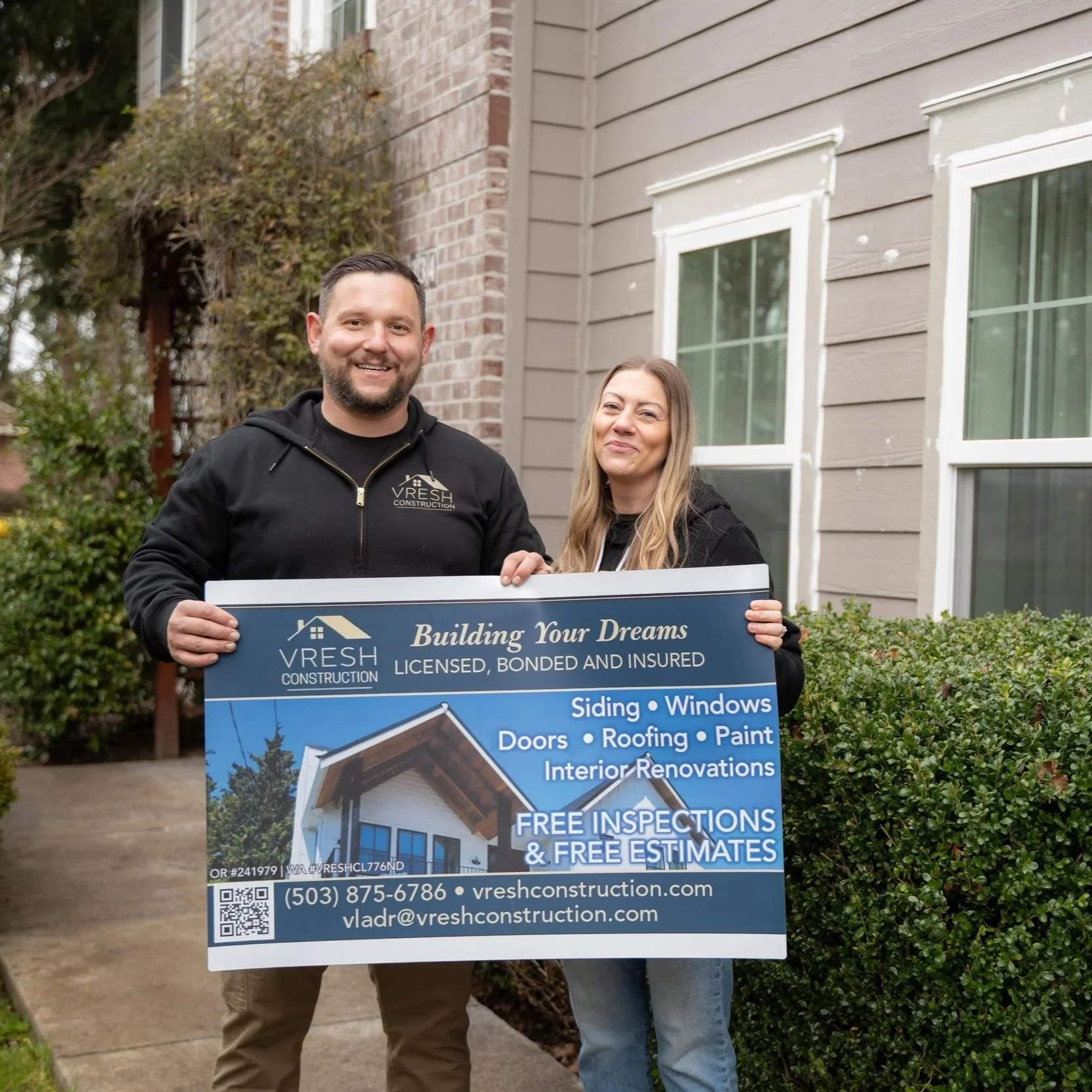
Homeowners stand with their contractor outside a renovated house, emphasizing the importance of choosing experienced professionals for historic home projects to avoid costly mistakes and preserve original architectural character.
The quote looks reasonable. The contractor has good reviews. The start date works. Everything lines up — except nobody asked whether this crew has ever worked on a 1920s Craftsman with plaster walls, old-growth fir trim, and knob-and-tube wiring running through the wall cavities. They show up on day one and start demo. The plaster cracks across the hallway. The original fir trim gets tossed in the dumpster because "it's easier to replace." And nobody noticed the knob-and-tube until a saw nicked a live wire behind the wall.
Historic homes aren't old houses. They are old construction systems built with different materials, different techniques, and different structural logic than anything built after 1960. A contractor who builds great decks and finishes basements can still wreck a 1925 bungalow because the skills don't transfer.
Mistake #1: Hiring Based on Price Instead of Experience
A general contractor who has never worked with plaster and lathe doesn't know that screwing drywall anchors into a plaster wall can crack it three feet in every direction. A crew unfamiliar with balloon framing doesn't realize that wall cavities run continuously from the basement to the attic — meaning fire, moisture, and insulation all behave differently than in modern platform-framed homes.
The cheapest quote is almost always from a contractor who doesn't understand what the project actually involves. They bid it like a modern renovation. Then the change orders start. Original trim that was "included in demo" turns out to be irreplaceable old-growth fir. Plaster repair that "wasn't in scope" is now $5,000 because the crew damaged three walls during rough-in. The $35,000 renovation becomes $55,000 — and the house loses character in the process.
Ask every contractor on the short list: how many pre-1950 homes have they renovated in the past two years? Get addresses. Drive by. Look at the work. The answer to this question matters more than the number on the estimate.
Mistake #2: Skipping EPA Lead-Safe Certification Verification
Every pre-1978 home potentially contains lead paint. Every renovation that disturbs painted surfaces must follow EPA RRP lead-safe work practices. This is federal law, not a recommendation. Fines run up to $37,500 per day per violation.
Portland has a high concentration of pre-1950 homes — Craftsman bungalows, Victorians, foursquares, colonial revivals. These homes have multiple layers of lead paint on every surface. Window trim, baseboards, door casings, exterior siding — all of it. A contractor who doesn't mention lead testing before starting work on a 1930s home either doesn't know the law or ignores it.
Verify the contractor's EPA Lead-Safe Certification before signing. Ask for the firm's certification number. Check it through the EPA's database — it takes two minutes online. If they can't produce it, they cannot legally work on a pre-1978 home. Walk away.
Mistake #3: Not Requiring a Pre-Work Material Assessment
Modern renovations start with demo. Historic renovations start with assessment. Before anything gets torn out, someone needs to walk the project area and identify what's original, what's been modified, what contains hazardous materials, and what must be preserved.
This assessment should document original trim profiles (so replacements match), plaster condition, wiring type and location, structural framing type (balloon vs platform), insulation type and condition (vermiculite may contain asbestos), and any protected or character-defining features.
A contractor who skips this step and jumps straight to "we'll figure it out as we go" will make expensive mistakes. Plaster gets cracked during electrical rough-in because nobody mapped the wiring paths. Original built-ins get removed because the demolition plan didn't flag them for protection. These aren't accidents — they're failures of planning.
Mistake #4: Accepting a Generic Contract
A renovation contract for a historic home needs clauses that don't appear in standard construction contracts. Specifically:
Original material handling. The contract should state which original materials are to be preserved, where they'll be stored during construction, and what happens if any are damaged. Replacement cost language should reflect that original old-growth fir, hand-carved brackets, and leaded glass are irreplaceable, not replaceable at standard lumber prices.
Change order protocol for discoveries. Historic homes hide surprises behind every wall — obsolete wiring, structural modifications from previous renovations, water damage that isn't visible until surfaces are opened. The contract should include a clear process for documenting discoveries, getting written approval before proceeding, and pricing additional work transparently.
Lead and asbestos protocols. Specific language about how the contractor will handle lead paint (EPA RRP compliance), and what happens if asbestos-containing materials are discovered (vermiculite insulation, old floor tiles, pipe insulation). The contractor should identify these risks in writing before starting, not after disturbing them.
Subcontractor qualifications. The general contractor may be experienced with historic homes, but the electrician and plumber need to be too. Require that all subcontractors have documented experience with pre-1950 construction. An electrician unfamiliar with knob-and-tube wiring can create fire hazards when running new circuits through old wall cavities.
Mistake #5: Not Checking Portland-Specific Credentials
Oregon requires contractors to be licensed through the Construction Contractors Board (CCB). That's baseline — every contractor should have it. But for historic homes, additional credentials matter:
EPA Lead-Safe Certification (RRP). Required by law for any work on pre-1978 homes. Non-negotiable.
Asbestos awareness training. Pre-1980 homes commonly contain asbestos in floor tiles, pipe insulation, vermiculite attic insulation, and some plaster mixtures. Contractors should know how to identify and handle these materials.
Historic preservation experience. Not a formal license, but demonstrable. References from owners of pre-1950 homes. Photos of completed projects showing original material preservation. Understanding of period-appropriate repair techniques — epoxy consolidation for rotted wood, plaster repair versus drywall replacement, match-milling for trim profiles.
Insurance that covers historic materials. Standard general liability may not cover the replacement value of original architectural elements. Confirm the contractor's policy addresses this — or get a specific rider for the project.
Frequently Asked Questions
The Right Contractor Changes Everything
A qualified historic home contractor preserves what makes the house worth owning in the first place. The wrong one destroys it with good intentions and modern habits. The five mistakes above account for most of the horror stories Portland homeowners tell about historic renovation projects. Every one of them is preventable with the right questions asked before the contract gets signed.