
Milgard vs Marvin Windows: Which Is Worth the Premium?
Two window quotes are on the table, and they don't even look like they're for the same job. Milgard comes in at one price. Marvin comes in thousands higher. Both companies make good windows, but they're built for different homeowners with different priorities. The question is whether Marvin's premium actually buys something the home needs — or whether the extra cost is just paying for a name that doesn't change how the windows perform in Portland's rain and freeze-thaw cycles.
Milgard vs Marvin: How They Compare
| Feature | Milgard | Marvin |
|---|---|---|
| Best Entry Series | Tuscany (vinyl) | Essential (fiberglass) |
| Premium Series | Ultra (fiberglass) | Signature (wood-clad) |
| Material Options | Vinyl, fiberglass, wood-clad hybrid | Fiberglass, wood, wood-clad |
| Warranty | Lifetime (original owner) | Limited lifetime (varies by series) |
| PNW Engineering | Engineered for rain/freeze-thaw | National design; performs well with proper install |
| Price Range (installed) | $850-$2,000+ | $1,200-$3,500+ |
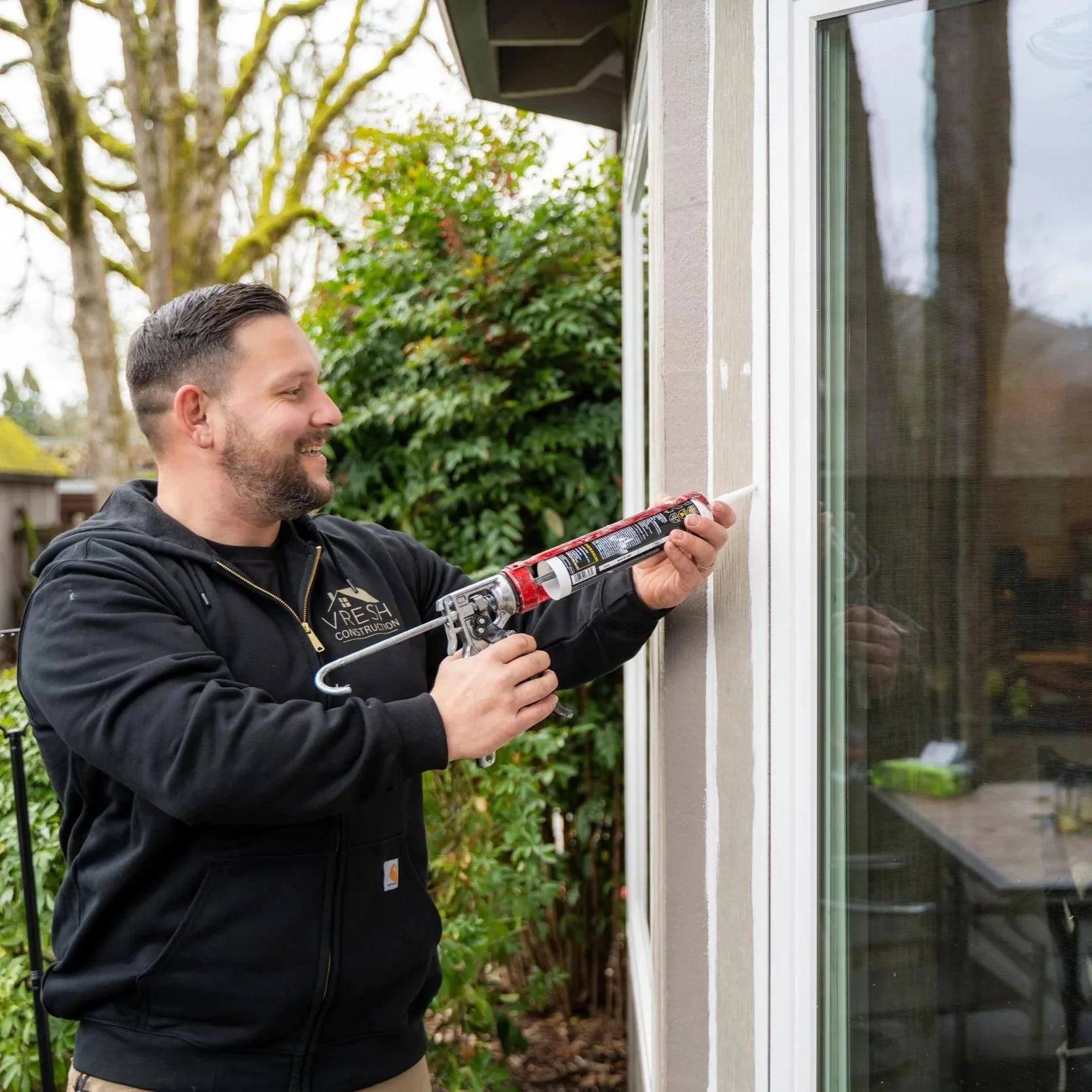
When Vresh Construction's own founder is the one sealing your new windows, Portland homeowners know the premium they paid for — whether Milgard or Marvin — is being fully protected.
Milgard built its reputation on Pacific Northwest performance. They're headquartered in Tacoma and engineer specifically for this climate — the 37+ inches of annual rain, the freeze-thaw cycles, the sustained horizontal moisture that other regions don't deal with. Marvin is a Minnesota company that builds for cold climates and premium aesthetics. Both approaches work here, but they solve different problems.
Where Milgard Outperforms
Price is the most obvious difference. Milgard Tuscany runs $850-$1,300 per window installed. Marvin Essential starts at $1,200 and climbs fast — their Signature series can hit $3,500+ per window. On a 10-window replacement, that gap is $5,000-$15,000. For most Portland homeowners replacing single-pane aluminum frames from the 1960s and '70s, that price difference funds an entire additional home improvement project.
The warranty separates them, too. Milgard offers a Lifetime Warranty for the original owner covering manufacturing defects in seals, frames, hardware, and glass. Marvin's warranty varies by product line and is more limited in certain areas. In Portland's freeze-thaw climate, compression seals eventually fail even on premium windows — usually around year 12-15. Milgard covers that. Depending on the Marvin series, that same protection may not exist at that point.
Milgard's drain rail and sill pan engineering was designed for sustained horizontal rain. Portland gets rain blown sideways from October through May. The integrated sill pans and compression seals on Tuscany and Trinsic are tighter than Marvin's standard configurations. For pure rain performance in this climate, Milgard has a measurable edge.
Where Marvin Outperforms
Marvin builds some of the best-looking windows on the market. On a historic home — a Craftsman bungalow, a Victorian, a Portland foursquare — where window style matters, Marvin's Signature series delivers. Real wood interiors with Ultrex fiberglass cladding on the outside. The profiles are thinner and more refined than Milgard's wood options. These windows look like they belong in a home built in 1920.
Marvin also offers more customization. Non-standard sizes, unusual shapes, specialty configurations — their manufacturing accommodates requests that Milgard's production lines can't match as easily. A home with arched windows, round-tops, or custom divided-lite patterns gets exactly what it needs from Marvin.
The Ultrex fiberglass cladding on Marvin's exterior is a strong material. It doesn't absorb water, doesn't expand and contract significantly with temperature swings, and holds paint well. For exposed walls — north-facing, west-facing — that material stability matters over a 25-year lifespan.
Cost and Value Comparison
Portland metro pricing (actual cost depends on window size, accessibility, and structural factors):
Milgard Tuscany (vinyl): $850-$1,300/window, 10-window job ~$9,000-$13,000
Milgard Ultra (fiberglass): $1,200-$2,000+/window, 10-window job ~$12,000-$20,000
Marvin Essential (fiberglass): $1,200-$2,000/window, 10-window job ~$12,000-$20,000
Marvin Signature (wood-clad): $2,500-$3,500+/window, 10-window job ~$25,000-$35,000+
Milgard Tuscany at $10,500 for 10 windows with a lifetime warranty is the value play. Marvin Essential at $16,000 for 10 windows delivers fiberglass frames with more design flexibility. Marvin Signature at $30,000+ is the premium choice for homeowners who want the best-looking window available and aren't primarily driven by budget.
The cost question comes down to priorities. If rain performance, warranty length, and budget efficiency matter most, Milgard wins clearly. If architectural authenticity, design customization, and premium aesthetics drive the decision, Marvin earns its premium.
Which Is Right for Your Portland Home?
Milgard makes sense when the whole house needs new windows and budget matters. Tuscany or Trinsic delivers proven rain performance, the strongest warranty in the industry, and pricing that makes a full-house replacement realistic. Most Portland homes built between 1950 and 1985 with single-pane aluminum frames fall into this category. Milgard handles the climate, protects the investment long-term, and doesn't drain the renovation budget.
Marvin makes sense when the home is architecturally significant and the window appearance is part of the restoration. Craftsman bungalows, Victorians, older Portland foursquares — homes where the window style is visible and part of the character. Marvin Signature delivers real wood interiors with fiberglass protection outside. The premium is real, but so is the result.
But regardless of brand: installation quality determines everything. Sill pans, head flashing, drainage planes, air sealing — these details matter more than the logo on the frame. A poorly installed premium window fails faster than a well-installed budget window. Pick the contractor before picking the brand.
Portland Installation Considerations
The brand conversation matters less than most homeowners think. What matters more is what happens during installation — and Portland's climate punishes installation shortcuts faster than most regions.
Sill pan drainage is the most critical detail. Portland gets sustained horizontal rain from October through May. Water hits the window frame sideways and needs somewhere to go. A sill pan catches any water that penetrates past the frame and directs it back to the exterior. Without a properly sloped sill pan, that water drains into the wall cavity — and the homeowner doesn't find out until the drywall stains or the framing rots. Both Milgard and Marvin perform well behind a proper sill pan. Both fail behind a missing one.
Head flashing is the second detail that separates good installations from bad ones. The flashing above the window directs water running down the wall away from the window opening. Missing or poorly lapped head flashing lets water behind the window trim and into the framing. This is a $30 piece of metal that prevents thousands in water damage.
Pre-1978 homes require EPA RRP lead-safe work practices during window replacement. Any painted surface being disturbed — interior or exterior — needs lead testing or presumed-positive containment. Compliance adds $300-$800 per project but is required by federal law. The contractor should hold current EPA RRP certification and provide documentation.
Oregon Energy Trust rebates offset some of the cost. Both Milgard and Marvin offer qualifying windows — check current rebate amounts with the installer. The paperwork should be handled as part of the project, not left for the homeowner to figure out afterward.