
Patio Cover Benefits: Why Portland Decks Need Overhead Protection
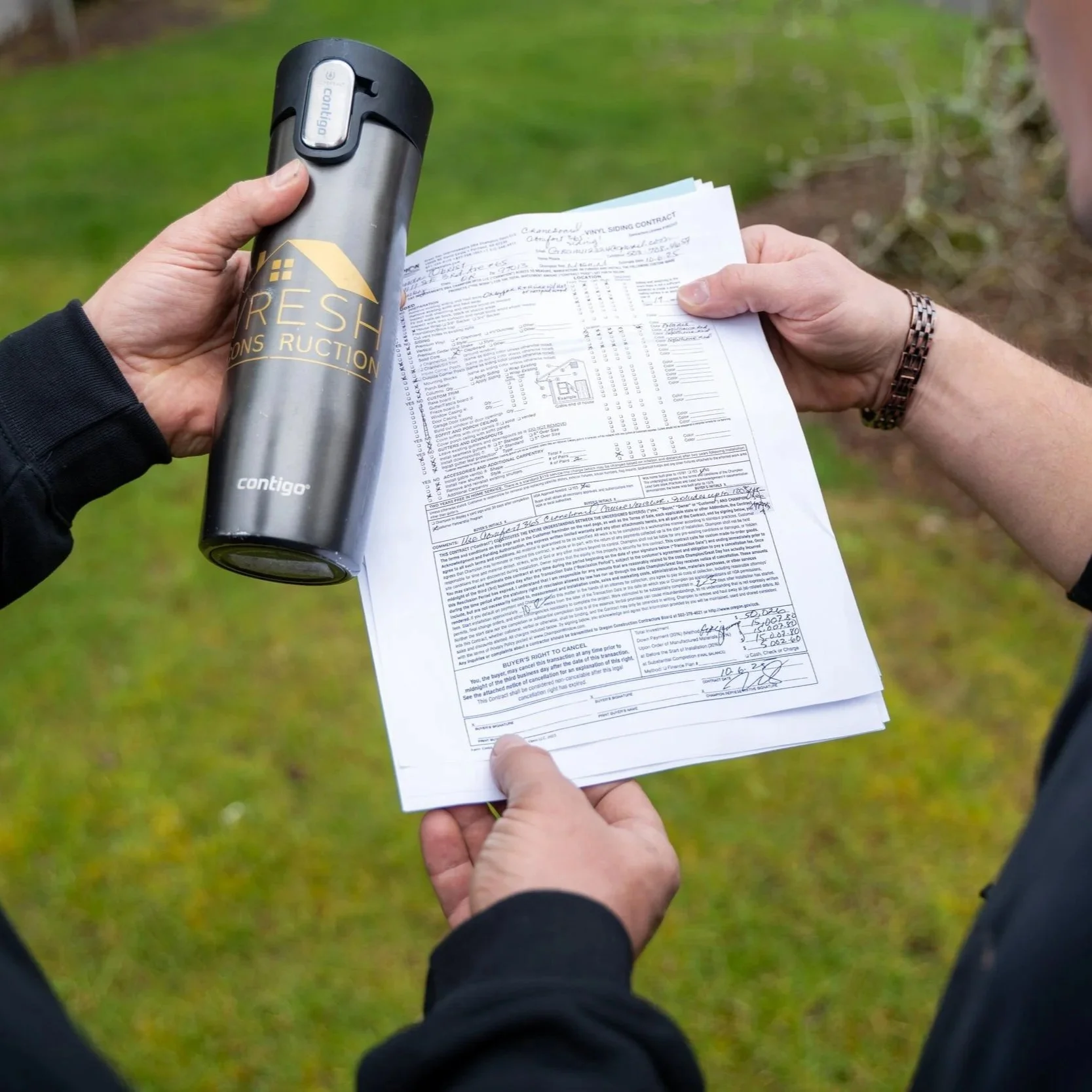
A contractor reviews plans on-site, highlighting how adding a patio cover protects decks from constant rain exposure, reducing rot, extending lifespan, and improving year-round usability in Portland’s wet climate.
The deck gets used four months a year. Maybe five if September cooperates. From October through May, Portland's rain turns it into a wet surface nobody walks on. The wood stays damp for weeks at a time. Moss grows. The stain wears off. By year seven, the boards feel soft near the house, and the railing posts wobble. The deck is rotting — not because the material is bad, but because eight months of constant rain exposure is more than any deck surface can handle without protection.
A patio cover changes the equation. It keeps direct rain off the deck surface, extends the months the outdoor space is usable, and adds years to the deck's lifespan. The cost is real, but so is the $5,000-$15,000 deck replacement it pushes down the road by a decade.
How a Patio Cover Prevents Deck Damage
Direct rain exposure is the primary driver of deck deterioration in Portland. Every rainstorm saturates the deck surface. Wood absorbs the water, swells, and stresses its fasteners. When the rain stops (briefly), the surface dries and contracts. This constant expansion and contraction cycle loosens screws, lifts grain, opens checks, and creates entry points for rot.
A solid patio cover eliminates most of this. The deck surface stays dry during rain events. It still gets humidity exposure from ambient moisture, but it doesn't sit in standing water for days. The reduction in direct water contact slows every form of deterioration — granule loss on composite, checking on wood, moss growth, and fastener corrosion.
The area where the deck meets the house benefits most. This junction — the ledger board connection — is the most failure-prone spot on any deck. Water running down the siding and pooling at the ledger can cause rot that compromises the structural connection. A patio cover with proper gutter drainage routes water away from this critical joint, rather than directly onto it.
Patio Cover Types and Costs
| Type | Cost Range | Rain Protection | Light Transmission | Permit Required |
|---|---|---|---|---|
| Open pergola (wood) | $5,000-$12,000 | Partial (40-60%) | High | Usually no |
| Pergola with polycarbonate panels | $8,000-$18,000 | High (90%+) | Moderate | Usually yes |
| Attached solid roof cover | $12,000-$25,000 | Complete | None (solid) | Yes |
| Freestanding pavilion | $15,000-$35,000 | Complete | None (solid) | Yes |
| Retractable awning | $3,000-$8,000 | Variable | Usually no | |
| Louvered pergola (adjustable) | $15,000-$30,000+ | Adjustable (0-100%) | Adjustable | Usually yes |
Attached covers that tie into the existing roofline cost less than freestanding structures because they share one wall with the house. Freestanding structures need their own posts, footings, and complete roofing, which adds material and labor.
What Works in Portland's Climate
Solid attached covers perform best for full rain protection. They extend the existing roofline over the deck with matching or complementary roofing material. Gutters on the cover drain water away from the deck and foundation. This is the most common patio cover type on Portland homes because it provides complete protection during the 8-month rain season.
Polycarbonate panel covers split the difference between a solid roof and open air. The panels keep rain out while letting filtered light through. Multi-wall polycarbonate insulates slightly and handles snow loads. The material yellows over 15-20 years and needs replacement, but it's significantly cheaper than glass and lighter than solid roofing.
Open pergolas serve as summer shade structures but offer limited rain protection. In Portland, an uncovered pergola is a three-season structure at best. Adding a retractable fabric shade or removable panel inserts extends usability slightly.
Louvered pergolas are the premium option. Motorized louvers rotate from fully open (sun and airflow) to fully closed (rain protection). They're the most versatile but also the most expensive and mechanically complex. The motorized louver systems used in the Pacific Northwest need to handle heavy rain loads, so quality matters.
Permit and Code Considerations
Portland requires a building permit for most patio covers — exceptions exist for small freestanding shade structures under a certain square footage. Attached structures that tie into the existing roof almost always need a permit because they affect the building envelope and structural loading.
Setback requirements matter too. The cover can't extend past the property line setbacks. In Portland's older neighborhoods with narrow lots, the setback can limit how deep the cover extends. Check with the Portland Bureau of Development Services before finalizing the design.
Snow and wind loads: The Oregon structural code requires patio covers to handle both. Portland's snow loads are modest, but ice storms happen. A properly engineered cover handles the weight. An improperly built one collapses — and takes the deck railing with it.
The Lifespan Payoff
An uncovered wood deck in Portland lasts 10-15 years with regular maintenance. A covered wood deck in the same climate lasts 15-25 years because the surface takes less direct rain, UV exposure, and moss growth dramatically. The stain lasts longer. The fasteners corrode more slowly. The wood stays drier.
For composite decks, the cover's benefit shifts from structural protection to usability. Composite doesn't rot, but it does get slippery with moss growth, and it's unusable in the rain. A cover turns a composite deck from a 4-month asset into a 10-month outdoor living space.
The math: a patio cover costing $15,000 that extends a deck's life by 8-10 years avoids a $12,000-$20,000 deck replacement. That's not counting the added living value of using the outdoor space during Portland's long rain season — grilling in November, sitting outside during a rain shower, keeping outdoor furniture dry year-round.
Frequently Asked Questions
Outdoor Space That Works 10 Months a Year
Portland's rain is the reason most decks sit empty for eight months. A patio cover turns that math around — the deck becomes usable through everything except the coldest winter weeks. The deck surface lasts longer. The furniture stays dry. And the outdoor space earns its place in how the home actually gets lived in, not just how it looks on a sunny July afternoon.