Entry Door Replacement Cost in Portland: Steel, Fiberglass, Wood
The front door sticks. It has for a while. The deadbolt needs a shoulder into the frame to turn. Cold air leaks around the bottom edge every winter, and the weatherstripping gave up two seasons ago. Then one afternoon, a screwdriver goes into the threshold, and the wood is soft — moisture has been eating the frame from the bottom up. That's when the door becomes a project. And the first question is always: what does a new one cost?
Entry door replacement pricing in Portland ranges from $1,200 for a basic steel door to $8,000+ for a custom wood door with sidelights and decorative glass. The gap is wide because the variables stack — material, glass, hardware, sidelights, and what's hiding in the rough opening when the old door comes out. A door that drops into a clean opening with no surprises is a one-day job. A door that reveals a rotted sill plate and damaged framing underneath is a different project.
Cost by Door Material
| Door Material | Cost Range (Installed) | Best For |
|---|---|---|
| Steel | $1,200-$3,500 | Security, energy performance, budget |
| Fiberglass | $1,800-$5,000+ | Durability, moisture resistance, wood-grain look |
| Wood | $3,000-$8,000+ | Historic homes, architectural authenticity |
These ranges include removal of the existing door, rough opening inspection, installation of the new prehung unit, interior and exterior trim, hardware, and basic weathersealing. Sidelights, transoms, decorative glass, and rough opening repairs are additional.
Cost by Configuration
| Configuration | Typical Cost Range | Notes |
|---|---|---|
| Single door, no glass | $1,200-$2,500 | Simplest replacement |
| Single door with glass insert | $1,500-$4,000 | Half-lite or full-lite options |
| Single door with one sidelight | $2,500-$5,500 | Wider rough opening may be needed |
| Single door with two sidelights | $3,500-$7,000+ | Structural header work if widening opening |
| Double entry doors | $3,000-$8,000+ | Requires wider opening, possible header modification |
Adding sidelights to an existing single-door opening means widening the rough opening — that's framing work, not just a bigger door. The sidelights themselves add $400-$2,000+ to the project, depending on the style, and the structural work to widen the opening adds another $800-$2,500.
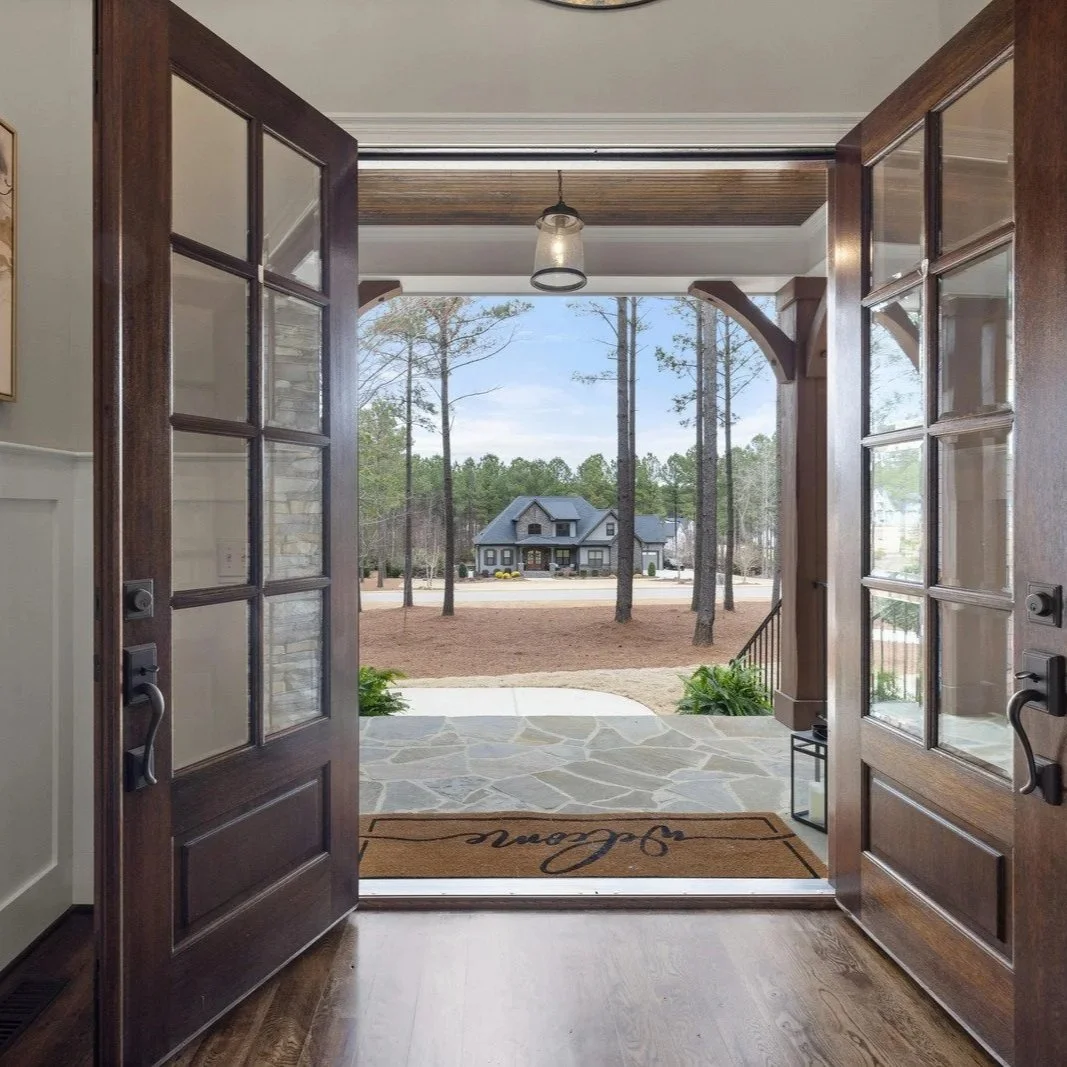
Wooden front entry doors installed in a residential home during entryway renovation and exterior door replacement improvement project.
What Drives the Cost
Door material. Steel is the most affordable. Fiberglass sits in the middle and covers the widest range of performance and aesthetic needs. Wood commands a premium because the raw material costs more, the manufacturing is more complex, and the finishing requirements are higher. The material choice is the single biggest line item.
Glass and decorative options. A solid door panel is the baseline. Adding a half-lite or full-lite glass insert raises the price $300-$1,000+, depending on the glass type. Decorative art glass, prairie-style divided lites, and beveled glass push that number higher. Low-E coatings for energy performance are standard on most quality glass inserts. Tempered safety glass is required by building code for door panels and sidelights — that's not an upgrade, it's a baseline.
Hardware. The door handle set, deadbolt, and hinges range from $150 for basic builder-grade hardware to $800+ for premium brands with smart lock integration. On a $2,000 door, the hardware is a meaningful percentage of the total cost.
Rough opening condition. This is the unknown that shifts a $2,500 job to a $4,000 job. The old door comes out, and the threshold sill is soft, the jack studs have moisture damage, or the subfloor at the threshold has been wicking water for years. Portland homes — especially entries facing south and west where rain hits the door directly — commonly show moisture damage at the sill and threshold. Repairing a rotted sill and damaged framing adds $500-$2,000+ to the project.
Sidelights and transoms. Adding sidelights to an existing single-door opening requires widening the rough opening, which means cutting the framing, installing a new header, and tying the structural work into the existing wall. That's not a door upgrade — it's a framing project with a door in the middle of it. Transoms above the door add similar complexity if the existing header height doesn't accommodate one.
Lead-safe compliance. Portland homes built before 1978 — a large share of the housing stock — likely have lead paint on the door frame, casing, and surrounding surfaces. EPA RRP rules require Lead-Safe Certified contractors to follow containment and cleanup protocols. Compliance adds $300-$800 to the project. Federal law, not optional.
Steel Entry Doors
Steel is the most practical choice for most Portland residential replacements. An insulated steel door with a foam core delivers strong energy performance, excellent security, and costs less than fiberglass or wood at comparable quality levels.
The trade-offs are real. Steel dents on impact — a hard knock, a wayward delivery, a kid's bike handle. And if the factory finish gets breached — a deep scratch, a dent that cracks the paint — the exposed steel can rust. In Portland's damp climate, surface rust at the bottom edge of a steel door is common on units where the finish has been compromised by threshold moisture.
Quality steel doors with factory-applied finishes hold up well when properly installed with adequate clearance above the threshold. The finish matters — a steel door with a baked-on factory coating outperforms one with a field-applied paint job.
Steel runs $1,200-$3,500 installed, depending on the panel profile, glass insert, and hardware. At that price point, a homeowner gets security, energy performance, and a clean appearance for the lowest entry cost among the three materials.
Fiberglass Entry Doors
Fiberglass is the best all-around performer for Portland's climate. The material doesn't dent, doesn't rust, doesn't swell from moisture, and doesn't require the refinishing schedule that wood demands. Fiberglass doors are available in wood-grain textures that replicate the appearance of real wood — close enough that the difference is hard to spot from the sidewalk.
Therma-Tru is the most commonly specified fiberglass entry door brand in the Pacific Northwest. The Smooth-Star series (smooth fiberglass), Fiber-Classic series (wood-grain fiberglass), and Pulse series (contemporary smooth) cover most residential applications. Therma-Tru's fiberglass skin doesn't absorb moisture, and the composite frame handles Portland's temperature swings without expanding or contracting enough to affect the seal.
Masonite and JELD-WEN offer strong mid-range fiberglass options. JELD-WEN's Aurora series and Masonite's Smooth-Fiberglass line deliver reliable performance at a lower price point than Therma-Tru's premium lines.
Fiberglass runs $1,800-$5,000+ installed. The range is wide because fiberglass covers everything from a basic smooth panel to a custom wood-grain door with decorative glass, sidelights, and premium hardware. A foam-core fiberglass door delivers the highest thermal resistance of any door material — relevant for west-facing Portland entries that take full weather exposure.
Wood Entry Doors
Real wood is the premium tier and the only material that truly matches the character of Portland's historic Craftsman bungalows, foursquares, and Tudor revival homes. Mahogany, fir, oak — the grain depth and warmth of real wood can't be fully replicated by fiberglass textures, no matter how good those textures have gotten.
The maintenance commitment is significant. Wood entry doors need refinishing or repainting every 2-5 years, depending on sun and moisture exposure. South- and west-facing entries are the most demanding — direct sun degrades the finish faster, and rain hits the door face during storms. A wood door on a covered porch lasts longer between refinishing cycles than one fully exposed to weather.
Marvin Ultimate (all wood) and Andersen 400 Series (wood interior with Fibrex exterior cladding) sit at the premium end. These doors are typically specified on high-end renovation projects or homes where the door is a significant architectural element.
Wood runs $3,000-$8,000+ installed, depending on species, glass configuration, and hardware. For the right house — a 1920s Craftsman in Irvington, a Portland Heights Tudor — the investment in real wood is part of preserving the home's character. For a 1975 ranch in Beaverton, fiberglass that looks like wood makes more financial sense.
What Should Be in the Quote
A complete entry door replacement quote should break down every component.
Door unit specification. Brand, series, material, glass type, and hardware. "Fiberglass entry door" isn't specific enough to compare quotes. Therma-Tru Fiber-Classic with half-lite clear Low-E glass is specific enough.
Removal and disposal. Old door, frame, threshold, trim — all of it. The quote should include hauling the old unit away.
Rough opening inspection and repair. The quote should address how damage discovered during removal will be handled. A per-opening repair allowance or a separate line item prevents mid-project change-order negotiations.
Sill pan and head flashing. These should be listed as separate items. If the quote doesn't mention a sill pan, the installation is probably skipping it — and that's the detail that prevents threshold rot.
Air sealing. Low-expansion foam between the door frame and rough framing. Takes 10-15 minutes, making a noticeable difference in energy performance.
Interior and exterior trim. Casing on both sides, back-primed and sealed. A door installation that leaves unfinished trim or expects the homeowner to hire a separate carpenter isn't a complete job.
Hardware. Handle set, deadbolt, hinges — specified by brand and finish. Builder-grade hardware on a $4,000 fiberglass door is a mismatch.
Lead-safe compliance. For pre-1978 homes, RRP compliance should be a line item. If it's missing, the contractor may not hold EPA Lead-Safe Certification.
CTA: Action
Get quote — Planning an entry door replacement? VResh Construction provides free on-site assessments with written estimates. Proper sill pan, head flashing, and air sealing on every installation. Call (503) 272-6436.
Portland's Climate and Entry Door Performance
Portland's entry doors take more weather abuse than most homeowners realize. The front of the house typically faces the street, and in Portland's grid, that often means a south or west exposure — directly into the prevailing storm direction. Wind-driven rain during Portland's 7-8 month wet season pushes water against the door face, into the frame joints, and down to the threshold. The threshold sits at the bottom of all that water's travel path.
Three installation details determine whether an entry door survives Portland's climate long-term.
Sill pan at the threshold. A formed pan underneath the threshold catches any water that gets past the door seal and directs it back to the exterior. Without a sill pan, water that passes the weatherstripping sits on the subfloor and rots the framing from the bottom up. This is the most commonly skipped step in budget door installations — and the primary cause of threshold rot in Portland homes.
Head flashing above the door. Rain running down the wall hits the top of the door opening. Head flashing directs that water away from the rough opening and onto the exterior trim, where it drains away. Without it, water enters above the frame and soaks into the header and jack studs. The same detail that matters in window installations matters here.
Air sealing the frame gap. The gap between the door frame and the rough opening — typically 1/4 to 1/2 inch — transmits cold air in winter and moisture year-round. Low-expansion foam fills that gap and creates a thermal and moisture break. The door's weatherstripping seals the door-to-frame joint; the foam seals the frame-to-wall joint. Both matter.
Portland's 25-40 freeze-thaw cycles per year stress the door-to-frame connection. Fiberglass and steel frames maintain dimensional stability across temperature swings. Wood frames expand and contract with moisture and temperature changes — which is why wood doors in Portland often develop seasonal sticking and binding that steel and fiberglass doors avoid.
Frequently Asked Questions
The Budget Reality
A $1,500 budget replaces one steel entry door with standard hardware in a clean opening. A $3,000 budget gets a mid-range fiberglass door with a glass insert and decent hardware — the sweet spot for most Portland homes. A $5,000+ budget opens up premium fiberglass with sidelights, decorative glass, and high-end hardware. At $8,000+, the project is either a custom wood door for a historic home or a fiberglass door with sidelights that required widening the rough opening.
The sill pan, head flashing, and air sealing that make the installation last should be included at every price point. Those details cost less than $100 in material and less than an hour of labor — but they're the difference between a door that lasts 25 years and one that rots the threshold in 10.
The order on the invoice matters: slab, then frame, then what happens at the threshold. A door priced without a formed sill pan is priced without the part that keeps water out. VResh Construction fits one on every install, in a day — entry door replacement in Beaverton, entry doors across Portland. Free estimate: (503) 272-6436.