
Exterior Paint Peeling? The Real Causes (It's Not the Paint)
The house was painted three years ago. Good paint, reputable brand, reasonable price. Now the south wall is peeling in sheets. The window trim on the west side is blistering. The north face has mildew growing under the new paint. Three years and $8,000 later, the paint job is failing — and the instinct is to blame the paint.
The paint is almost never the problem. What's under the paint is the problem. And in Portland, what's under the paint is usually moisture that was there before the paint went on, or moisture that found its way behind the paint after application. Until the moisture source is addressed, repainting is throwing money at a surface while the real problem keeps working underneath.
Cause #1: Moisture Behind the Siding
This is the biggest cause of premature paint failure in Portland. Water gets behind the siding through failed caulk, missing flashing, cracked trim joints, or gaps where siding meets windows and doors. The moisture migrates through the wood to the surface. When the sun hits the wall, that moisture turns to vapor and pushes outward — lifting the paint off the wood from behind.
The pattern is distinctive: blistering and peeling concentrated in specific areas, not uniform across the entire wall. The paint is failing where water reaches the back of the wood, not where the paint itself has a problem. Scrape a blister, and the wood underneath is damp or stained. That's the tell.
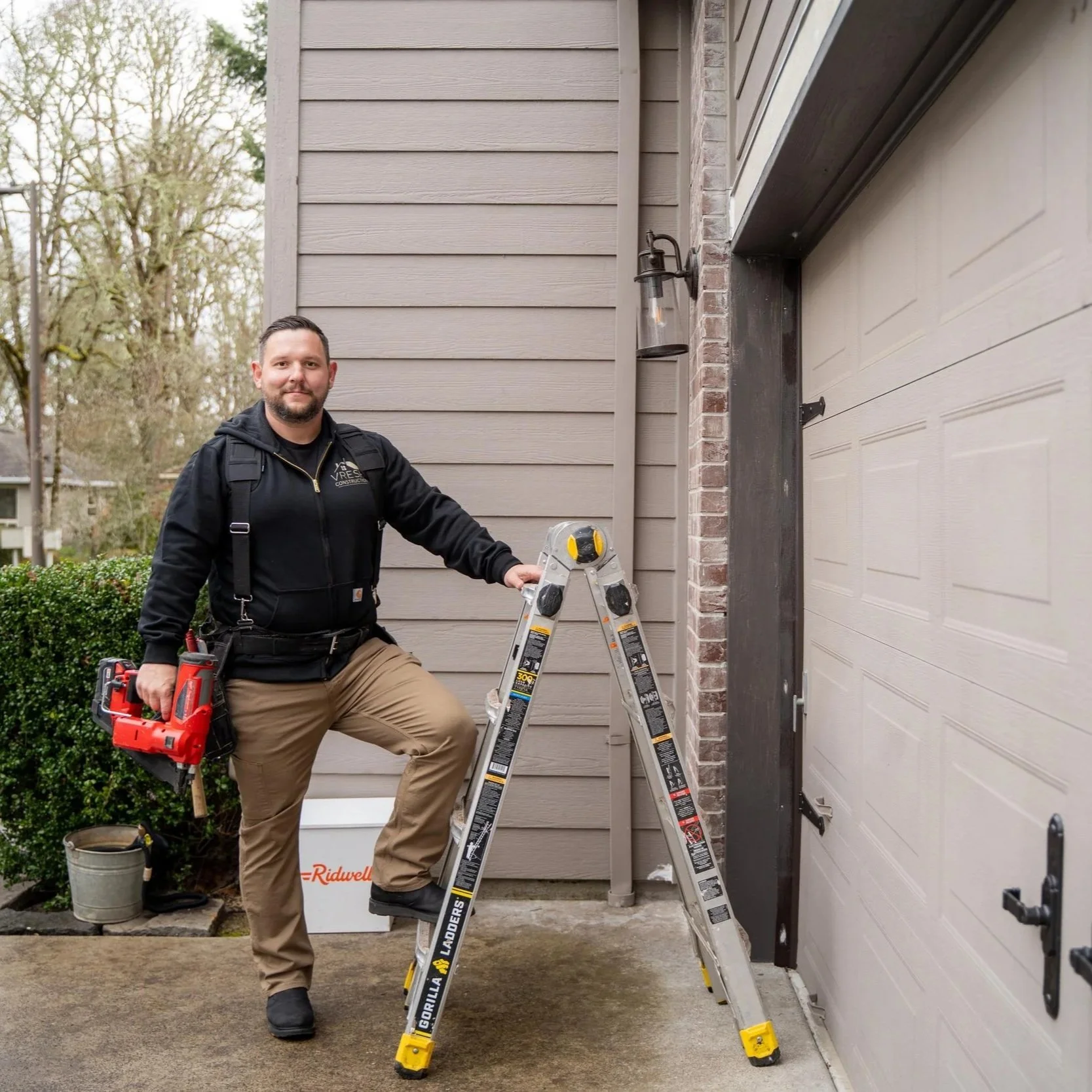
A contractor stands beside a home exterior, emphasizing that paint failure is usually caused by moisture intrusion or poor preparation, not the paint itself, especially in Portland’s damp climate conditions.
The fix: find where the water is entering. Check the flashing above the affected area. Check the caulk around nearby windows. Check the gutter above — a clogged or overflowing gutter can send water down the wall behind the siding every time it rains. Stop the water source, let the wood dry completely, and then repaint. Painting over damp wood guarantees repeat failure.
Cause #2: Poor Surface Preparation
Paint doesn't stick to surfaces that aren't clean, dry, and properly primed. The prep work before painting determines whether the job lasts 10 years or 3. In Portland, prep is where contractors cut corners most often — because doing it right takes longer than painting.
Dirty surfaces. Mildew, moss, and oxidation on the existing paint create a barrier between the old surface and the new coat. If the painter sprayed new paint over mildew without cleaning first, the new paint adhered to the mildew, not the wood. When the mildew regrows, the paint comes off with it.
Loose or flaking old paint. New paint over loose old paint peels with the old paint underneath it. Proper prep requires scraping all loose paint to a firm edge, sanding the transitions smooth, and priming bare wood before topcoating. This is labor-intensive and time-consuming, which is why budget painters skip it.
No primer on bare wood. When old paint is scraped off, and bare wood is exposed, that wood needs primer before the topcoat goes on. Topcoat applied directly to bare wood doesn't bond properly, especially on weathered or porous wood. It may look fine for a year, then adhesion fails.
Wet wood. Portland's climate means exterior wood rarely reaches the ideal dryness for painting (below 15% moisture content) without planning. Painting on a Thursday after it rained Monday through Wednesday means the wood is still holding moisture. That trapped moisture pushes the paint off within months.
Cause #3: Failed Caulk and Sealant
Caulk fails before paint does. Portland's freeze-thaw cycles crack and shrink caulk at window perimeters, trim joints, and siding transitions. Once the caulk fails, water enters the gap and saturates the wood behind the paint. The paint peels in a line along the failed caulk joint.
A fresh paint job over old caulk is a paint job with a timer on it. The old caulk was already failing — the new paint just covered it up. Within 1-2 Portland winters, the caulk cracks again, water enters, and the paint peels along the same lines.
The fix: remove all failed caulk before repainting. Replace it with high-quality polyurethane or modified silicone exterior caulk. Not acrylic — acrylic caulk in Portland's climate fails within 3-5 years. Polyurethane caulk stays flexible through freeze-thaw cycles and lasts 10-15 years.
Cause #4: Wrong Paint or Application
Not all exterior paints perform equally in Portland's climate. A paint that works fine in Arizona may fail here because it wasn't formulated for sustained moisture exposure.
Flat paint on moisture-prone surfaces. Flat paint absorbs moisture more readily than satin or semi-gloss. On horizontal surfaces (window sills, cap trim) and high-moisture areas (north-facing walls), satin or semi-gloss performs better because water beads and sheds instead of absorbing.
Paint applied too thin. Two coats minimum on bare wood. Contractors who spray a single thin coat to finish faster leave coverage that's too thin to protect the wood underneath. Thinly applied paint fails at stress points first — edges, corners, and sun-exposed surfaces.
Paint applied too thick. Equally problematic. Thick, gummy coats dry on the surface while staying soft underneath. The surface skins over, trapping solvent and moisture. As the trapped moisture tries to escape, it blisters the paint.
Incompatible layering. Oil-based paint over latex (or latex over uncured oil-based) creates adhesion problems. Each coat should be compatible with what's underneath. When repainting, know what the existing paint type is before choosing the new product.
Frequently Asked Questions
The Fix Is Under the Paint
Peeling paint is a symptom. Moisture behind the wood is the disease. A new coat of paint on a damp wall fails the same way the last coat did. The real fix starts with a moisture assessment — finding where water enters the wall, repairing the flashing and caulk, replacing any rotted wood, and letting everything dry before a single brush stroke goes on. That's the job that lasts 10 years instead of 3.