
Milgard vs Andersen Windows for Portland's Wet Climate
Two window quotes are sitting on the table, and they don't match. One says Milgard, one says Andersen, and the prices are thousands apart. Meanwhile, the current windows are fogging between the panes, the seals are shot, and cold air bleeds through every time the temperature drops below freezing. Portland throws 37+ inches of rain at a house every year. Freeze-thaw cycles crack materials that weren't built for it. So the real question isn't which brand looks better on paper — it's which one actually holds up against what this climate does to the home.
Milgard vs Andersen: Quick Answer
Milgard wins on warranty and price. Their frames were engineered for the Pacific Northwest specifically — the rain, the freeze-thaw, all of it. Entry-level cost is lower than anything Andersen offers.
Andersen wins on brand name and historic restoration. Their Fibrex composite holds up in extreme weather without question. And for anyone restoring a 1920s bungalow who wants real wood on the inside, Andersen 400 Series is the only serious option.
For the typical Portland window replacement — a ranch or split-level with those old single-pane aluminum frames from the '60s or '70s — Milgard's Tuscany or Trinsic hits the right balance. Reasonable cost, decades of warranty, proven performance here. But for a Craftsman where period authenticity matters, Andersen 400 Series is worth paying more.
One thing nobody emphasizes enough: the installer matters more than the window brand. Beautiful windows fail in five years when the flashing is wrong. Poor sill pans, missing head flashing, bad drainage — these kill windows in Portland. A perfect window installed badly still leaks. Pick the contractor before picking the brand.
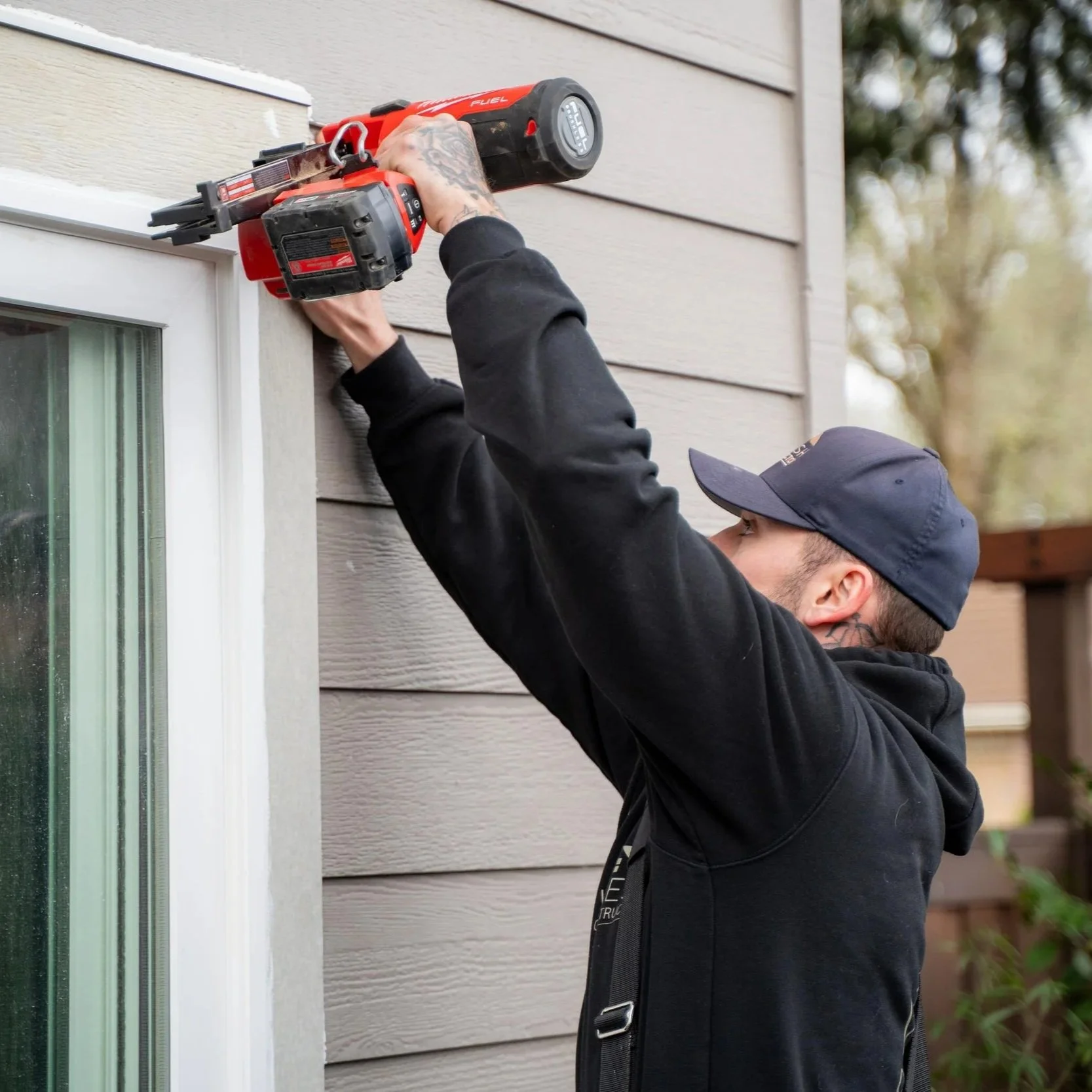
Vresh Construction's technicians have installed both Milgard and Andersen windows across Portland homes — and know exactly which one holds up better once the Pacific Northwest rain season hits.
Key Differences That Matter
| Feature | Milgard | Andersen |
|---|---|---|
| Best Entry Series | Tuscany (vinyl) | 100 Series (vinyl) |
| Premium Series | Ultra (fiberglass) | 400 Series (wood-clad) |
| Material Options | Vinyl, fiberglass, wood-clad hybrid | Vinyl, Fibrex composite, wood-clad |
| Warranty | Lifetime (original owner) | 20-year limited |
| PNW Engineering | Engineered for rain/freeze-thaw | National spec; works in PNW with proper install |
| Price Range (installed) | $850-$2,000+ | $1,200-$2,800+ |
Milgard built the Tuscany and Trinsic for rain. The drain rails sit tighter, the compression seals grip harder, and the sill pans are integrated — not afterthoughts. The Lifetime Warranty covers the original owner, which is basically Milgard saying they'll stand behind the product for as long as that person lives there. And when the installer holds the Authorized Warranty Service Provider designation, claims get handled locally. No shipping parts back and forth. No waiting on a national claims desk.
Andersen's Fibrex composite is proprietary and it earns its reputation. Unlike vinyl, Fibrex doesn't swell and shrink when temperatures swing from the 20s at night to the 50s in the afternoon. Unlike wood, it doesn't rot. Paint grabs onto it and stays. For an older Craftsman bungalow in Portland, Andersen 400 Series delivers real wood interiors that match the original trim — something Milgard can't do unless the homeowner steps up to the Essence line. Andersen also has dealer networks everywhere, which matters for anyone who might move and need service in another city.
When to Choose Milgard
If budget is driving the decision, Milgard is the clear pick. Tuscany runs $850-$1,300 per window installed. Andersen's cheapest option, the 100 Series, starts at $1,200 and goes up from there. On a 10-window job, that gap adds up to four or five thousand dollars. That's real money — especially when every window in the house needs replacing, as most Portland homeowners find once they realize those old aluminum frames are all failing at the same rate.
The warranty difference is where Milgard really separates itself. Lifetime coverage for the original owner. Seals, frame, hardware, and glass — manufacturing defects are covered. Once the installer is authorized, the claim is resolved locally. No paperwork mailed to some distant office. Now think about year 15. A compression seal cracks. Happens constantly in freeze-thaw climates — the temperature swings stress every seal eventually. Milgard covers it. Andersen's 20-year warranty is already expired at that point. In Portland, where the windows cycle between wet and freezing for six months straight, that warranty gap is not a small thing.
Want something more modern than the current vinyl? Trinsic is the move. Clean frame profile, thinner than most competitors, which means more glass area and more natural light getting in during those gray winter months when the house feels like a cave. Installation is straightforward. Price is predictable. Thousands of Portland homes already have Trinsic installed.
If fiberglass durability appeals but Andersen's price tag doesn't, look at Milgard Ultra. It runs $1,200-$2,000+ per window installed — less than Andersen's wood-clad 400 Series. Fiberglass doesn't absorb water the way vinyl does. Driving rain hits the window frames for six months of the year here. Vinyl soaks some of that in, swells, contracts, stresses the seals. Fiberglass doesn't move. Temperature swings in March and April — freezing at night, mild during the day — barely affect it. Seals last longer when the frame around them stays still.
When to Choose Andersen
Restoring a 1920s Craftsman? Andersen 400 Series, wood interior. That's the answer. Homes built between 1910 and 1950 had wood window frames originally, and vinyl replacements look wrong — everybody can tell. Fibrex composite on the outside protects the wood permanently. Real wood on the inside matches the existing trim and woodwork. For a true restoration where getting it right matters, the Andersen 400 Series is where the conversation starts and ends. Milgard doesn't have anything comparable unless the homeowner steps up to the Essence line.
Brand name matters for resale. Andersen is nationally recognized — homebuyers see it on the window sticker, and they feel good about it. For anyone planning to sell within seven years, that name recognition helps in Portland's competitive market. Buyers see Milgard, and they are not sure what to think. They see Andersen, and they nod.
North-facing and west-facing walls take the worst punishment in Portland. Months of dampness on the north side. The hardest fall and winter storms are slamming the West. Andersen's Fibrex handles that better than vinyl. It doesn't absorb moisture, doesn't swell, and doesn't shrink when temperatures swing. Vinyl frames on a north wall sit wet for weeks — eventually the seals break down. Fibrex sheds the water instead. West-facing walls get hit with sideways rain during storms, and Fibrex stays dimensionally stable through all of it. This isn't marketing — it's what happens to windows on exposed walls over 10-15 years.
But Andersen has one more advantage worth mentioning: custom sizes and unusual shapes. Their dealer network makes sourcing non-standard frames faster than working with smaller manufacturers.
Cost Comparison and Final Recommendation
Portland metro pricing (size, access, and structural factors change this — get a local estimate for the actual house):
Milgard Tuscany (vinyl): $850-$1,300/window, 10-window job ~$9,000-$13,000 total
Milgard Ultra (fiberglass): $1,200-$2,000+/window, 10-window job ~$12,000-$20,000 total
Andersen 100 Series (vinyl): $1,200-$1,600/window, 10-window job ~$12,000-$16,000 total
Andersen 400 Series (wood-clad): $2,000-$2,800+/window, 10-window job ~$20,000-$28,000+ total
A 10-window Milgard Tuscany job lands around $10,500 with Lifetime Warranty included. Andersen 100 Series runs about $14,000 with a 20-year limited warranty. That extra $3,500 buys the Andersen name and national dealer access. It doesn't buy more warranty coverage.
Think about year 15. A compression seal fails — happens all the time in freeze-thaw climates. Milgard covers it. Andersen doesn't. On a 10-window job, that warranty difference alone pays for the price gap.
Budget between $10,000-$15,000? Go with Milgard Tuscany or Trinsic. Maximum warranty coverage for Portland's freeze-thaw punishment. Historic Craftsman where resale value matters? Spend $20,000-$28,000 on Andersen 400 Series — wood interiors, brand name everybody recognizes. Want fiberglass durability without Andersen pricing? Milgard Ultra splits the difference.
Frequently Asked Questions
Choose Confidence, Not Just a Brand
Both Milgard and Andersen work in Portland. Milgard takes warranty, PNW engineering, and value. Andersen takes historic authenticity and brand name recognition. But the real thing that separates a window job that lasts from one that doesn't? The installer.
A contractor who understands Portland's horizontal rain patterns, knows how freeze-thaw affects every joint and seal, and follows proper flashing protocol — that person matters more than any logo on the window frame. The home deserves windows built for this weather and installed by somebody who keeps water out for 25+ years.
Pick the contractor first. Then pick the windows. Check their Portland references. Make them spell out every flashing detail in writing. Make sure they back their work with a real warranty. Good windows protect a home from rain, cut heating bills, and add to property value — but only if somebody installs them right.