
Roof Repair vs Replacement: How to Know Which You Actually Need
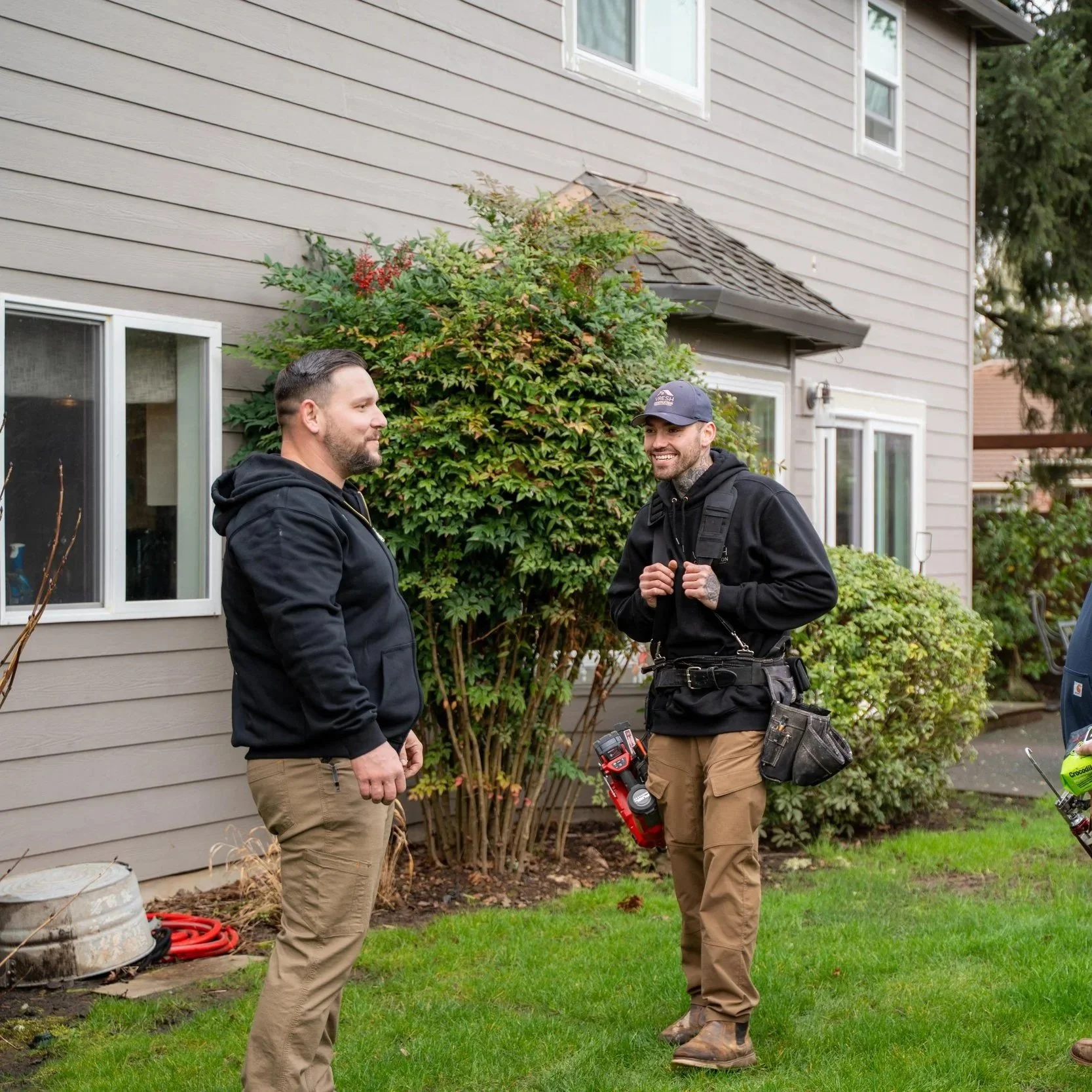
Contractors discuss a roofing issue on-site, highlighting how evaluating roof age, damage extent, and overall condition determines whether a repair is sufficient or a full replacement is necessary.
A few shingles are missing after last month's windstorm. There's a water stain on the bedroom ceiling. The roofer shows up, looks at it, and says the whole roof is getting close. That's the conversation nobody wants to have. A $500 repair sounds a lot better than a $15,000 replacement. But if the roof is 22 years old and the shingles are curling across the entire south face, that $500 repair buys six months, not six years.
The decision comes down to three things: the roof's age, how much of it is damaged, and the condition of the rest. Get those three answers right, and the repair-vs-replace question answers itself.
When Repair Makes Sense
The roof is under 15 years old. A 10-year-old architectural shingle roof with storm damage in one area still has 15-20 years of life ahead of it. Repairing the damaged section preserves that remaining lifespan. Replacing the whole roof at 10 years throws away a decade of useful material.
The damage is localized. A fallen branch took out a 10x10 section. Wind lifted shingles along one ridge line. Ice dam damage affected the eaves on the north face only. When the problem is in one area, and the surrounding shingles are still flat, intact, and properly sealed, targeted repair handles it.
The shingles match. If the existing shingle is still manufactured and available in the same color, repair sections blend in. Discontinued colors or heavily faded shingles make patches obvious — which matters for curb appeal and resale.
The deck underneath is sound. A roofer who pulls back damaged shingles and finds solid plywood underneath can replace the shingles and move on. If the plywood is soft, dark, or delaminating, the damage goes deeper than a surface repair addresses.
Typical repair costs in Portland: - Missing shingle replacement (small area): $200-$500 - Ridge cap repair: $300-$600 - Valley repair: $400-$1,000 - Flashing repair (chimney, skylight, wall junction): $300-$800 - Storm damage section (100-200 sq ft): $500-$1,500
When Replacement Is the Right Call
The roof is 20+ years old. Most architectural shingles in Portland last 20-30 years, depending on quality, installation, and maintenance. Once the roof passes 20, every repair is buying time on a system that's approaching the end of life. The math shifts — three $1,500 repairs over two years add up to $4,500 that bought zero additional lifespan.
Damage is widespread. Curling shingles across multiple faces. Granule loss visible in every gutter section. Moss penetration that's lifted shingles across the north and west faces. When the damage isn't in one spot but everywhere, repair can't fix a systemic problem.
Multiple leaks. One leak is a flashing failure or a localized shingle problem. Two or three leaks in different areas of the roof mean the system is failing. Patching individual leaks on a roof that's generating new ones every storm season doesn't end.
The repair estimate exceeds 30% of the replacement cost. Industry rule of thumb: if the repair costs more than a third of what a full replacement would cost, replace. A $5,000 repair on a roof where replacement costs $15,000 means the money is better spent on a new roof with a new warranty.
Failed deck. When the roofer opens up the damaged area and finds soft, delaminating, or rotted plywood, the scope has grown past repair. Widespread deck damage means the roof has been leaking in places nobody noticed, and the sheathing needs replacement along with the shingles.
The Portland Factor
Portland's climate accelerates roof aging in specific ways that affect the repair-vs-replace decision:
Moss. Heavy moss growth lifts shingle edges, holds moisture against the surface, and accelerates granule loss. A roof with heavy moss across multiple faces is aging faster than its calendar age suggests. A 15-year-old roof with thick moss may be performing like a 22-year-old roof.
North-facing exposure. Roof sections that face north or northwest take the most rain and dry the slowest. These faces fail first — moss is thickest, granules are thinnest, and shingles curl earliest. If the north face needs replacement but the south face still looks good, a partial re-roof of the worst sections is sometimes practical.
Freeze-thaw. Portland gets 25-40 freeze-thaw cycles per year. Each cycle stresses shingle adhesive strips, expands micro-cracks in the surface, and works on flashing seals. Roofs in exposed locations — hilltops, ridge lines — take more freeze-thaw damage than sheltered homes in valleys.
Wind-driven rain. Portland's rain comes sideways from the southwest during storms. Lifted shingle edges let wind-driven rain underneath and directly onto the deck. In a climate with mostly vertical rain, a slightly lifted shingle is cosmetic. In Portland, it's a leak source.
Frequently Asked Questions
Making the Right Decision
Repair when the problem is limited, and the roof has life left. Replace the roof when it is old, the damage is everywhere, and the repair money would be better spent on a new system. The worst outcome is spending $5,000 on repairs over three years and then replacing the roof anyway — that $5,000 bought time but added nothing. Get an honest assessment from a contractor who does both repair and replacement, someone who doesn't benefit from pushing one option over the other.