
5 Signs It's Time to Gut Your Kitchen (Not Just Update It)
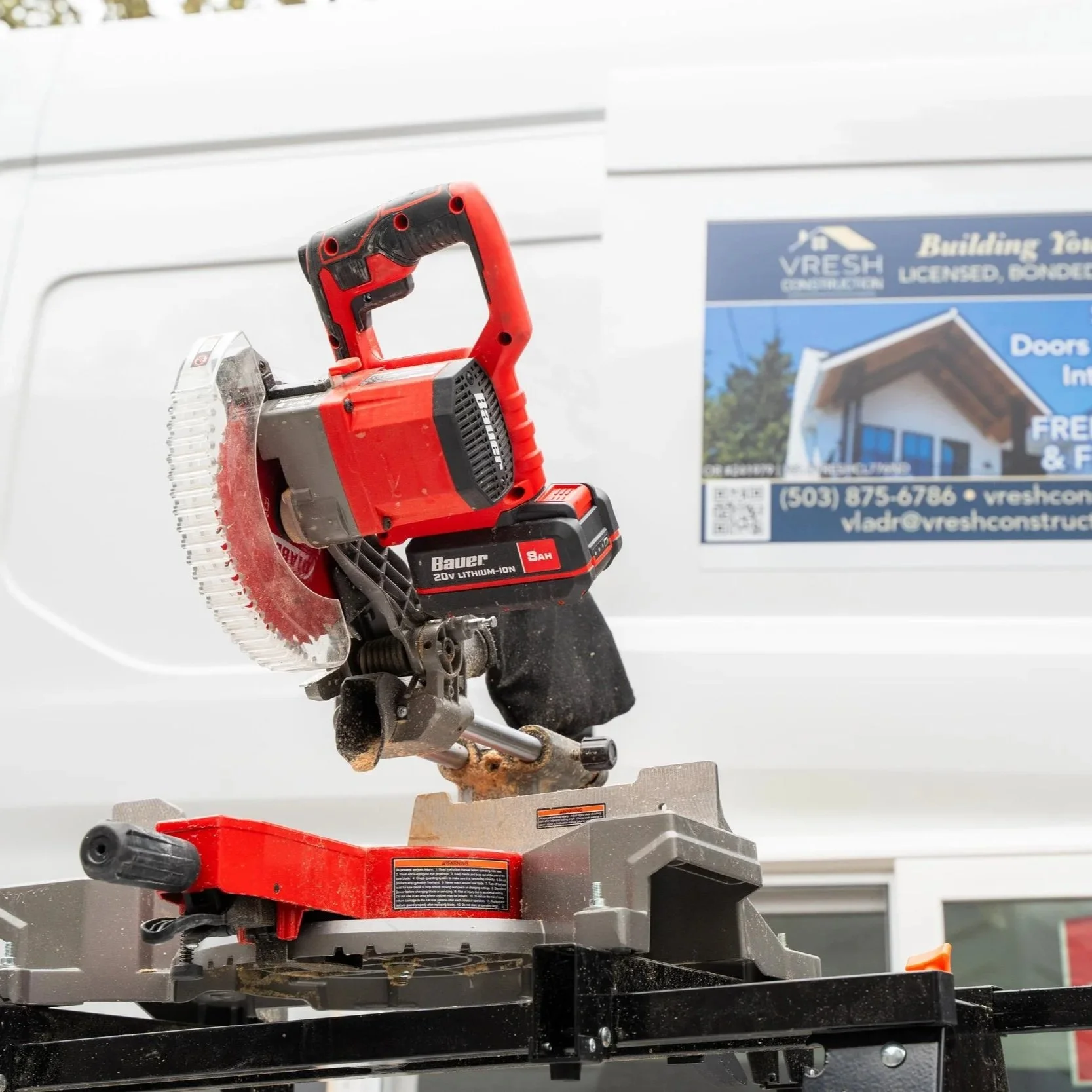
Gutting a kitchen in Portland isn't a weekend project — it's the kind of work that demands Vresh Construction's level of equipment, precision, and licensed expertise to do right from the first cut.
The kitchen looks tired. The cabinets are from 1992. The countertops are laminate. The thought is: new counters, new cabinet doors, fresh paint, and it'll feel like a different room. Sometimes that's the right call. But sometimes the problems go deeper than the surfaces, and a $15,000 cosmetic update becomes wasted money on a kitchen that needs $50,000 of structural and mechanical work behind those new cabinet doors.
Here's how to tell the difference before spending money on the wrong scope.
Sign #1: The Layout Doesn't Work (And Never Will)
The galley kitchen where two people can't pass each other. The L-shape where the fridge blocks the counter flow. The kitchen where the stove faces a wall, and the sink faces another wall, and nothing connects. Bad layouts don't improve with new surfaces — they stay bad with prettier countertops.
If traffic flow forces people to cross paths constantly, if the work triangle (sink-stove-fridge) requires 20+ steps between stations, or if there's no place to set a cutting board without blocking a drawer, the layout is the problem. And layout changes mean moving walls, plumbing, and electrical. That's a gut renovation, not an update.
Portland homes built in the 1940s-1960s commonly have small, enclosed kitchens separated from dining rooms by a load-bearing wall. Opening that wall to create a modern open floor plan requires structural engineering, a beam to replace the wall, and reconfigured plumbing and electrical. It's the single most common kitchen gut trigger in Portland's housing stock.
Sign #2: The Plumbing or Electrical System Can't Support Modern Use
A kitchen from 1975 has 15-amp circuits, one or two outlets, and galvanized supply lines. A modern kitchen needs 20-amp circuits for countertop receptacles (code requirement), a dedicated 20-amp circuit for the dishwasher, a dedicated circuit for the disposal, and potentially 240V for an induction cooktop or wall oven. The gap between what exists and what code requires is too wide for a surface update.
Old galvanized water supply lines corrode from the inside, restricting flow and adding rust to the water. They need replacing — and once the walls are open for plumbing, the scope has crossed from update into renovation.
If the kitchen has only one or two outlets and every appliance runs off power strips, if the lights dim when the microwave turns on, or if the dishwasher trips a breaker during the dry cycle, the electrical system is undersized, and a surface update won't fix it.
Sign #3: Water Damage Behind the Cabinets
Pull out the cabinet under the sink. Look at the back wall and the floor. Dark staining, soft drywall, mold spots, or warped flooring underneath the cabinets means water has been working behind the surfaces for years. The damage extends further than what's visible from the front.
Portland kitchens with older plumbing develop slow leaks at supply line connections and drain joints. A drip that barely shows up in the cabinet base can saturate the subfloor, the wall cavity, and the floor joists below for months. New countertops over a rotted subfloor are a bad investment. The subfloor, wall framing, and possibly the floor joists need repair before any new surfaces go in.
Check the flooring near the dishwasher and refrigerator, too. Dishwasher supply hoses and ice maker lines are common slow-leak sources. Soft or discolored flooring in these areas indicates that the subfloor beneath is compromised.
Sign #4: The Cabinets Are Structurally Failed (Not Just Ugly)
Cabinet doors with peeling veneer, misaligned hinges, and dated finishes can be refaced. That's a cosmetic fix. But cabinets with sagging shelves, separated joints, water-swollen particle board, and drawer boxes that fall apart when opened — those have failed structurally and no amount of new doors hides it.
Particle board cabinets from the 1980s-1990s are the worst offenders. The material swells when exposed to kitchen steam and minor leaks. Screws pull out of swollen particleboard. Shelf pins work loose. The cabinet boxes lose structural integrity. New doors on a failed box waste the door money.
When the cabinets need full replacement, the walls behind them need inspection and repair. Decades of cabinet-mounting hardware, plumbing penetrations, and trapped moisture leave the wall surfaces in poor condition. New cabinets install better on properly prepared walls — which usually means opening them up and starting fresh.
Sign #5: The Floor Slopes or Feels Soft
Stand in the center of the kitchen. Drop a marble. If it rolls, the floor isn't level. Walk the kitchen slowly and feel for soft spots, especially near the sink, the dishwasher, and the exterior walls. A spongy floor means the subfloor or joists underneath have moisture damage.
Portland homes with crawlspaces under the kitchen are especially vulnerable. Moisture from the crawlspace migrates upward through the subfloor. Combined with leaks from above (sink, dishwasher), the subfloor gets attacked from both sides. A floor that's noticeably soft needs structural evaluation before any surface work.
This isn't a cosmetic issue. A soft kitchen floor means the structural support below is compromised. New tile or hardwood flooring over a failing subfloor will crack, separate, and fail within a few years. The subfloor — and potentially the joists — need repair first. That means the kitchen comes apart.
Frequently Asked Questions
The Honest Assessment
Some kitchens need new countertops. Some need to come down to the studs. Knowing which one before spending money is the difference between a renovation that works and an update that covers up problems for a few more years. If more than two of the five signs above are present, the kitchen is telling a story about what's behind the walls — and that story means a gut renovation is the right call.