Egress Window in a Concrete Foundation: Why It's a Different Project
The contractor marked the cut lines on the interior face of the concrete wall — a rectangle 46 inches wide by 38 inches tall, positioned so the finished sill would sit 36 inches above the basement floor. The existing window was a 14-by-32-inch slider that had been cast into the wall when the house was built in 1967. The rough opening for the new egress window would be more than three times the area of the existing one. The wall was 8 inches of poured concrete with #4 rebar at 24-inch spacing. The diamond saw that would cut this opening was a 14-inch wet-cutting walk-behind saw designed for this exact application — cutting precise openings in structural concrete without damaging the surrounding wall.
That setup — measuring, marking, positioning the saw — is the part of an egress window project that distinguishes concrete foundations from every other foundation type. In a wood-frame foundation, the opening is created by removing studs and installing a header — work that requires a circular saw and framing lumber. In a concrete foundation, the opening is created by cutting through 8-10 inches of reinforced concrete — work that requires a diamond blade, water supply for cooling, a plan for the rebar, and a method for removing a concrete block that may weigh several hundred pounds. The materials, equipment, and expertise are different, and the cost reflects all three.
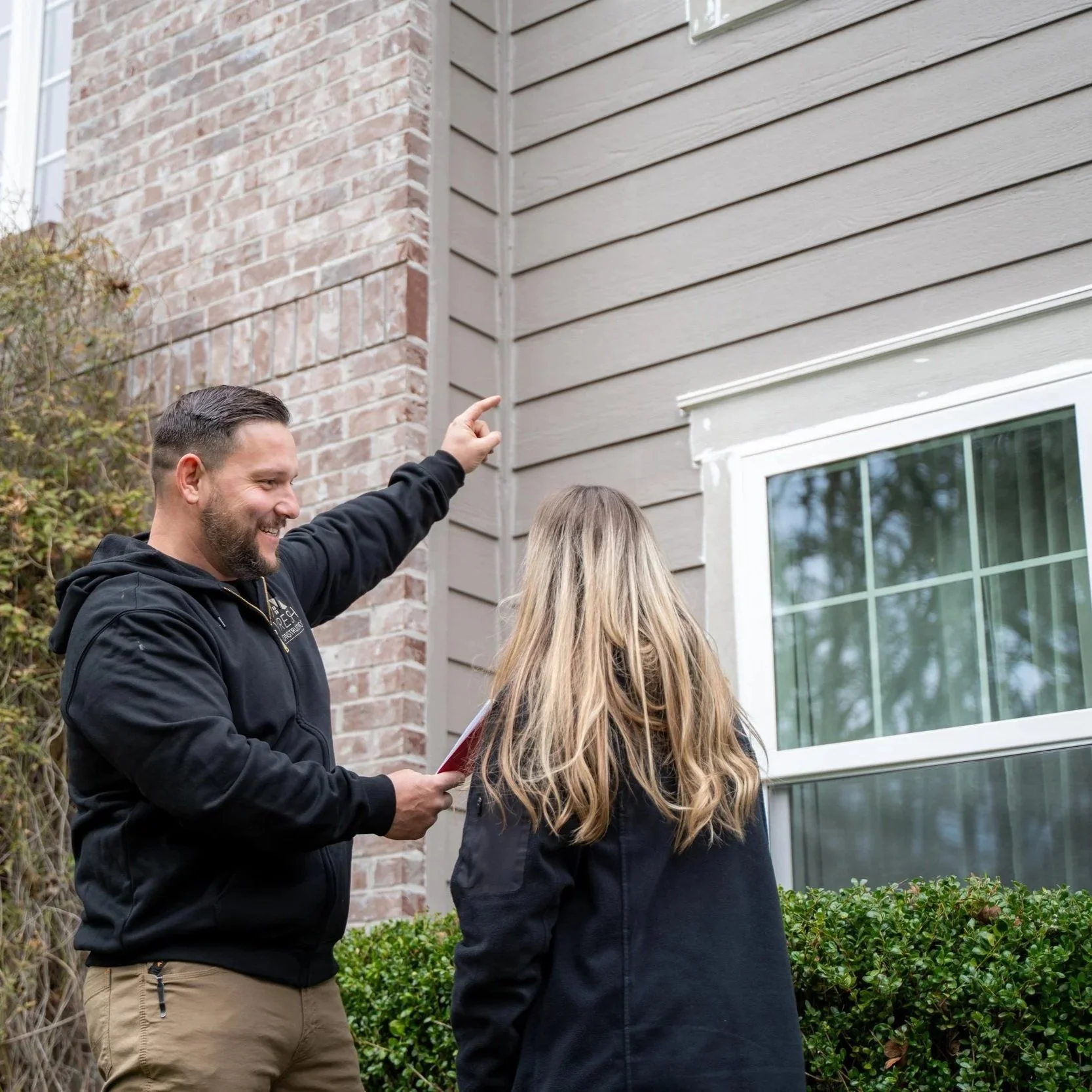
Contractor inspecting concrete foundation siding while discussing egress window installation, structural cutting, drainage systems, and Portland building code requirements.
Why Concrete Foundations Cost More for Egress
The cost premium for egress installation in concrete foundations — $3,000-$6,000+ compared to $2,000-$3,500 for wood-frame — comes from four factors that do not apply to wood-frame work.
Diamond saw cutting. Cutting a poured concrete wall requires a diamond-tipped blade — either on a wall saw (mounted to a track on the wall surface) or a flat saw (for horizontal cuts) supplemented by core drilling at the corners. Diamond blades are consumable — they wear during cutting and must be replaced based on the hardness of the concrete and the presence of aggregate. The cutting equipment is specialized, and the operators who run it are trained specifically for concrete cutting.
Wet cutting and containment. Diamond cutting concrete generates heat that must be managed with a continuous water supply to the blade. The water cools the blade, reduces dust, and extends blade life. Wet cutting also produces concrete slurry — a mixture of water, cement dust, and fine aggregate — that must be contained and managed. On the interior side, this means protecting the basement floor and any finished surfaces from the slurry. On the exterior side, it means managing the water runoff to prevent it from entering the drainage system or pooling at the foundation.
Concrete removal and disposal. The concrete section removed from the opening is a solid block of reinforced concrete. For a typical egress opening in an 8-inch wall (roughly 46 inches wide by 38 inches tall), the cutout weighs approximately 400-600 pounds. The block must be cut into manageable sections, removed from the wall, and transported off-site for disposal. The weight and bulk of the material add labor time and disposal costs that do not exist in wood-frame work.
Structural assessment. A poured concrete foundation wall is a structural element — it resists soil pressure from the exterior and carries a portion of the building's load from above. Cutting an opening in this wall removes material from the load path. Depending on the opening size, the wall height, the soil conditions, and the loads above, the opening may require a reinforced concrete or steel lintel above it to redistribute the load. A structural engineer may need to specify the lintel design for larger openings or walls with significant loading. This assessment and potential reinforcement add cost that is not required for wood-frame openings, where a standard lumber header provides the necessary support.
The Cutting Process: Step by Step
Understanding the concrete cutting process explains why the project takes 3-5 days and why the cost reflects specialized work rather than standard construction.
Step 1: Site preparation. The interior is protected — the basement floor is covered, and any finished surfaces near the cut area are masked or shielded from concrete dust and slurry. On the exterior, the area around the cut location is excavated to expose the full height of the foundation wall where the window will be installed. The excavation must be wide enough for the saw operator to work and deep enough to accommodate the bottom of the window well.
Step 2: Marking the opening. The opening dimensions are marked on the interior and exterior faces of the wall. The marks must account for the rough opening size required by the specific egress window, plus any clearance needed for shimming and flashing. The opening location is verified against the structural assessment — confirming that the cut does not intersect with utilities, structural elements above (beams, bearing walls), or reinforcement patterns that would compromise the wall's integrity.
Step 3: Core drilling (if used). Some cutting methods begin with core drilling at the four corners of the opening. The core holes define the corners precisely and provide a starting point for the saw cuts. Core drilling also reveals the rebar pattern and wall composition — information that helps the operator plan the saw cuts.
Step 4: Diamond saw cutting. The saw cuts follow the marked lines. Wall saws run on a track mounted to the wall surface and cut through the full thickness of the concrete in one or more passes. The water supply runs continuously during cutting. The operator adjusts the feed rate based on the concrete hardness and the rebar encounters — cutting through rebar slows the process and increases blade wear. The four cuts (top, bottom, left, right) define the opening.
Step 5: Rebar cutting. If the saw blade encounters rebar, the rebar is cut as part of the wall cut or separately with a reciprocating saw or grinder after the concrete cuts are complete. The exposed rebar ends are cut flush with the opening edges to prevent interference with the window frame.
Step 6: Concrete removal. The concrete block defined by the cuts is separated from the wall. For large openings, the block is scored or cut into smaller sections before removal to manage the weight. The block is pushed, pulled, or lifted out of the wall — depending on the access conditions — and set down for disposal.
Step 7: Opening preparation. The rough opening edges are cleaned, and any loose concrete is removed. The opening is checked for square and dimension — the edges should be straight and the corners clean. If a lintel is required, it is installed above the opening at this stage — either a steel angle, a steel channel, or a reinforced concrete beam, depending on the structural specification.
Step 8: Window installation. The egress window is set into the prepared opening, shimmed, leveled, and fastened. The window must meet the Oregon egress code: 5.7 square feet of net clear opening (5.0 at grade), a minimum clear height of 24 inches, a minimum clear width of 20 inches, and a maximum sill height of 44 inches above the finished floor. A sill pan and flashing are installed to manage water at the window-to-concrete interface. Sealant is applied between the window frame and the concrete — typically a backer rod and polyurethane or silicone sealant that accommodates the differential movement between the window frame and the concrete.
Step 9: Window well installation. The window well is positioned against the foundation wall, centered on the window opening. The well must provide at least 9 square feet of floor area with a minimum width and projection of 36 inches. The well is fastened to the foundation wall — typically with concrete anchors — and backfilled. Drainage is installed at the base of the well, connecting to the footing drain or exiting to daylight at grade.
Step 10: Finishing. Interior finishing includes framing the opening with wood (a buck frame), installing drywall returns, and applying trim and paint. Exterior finishing includes grading around the window well, restoring any landscaping disturbed by the excavation, and installing a window well cover if desired.
Foundation Variables That Affect the Project
Not all concrete foundations are the same. Several variables affect the difficulty, duration, and cost of the egress installation.
Wall thickness. Residential poured concrete foundations in Portland are typically 8-10 inches thick. Thicker walls take longer to cut — the saw makes more passes, the blade wears faster, and the removal block is heavier. Older foundations or foundations with increased soil loads may have walls exceeding 10 inches.
Rebar density and pattern. Standard residential foundations have #4 rebar (1/2-inch diameter) at 16-24 inch spacing in both directions. Foundations with heavier reinforcement — closer spacing, larger bar sizes, or both horizontal and vertical mats — require more cutting time and more blade wear. The rebar pattern is not always visible from the surface, which is why core drilling at the corners is a useful diagnostic step.
Concrete age and composition. Older concrete (pre-1960) may have different aggregate compositions that affect cutting speed and blade wear. Very hard aggregate (river rock, basalt) cuts slower than softer aggregate (limestone, gravel). Concrete that has deteriorated — spalling, cracking, or delamination — may require additional structural work around the opening to ensure the remaining wall is sound.
Wall height and loading. The height of the wall above the opening and the loads it carries determine whether a lintel is required. A window opening near the top of a tall wall with minimal loading above may not require a lintel. A large opening in the middle of a wall that carries a floor load and backfill pressure almost certainly does. The structural assessment determines the requirement.
Exterior conditions. The excavation depth, soil type, slope, proximity to property lines, and access for equipment all affect the exterior work. A window location on a flat lot with easy access and sandy soil is a simpler excavation than a window on a downhill slope with clay soil and a fence at the property line. Hand excavation — required when equipment cannot reach the location — adds significant labor time.
CMU Block and Brick: Different Concrete, Different Process
Not all concrete foundations are poured. CMU (concrete masonry unit) block and brick foundations require different approaches.
CMU block foundations. CMU blocks are removed rather than cut. The blocks at the opening location are broken out, and the opening is reframed with a steel or concrete lintel above. The CMU cells at the sides of the opening are typically filled with grout and rebar for reinforcement. The process is less equipment-intensive than poured concrete cutting — no diamond saw or wet cutting system — but requires masonry skills for the lintel installation and the reinforcement of the opening edges. Cost range: $3,000-$5,500.
Brick foundations. Brick foundations are the least common in Portland residential construction, but the most complex for egress installation. The brick must be carefully removed — brick does not cut as cleanly as poured concrete, and the mortar joints create weak points that can cause unintended cracking beyond the opening. A steel lintel is typically required above the opening. The interior and exterior finish work must account for the irregular surface of the brick — the rough opening may not be as clean or as square as a poured concrete cut. Cost range: $4,000-$6,000+.
What to Expect During Installation
Understanding the project timeline and the disruptions it creates helps homeowners plan around the work.
Day 1: Excavation and preparation. The exterior is excavated to expose the foundation wall. Interior protection is set up. The cut lines are marked. If core drilling is used, the corner cores are drilled. Duration depends on excavation depth and access conditions.
Day 2: Cutting and removal. The diamond saw cuts the opening. The concrete is removed. The opening is cleaned and prepared. If a lintel is required, it is installed. This is the most equipment-intensive day — the saw, the water supply, the slurry management, and the concrete removal all happen on this day.
Day 3: Window and well installation. The egress window is installed, shimmed, and sealed. The window well is positioned, anchored, and drainage is connected. The well is backfilled, and the exterior grade is partially restored.
Day 4-5: Finishing and inspection. Interior framing, drywall returns, trim, and paint. Exterior grading and yard restoration. The building inspector verifies the structural opening, the window sizing, the flashing, and the egress compliance.
Disruptions to expect. Noise during cutting (diamond saws are loud). Water and slurry management during cutting. Concrete dust — even with wet cutting, some dust is generated. Temporary loss of the exterior grade at the window location. Interior access restrictions near the work area during cutting and finishing.
Common Mistakes in Concrete Egress Projects
Cutting without a structural assessment. A poured concrete foundation wall is a structural element. Cutting an opening without understanding the loads, the rebar pattern, and the need for a lintel can compromise the wall's ability to resist soil pressure and carry building loads. The structural assessment is not optional — it is the basis for the opening size, location, and lintel specification.
Using the wrong equipment. Concrete cutting requires diamond saw equipment designed for structural concrete. A contractor who proposes to cut the opening with a standard concrete demolition saw (a cutoff saw or chop saw) may not achieve the precision or the clean edges that the project requires. Imprecise cuts result in larger gaps around the window frame, which are harder to seal and flash properly.
Ignoring drainage. A window well in a concrete foundation is a collection point for water — rain, snowmelt, surface runoff, and groundwater. Without drainage at the base of the well, water accumulates and creates hydrostatic pressure against the window seal. The drainage connection — to the footing drain or to a daylight outlet — is part of the project scope, not an optional add-on.
Skipping the permit. Cutting an opening in a foundation wall is a structural modification that requires a building permit. The permit triggers the inspection that verifies the structural integrity of the opening and the egress compliance of the window. Skipping the permit eliminates the independent verification and creates a disclosure issue at resale.
Frequently Asked Questions
The Foundation Determines the Project
An egress window in a wood-frame foundation is a framing project. An egress window in a concrete foundation is a concrete cutting project. The window, the well, the drainage, and the finishing are the same, but the opening is a fundamentally different scope of work. The cost difference between wood-frame and concrete reflects that difference in scope — not a markup, but the actual cost of the equipment, the expertise, and the labor required to cut a precise opening in a structural concrete wall. Understanding that distinction is the first step toward accurately budgeting the project.
The question is not whether concrete can be cut — it can. It is what carries the load above the cut once it is. The header specification is the part that decides both the price and the permit. VResh Construction sizes it before quoting — egress windows in Oregon City and in Salem. Free written estimate: (503) 272-6436.