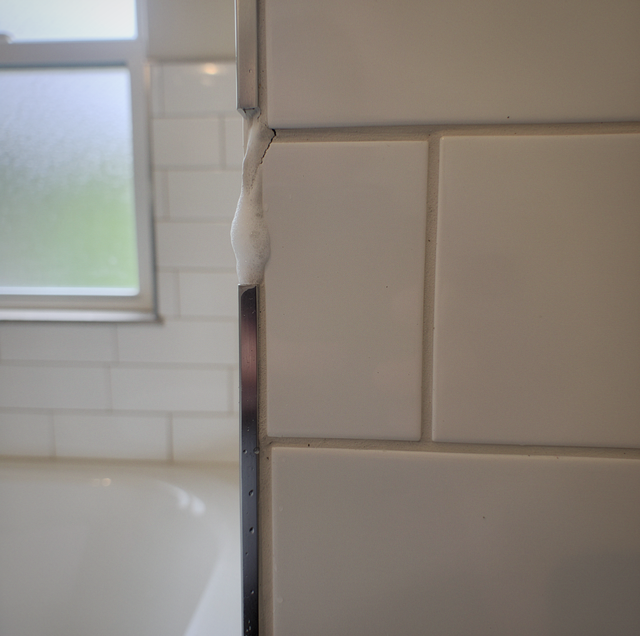
Quick Answer: Neither material wins outright. Tile relies on a waterproof layer behind its grout joints and repairs one tile at a time. Acrylic is a molded shell with a handful of joints, but a crack through the shell can mean replacing the panel.
A tile wall can look perfect from the shower floor while the backer board behind a few grout lines has gone soft, and an acrylic wall can look perfect while water runs behind a caulk line that let go. What each hides is different, and so is what fails.
Tile and acrylic shower surrounds both hold up over years of daily water exposure, but they hold up on different terms. What decides which one lasts in a given bathroom comes down to what sits behind the finished surface, the number of joints the water has to find its way through, and what a repair looks like the day a corner gets damaged.
| Factor | Tile | Acrylic |
|---|---|---|
| What's behind it | A waterproof substrate and membrane carry the water barrier; tile is a wear layer on top of it | The molded shell itself is the water barrier |
| Seams and grout | Dozens of individual grout joints across a full wall | A handful of panel and perimeter caulk joints |
| Cleaning | Porous grout holds soap film and moisture inside its pores | A sealed, nonporous surface sheds film that wipes off the top |
| Repair after a crack or chip | An individual tile can be cut out and replaced on its own | A surface chip can sometimes be filled; a crack through the shell can mean replacing the panel |
| Installation time | Several sequential steps, each needing cure time before the next | Panels fastened and sealed in fewer steps, with no membrane or grout cure |
| How it fails | Grout erodes at a joint and lets water reach the substrate behind it | The perimeter caulk is the weak point: when it separates, water gets behind an otherwise sound panel |
The Substrate Behind Tile Versus an Acrylic Shell
A tile wall is built in layers, and the tile itself is not the layer keeping water out of the framing. Tile: installers set the tile over a rigid backer board or a waterproofed substrate, and a membrane or a waterproofing coating applied under and around that substrate is the water barrier. The tile and grout on top are a wear surface, decorative and durable against abrasion, but they were never designed to be watertight on their own. That job belongs to what's underneath.
Acrylic: an acrylic surround is molded as a single continuous shell, sometimes reinforced on the back with a fiberglass or composite backing for rigidity, and that shell is the water barrier itself. There is no separate waterproofing membrane behind it because the panel does not rely on one; it is fastened to the wall framing or over existing wallboard and sealed at its edges. Where tile depends on a barrier hidden behind it, an acrylic wall depends on the integrity of the visible molded piece.
Seams and Grout: Where Water Travels
A tile surround is assembled from individual pieces, so every tile edge is a grout joint. A full shower wall built this way runs to dozens of them, and every one is a place where mortar and grout meet water on one side and a substrate on the other. Grout is a rigid, porous material, and it is not itself waterproof; a hairline crack from ordinary substrate movement or plain porosity lets water reach the layer behind it, which is why that layer has to be waterproof.
An acrylic surround comes as a one-piece unit or a small set of large panels, so the water-facing joints are limited to where those panels meet each other (if a shower has more than one) and to the perimeter caulk line where the panel meets the tub, the floor, and any adjoining wall. Fewer joints mean fewer places for water to get in, but the joints in an acrylic wall are sealed with flexible caulk, and where one separates, water reaches the wall behind the panel with no membrane there to stop it.
A tile that sounds hollow when tapped near a corner or seam, compared with the solid sound of tile farther from an edge, signals a lost bond to the substrate; check it before assuming a wall only needs new grout.
Cleaning: What Porous Grout Holds Onto and What a Sealed Shell Sheds
Tile: Grout is porous at a microscopic level, and that pore structure is exactly what lets it absorb soap film and mineral deposits from water rather than letting them sit on the surface. A wipe with a cloth reaches the surface of the grout but not what has worked into the pores, which is why grout cleaning calls for a scrub brush or a grout-specific cleaner rather than a quick pass with a sponge. That same porosity gives mold something to establish inside, not only on top of, so a grout joint can carry mold below what a surface wipe removes.
Acrylic: The acrylic surface of the panel is sealed and nonporous, so soap film and mineral deposits sit on its surface rather than soaking in. A wipe-down removes what's there because there is nowhere for it to hide. The surface can still support a film of surface mold if it stays wet and unclean, but that film sits on the material rather than inside it, so it comes off with the same wipe that removes the soap scum underneath it.
Repairing a Crack or a Chipped Corner
A cracked or chipped individual tile is a contained problem on a tile wall. Because the wall is built from separate pieces, a tile can be cut out and replaced without disturbing the surrounding tiles, provided the substrate beneath is still sound. The obstacle is finding a matching tile: a pattern or color from an earlier production run may no longer be available, which can turn a small repair into a larger one if an exact match matters to the homeowner.
An acrylic surround does not have that option because the wall is a single continuous piece rather than a set of replaceable units. A surface scratch or a shallow chip in the acrylic can sometimes be sanded and polished out or filled. A crack that reaches through the shell to the backing behind it is a different problem: it has broken the panel's own water barrier at that point, and replacing the panel is the fix that restores the barrier, because there is no adjacent seam to isolate the damage the way a single tile can be isolated.
Removing old tile without a plan for what's underneath is risky: adhesives from installations before the 1980s can contain asbestos, and prying open a long-wet wall can expose already-compromised framing. Have a professional evaluate it before demolition starts.
Cure Time and Sequencing Separate the Two Installations
Setting tile is a layered process, and each layer has to be sound before the next one goes on. The substrate goes in first, then a waterproofing membrane or coating, then the tile is set in mortar and left to cure, then the grout is applied and given its own cure time before the wall is sealed. Skipping ahead to the next step before the one before it has fully set is how a membrane ends up unbonded, or a grout joint ends up weak from the start.
An acrylic surround skips nearly all of that sequencing because the wall arrives as a one-piece unit or a small set of finished panels rather than being built up piece by piece on site. The panels are fastened to the framing or over sound existing wallboard and sealed at the perimeter, without a membrane to install or grout to cure. The shorter installation comes from having fewer materials, each of which needs time to set before the next one goes on.
How Each System Fails After Years of Service
A tile surround's failure starts at a single grout joint. Grout erodes gradually from cleaning abrasion and repeated wetting and drying, or a joint cracks from ordinary house movement, and once water finds a way through that one joint, it reaches the substrate behind the tile. If the membrane behind that joint is intact, the water stops there, and the tile can stay bonded after the first crack. If the substrate itself was compromised, for instance a section of backer board that stayed wet, tiles nearest that spot can loosen or the wall can develop a soft, spongy feel while the face of the wall still looks sound.
An acrylic surround's weak point is the perimeter caulk joint. That seal is flexible and ages, and once it separates from age or movement, water can travel behind an otherwise intact panel. Away from the seams, the shell can also show wear on its own over years of use: a scratch that dulls the surface, or a stress crack where the panel flexes at a point it was not backed to support.
The Detail That Decides Between Them
Once those are weighed, the shape of the shower can settle it. A standard rectangular stall or tub alcove is the shape acrylic manufacturers mold for, including units with molded seats and shelves, and a one-piece unit fits it with no field joint beyond the perimeter. A shower with a custom footprint, a curved wall, or a niche and bench placed where no stock unit puts them is built up from individual pieces, and tile follows that geometry where a molded shell cannot. The question to answer for your bathroom is whether a stock shell fits your footprint without forcing a compromise you would notice every day.
Frequently Asked Questions
Yes. Pairing a tile floor pan with acrylic wall panels is a workable combination, since the pan handles standing water and the drain, while the walls shed spray and runoff. It lets a bathroom use acrylic's fewer wall seams while still using a tile or a poured pan shaped to the floor drain.
It can, through staining: grout that takes in soap film and minerals shifts color as they build up in its pores. A sealer resists that while it lasts, but the seal wears from cleaning and water. It needs reapplying on the interval its label gives, and a water-drop test shows when: if water darkens the grout instead of beading, the seal has worn through.
In some cases, yes. Certain acrylic surround systems are designed to be installed directly over an existing tile wall without a full tear-out, provided the wall beneath is flat and structurally sound enough for the panel to sit flush against it. A wall with loose tile, a soft substrate, or an uneven surface behind the tile is not a candidate for that approach and requires removing the old surface first.
It can. Acrylic panels have a maximum sustained-temperature rating from the manufacturer, and running steam against a panel not rated for it can soften or warp the shell over time. Tile and grout are mineral-based and unaffected by sustained heat the way a molded plastic shell can be, which makes the wall material, not only the pan, worth checking against the equipment's rated temperature before a steam shower goes in.
Yes. The caulk at the corners and where the surround meets the tub or floor is a different material from field grout: a flexible sealant rather than a rigid cementitious joint, because those points move with the structure in ways the flat wall does not. That caulk ages on its own schedule, so it can fail while the grout beside it still looks sound, which makes checking it a separate task from checking the grout.
No, not the same way. The color in an acrylic panel runs through the sheet the shell is formed from rather than sitting in a coating on top of it, so no painted layer can wear thin or need refinishing. What can still change the look is ordinary wear: scratching, harsh chemical cleaners, or dulling of the surface finish over years of use.
Ask for a bathroom renovation walkthrough — one that measures your shower's footprint, checks what sits behind the current walls, and weighs tile against acrylic for that space. VResh Construction serves the Portland metro. CCB #241979. Call (503) 272-6436.