
Composite Decking in Portland, OR
Trex, TimberTech, Fiberon & Azek. No Painting, No Staining, No Splinters. Proper Ledger Flashing on Every Build. Capped Composite & PVC Options. Licensed OR #241979.

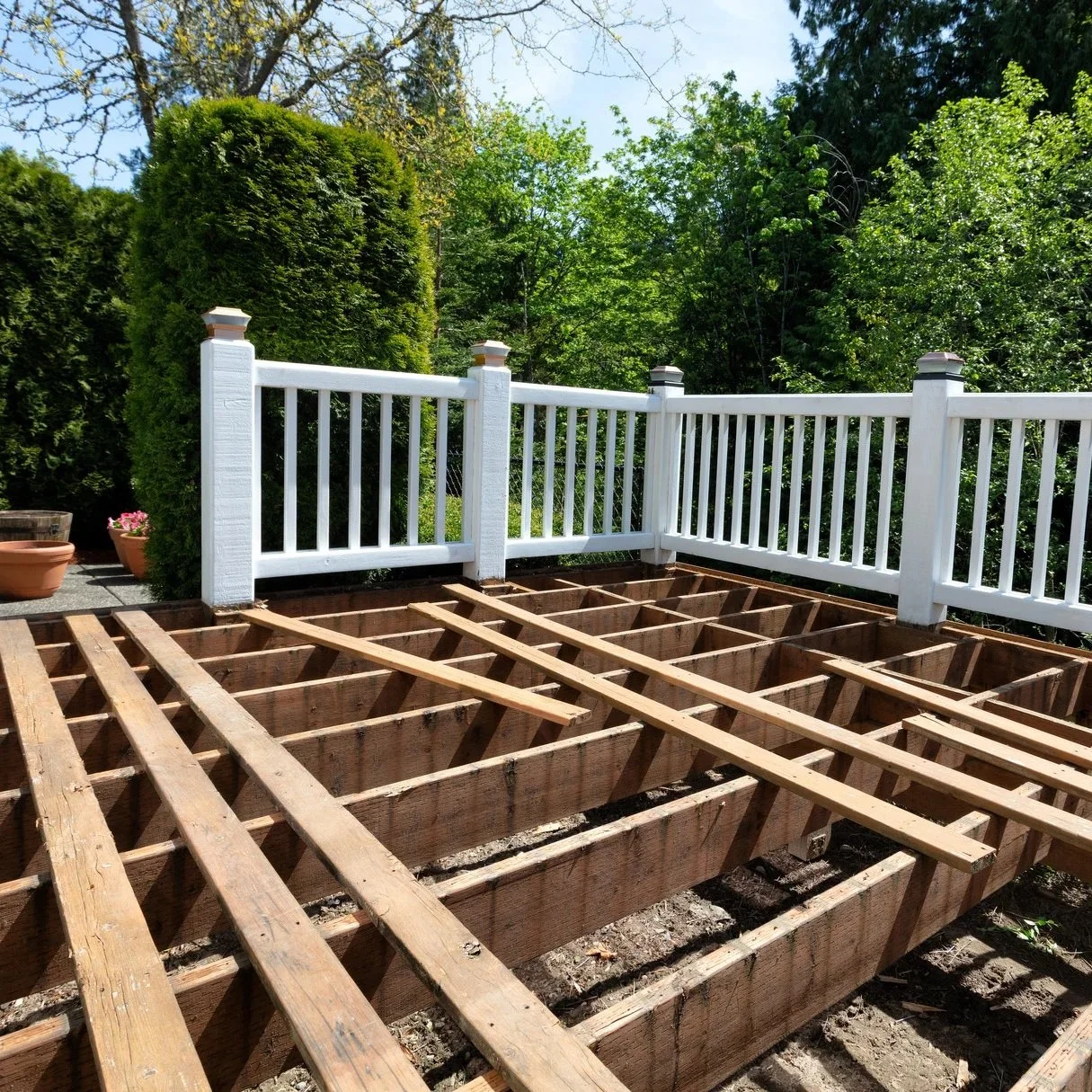
Composite decking is the most practical low-maintenance deck surface for Portland’s climate. It does not rot, does not require painting or staining, resists mold and mildew better than wood in Portland’s sustained wet conditions, and carries 25–30 year fade and stain warranties from major manufacturers. VResh builds new composite decks and replaces existing wood decks with composite throughout the Portland metro — handling the full project from permits and footings through framing, decking, and railing installation.
The most important part of any Portland deck is not the decking surface — it is the ledger connection and the framing behind it. Ledger flashing failure is the primary cause of deck-related structural damage on Portland attached homes — water that infiltrates behind the ledger reaches the rim joist and band board of the house and produces rot that can go undetected for years. We flash every ledger correctly on every project. There are no shortcuts on that detail.
Composite Decking Products for Portland Homes
|
Trex®
Most Popular — Recycled Content, Wide Color Range
|
Trex is the most widely installed composite decking brand in the US and the most commonly requested product in Portland. Made from 95% recycled content (reclaimed wood-fiber and recycled plastic film), Trex offers a broad color range, a 25-year fade and stain warranty on their Transcend and Select lines, and strong availability through Portland-area suppliers. The Trex Transcend line is their premium capped composite product — a polymer shell over the composite core provides superior moisture and stain resistance. The Enhance line is their mid-tier option at a lower price point. |
|
TimberTech® / Azek®
Premium — PVC & Capped Composite Options
|
TimberTech and Azek are brands under the same parent company, offering both capped composite (TimberTech) and full PVC (Azek) decking products. Azek PVC decking is 100% cellular PVC — no wood-fiber content, no moisture absorption, and the strongest resistance to mold and staining of any mainstream decking product. Particularly well-suited to Portland's sustained wet conditions and shaded deck environments where mold is a concern. TimberTech's capped composite lines offer a more natural wood appearance at a lower price point than full PVC. |
|
Fiberon®
Mid-Premium — Strong Warranty, Good Value
|
Fiberon offers a range of capped composite decking products with competitive pricing and strong warranty coverage — the Fiberon Concordia and Pro Tect Advantage lines carry a 25-year performance warranty. Fiberon products are available through several Portland-area lumber suppliers and are a practical mid-tier choice when Trex or TimberTech pricing is outside the project budget. Fiberon's Good Life line is their entry-level composite option. |
|
Deckorators®
Mineral-Based Core — Unique Portland Wet Climate Option
|
Deckorators Voyage and Voyage Reserve use a mineral-based composite core rather than a wood-fiber core. Mineral-based composites have zero wood content, eliminating the moisture-absorption pathway that affects wood-fiber composites when the protective cap layer is damaged. For Portland's high-rainfall environment, the mineral core's complete elimination of wood fiber is a meaningful durability advantage. Available through select Portland-area dealers. |
Why Composite Decking for Portland Homes
No Maintenance — Portland's Strongest Case for Composite
A wood deck in Portland requires annual cleaning, periodic staining or sealing (every 2–3 years for horizontal surfaces exposed to the full wet season), and eventual board replacement as wood degrades. Composite decking requires annual cleaning with soap and water — no staining, no sealing, no painting, no splinter sanding. For Portland homeowners who want a deck they can use without managing it, composite is the practical choice.
The higher upfront cost of composite vs. pressure-treated wood typically amortizes within 10–15 years when maintenance costs are included in the comparison.
Mold and Mildew Resistance in Portland's Wet Climate
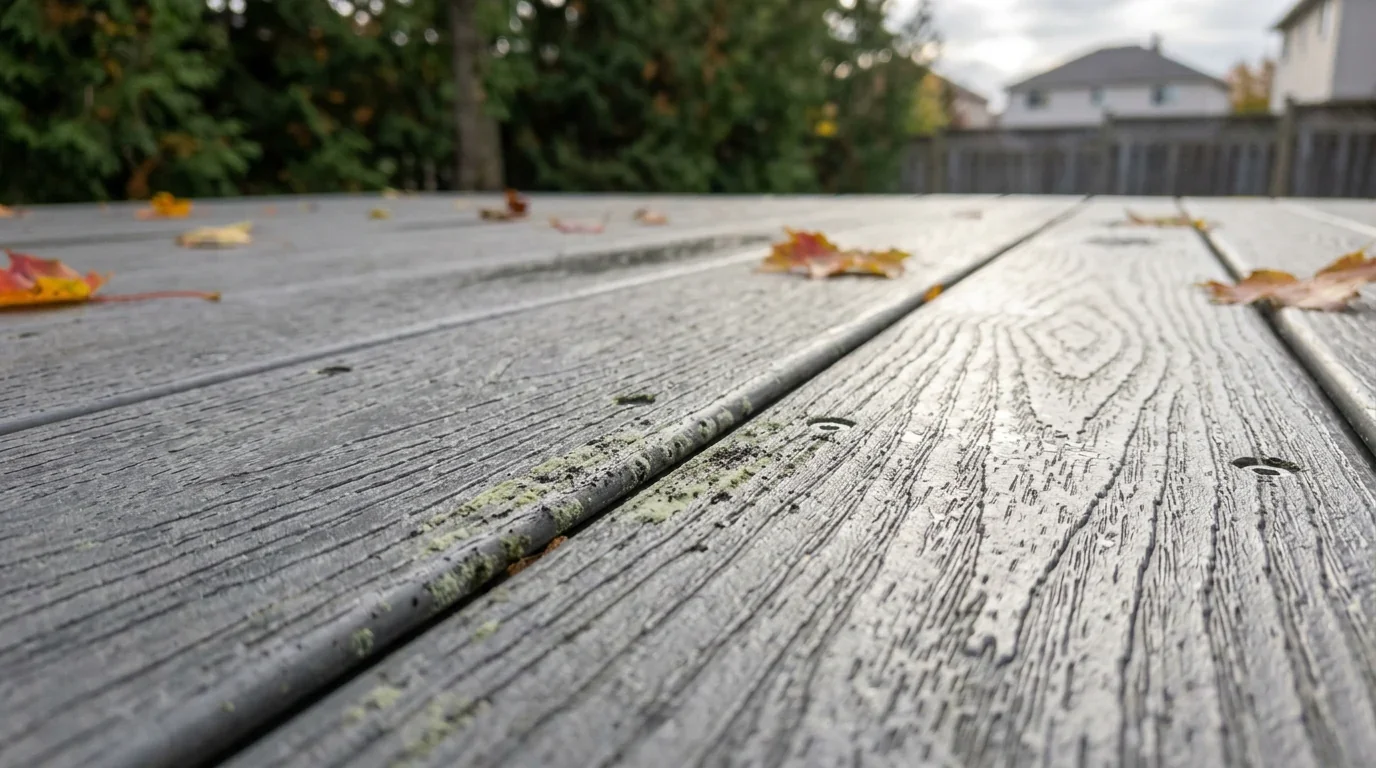
Portland's damp, shaded deck environments are ideal for mold and mildew growth on porous wood surfaces. Composite and PVC decking's non-porous surface does not harbor mold in the same way wood does. Capped composite products — where a polymer shell encapsulates the composite core — are the most resistant. PVC products (Azek) are the most resistant of all, with no organic content for mold to feed on.
For Portland decks that are heavily shaded or that stay wet for extended periods, capped composite or PVC is the correct material specification.
Slip Resistance When Wet — Important for Portland's Nine-Month Wet Season
Portland's deck surfaces are wet for the majority of the year. Smooth-surface composites can be slippery when wet. Most quality composite products address this with a brushed, embossed, or grooved surface texture that provides traction. Specify a product with a textured surface for any Portland deck that receives regular foot traffic in wet conditions — most Trex, TimberTech, and Fiberon products in their mid-to-premium lines have adequate texture for Portland's conditions.
Honest Assessment — Composite vs. Wood
Composite is not the right choice for every Portland homeowner. It costs more upfront — typically 50–100% more than pressure-treated wood framing and decking for the surface boards. It cannot be easily repaired with a single board replacement if it is damaged, because weathered composite boards will not match the color of new boards. And for homeowners who genuinely prefer the look and feel of natural wood, composite's simulated wood grain may not satisfy.
Pressure-treated wood, Western Red Cedar, and Ipe (Brazilian walnut) are all used on Portland decks and have their own performance profiles. Vlad will give you a straight comparison of composite vs. wood options at the estimate visit.
Composite Deck Installation — What the Project Involves
What Makes a Portland Deck Last — Ledger, Footings & Framing
The Ledger Is Where Portland Decks Fail
The ledger — the framing member that connects an attached deck to the house — is the most common point of structural and moisture failure on Portland decks. Water that infiltrates behind the ledger reaches the house's rim joist and band board, causing rot that is invisible until it is advanced. On many Portland homes built before 2000, the ledger was installed without a standoff gap or proper flashing — direct contact between the pressure-treated ledger and the house wall trapped moisture, triggering a slow-rot cycle.
When we build or rebuild an attached deck in Portland, the ledger is flashed with self-adhering membrane over the WRB, set on a standoff to create a drainage gap, and covered with Z-flashing above. This is the manufacturer-specified and code-required installation for attached decks. There are no shortcuts.
Deck Footings — Depth Matters in Portland
Portland’s frost line is approximately 12–18 inches below grade in most locations. Deck footings must extend below the frost line to prevent frost heave — a footing that freezes, and heaves will rack the deck frame above it, opening gaps in the ledger connection and producing uneven boards.
For larger decks or decks with heavy railings and roofs, footing diameter is also a structural question — the footing must be sized to transfer the total load to bearing soil without settlement. We calculate footing size and depth based on the deck load and local soil conditions, not on what is quickest to dig.
Composite Over Wood Framing — Joist Spacing Matters
Composite decking has specific joist spacing requirements that differ from wood decking. Most composite products require 12-inch on-center joist spacing for standard 90° installations — the 16-inch spacing standard for wood decking is not sufficient for most composites and will produce visible deflection underfoot.
Diagonal composite installations require even tighter framing — typically 12 inches on-center throughout. When replacing wood decking with composite decking on an existing frame, we inspect the existing joist spacing and advise on whether blocking is needed to meet composite standards before ordering any new decking.
Serving Portland Metro Area
VResh Construction provides window replacement, siding installation, roofing, dry rot repair and full exterior renovation services throughout the Portland metro area and Southwest Washington.
Portland Metro — Oregon
Southwest Washington
Extended Service Areas
(503) 272-6436 — Call or Text, Available 24/7
We answer calls and texts at any hour. For storm damage, active leaks, or structural emergencies, calling directly is the fastest path to a response.
Composite Decking FAQs — Portland Homeowners


Client's Talk
We have a wealth of experience working as main building contractors on all kinds of projects, big and small, from home maintenance and improvements to extensions, refurbishments and new builds.
Get a Free Andersen Window Estimate
Vlad comes out, assesses every opening, and gives you a straight written quote — no sales pressure, no commitment required.
✓ Same-day response on all estimate requests
✓ No commission-based sales — just honest quotes
✓ Licensed OR #241979 · WA #VRESHCL776ND
✓ EPA Lead-Safe Certified for pre-1978 homes
✓ All major window brands available — we let you choose