
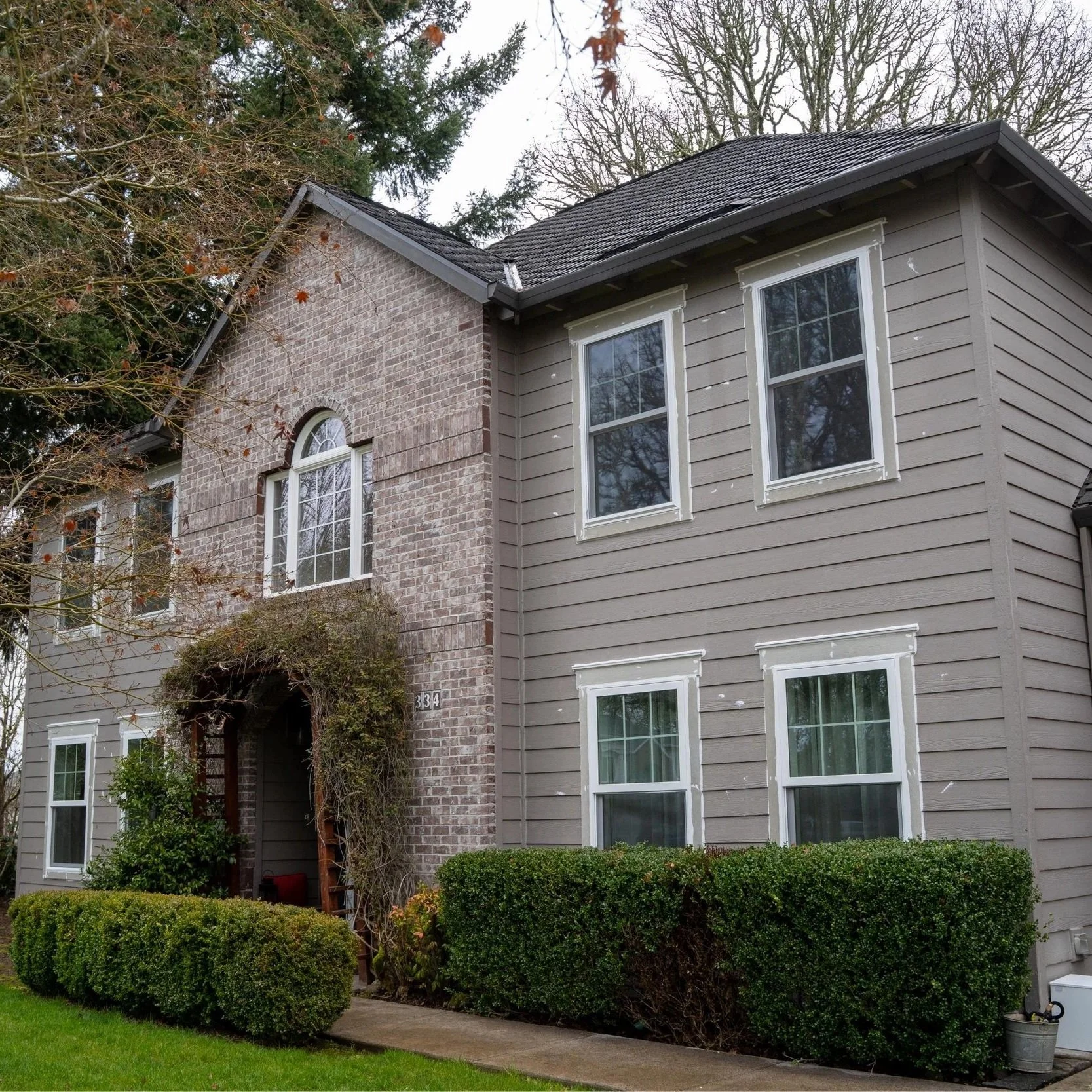
Emergency Roof Repair in Portland, OR
Storm Damage, Active Leaks & Fallen Tree Impact. Same-Day Response. Temporary Protection Deployed Fast. Insurance Documentation Provided. Licensed OR #241979.

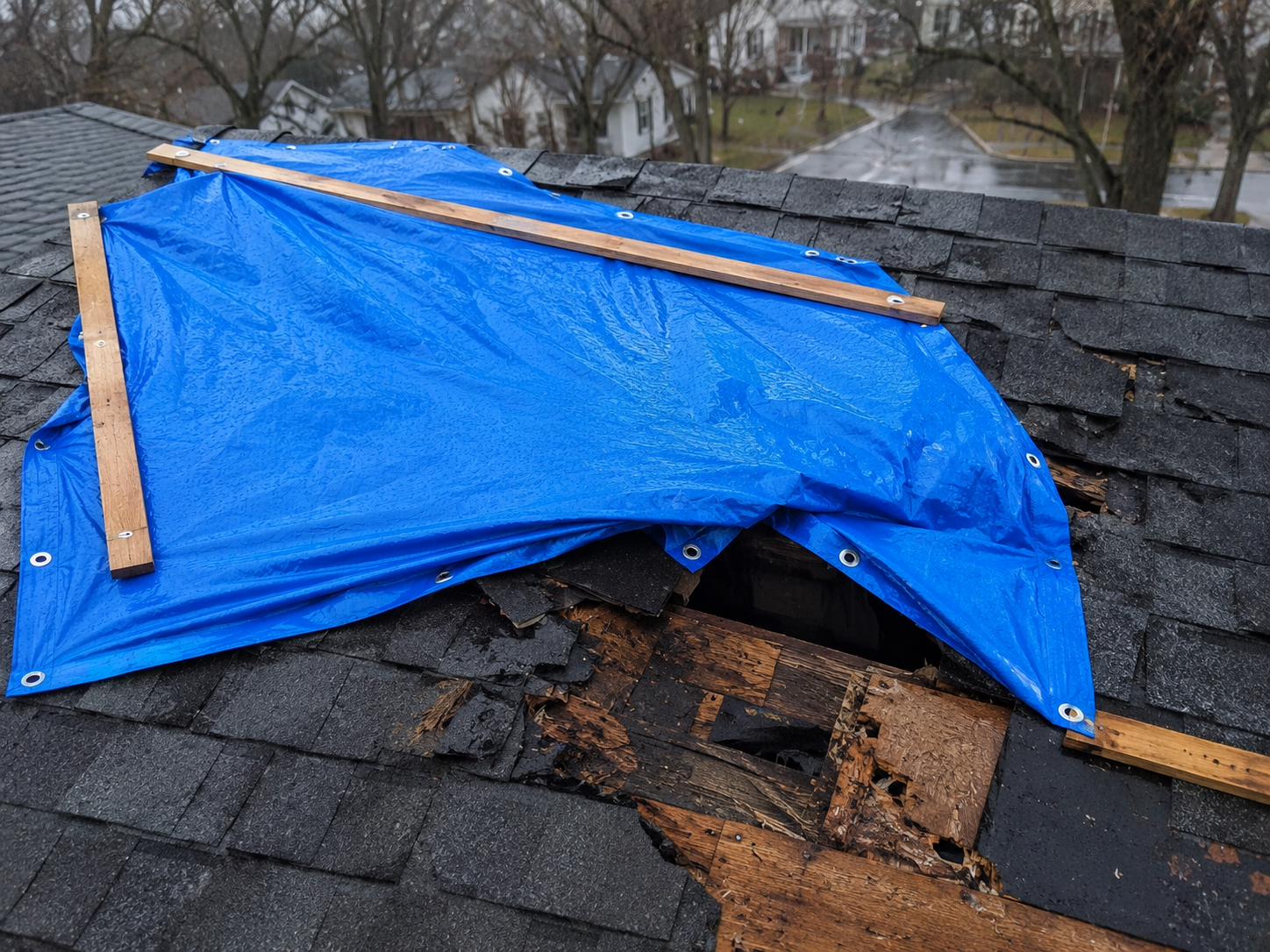
If water is actively entering your home, call us now — not after the storm, not in the morning. VResh responds to roof emergencies throughout the Portland metro and SW Washington the same day, at any hour. We arrive, assess the full scope of damage from the exterior and attic, deploy temporary protection to stop active water infiltration, and document everything for your insurance claim. The phone number at the top of this page is answered 24 hours a day, 7 days a week.
Portland’s winter storm season — October through March — produces the conditions that cause most Portland roof emergencies: sustained southwest wind during atmospheric river events, fallen trees and limbs from the city’s significant urban canopy, and failed flashings or sealants that reach failure threshold during heavy rain. We know these failure modes, we carry the materials to address them on the first visit, and we work alongside your insurance adjuster to document the damage correctly.
What Counts as a Roof Emergency — Portland Scenarios
|
Storm Damage — Wind & Rain
RESPOND SAME DAY
|
Portland's winter storms — particularly atmospheric river events and sustained southwest wind — are the most common cause of emergency roof damage. Wind lifts shingles, blows off ridge caps, and opens seams at wall junctions and penetrations. Driven rain then enters the opened roof plane within hours. Active water infiltration during a storm event requires the same-day temporary protection to prevent interior damage from compounding. Call immediately — do not wait until the storm passes to contact us. |
|
Fallen Tree or Branch Impact
RESPOND SAME DAY
|
Portland's significant tree canopy is a year-round roof hazard — wind-thrown trees, ice-laden branches, and dead limbs all cause impact damage. Tree impact can cause a range of damage severity: from displaced shingles to sheathing damage to structural rafter or framing damage. The visible damage on the exterior is rarely the full picture — the impact load often causes damage at the framing level that becomes visible only after the debris is removed. We assess the full scope from both the exterior and interior (attic) as part of the emergency response. |
|
Active Leak with Interior Water
RESPOND SAME DAY
|
Water entering through the roof and reaching interior finishes — ceiling staining, dripping, pooling on floors — requires same-day response. The visible interior damage is typically a fraction of the actual moisture spread in the wall and ceiling assembly. The longer active infiltration continues, the larger the scope of the moisture damage. Temporary protection deployed the same day dramatically limits the total damage extent and the cost of remediation. |
|
Missing or Lifted Shingles
ADDRESS WITHIN 48 HOURS
|
Shingles that are visibly missing or lifted expose the underlayment and, when the underlayment fails, the deck and interior. In Portland’s climate, an exposed deck section can take in significant moisture within 24–48 hours of a rain event. If the underlayment is intact and no rain is forecast within 48 hours, this is an urgent repair but not necessarily a same-day emergency. If rain is forecast within 24 hours, treat it as an emergency and call immediately. |
|
Flashing Failure at Chimney or Wall
ADDRESS WITHIN 48 HOURS
|
Failed step flashing, counter-flashing, or chimney cap flashing creates a water entry path that typically does not produce interior damage immediately — water infiltrates slowly into the wall or ceiling assembly over repeated rain events. This is an urgent repair that should be addressed within 48 hours, but it is generally not an active emergency unless water is visibly entering the interior. Call us to schedule a same-day or next-day assessment. |
|
Structural Sagging or Collapse Risk
CALL IMMEDIATELY
|
Visible roof sagging, a roof plane that has shifted or separated, or any indication of structural compromise requires an immediate call. Do not remain in the structure until a qualified professional has assessed the structural risk. Call us and, if structural collapse appears imminent, call 911 first. Structural roofing emergencies are rare in Portland but occur after severe tree impact, sustained snow load (uncommon but not unknown in Portland), or in homes with long-term unaddressed moisture damage to structural framing. |
Double-Hung Window Installation — What the Project Involves
Temporary Protection — Tarping, Membrane & What to Do While You Wait
What Emergency Tarping Does — and What It Doesn't
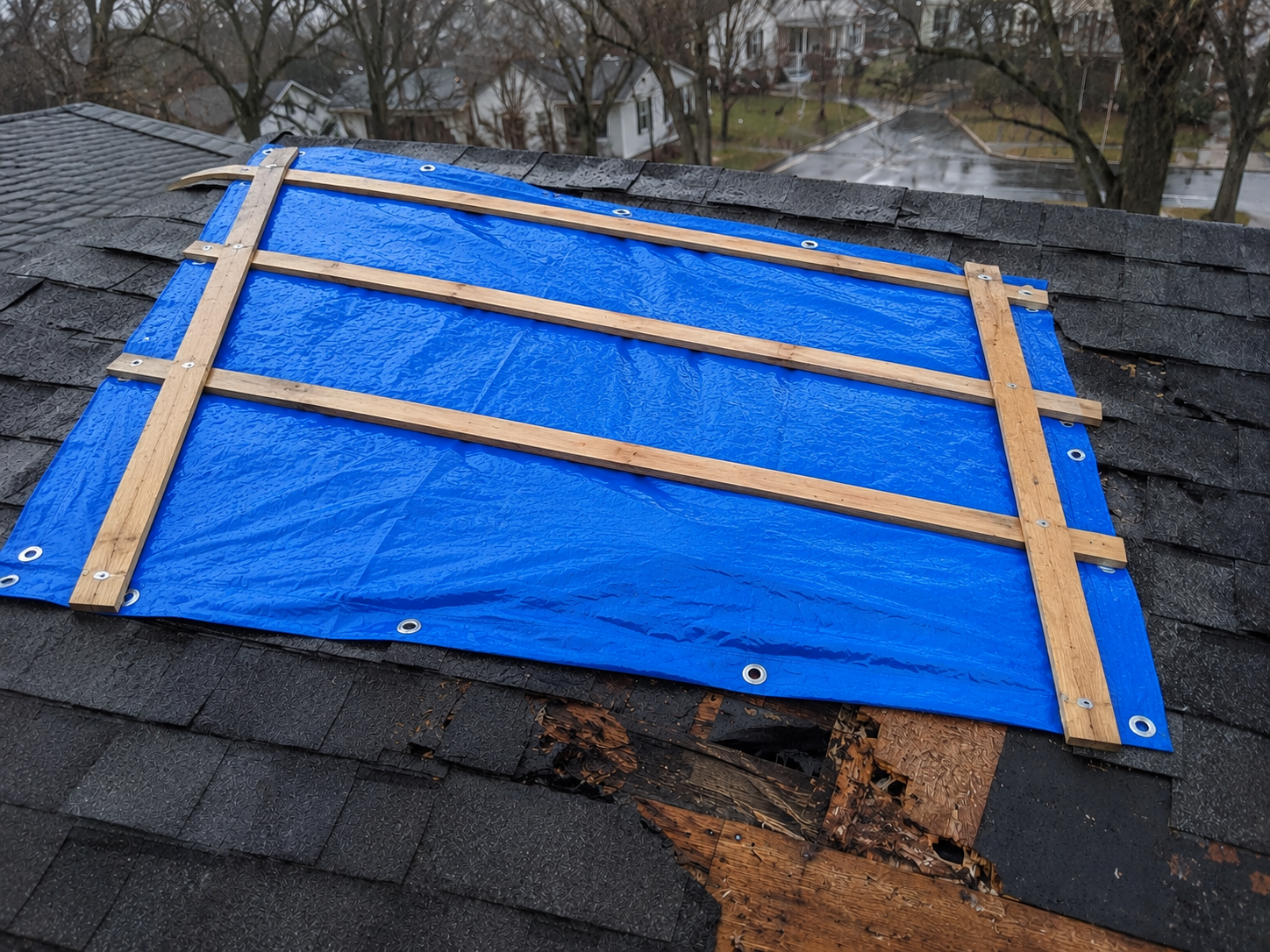
An emergency tarp stops active water infiltration by covering the damaged roof area and directing water around the opening until permanent repair can be completed. It prevents additional interior damage from accumulating while the permanent repair scope is assessed and scheduled.
A tarp is not a permanent repair. It will not hold indefinitely in Portland's sustained rain and wind — tarps must be secured correctly, anchored at the ridge and weighted at the edges, and inspected after any significant wind event. We deploy tarps as a bridge to permanent repair, not as a long-term solution.
Self-Adhering Flashing Membrane — Better Than a Tarp for Small Openings
For smaller damaged areas — a missing shingle section, a failed pipe boot, or an open flashing joint — self-adhering waterproofing membrane applied over the damaged area provides better temporary protection than a tarp. The membrane bonds to the existing roofing, seals around fasteners, and does not shift in the wind. For limited-damage situations where the deck and surrounding shingles are intact, membrane application is our preferred temporary protection method.
Tree Debris — Do Not Attempt to Remove It Before We Assess
A tree or large branch that has come to rest on the roof may be providing structural support to damaged framing — removing it without assessment can cause additional collapse. Do not attempt to remove tree debris from the roof before a qualified professional has assessed the structural condition. Call us, describe what you can see, and we will advise on whether debris removal can wait for our arrival or requires immediate action by a tree service.
Interior Protection While Waiting for Response
If water is actively entering before we arrive: place buckets to collect drips, lay plastic sheeting on floors and furniture to protect from secondary water spread, and if you can safely access the attic, place plastic sheeting over insulation in the affected area to slow water migration. Do not attempt to go on the roof in a storm or at night — the risk of a fall in wet or dark conditions is higher than the additional damage the water will cause before we arrive.
Insurance Documentation — What You Need and What We Provide
Document Before Cleanup
Before removing debris or beginning any cleanup, photograph all damage — exterior roof damage, interior ceiling and wall damage, and any fallen debris in its original position. Insurance adjusters need to see the damage as it occurred, not after it has been partially cleaned up. We document all damage photographically as part of our emergency response, but the homeowner should also photograph independently before we arrive if possible.
What VResh Provides for Your Claim
We provide a written damage assessment documenting the cause of damage, the extent of roof and structure damage, the temporary protection installed, and the scope of permanent repair required. This documentation is provided to the homeowner at no charge and is formatted for submission to a homeowner’s insurance adjuster. We do not charge for the documentation itself — it is part of our emergency response.
Supplement Claims for Discovered Damage
When permanent repair work uncovers additional damage not visible in the initial assessment — deck rot beneath the damaged shingles, framing damage not visible from the attic, or moisture damage in wall assemblies — we document the discovered damage and advise on whether a supplemental insurance claim is appropriate. Supplement claims are common in tree impact situations where the impact load causes damage that is not visible until debris removal and sheathing access.
Working with Your Insurance Adjuster
Most homeowner’s insurance policies cover sudden and accidental roof damage from storm events, tree impact, and similar causes. Gradual deterioration, deferred maintenance, and pre-existing conditions are typically excluded. We work alongside your insurance adjuster — we are available to meet the adjuster on site, provide our assessment documentation, and explain the scope of permanent repair. We do not inflate scopes to maximize claims; we document what is damaged and what repair is required.
Serving Portland Metro Area
VResh Construction provides window replacement, siding installation, roofing, dry rot repair and full exterior renovation services throughout the Portland metro area and Southwest Washington.
Portland Metro — Oregon
Southwest Washington
Extended Service Areas
(503) 272-6436 — Call or Text, Available 24/7
We answer calls and texts at any hour. For storm damage, active leaks, or structural emergencies, calling directly is the fastest path to a response.
Emergency Roof Repair FAQs — Portland Homeowners


Client's Talk
We have a wealth of experience working as main building contractors on all kinds of projects, big and small, from home maintenance and improvements to extensions, refurbishments and new builds.
Get a Free Andersen Window Estimate
Vlad comes out, assesses every opening, and gives you a straight written quote — no sales pressure, no commitment required.
✓ Same-day response on all estimate requests
✓ No commission-based sales — just honest quotes
✓ Licensed OR #241979 · WA #VRESHCL776ND
✓ EPA Lead-Safe Certified for pre-1978 homes
✓ All major window brands available — we let you choose