
Fog Between Your Window Panes? It's the Seal, Not the Glass
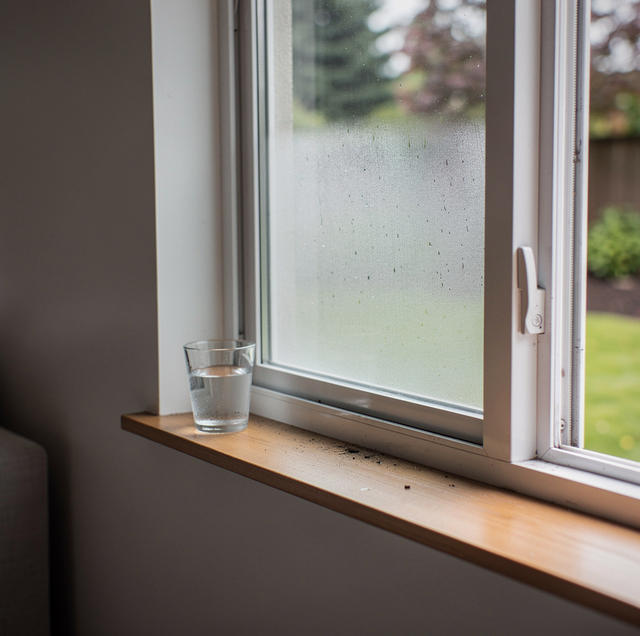
The first time you notice it, the gray smudge in the corner of the glass looks like something a rag and glass cleaner should handle, and nothing you spray on either side of the window touches it. That's because the smudge isn't on a surface you can reach. It's fog trapped between the two panes of glass, sealed inside a space no cleaning cloth has ever entered.
Most double- and triple-pane windows work because the space between panes is sealed shut at the factory and filled with air or an insulating gas. When the seal holding that space closed gives out, moisture gets in, and the glass itself is rarely the problem. The window unit inside the frame, the sealed glass assembly known in the trade as an insulating glass unit, is what actually failed. That distinction matters for the repair, because it points at the sealed unit specifically rather than the wood, vinyl, or fiberglass frame holding it, which in most cases is still doing its job fine.
Quick Answer: Fog between window panes means the sealed glass unit's factory seal has failed, letting moisture into a space no cleaner can reach. The glass and frame are usually fine; the sealed unit needs replacing, not cleaning.
The Seal Between the Panes
Most windows built in the last several decades use two or three panes of glass held a fixed distance apart by a spacer that runs around the entire perimeter of the unit: a hollow metal strip — or a foam strip with the desiccant blended into it. The desiccant is a moisture-absorbing material similar to the small packets that come inside a new pair of shoes to keep them dry in the box. Two separate seals hold the whole assembly together: a primary seal, usually a bead of polyisobutylene, that keeps gas and moisture from moving in or out, and a secondary structural seal, often silicone or polysulfide, that bonds the glass to the spacer and holds the unit rigid inside the sash. Fill the sealed gap with argon or krypton instead of ordinary air, and the unit insulates noticeably better, at least until one of those seals gives. None of that assembly is visible once the unit is set into a finished sash, which is part of why a failed seal reads as a mystery: everything a homeowner can see and touch is still intact.
How the Seal Comes Apart
Every one of those seals is under constant mechanical stress, whether or not anyone is home to notice it. The gas trapped between the panes expands on a hot afternoon and contracts overnight, and that daily pumping action flexes the seal at the spacer joint thousands of times a year. Direct sunlight adds a second stress: ultraviolet light breaks down the polymer chains in the sealant over years of exposure, making it brittle exactly where it needs to flex the most. A frame that doesn't drain well compounds both problems, because water sitting against the bottom of the sash for days at a time softens the seal from the outside in, working faster than sun or temperature alone. Beneath all three is simple age: every sealant has a service life, and a unit installed decades ago is closer to the end of it than a sign of some new problem appearing all at once. That daily flexing also matters more at the corners of the unit, where the spacer has to turn a tight bend, and the seal is thinnest to begin with, which is often where a failure starts even when the rest of the perimeter still looks intact.
Why the Desiccant Buys You Years, Then Buys You Nothing
A window that looked perfectly clear in June and fogged over by September did not fail in three months: it failed years earlier, gradually, and only just ran out of a capacity that had been quietly protecting it the whole time. That capacity is the desiccant packed into the spacer. It absorbs any trace moisture that works its way past a compromised seal, keeping the air between the panes dry even after the seal has begun to leak. Fog only shows up once the desiccant reaches the edge of its capacity, and permanent haze waits until it is fully saturated and can't pull one more molecule of water vapor out of that trapped air. That's why the problem reads as sudden, arriving after years with no sign of trouble, when the seal itself has likely been failing since well before you noticed anything. What the desiccant can hold is set at the factory, and it is finite: the strip inside the spacer holds a fixed amount of water, and nothing about normal use restores what it has already taken up. A larger unit carries a longer run of spacer and more desiccant with it, which is part of why two windows installed on the same day, sealed the same way, can fog years apart.
Metal spacers conduct outdoor heat and cold straight to the glass edge; foam or non-metal spacers slow that transfer. Warm-edge systems put less daily flex on the seal, one reason newer units outlast older aluminum-spacer windows.
Comes-and-Goes Fog vs. the Haze That Never Leaves
The pattern the fog follows across a day tells you how far along the failure is. Intermittent fog, condensation that appears and disappears with the weather, means the desiccant is sitting at the edge of its capacity: it can still hold the moisture in that cavity at mild temperatures, but not once a cold morning drops the trapped air below its dew point. That is the last stage before the haze turns permanent, and it is still early enough to schedule a repair on your own timeline rather than as an emergency. Haze that never fully clears, or a gray-white film that looks etched into the glass itself, means the desiccant is fully saturated and has been for a while, and moisture has been cycling in and out of that space long enough to leave mineral deposits behind on the interior glass surfaces.
That film is mineral residue bonded to the two glass surfaces that face each other inside the sealed cavity. Scrubbing the outside or inside face of the window targets entirely different glass, which is why the cleaning makes no difference.
The Argon Loss You Can't See
The insulating gas sealed into that cavity leaves through the same failing seal that lets water vapor in. A seal loose enough to admit trace water vapor over several years is also loose enough to let argon or krypton gas slowly escape outward, and gas loss typically runs ahead of visible fog rather than behind it. Argon is denser and slower-moving than ordinary air, which is what makes it slow the heat crossing the gap in the first place, so as it thins out and air works its way in to replace it, the gas in that cavity circulates more freely, and the window gives up insulating value a little at a time. A window can lose a meaningful share of its fill gas, and with it a real share of the insulating performance printed on its original energy label, for years before anyone sees a haze and connects it to the window at all. The room near that window just runs a little less comfortably than it used to, with no obvious cause. A slightly colder draft near the glass on a winter evening, or a room that takes longer to hold its temperature than the rest of the house, is often the first sign of a seal problem well before any haze is visible, and it tends to get written off as an old window rather than traced to a specific failure.
What the Fix Depends On
Once a seal has failed, three options exist: replacing only the insulating glass unit, replacing the full sash, or replacing the whole window. Which one applies turns on the condition of the sash and the frame around the failed unit rather than on the fog itself, so a contractor checks the sill and jambs for soft or spongy wood, confirms the sash still operates and closes tight against its weatherstripping, and measures the actual opening against what the original manufacturer built to. Getting that assessment right the first time keeps a repair proportional to the actual damage, rather than paying for more replacement than the window needs.
Drilling a weep hole into a fogged unit to dry it out does not fix the seal. It destroys the unit, lets in more moisture, and does nothing to restore the insulating gas that already escaped.
Frequently Asked Questions
Yes. Windows that take the most direct sun swing through a wider daily temperature range than shaded windows on the same house, and that wider swing puts more daily flex on the seal, so sun-exposed windows are often the first to show fog even when every window was installed at the same time.
Yes. A triple-pane unit has two separate sealed cavities rather than one, so a seal can fail on just one side while the other remains completely clear, which is sometimes mistaken for a partial or minor failure rather than a fully compromised cavity.
Yes. A Low-E coating is applied to one specific glass surface at manufacture, numbered by its position in the stack, and a replacement unit has to match that same coating and surface position or the window's appearance and performance will visibly differ from the rest of the house.
On windows where the grid is mounted between the panes rather than applied to the surface, the grid is attached to the spacer, so a spacer that has started to shift as the seal opens can make the grid visibly tilt or rattle before any fog is noticeable at all.
Yes. The U-factor and solar heat gain numbers on a window's original NFRC label reflect its as-built condition, with intact gas fill and seals, so a compromised seal can measurably lower a home's actual as-built performance relative to the numbers used when the window was purchased or during an energy audit.
No. Many double-hung replacement windows use a sash pocket designed to be pulled and reglazed in place, while casement sashes are more often built as a fixed, welded unit, and which design is in the wall determines whether just the sash can be swapped without disturbing the surrounding frame.
Schedule a window inspection — get a clear answer on whether the fix is glass, sash, or full window replacement. VResh Construction serves the Portland metro. CCB #241979. Call (503) 272-6436.
