
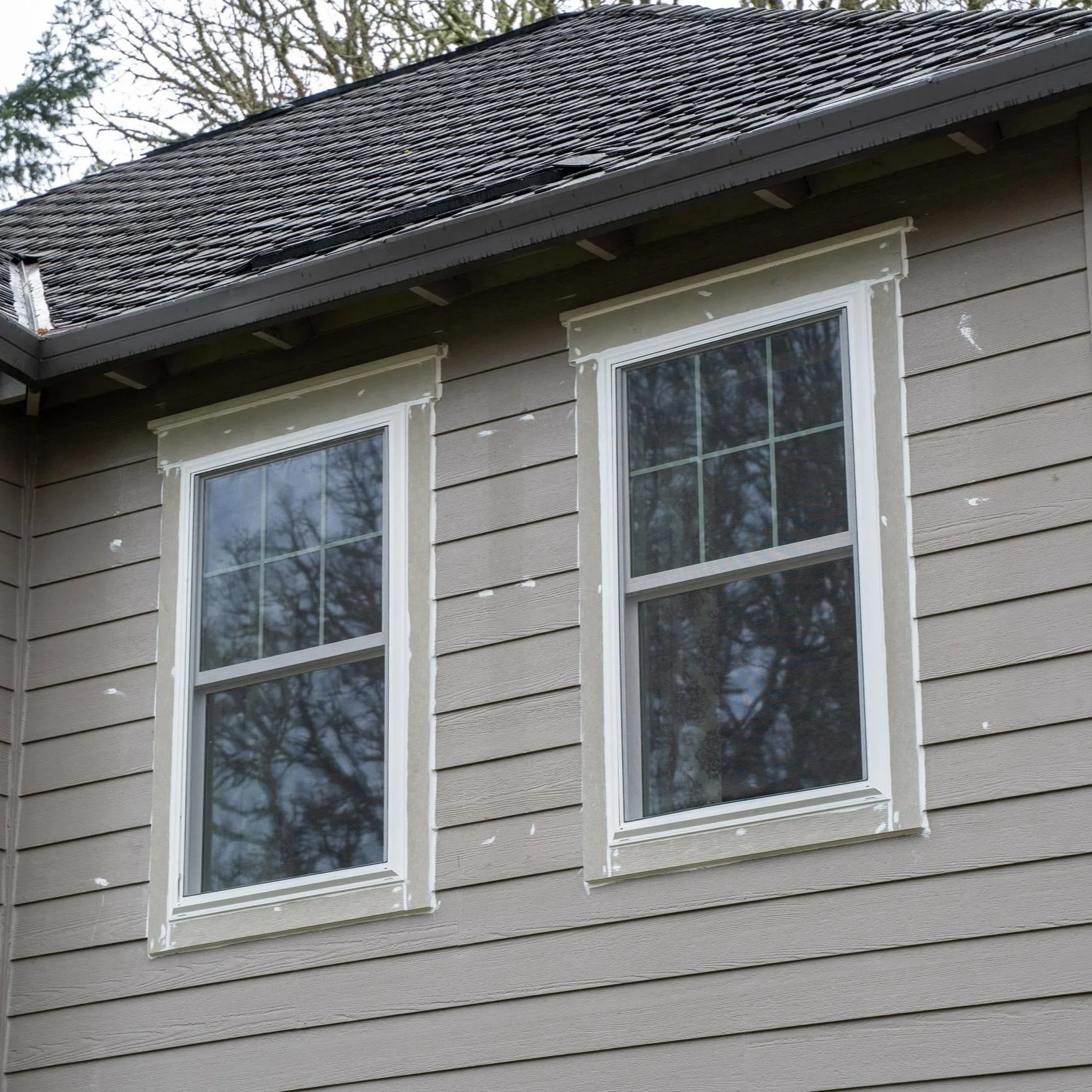
Double-Hung Window Replacement in Portland, OR
Both Sash Operate. Tilt-In Cleaning on Modern Units. Portland’s Most Commonly Replaced Window Type. All Major Brands. Licensed OR #241979.

Double-hung windows are Portland’s most commonly replaced window type — found in homes built from the 1920s through today across every neighborhood. Both sash slide vertically, giving independent ventilation control from two positions. On modern units, both sash tilt inward for cleaning from inside the home — eliminating the need for ladders or exterior access to clean second and third-floor windows. VResh handles the full double-hung replacement: removal, rough opening assessment and repair, proper sill pan flashing, installation, and interior and exterior trim restoration.
The most common double-hung replacement scenario we see in Portland is aging vinyl windows from the 1990s and early 2000s — fogged glass from failed seals, sash that won’t stay up, and hardware that no longer operates correctly. The second most common is replacing original single-pane wood double-hungs in pre-1960 homes. Both situations require the same careful approach: assess the rough opening before ordering, repair any rot at the sill, and install with proper sill pan and head flashing.
Single-Hung Windows — When They Make Sense
Single-hung windows look almost identical to double-hung units from the street, but only the bottom sash moves. They cost less in the same size and material, and on ground-floor windows, where the outside glass is easy to reach, the fixed top sash rarely matters. Many Portland homes built from the 1950s through the 1990s have single-hung windows, and a like-for-like replacement keeps the look of the house consistent.
We recommend double-hung instead for upstairs rooms, where cleaning the outside of a fixed top sash means a ladder, and for rooms that need top-down ventilation, such as a child’s bedroom where the lower sash stays closed. Many homeowners mix the two, with single-hung on the ground floor and double-hung upstairs, to keep the cost down without giving up convenience where it counts.
Why Double-Hung Windows for Portland Homes
Dual Ventilation Positions
A double-hung window provides two independent ventilation options: bottom sash up, top sash down, or both simultaneously. Opening the top sash alone allows warm air to escape from the top of the room while keeping the lower sash closed — useful for child and pet safety, and for directing airflow in rooms where a low opening would create a draft. For Portland's warm-season ventilation, the combination of top and bottom openings creates convective airflow that casement or single-hung windows cannot replicate.
Tilt-In Cleaning — Modern Convenience
Modern double-hung windows (virtually all units built after the late 1990s) have a tilt-in feature on both sash — the sash pivots inward on pivot bars at the bottom of each sash track, allowing the exterior glass surface to be cleaned from inside the home. For Portland's second and third-floor windows, this eliminates the need for ladders or exterior access to clean exterior glass. Original single-pane wood double-hungs do not have this feature — it is one of the most appreciated improvements homeowners notice after replacement.
Portland's Most Common Replacement Window
Double-hung windows are found in Portland homes across every era and every neighborhood — from 1920s colonial revivals to 1960s ranches to 1990s new construction. They are the default window type for bedrooms, living rooms, and secondary openings throughout the Portland housing stock. This ubiquity means all major brands offer a wide range of double-hung products, parts availability is excellent, and lead times are shorter than specialty products. It is also the window type we install most frequently.
Compatible with Every Portland Home Style
Unlike casement windows (which are strongly associated with Craftsman and colonial architecture) or picture windows (which suit contemporary design), double-hung windows are visually neutral and work with every Portland architectural style. They are the correct replacement choice when architectural character is not a primary concern, and the goal is maximum performance, reliable operation, and competitive pricing.
Double-Hung Window Configurations for Portland Homes
|
Standard Double-Hung
|
Both sash slide vertically with full tilt-in cleaning. The most widely available configuration across all brands and price tiers. Available in virtually any size — from narrow bedroom windows to wide living room units. The default choice for most Portland replacement projects. |
|
Single-Hung
|
Only the bottom sash is operable — the top sash is fixed. Single-hung windows cost less than double-hung units of identical size and construction because they have fewer moving parts. The tradeoff is loss of top-sash ventilation and, typically, loss of the tilt-in cleaning feature on the fixed upper sash. Appropriate for budget-constrained applications where top-sash ventilation is not needed. |
|
Double-Hung with Grilles (SDL)
|
Simulated divided light grille bars replicate the appearance of original multi-pane wood windows. For Portland homes built before 1960, grille patterns (6-over-6, 6-over-1, 3-over-1) maintain historic character while providing the performance of a modern sealed unit. Grille bars are available on the exterior glass, between the panes, and on the interior — the between-pane spacer is the most weather-resistant and requires no cleaning. |
|
Wide Double-Hung (Mulled or Single Wide Unit)
|
For large openings — wide living room windows, picture-window replacements, and wide bedroom openings — double-hung windows can be specified in wide single units or mulled side-by-side. Wide single units simplify installation and avoid center-post visual interruption. Mulled units allow independent operation of each section. Both require careful rough opening assessment for structural support at the header. |
|
Low-Profile / Slim-Frame Double-Hung
|
Contemporary double-hung products offer slimmer frame profiles with greater glass-to-frame ratios — more visible glass, less frame border. Popular in modern and contemporary Portland homes, where maximum light and minimal frame are both priorities. Available in aluminum-clad wood and premium vinyl lines from most major manufacturers. |
|
Fiberglass Double-Hung
|
Fiberglass frames expand and contract at nearly the same rate as glass, so the seals around the glass stay tight through Portland’s wet winters and warm, dry summers. Fiberglass is stronger and more rigid than vinyl, which allows slimmer frames, and it can be painted. It costs more than vinyl and less than most clad-wood lines, which makes it a common middle choice for homeowners who plan to stay in the house long term. |
|
Egress-Size Double-Hung
|
Oregon code calls for every bedroom to have an emergency escape opening: at least 5.7 sq ft of net clear opening, 24 inches of clear height and 20 inches of clear width, with the sill no more than 44 inches above the floor. Only the bottom sash of a double-hung opens, so the unit has to be roughly twice as tall as the clear height it gives. When a bedroom window falls short, we size the replacement to meet the requirement or recommend a casement. Our egress window page covers the full requirements. |
Double-Hung Window Installation — What the Project Involves
Repair vs. Replace — What to Know Before You Call
Fogged Glass — Seal Failure vs. Full Replacement
Fogged or cloudy glass means the insulating gas seal between the panes has failed — moisture has infiltrated the air space and condenses on the interior glass surfaces. In most cases, the frame is structurally sound, and the balance hardware still operates correctly. Replacing just the sealed glass unit is often the right call: lower cost, less disruption, and the frame’s flashing and air sealing stay intact. If the sash itself is worn, a sash replacement is the next step up. We assess which repair fits at the estimate visit and will not upsell a full-frame replacement if a glass replacement or sash repair solves the problem.
Failed Sash Balance — Sash That Won’t Stay Up
Original Portland double-hung windows used coil spring or block-and-tackle balances. Both wear out — a sash that falls when released, slides down on its own, or is impossible to open without propping indicates failed balance hardware. In most pre-1980 wood double-hungs, balance replacement is a repair job, not a full window replacement. Modern replacement windows use spiral balance systems that are significantly more durable. When the frame is intact and rot-free, we assess whether balance repair makes more sense than full replacement.
Air Infiltration and Drafts — Replace or Restripe?
Drafts around a double-hung window most commonly come from worn or missing weatherstripping on the sash, failed caulk at the exterior trim, or gaps in the interior stop. Weatherstrip replacement is inexpensive and often deferred longer than it should be. If the frame is sound and the sash operates correctly, weatherstrip replacement extends the window’s useful life significantly. Full replacement is warranted when the frame is damaged, the sash is warped, or the window’s thermal performance no longer meets current expectations.
Condensation on the Glass Interior Surface
Condensation on the interior glass surface (the room-side pane) is a humidity problem, not a window failure. It means indoor humidity is high enough to condense on the coldest surface in the room. A new, better-insulated window keeps the room-side glass warmer and usually reduces it, but if indoor humidity stays high, condensation will still form on the glass and other cold surfaces. The lasting fix is humidity control: bath and kitchen fans that vent outside, and a dehumidifier in damp rooms.
Serving Portland Metro Area
VResh Construction provides window replacement, siding installation, roofing, dry rot repair and full exterior renovation services throughout the Portland metro area and Southwest Washington.
Portland Metro — Oregon
Southwest Washington
Extended Service Areas
(503) 272-6436 — Call or Text, Available 24/7
We answer calls and texts at any hour. For storm damage, active leaks, or structural emergencies, calling directly is the fastest path to a response.
Double-Hung Window FAQs — Portland Homeowners


Client's Talk
We have a wealth of experience working as main building contractors on all kinds of projects, big and small, from home maintenance and improvements to extensions, refurbishments and new builds.
Get a Free Window Estimate
Vlad comes out, assesses every opening, and gives you a straight written quote — no sales pressure, no commitment required.
✓ Same-day response on all estimate requests
✓ No commission-based sales — just honest quotes
✓ Licensed OR #241979 · WA #VRESHCL776ND
✓ EPA Lead-Safe Certified for pre-1978 homes
✓ All major window brands available — we let you choose