The first quote says $14,000 for 12 windows. The second quote says $32,000 for the same 12 windows. Both contractors showed up, both measured, both seemed competent. The $18,000 gap between those numbers isn't a mistake — it's the difference between vinyl and fiberglass, between a pocket insert and a full-frame replacement, between a crew that skips the flashing and one that doesn't.
Window replacement pricing in Portland is wider than for almost any other home project because the variables stack up. The window brand matters. The frame material matters. The type of window matters. And the condition hiding behind the existing trim — rot, moisture damage, failing framing — can add thousands that nobody sees until the old window comes out. Here's how the costs break down.
Cost by Window Material
| Frame Material | Per Window (Installed) | 10-Window Project | 15-Window Project |
|---|---|---|---|
| Vinyl (Milgard Tuscany, Jeld-Wen W-2500) | $800-$1,400 | $8,000-$14,000 | $12,000-$21,000 |
| Fibrex composite (Andersen 200 Series) | $1,000-$1,800 | $10,000-$18,000 | $15,000-$27,000 |
| Fiberglass (Milgard Ultra, Marvin Elevate) | $1,200-$2,500 | $12,000-$25,000 | $18,000-$37,500 |
| Wood-clad (Andersen 400, Marvin Signature) | $1,800-$3,500+ | $18,000-$35,000 | $27,000-$52,500+ |
These ranges include standard installation with proper flashing. Bay windows, bow windows, egress cut-ins, and rough opening repairs are additional.
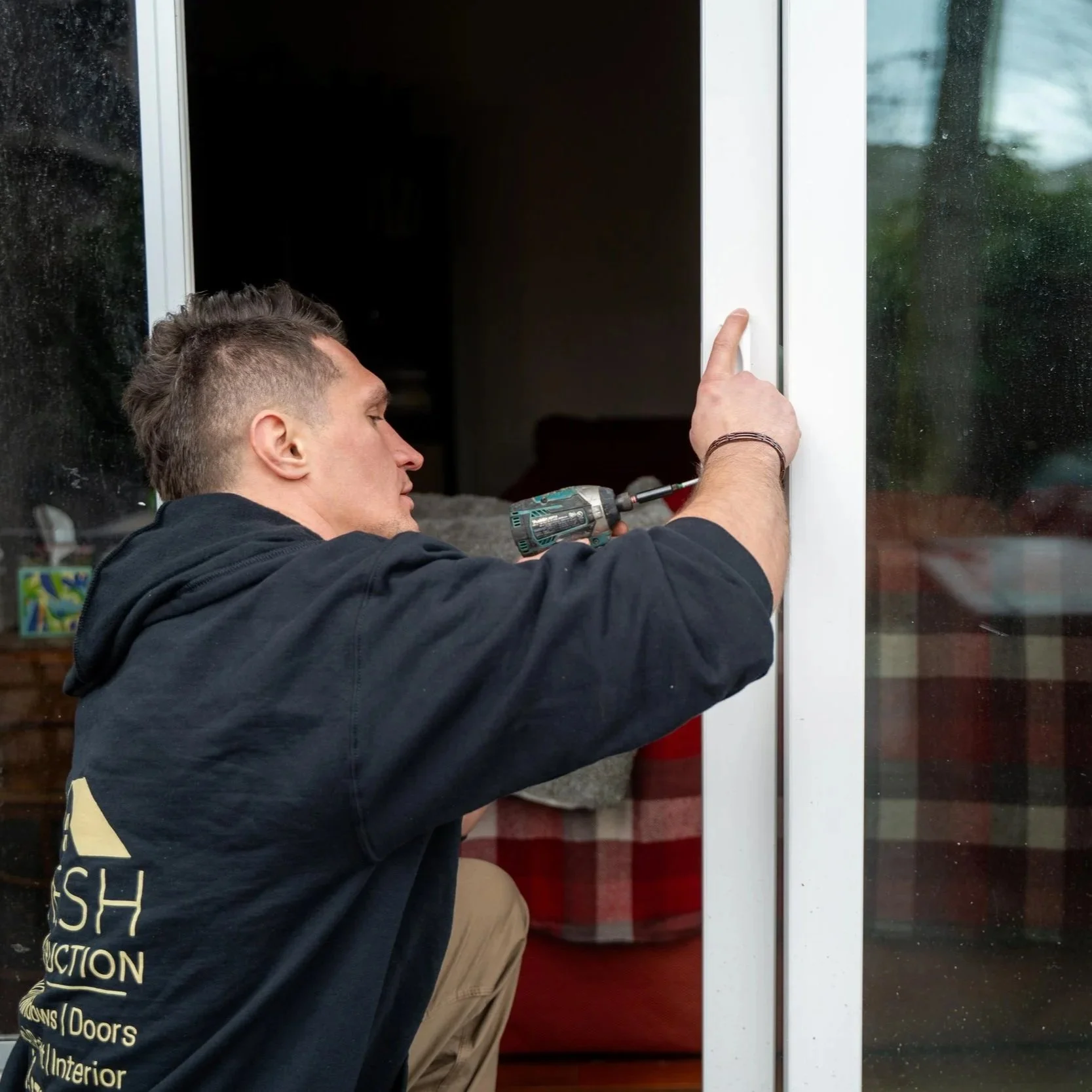
Contractor installing replacement window while discussing Portland window brands, energy efficiency, warranty coverage, and long-term exterior performance benefits.
Cost by Brand — Portland Pricing
Portland contractors install a handful of major window brands. Each occupies a different price tier and serves a different purpose.
Milgard sits at the value-to-performance sweet spot for most Portland homes. The Tuscany series (vinyl) runs $850-$1,300 per window installed and carries a Full Lifetime Warranty for the original owner — one of the strongest warranties in the industry. The Ultra series (fiberglass) runs $1,200-$2,000+ and offers better dimensional stability across Portland's temperature swings. Milgard is headquartered in Tacoma and engineers specifically for the Pacific Northwest rain and freeze-thaw cycles.
Andersen covers a wide price range. The 200 Series (Fibrex composite) runs $1,000-$1,800 per window. The 400 Series (wood interior with Fibrex exterior) runs $1,200-$2,800+ and works well for historic home renovations where interior wood character matters. Andersen carries an Owner-to-Owner transferable limited warranty — 20 years on glass, with non-glass component coverage varying by series and material.
Marvin is the premium tier. The Marvin Elevate (real wood interior, Ultrex fiberglass exterior) runs $1,400-$2,500+ per window and carries a 20-year limited warranty. The Ultimate series (fully custom wood) runs $2,000-$5,000+ each with a 10-year limited warranty. Marvin's Ultrex fiberglass exterior expands and contracts at nearly the same rate as glass — roughly 4-5 times less movement than vinyl — which reduces seal stress over decades.
Jeld-Wen offers solid value at the budget-to-mid tier. The W-2500 vinyl series runs $650-$1,400 per window installed with a Limited Lifetime Warranty. A good fit for larger projects where the budget is tight but quality installation still matters.
Pella falls in the mid-to-premium range at $900-$2,200+ per window. The 250 Series (vinyl) competes with Milgard Tuscany. The Lifestyle Series offers wood interior options similar to Andersen's 400 Series.
Cost by Window Type
| Window Type | Replacement Cost (Installed) | Notes |
|---|---|---|
| Double-hung | $800-$2,000 | Most common in Portland homes pre-1990 |
| Casement | $900-$2,200 | Best air seal when closed; crank operation |
| Sliding | $750-$1,800 | Common in 1960s-1980s ranch homes |
| Picture/Fixed | $600-$1,600 | Best energy efficiency; no operable seams |
| Bay window | $3,500-$8,000+ | Requires structural header work |
| Bow window | $4,000-$9,000+ | 4-6 panels in gentle curve; complex install |
| Egress cut-in | $1,500-$3,500+ | Enlarging rough opening; structural work required |
The window type affects more than price. Bay and bow windows project through the exterior wall plane and need structural headers, roof flashing at the projection, and more complex trim work. Egress cut-ins require sawing through the foundation wall or enlarging an existing opening — that's structural work on top of the window cost.
What Drives the Price Up
Rough opening condition. This is the big surprise on Portland projects. The old window comes out, and the rough sill is soft, the jack studs have moisture damage, or the sheathing behind the trim has been absorbing water for years. Repairing rot in a rough opening adds $500-$2,000+ per window. On homes built before 1960, finding some level of moisture damage is more common than not finding any.
Full-frame vs. pocket replacement. A pocket (insert) replacement slides a new window sash into the existing frame, leaving the old frame, flashing, and trim in place. It's faster and cheaper — but it doesn't address failing flashing, hidden rot, or deteriorated seals behind the existing frame. A full-frame replacement removes everything back to the rough opening, inspects and repairs the framing, installs proper flashing, and builds it back from scratch. The full-frame approach costs 20-40% more but catches problems that pocket replacements hide.
Lead-safe work practices. Portland homes built before 1978 — a large share of the city's housing stock — likely have lead paint on window frames, trim, and surrounding surfaces. EPA RRP rules require Lead-Safe Certified contractors to follow specific containment and cleanup protocols. Compliance adds $300-$800 to the project, but is required by federal law — not optional.
Custom sizes and configurations. Portland's older housing stock — Craftsman bungalows, Victorians, foursquares — often has window openings that don't match standard catalog sizes. Custom-ordered windows add 2-6 weeks of lead time and 15-30% to the per-window cost compared to standard sizes.
Access and height. Second-story windows, windows over rooflines, and windows in tight spaces between houses increase labor time. Scaffolding adds $500-$1,500 to a project, depending on the scope.
What Should Be in the Quote
A window replacement quote should break down every component so two quotes can be compared side by side.
Window specification. Brand, series, frame material, glass package (double-pane Low-E with argon is standard; triple-pane is the upgrade), and configuration. The exact product should be named — "vinyl double-hung" isn't specific enough to compare.
Installation method. Full-frame or pocket replacement. This one distinction can account for a 20-40% price difference between two quotes for the same window.
Flashing and moisture management. Sill pan, head flashing, weather-resistive barrier integration, and air sealing should all be listed. If the quote doesn't mention flashing, it probably isn't included — and that's the detail that prevents water damage behind the new window for the next 20 years.
Rough opening repairs. The quote should address how rot or damage discovered during removal will be handled — a per-window repair allowance or a separate line item. Discovering rot mid-project shouldn't require a change order negotiation.
Lead-safe compliance. For pre-1978 homes, RRP compliance should be a line item. If it's missing, the contractor may not hold EPA Lead-Safe Certification.
Trim and finish. Interior casing, exterior casing, or brick mold, caulking, and paint touch-up. A window installation that leaves unfinished trim isn't a finished job.
Permit. Portland requires permits for window replacements that involve structural changes (enlarging openings, adding headers). The contractor should handle permit applications and inspections.
Get quote — Planning a window replacement? VResh Construction provides detailed, itemized window estimates with full flashing on every project. Call (503) 272-6436 for a free on-site assessment.
Portland Climate and Window Performance
Portland gets 37+ inches of rain annually, most of it arriving as sustained horizontal events from October through May. That puts more stress on window installations than almost any other climate in the country. The rain doesn't just fall down — it blows sideways into window frames, trim joints, and any gap in the flashing system. That sustained horizontal moisture separates a window that lasts 25 years from one that rots the framing behind it in 10.
Three installation details determine whether a window holds up long-term in Portland's climate.
The head flashing sits above the window and directs water running down the wall away from the top of the rough opening. Without it, water enters above the window frame and soaks into the framing. It's a $30 piece of metal that prevents thousands in damage — and it's the most commonly skipped detail on budget installations.
Sill pan flashing sits at the bottom of the rough opening and catches any water that gets past the window frame, directing it back to the exterior. Without a sill pan, that water sits on the rough sill and rots the framing from below. Nobody finds out until the drywall stains or the siding buckles.
Air sealing fills the gap between the window frame and the rough opening with low-expansion foam. That gap — typically 1/4 to 1/2 inch — allows cold air in during winter and transmits moisture into the framing during Portland's wet months. Proper foam sealing takes 10 minutes per window and makes a noticeable difference in energy performance.
Choosing the Right Brand for the Home
The brand decision depends on the home, the budget, and how long the windows need to last.
Most Portland ranch homes and standard residential replacements land on Milgard Tuscany or Jeld-Wen vinyl. These homes were built between 1950 and 1985, usually have standard-size openings, and need windows that perform well in rain without blowing the renovation budget. At $800-$1,400 per window, a full-house replacement stays in the $12,000-$22,000 range — realistic money for most homeowners.
Historic homes where window appearance matters — Craftsman bungalows, Victorians, Portland foursquares — are better served by Marvin Elevate or Andersen 400 Series. Real wood interiors match the character of original millwork. Marvin's Ultrex fiberglass exterior handles Portland's moisture better than any other exterior cladding material on the market. The premium is real — $1,400-$2,500+ per window — but so is the result on a home where the window profile is visible and part of the architecture.
For long-term value without the premium price, Milgard Ultra (fiberglass) sits in between. Better dimensional stability than vinyl, stronger thermal performance, and the same Full Lifetime Warranty. At $1,200-$2,000+ per window, it fills the gap between vinyl and premium wood-clad options.
The brand on the window matters less than what happens during installation. A poorly installed premium window fails faster than a well-installed budget window. Sill pans, head flashing, drainage planes, air sealing — these details determine whether the investment holds up for 5 years or 25.
Frequently Asked Questions
The Budget Reality
A $12,000 budget replaces 10-12 vinyl windows with proper installation. A $25,000 budget replaces the same count in premium fiberglass or handles a smaller count in wood-clad. A $40,000+ budget covers a full-house replacement in Marvin Elevate or a combination of premium windows with structural rough opening repairs throughout. Knowing where the money goes makes every conversation with contractors more productive — and makes it easier to spot the quote that's too low because it's leaving something out.
Price per window is the wrong unit. A full-frame replacement and a pocket insert are different jobs at the same opening, and VResh Construction only does the first — which is why its number carries the sill pan and the head flashing with it. Window replacement in Beaverton, window replacement across Portland. Free estimate: (503) 272-6436.