Exterior Painting Cost Portland: Prep Work Is Where the Money Goes
The paint started peeling on the south side of the house within 18 months. The homeowner had paid $3,200 for a full exterior repaint two summers earlier — a price that seemed competitive at the time. The crew showed up on a Monday, pressure-washed on Tuesday, and started spraying the finish coat on Wednesday. No scraping. No priming of bare wood. No caulk inspection. The paint went over loose existing paint, bare patches where the old paint had already failed, and caulk joints that had cracked years ago. By the second winter, the new paint was lifting everywhere, the old paint underneath had been failing, and water was running through the same caulk joints that were never addressed.
That $3,200 paint job lasted 18 months. The corrective repaint — with proper scraping, priming, caulk removal and replacement, and spot repairs — costs $5,800. The homeowner paid $9,000 total for a job that should have cost $5,500-$6,500 once done right.
Exterior painting costs in Portland are driven by preparation, not by paint. The paint itself — even premium acrylic — is 15-20% of the project cost. The other 80% is labor, and most of that labor is preparation: cleaning, scraping, sanding, priming, caulking, and repairing the substrate before a drop of finish coat goes on. A low bid almost always means the prep was cut.
Cost by Home Type
| Home Type | Siding Area (approx) | Typical Cost Range | Notes |
|---|---|---|---|
| Single-story ranch (1,200-1,600 sq ft siding) | 1,200-1,600 sq ft | $3,500-$6,500 | Average prep, prime + 2 finish coats |
| 1.5-story bungalow/Cape Cod | 1,500-2,000 sq ft | $4,500-$8,000 | Dormers and gable ends add complexity |
| Two-story Colonial/foursquare | 2,000-2,800 sq ft | $5,500-$10,000+ | Scaffolding or lifts required for upper story |
| Large two-story with detailed trim | 2,500-3,500+ sq ft | $7,000-$12,000+ | Multi-story, extensive trim, multiple colors |
| Historic Craftsman with heavy detail | Varies | $8,000-$15,000+ | Window trim, bracket detail, column work |
These ranges include pressure washing, scraping and sanding, spot priming, caulk replacement, minor surface repairs, and two finish coats. They do not include extensive structural repairs (dry rot, siding replacement), lead abatement beyond standard RRP compliance, or color consultation services.
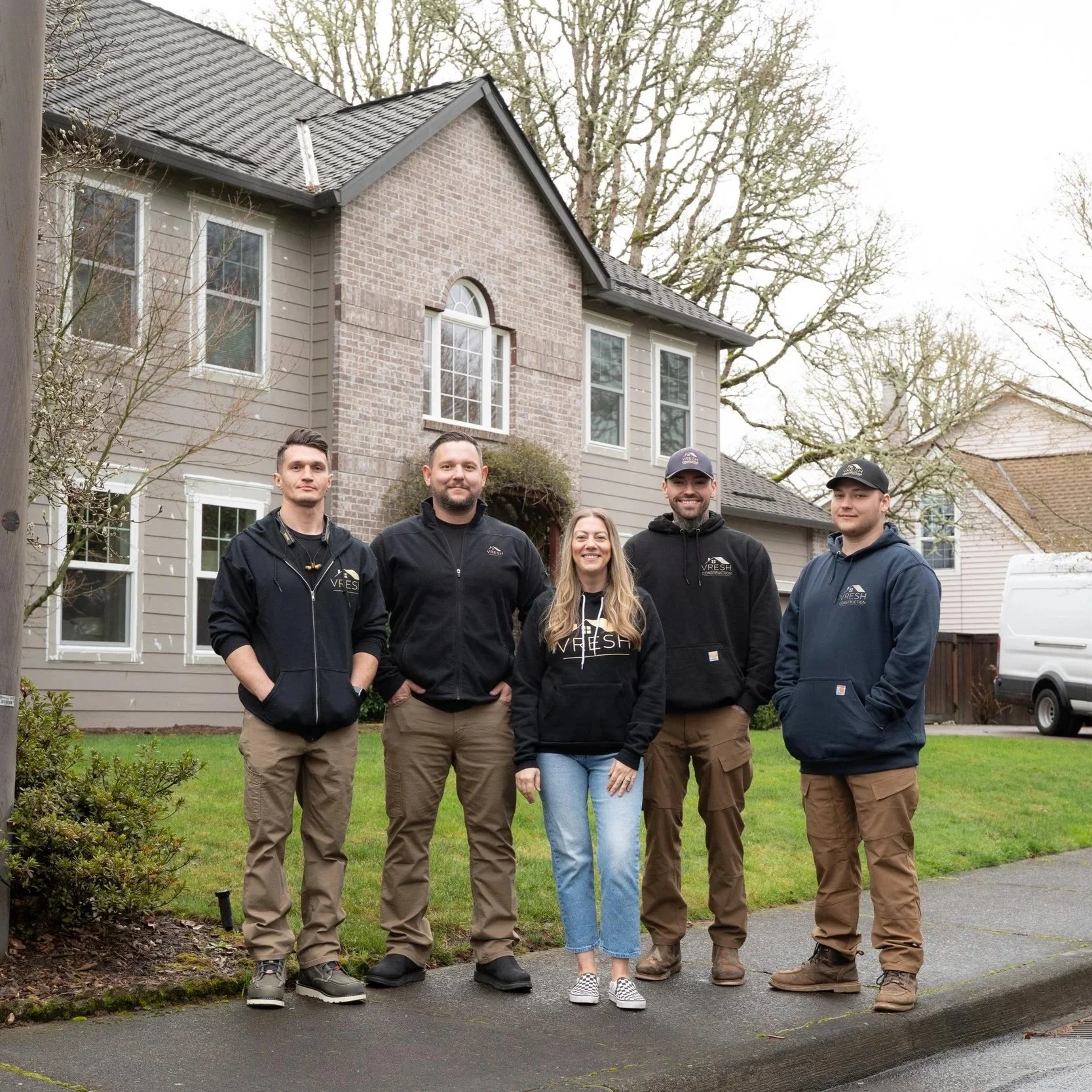
Painting contractors standing outside Portland home discussing exterior prep work, scraping, priming, caulking, and long-lasting paint application techniques carefully.
What Drives the Cost
Surface condition — the prep variable. A home that was properly prepped and painted 8 years ago and is due for a maintenance repaint requires less scraping, less priming, and fewer repairs than a home where the previous paint job failed 3 years ago and has been deteriorating since. The condition of the existing surface determines the prep labor, and the prep labor is the largest line item on an exterior paint estimate. Two homes of identical size can produce estimates $2,000-$4,000 apart based solely on surface condition.
Number of stories. Second-story work requires scaffolding, ladder jacks, or boom lifts. The equipment adds $500-$1,500 to the project, depending on the type and duration. The labor is also slower — working from scaffolding takes longer than working from the ground. A two-story home costs 40-60% more than a comparable single-story home, and the access equipment is a significant portion of that premium.
Trim complexity. A home with simple flat trim around windows and doors is painted faster than a Craftsman with exposed rafter tails, decorative brackets, column details, and multi-piece window casings. Detailed trim requires brush work — slower than spray or roller on flat siding — and more masking time. Homes with two or three paint colors (body, trim, accent) add masking and cutting-in time for each color change.
Substrate type. Different substrates require different products and different preparation. Cedar siding may perform better with a penetrating stain than a film-forming paint. James Hardie fiber cement has manufacturer-recommended coating specifications. Vinyl siding requires a bonding primer formulated for vinyl. Wood, fiber cement, and previously painted surfaces each have different priming and adhesion requirements that affect product selection and application method.
Lead-safe compliance. Portland homes built before 1978 — a large share of the housing stock, particularly in inner northeast, southeast, and northwest neighborhoods — likely have lead paint on some or all exterior surfaces. EPA RRP rules require Lead-Safe Certified contractors to follow containment and cleanup protocols when scraping, sanding, or otherwise disturbing painted surfaces. Compliance adds cost to the project. Most exterior painters in Portland are not EPA Lead-Safe Certified — which means they cannot legally scrape or sand pre-1978 surfaces. Ask for the certification before any work begins.
Timing and scheduling. The painting season in Portland runs roughly late June through September — the months with the lowest rainfall and the highest probability of consecutive dry days. Paint needs to be applied when the surface is dry, the temperature is above 40-50°F (depending on the product), and no rain is expected for at least 24 hours. Portland's dry window is narrow. Contractors who schedule into the wet season risk applying paint in marginal conditions, which compromises adhesion and durability. Most established Portland painting contractors are booked by May for the summer season.
Where the Money Goes — Prep vs. Paint
Most homeowners think of an exterior paint job as buying paint and paying someone to apply it. The reality is that 60-70% of the project cost is preparation, and the quality of that preparation determines whether the paint lasts 3 years or 12.
Pressure washing. All surfaces must be cleaned before any paint goes on. Portland homes accumulate dirt, mildew, algae, pollen, and surface chalking from the previous paint — especially on north-facing walls that stay damp longer. Painting over contaminated surfaces is the single most common cause of early paint failure. The surface must be clean and dry before priming or painting.
Scraping and sanding. All failing, peeling, or flaking paint must be removed down to a sound substrate. The edges of remaining paint must be feathered smooth so the new paint bridges evenly from painted to bare surfaces. Paint applied over loose existing paint peels with the existing paint — the new coat bonds to the old coat, and when the old coat lets go, both come off.
Priming. Every bare wood surface, every bare fiber cement surface, and every field-cut end must be primed before the finish coat. Primer does two things: it seals the substrate against moisture absorption, and it provides a bonding surface for the finish paint. Finish paint applied directly to bare wood, especially in Portland's climate, absorbs unevenly and fails prematurely.
Caulk removal and replacement. All failed caulk at window perimeters, door perimeters, corner boards, and trim joints must be removed and replaced. Old caulk that has cracked, separated, or pulled away from the substrate is an active water entry point during every rain event. Painting over the failed caulk seals the visible surface but does nothing to stop water from entering behind it. The proper sequence is: remove old caulk, inspect the joint for damage behind it, replace with fresh exterior caulk, and then paint.
Minor repairs. Nail holes, small cracks, failed caulk backer rod, and minor surface defects should be repaired before painting. These repairs prevent paint bridging failures — where the paint film spans a gap or crack and eventually ruptures as the substrate moves with temperature cycling.
When to Repaint vs. When to Replace Siding
Not every home with failing paint needs a repaint. Sometimes the substrate has deteriorated past the point where paint can protect it.
Repaint when the siding itself is structurally sound — firm to the touch, well-adhered, no soft spots — and the paint failure is a surface issue. Peeling paint on sound siding is a preparation and application problem, not a siding problem. Strip, prime, and repaint correctly.
Replace the damaged boards, then paint, when the bottom courses are soft or spongy, window trim has rot at the corners, or individual boards have end-grain rot. Painting over rotted wood does not fix the rot — the fungi continue to consume the wood behind the fresh paint, and the paint fails again over the rotted area within 1-3 seasons.
Replace the siding, then paint (or install pre-finished), when the damage is widespread — rot across multiple walls, Masonite hardboard that has delaminated, or siding that has reached the end of life. At that point, the labor cost of extensive scraping and prep on a failing substrate approaches or exceeds the cost of new siding with a factory-primed or factory-finished finish.
The inspection determines the scope. A painting estimate should include a walk-around with the contractor that identifies areas where the substrate has failed, not just areas where the paint has failed. That walk-around separates the surfaces that need paint from the surfaces that need repair or replacement before paint.
Paint Products That Work in Portland
Product selection depends on the substrate, the exposure, and the sheen.
100% acrylic latex is the standard exterior paint for most Portland applications. Acrylic paints flex with temperature and moisture cycling without cracking — a critical property in Portland's climate where surfaces expand and contract between cool, wet winters and warm, dry summers. For siding, flat or low-sheen finishes hide surface imperfections. For trim, semi-gloss provides durability and moisture resistance on high-traffic surfaces.
Sherwin-Williams Duration and Emerald Exterior are two of the most commonly specified exterior paints for Portland homes. Both are 100% acrylic with strong adhesion, flexibility, and UV resistance. Duration has been a Pacific Northwest standard for years. Emerald is the premium tier with enhanced self-priming properties.
Benjamin Moore Aura Exterior is another premium option with strong Pacific Northwest performance — high pigment density for coverage and a LifeGuard technology that targets UV and moisture resistance.
James Hardie fiber cement has manufacturer-recommended coating specifications. When repainting Hardie siding, the finish coat should be compatible with the existing primer or factory finish. Hardie's ColorPlus factory finish carries a 15-year fade warranty — the longest factory paint warranty in the siding industry. Homes with ColorPlus may not need repainting for 15+ years, depending on exposure.
Cedar siding may perform better with a penetrating stain than a film-forming paint. Stains absorb into the wood grain rather than forming a film on the surface. When a film-forming paint is applied to cedar, moisture cycling can cause the paint to peel as moisture migrates through the wood. A high-quality penetrating stain weathers gradually without the peeling failure mode — it fades rather than flakes.
The Painting Season in Portland
Portland's exterior painting window is narrow compared to most U.S. cities.
Late June through September is the primary painting season. Monthly rainfall drops below 1 inch during July and August, and daytime temperatures consistently reach 70-85°F — within the application range for most exterior products. Consecutive dry days are most likely during this window, and surface temperatures are high enough for proper paint curing.
May and October are marginal months. Rain events are less frequent than winter but still occur. Morning dew and surface moisture can delay work start times. Products need to be applied when the surface is dry, the air temperature is above the manufacturer's minimum (typically 40-50°F), and no rain is expected for at least 24 hours.
November through April is generally too wet for exterior painting in Portland. The sustained rain, limited drying time between events, and low temperatures create conditions where paint cannot properly cure. Emergency spot repairs and primer applications can be done in dry windows, but full exterior paint projects should be scheduled for the summer season.
Booking timeline. Most established Portland painting contractors are booked by May for summer work. Homeowners planning a summer paint project should get estimates in March or April to secure scheduling.
Cost Per Year — The Math That Matters
The upfront price of an exterior paint job matters less than the annual cost of protection it delivers. A $3,500 paint job that lasts 4 years costs $875 per year. A $6,000 paint job that lasts 12 years costs $500 per year. The cheaper bid is the more expensive choice when measured in cost per year of protection.
| Scenario | Project Cost | Expected Lifespan | Cost Per Year |
|---|---|---|---|
| Budget prep, standard paint | $3,500 | 3-5 years | $700-$1,167 |
| Full prep, premium acrylic | $6,000 | 8-12 years | $500-$750 |
| Full prep, premium acrylic, detailed trim | $9,000 | 10-12 years | $750-$900 |
| James Hardie ColorPlus factory finish with siding replacement | Included in siding cost | 15+ years (warranty) | Varies |
The cost-per-year calculation also applies to the labor warranty. Most reputable Portland painting contractors offer a 2-5 year workmanship warranty covering peeling, blistering, and adhesion failure that results from preparation or application defects. Paint manufacturers offer separate product warranties — typically 15-25 years for premium acrylics — but those warranties cover the product, not the application. A product warranty does not cover failure caused by poor preparation, improper application, or the wrong product on the wrong substrate. The labor warranty is the one that matters in the first 5 years.
Frequently Asked Questions
The Prep Is the Investment
A paint job lasts as long as the preparation behind it. Two coats of premium acrylic over properly cleaned, scraped, primed, and caulked surfaces last 7-12 years in Portland's climate. The same two coats over contaminated, unprimed, loose-paint surfaces last 3-5 years, and the cost of the corrective repaint exceeds the cost of doing it right the first time. The estimate should itemize the prep steps: pressure washing, scraping scope, priming scope, caulk replacement, and minor repairs. If the estimate only lists "paint exterior — two coats," it's not telling the homeowner what they're paying for — or what's being skipped.
Ask what is actually in the number. VResh Construction itemizes the estimate by prep, prime and finish and specifies the coat count before work begins, the same on exterior painting in Longview as in Milwaukie. Call (503) 272-6436.