The Milgard Full Lifetime Warranty: What It Covers and Skips
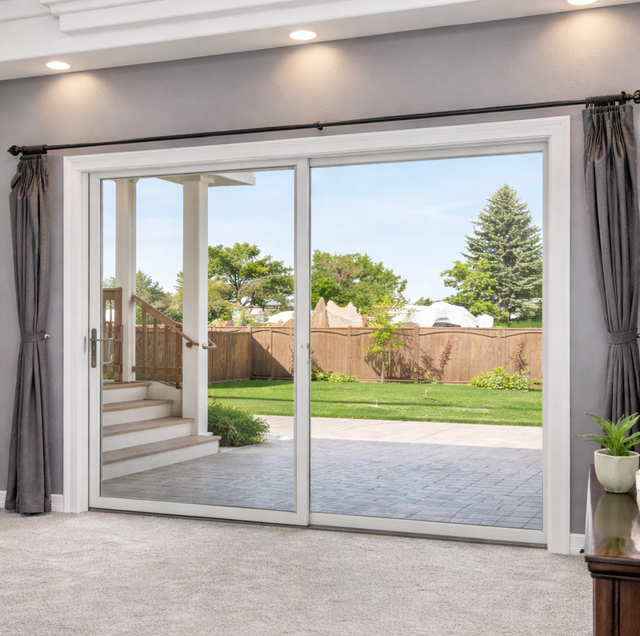
Quick Answer: Milgard's standard coverage is a Lifetime Limited Warranty. An Optional Full Lifetime Warranty, available on select series, extends that to include glass breakage. Neither covers a leak caused by the installation.
"Full Lifetime Warranty" sounds like it covers everything for as long as the door exists. It doesn't, and the gap between what the name implies and what the paperwork actually says is worth understanding before it matters, not after a claim gets denied.
Two Different Warranties, Not One
Milgard's standard coverage on its windows and patio doors is a Lifetime Limited Warranty, which covers manufacturing defects in materials and workmanship for as long as the original purchaser owns the home, with some territory restrictions that apply depending on where the product was installed. Beyond that, an Optional Full Lifetime Warranty is available as an upgrade on specific patio door lines, Tuscany (V400) and Trinsic (V300) among them, which extends coverage to include glass breakage in addition to the standard manufacturing-defect coverage.
The distinction that matters: "Optional" is the operative word, and it means what it says: this tier is an upgrade a buyer opts into, not something every door in an eligible series carries automatically. Two identical-looking Tuscany sliders can carry different warranty tiers depending on what was actually selected at the time of purchase, which is why confirming the specific tier in writing, rather than assuming the stronger one applies because the series qualifies, matters before relying on it.
What the Warranty Covers
Manufacturing defects in materials and workmanship: Problems with the frame material itself, the glass seal failing prematurely, hardware defects, and similar issues traced to how the unit was manufactured. This is the core of both warranty tiers.
Glass breakage, under the Full Lifetime Warranty tier: For products carrying the optional upgraded warranty, broken glass is covered in addition to manufacturing defects, which the standard Lifetime Limited Warranty does not include.
Factory-trained service: Warranty repairs under either tier are performed by Milgard-trained technicians rather than left to the installing contractor's own judgment on what qualifies as a covered repair.
A manufacturer's warranty, at either tier, covers the door unit itself. It does not cover a leak traced to how the door was installed, a missing sill pan, or improperly integrated flashing. That's a workmanship issue, not a product defect.
What the Warranty Does Not Cover
Installation-related failures: A leak traced to a missing sill pan, improperly lapped head flashing, or an unsealed frame gap is an installation issue, not a product defect. This is true of essentially every manufacturer's warranty, not specific to Milgard, and it's the single most common gap between what a homeowner assumes a "lifetime warranty" covers and what it actually does.
Damage from an outside cause: Storm damage, impact damage, or damage from something other than a manufacturing defect generally falls outside standard warranty coverage regardless of tier. A factory-trained technician evaluating a claim can typically tell fairly quickly whether damage traces to a manufacturing issue or an outside cause, which is the first fork in how a specific claim gets routed.
Full coverage regardless of who's the current owner: The Lifetime Limited Warranty's "lifetime" applies for as long as the original purchaser owns the home; territory restrictions and transferability terms can differ once a home changes hands, which is worth checking against the specific product's registered warranty rather than assumed.
Register a Milgard warranty at installation rather than waiting until a problem comes up. A registered warranty on file speeds up a future service call considerably compared to establishing coverage after the fact.
How a Warranty Service Claim Works, Step by Step
A homeowner suspecting a covered defect, rather than an installation issue, contacts Milgard directly or works through an authorized service provider to have the specific product and its warranty status looked up. From there, a factory-trained technician evaluates whether the issue is a covered manufacturing defect. If it's an installation-related issue instead, such as a leak traced to flashing rather than the door itself, that falls back to whoever performed the original installation and their own workmanship warranty, if one was provided in writing.
Frequently Asked Questions
Generally, it needs to be selected before the order is finalized, since the upgrade is tied to how the specific unit is coded and registered at the point of manufacture, not something added onto a door after it's already been built or delivered. A homeowner who wants to confirm this for a specific pending order is better off asking the selling contractor directly and getting the answer in writing on the order confirmation, rather than assuming it can be added later the way an accessory might be.
Milgard maintains a warranty lookup by product series and installation details for products already in place, which is the most reliable way to confirm coverage on an existing door rather than relying on memory of what was originally quoted. A registered warranty, set up at installation, makes this lookup faster and more reliable than trying to reconstruct purchase details years later.
The starting point is where the water is actually entering. A failed glass seal showing fogging between panes, or hardware that's visibly failed at the manufacturing level, points to the product side. Water tracking in along the sill, at a corner joint, or around the frame perimeter with the glass and hardware otherwise intact points to the installation side. A factory-trained technician can typically narrow this down with a visual inspection alone; if it's still ambiguous, the trim may need to be opened up to see the actual entry point directly.
Not automatically in the way some competitors structure it. Where a warranty is tied to "the original purchaser," a title change at closing is the kind of event worth flagging to the manufacturer directly rather than assuming it carries over silently, since a lapsed or reduced-coverage warranty is easy to miss until a claim is actually needed. Asking for the warranty documentation as part of a home purchase, the same way a buyer would ask for appliance manuals, is a practical way to catch this before it becomes a problem.
An authorized Milgard Warranty Service Provider has gone through Milgard's own authorization process to perform warranty service work on Milgard products directly, rather than a homeowner needing to coordinate separately with Milgard for factory service. Confirming a contractor's authorized status directly, rather than assuming general familiarity with the brand is the same thing, is worth doing before relying on them for warranty-covered work specifically.
This varies by what the specific defect requires and is worth confirming as part of any claim rather than assumed either way. Warranty coverage for the product itself, the frame, glass, or hardware, is more consistently covered than the labor to access it if that access requires removing surrounding finish material like trim or flooring that wasn't part of the original door unit. A factory-trained technician evaluating a claim can typically clarify what's included in a specific case before any work starts, which avoids a surprise bill for finish work that turns out to fall outside the warranty's scope.
A registered warranty on file removes the need for a receipt entirely, which is the practical reason registration at installation is worth doing rather than skipping. Without a registration on record, most manufacturers, including Milgard, can still look up product and warranty details from information on the unit itself, such as a serial or model number etched or labeled on the frame. However, that lookup process generally takes longer than pulling up an already-registered record.
Read the Tier, Not Just the Name
"Full Lifetime Warranty" is a real product tier with real coverage, but it's a specific tier on specific product lines, not a blanket promise attached to every Milgard door. Knowing which tier applies to a specific installed product, and understanding that installation-related leaks fall outside either tier, is what actually determines whether a future problem gets covered.
Get help sorting out whether an issue is warranty-covered or installation-related — VResh Construction is an authorized Milgard Warranty Service Provider. Warranty service and full replacement both run across the Portland metro, including window replacement in Salem and Gresham. CCB #241979. Call (503) 272-6436.