Storm-Damaged Sliding Door in Portland: Emergency Steps
Quick Answer: A storm-damaged sliding door that won't close or lock is typically secured with temporary board-up or film first, then scheduled for full replacement once the correct-size unit is available. Board-up is usually a same-day response; full replacement follows on a separate, longer timeline of days to weeks.
Glass on the floor and a door that won't latch change the priorities immediately, compared to a scheduled replacement. A tree limb through a patio door, a wind-driven branch that shatters a pane, or a panel forced off its track in a storm all create the same problem: an opening in the home that can't be secured the normal way. What happens in the hours right after that is different from a scheduled sliding door replacement, and knowing the difference ahead of time is worth more than most homeowners realize until they actually need it.
The Two-Stage Response
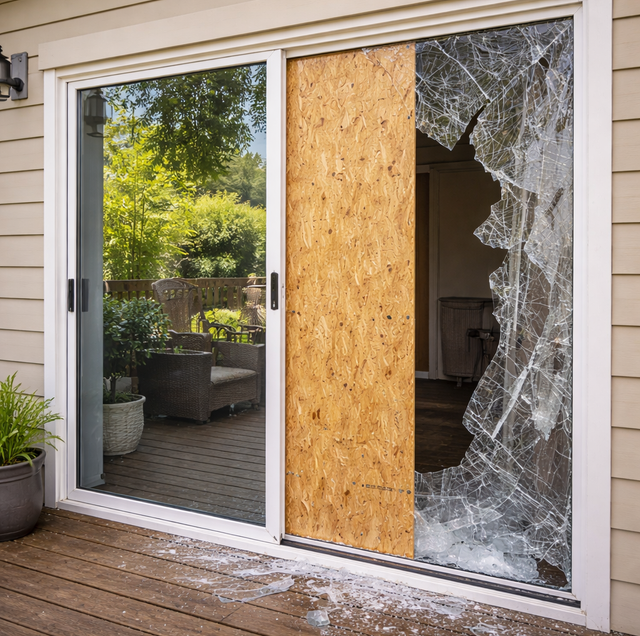
Stage one: Secure the opening the same day. A damaged sliding door that won't close or lock gets temporarily secured first, typically with exterior-grade plywood or, for a cracked-but-intact pane, security film or plastic sheeting, before anything about the permanent replacement is decided. This stage is about weather intrusion and basic security, not the final product.
Stage two: Measure, order, and install the correct replacement: Once the opening is secured, the actual replacement follows a more typical process: confirming the exact opening dimensions, since storm damage sometimes affects the frame itself and not just the glass, selecting a matching or upgraded door, and scheduling installation once the unit is available.
Keep the temporary board-up or film in place until the crew doing the full replacement arrives, even if the weather clears. Removing it early re-exposes the opening for no benefit.
What Determines How Fast Full Replacement Can Happen
Whether the frame itself is damaged, not just the glass: A cracked or shattered pane in an otherwise intact frame is a faster fix than a frame that's been bent, pulled from the wall, or had its track damaged, since frame damage sometimes means the rough opening needs inspection before a new door goes in.
Standard size versus a custom or older, discontinued size: A standard 60-, 72-, or 96-inch opening usually has faster stock availability than an older or nonstandard size, which sometimes requires a custom order with a longer lead time regardless of how urgent the situation is.
What to Do Before Help Arrives
Clear glass debris from walkways and interior floors: Broken glass from a shattered pane spreads further than it looks, and carefully clearing the immediate area, with gloves, reduces injury risk before a crew arrives.
Photograph the damage before covering it: A few photos of the door and surrounding frame, taken before board-up, are useful both for insurance purposes and for the crew doing the eventual replacement, since they show the original damage pattern that gets covered up in the interim.
Avoid forcing a damaged panel closed: A panel that's off its track or won't latch shouldn't be forced, since that can worsen frame damage or create a sharper edge risk from already-cracked glass.
A door that's structurally shifted, pulled partly from its frame, or sitting at a visible angle after storm damage is a bigger problem than a cracked pane and is worth flagging specifically when calling for emergency service, not described simply as "the door is broken."
Insurance and the Replacement Timeline
Storm and impact damage may be covered depending on the specific homeowner's insurance policy, and it's a separate question from a manufacturer's product warranty, which covers defects in the door itself rather than outside damage. Documenting the damage, keeping the temporary board-up receipt, and getting a written estimate for the full replacement are the pieces an insurance claim typically needs, and having them organized from the start avoids retracing steps later.
Why the Order of Operations Matters
Rushing straight to a full replacement without first securing the opening leaves a home exposed to weather and security risk for however long ordering and manufacturing the correct unit takes, which can be days even in a best-case scenario for a standard size. Rushing a permanent installation without accurate measurements, taken calmly rather than in the middle of an active weather event, risks ordering the wrong size door entirely, which then has to be reordered and adds real time to the process instead of saving it. The two-stage approach exists because each stage solves a different problem: one buys time safely, the other gets the long-term fix right the first time.
Frequently Asked Questions
Availability for the initial response and scheduling for the full installation are two different questions worth separating. A company offering after-hours availability for storm-damaged doors typically means someone can assess and secure the opening outside normal hours; the actual replacement installation still gets scheduled once the correct unit is confirmed and available, generally during regular working hours regardless of when the initial call came in.
No, and expecting that leads to frustration. Board-up addresses the immediate security and weather problem. The actual replacement door, especially for a nonstandard size or a specific glass package, still needs to be ordered and often manufactured, which realistically takes days to weeks depending on the specific unit, even when the emergency response itself was immediate.
That gets evaluated as part of the same assessment, and the distinction that matters is whether the sill plate itself, the structural member the door actually sits on, was compromised versus damage limited to surrounding trim or siding. A compromised sill plate needs to be repaired or replaced before the new door goes in, which adds scope; damaged trim or siding around an otherwise sound sill is more of a cosmetic finish repair that can often proceed alongside the door work without changing the structural timeline.
It can, mainly by blocking natural light and airflow to that room for an extended period, and a poorly sealed board-up can also allow some water intrusion during continued wet weather if it isn't flashed correctly at the edges. This is part of why moving from temporary board-up to full replacement promptly, rather than treating the board-up as a long-term fix, matters.
It can, mainly due to rush scheduling and any after-hours labor involved in the initial board-up response, rather than the door unit itself costing more. The door and its standard installation follow the same pricing factors, configuration, glass package, and site access, discussed for any replacement; it's specifically the urgency and timing that can add cost on top of that baseline, and confirming whether an emergency-response fee applies, and how it's itemized on the final invoice, is worth doing at the time of the very first call rather than assumed.
This is less common for a single residential opening than board-up is, and it's worth asking a specific contractor directly whether it's something they offer, since availability varies by company and by the specific opening size involved. Board-up combined with a realistic replacement timeline is the more typical path for most homeowners rather than a temporary rental unit, mainly because a rental-grade panel sized for one specific opening isn't something most residential contractors keep in stock the way commercial glazing companies sometimes do.
Secure First, Decide Second
The urgency after a sliding door is damaged is real, but the two stages, securing the opening and then getting the correct permanent replacement installed, are two separate problems with two separate timelines. Treating them as one rushed decision is how a homeowner ends up with a replacement that doesn't match the original opening correctly; treating them as two connected but distinct steps gets both the immediate safety issue and the long-term fix handled right.
Get a fast response and an accurate replacement timeline after storm or impact damage to your sliding door — VResh Construction is available for storm-damaged doors and windows. VResh Construction serves the Portland metro. CCB #241979. Call (503) 272-6436.