Sill Rot Under a Sliding Door: Find the Cause First
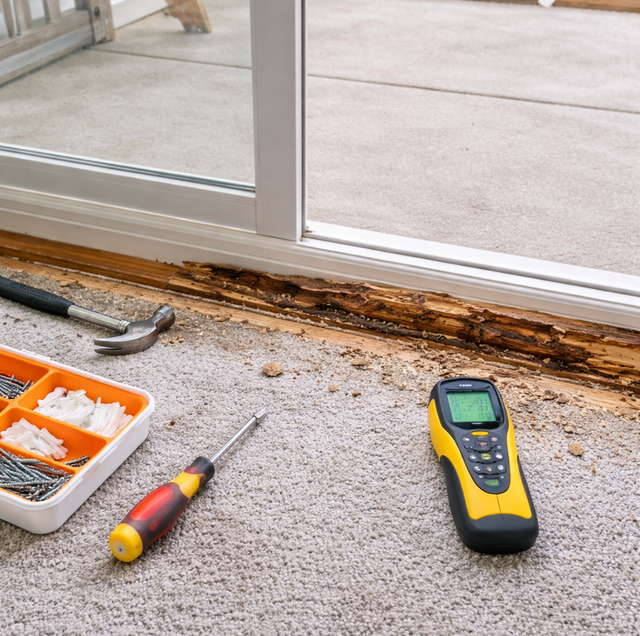
Quick Answer: Sill rot has to be repaired in order: find the moisture source first, remove all compromised wood, then correct the flashing that let water in, before anything gets reinstalled. Skip that order, and the rot comes back.
A homeowner in an older bungalow first noticed it as a faint musty smell that showed up every time it rained, one that never fully cleared even with the door open and a fan running for a day afterward. It took a repair estimate, and the interior trim coming off, to find the actual cause: the sill plate under the sliding door track had darkened and lost most of its structural integrity, a slow failure that had likely been running for years before the smell became noticeable enough to investigate.
Sill rot at a sliding door is common enough to have a fairly predictable repair sequence behind it, but the sequence matters as much as the individual steps. Fix it out of order and the same soft spot tends to come back.
What Sill Rot Actually Is
"Dry rot" is a misleading name; it's caused by sustained moisture, not dryness. Certain wood-decay fungi digest the cellulose and lignin that give wood its structural strength, and they generally need wood moisture content above roughly 20 percent to establish and spread. A sliding door's sill and the subfloor beneath it are a common location for this because a leak there is slow, often small, and largely invisible until the wood underneath has already been wet for a long time.
Where the water is actually coming from: Rot at a door sill traces back to a specific entry point almost every time: a missing or failed sill pan, head flashing that was never properly integrated into the wall's water-resistive barrier, or a gap at the frame that was never sealed. The rot itself is a symptom. The entry point is the cause, and repairing the rot without finding that entry point first is repairing the symptom while leaving the cause in place.
The Repair Has to Happen in This Order
Moisture source identification comes first, before any wood gets removed: This is the step most likely to get skipped by a rushed repair, and it's the most consequential one to skip. Removing rotted material without knowing what let the water in means whatever caused the damage the first time is still there, ready to start the same process again under a new door and new trim.
Extent assessment, not a guess: Rot travels along the wood grain, and the visible soft spot is rarely the full extent of the damage. Probing the surrounding sill plate, adjacent framing, and subfloor sheathing with a screwdriver or awl finds the actual boundary of sound wood before any cutting starts, rather than assuming the damage stops where it happens to be visible.
Complete removal of everything compromised: This means cutting back to solid material, not filling voids with wood hardener or an epoxy consolidant and calling it repaired. Those products can stabilize decorative, non-load-bearing wood, but they don't restore structural integrity to a load-bearing sill plate or subfloor section.
A repair that stops at removing visible rot and skips correcting the moisture source is not a repair. It's a delay, and the rot commonly returns within a few years under the new material.
Structural repair with the right material: New framing lumber, sheathing, or sill plate material goes in to replace what was removed, typically kiln-dried dimensional lumber, with pressure-treated lumber used at any point of direct contact with concrete or masonry, where ordinary lumber would be first to pick up moisture again.
Moisture pathway correction, not just a patch: The flashing, sill pan, or water-resistive barrier failure that caused the rot in the first place gets corrected as part of the same repair, not treated as a separate future project. A structural fix without this step addresses the damage that already happened without stopping the next round.
Reinstallation with the flashing detail actually done right this time: The door, trim, and finish materials go back on with proper flashing, clearances, and technique, the same standard that should have been used on the original installation.
Documentation: Photos and a written record of what was found, what was removed, and what was corrected are worth keeping as part of the project file, and worth asking for directly if a contractor doesn't offer them without being asked.
If a contractor proposes fixing visible rot without a clear answer for what caused it, ask directly. Replacing the rotted wood is not the same commitment as finding and fixing what let the water in, and a specific answer on that second part is worth getting before signing.
Why Patched Repairs Come Back
A repair that skips the moisture-source and pathway-correction steps, filling or covering the rot instead of removing and correcting it, doesn't stay fixed for long. The same decay process that caused the damage the first time is still active, because the water is still getting in behind the new material, so the same spot commonly needs the same repair again within a handful of years. The recurrence doesn't always show up in the same spot, either: water finding a blocked or still-missing drainage path often migrates a few inches along the sill before it finds new wood to saturate, which is why a second round of damage sometimes gets treated as a new, unrelated problem rather than the same uncorrected cause resurfacing nearby.
Frequently Asked Questions
A squeak usually means a fastener has worked loose or a subfloor panel has separated slightly from the joists below it, which is a structural connection issue rather than a material integrity issue. Sill rot presents as softness or give underfoot, not a sound, and a screwdriver or awl pressed into the suspect area will meet little or no resistance if rot is present, which distinguishes it from a fastener problem.
Sometimes, if it's caught early and the moisture source was a small, recent failure. More often, because the leak has usually been running unnoticed for years by the time it's discovered, the damage has spread into the subfloor sheathing and, in more advanced cases, the floor joists themselves. That distinction matters for the repair, not just the assessment: sill plate and sheathing replacement is a fairly contained material swap, but joist involvement typically means temporarily supporting the floor above during the work, which adds both time and cost to the job.
If the door itself is structurally sound, with functioning rollers, track, and glass seal, it can often be reinstalled after the sill and framing repair is complete. The repair and the door replacement are two separate decisions; a good door doesn't need to be replaced just because the framing under it did.
Timing and persistence. Water that pooled temporarily during a storm and is draining normally through track weep holes will be gone within a few hours. A soft spot that persists on dry days, weeks after the last rain, indicates saturated wood rather than surface water, and that persistence is the signal worth acting on.
Yes, and it's worth asking whether a contractor uses one beyond a screwdriver or awl probe. A pin-type meter, pushed into the wood at intervals moving outward from the visibly damaged area, gives an actual moisture-content reading rather than just a subjective sense of resistance. Readings that stay high well past where the wood looks or feels compromised are a sign the damage runs further than a visual check alone would catch, which matters for scoping the repair correctly the first time.
What a Repair Estimate Should Actually Cover
A repair quote that lists only wood removal and replacement is quoting half the job. The other half, finding and correcting whatever let the water reach that wood in the first place, is what actually determines whether the same spot needs the same repair again in a few years or stays solved.
VResh Construction does not set a new door on a rotted sill. The sill plate is cut back to sound wood and a formed pan goes in under the threshold, or the same water finds the same path next winter — dry rot repair in Lake Oswego, sliding door replacement in Vancouver. Free written estimate: (503) 272-6436.