Milgard vs. Andersen Sliding Doors in Portland: What Matters
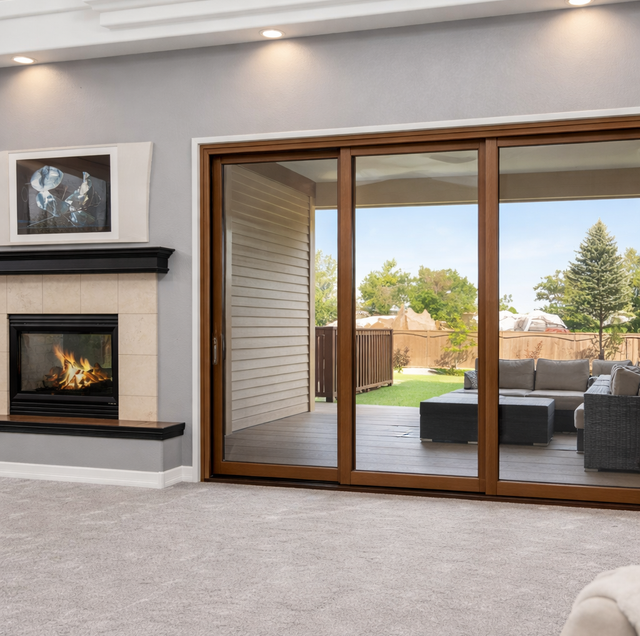
Quick Answer: Milgard builds its sliding doors from solid vinyl or thermally-improved aluminum. Andersen builds around a wood core, clad in vinyl or, on its A-Series, fiberglass. Cladding integrity, not the base material, is what matters for rain.
Milgard and Andersen are both major sliding door manufacturers with a real regional track record, and the construction difference between them is genuine: Milgard's sliding doors are solid material, vinyl or aluminum, straight through. Andersen builds its 200 and 400 Series doors around a wood core and clads the exterior to protect it. That's a different kind of question than "which material is better," and it matters more for how each door needs to be maintained than for whether a specific installed unit leaks.
The Real Construction Difference
Milgard's solid-material construction: The Tuscany (V400) and Trinsic (V300) series are solid vinyl, inside and out. The A250 line swaps in thermally improved aluminum for a narrower sightline. Neither has a core material that depends on a separate outer layer to stay dry; vinyl and aluminum are what they are all the way through the frame. Vinyl doesn't rot and doesn't need painting, though it expands and contracts more with temperature swings than some alternatives, which is a factor in long-term fit and seal life rather than an immediate concern.
Andersen's clad wood-core construction: Where Milgard's frame is solid vinyl or aluminum all the way through, Andersen's 200 and 400 Series doors depend on an added layer: a wood core, wrapped on the exterior face in rigid vinyl. The A-Series swaps that exterior for a fiberglass-clad finish, a choice some homeowners make to match older, paint-grade trim. The practical difference against a Milgard slider comes down to what sits underneath the visible surface: a scratch or ding on a Milgard panel doesn't expose anything different than what's already there, while a breach in Andersen's cladding exposes the wood core it was covering, which is why cladding integrity carries more weight on this side of the comparison.
What this means in practice, not in a lab: Neither construction type is the deciding factor in whether a specific installed door leaks. A well-installed Andersen unit with intact cladding and a properly detailed sill pan outperforms a poorly installed Milgard slider in every real-world case, and the reverse is equally true. Sill pan installation, head flashing, and air sealing, all field-installed steps independent of the door itself, determine water performance at the rough opening far more than which manufacturer's name is on the frame.
A clad wood-core door with cladding pierced by even one misplaced fastener from a past repair carries a different long-term risk than the same visible damage on a solid-material frame. That's worth a specific look on an older clad door.
Where the Brands Really Differ
Cladding maintenance, specifically: A solid vinyl or aluminum Milgard door has no cladding to maintain. An Andersen door's vinyl cladding is also low-maintenance, since it isn't painted; the fiberglass-clad A-Series can be painted, which reintroduces a paint-maintenance cycle vinyl and aluminum never require, and is worth factoring in only if that specific line is under consideration.
Track and weep system design: Both brands cut weep holes into the sill track to drain water that gets past the panel seal, but the exact track profile, hole spacing, and how easily the track clears debris varies by product line within each brand, not just between the two brands broadly. This is a detail worth asking a specific contractor about for a specific product line, rather than assuming one brand name guarantees better drainage design than the other across its entire catalog.
Price: Configuration and glass package move price more than brand does within a similar tier, but Andersen's clad wood-core construction generally places it at a higher price point than a comparable Milgard solid-vinyl unit for the same configuration. The gap is worth confirming on an itemized, apples-to-apples quote rather than assumed from brand reputation alone.
Ask for the specific series name, not just the brand, when comparing quotes. "Andersen" alone spans a solid-cladding-material range from vinyl to fiberglass; "Andersen 200 Series" or "Milgard Trinsic" is specific enough to actually compare construction type, not just a logo.
What Doesn't Change Based on Brand
Sill pan installation, head flashing integration, and air sealing at the frame gap are field-installed steps that happen the same way regardless of which brand's door goes into the opening. A missing sill pan under a premium Andersen unit fails on roughly the same timeline as a missing sill pan under a budget vinyl slider. The brand decision and the installation-quality decision are two separate questions, and conflating them is how a homeowner ends up paying a premium for a brand name while the actual failure point, the field-installed drainage detail, goes unaddressed either way.
Frequently Asked Questions
Look closely at every point where hardware, a lock strike, or a past repair fastener penetrates the exterior cladding, since those penetration points are where a seal failure is most likely to start rather than across an open, uninterrupted section. A small gap, discoloration, or slight give at one of those specific points is worth flagging before it's assumed the door's exterior finish is simply cosmetic wear.
Mainly in sightline and thermal behavior, not water performance. Aluminum conducts heat and cold more readily than vinyl, which is why the A250 line is thermally improved with a broken internal thermal barrier rather than being solid, uninterrupted metal. For water performance specifically, both aluminum and vinyl are solid materials without a cladding-integrity question, so the sill pan and flashing detail still does the deciding work either way.
It can, and the two brands land differently on this specific point. Andersen's Owner-to-Owner limited warranty is a named exception that explicitly transfers to a new buyer at sale rather than resetting. Milgard's standard Lifetime Limited Warranty, like most manufacturers' base coverage, is tied to the original purchaser, so a subsequent buyer typically isn't covered under that same term unless the transfer terms are confirmed directly with Milgard. That's a warranty-transfer question rather than a construction-quality one, and it's worth weighing against whichever brand's specific product otherwise fits the opening and budget better.
Not really. Both perform well when installed correctly, and the better fit depends on project priorities: a solid-material frame with nothing to maintain versus a clad wood-core door's traditional profile and paintable option on the A-Series, or a specific glass package or configuration that matters more for one household than another. An on-site conversation about those specific priorities is a more useful starting point than a blanket recommendation.
Marginally, and the glass package matters more than construction type for sound. A wider air gap between panes, or a laminated glass option where available, reduces sound transmission noticeably more than switching between a solid-vinyl and a clad wood-core frame does. Construction type affects sound mostly through fit and seal quality over time rather than through the base material's own sound-dampening properties.
Both can develop interior condensation under the same conditions: high indoor humidity meeting a cold glass surface, most often overnight in the colder months. Construction type has a smaller effect on this than the glass package does; a double-pane unit with argon fill and a warm-edge spacer resists condensation better than a single-pane or poorly sealed double-pane unit regardless of frame type. Persistent condensation on a relatively new, properly specified door is more often a sign of high indoor humidity than a frame or glass defect.
Pick the Construction Type for the Right Reasons
Solid vinyl or aluminum versus clad wood-core is worth deciding on maintenance, appearance, and price, because those are the things the material itself actually controls. Whether the finished installation stays dry through a hard winter storm is a question the sill pan, the flashing, and the crew answer, not the frame material, so it's worth keeping those two decisions separate rather than letting one stand in for the other.
Get a side-by-side quote for both brands on your specific opening, itemized so the construction type and the installation detail can each be evaluated on their own terms. VResh Construction serves the Portland metro. CCB #241979. Call (503) 272-6436.