Sliding Door Panel Replacement vs. Full Frame: How to Tell
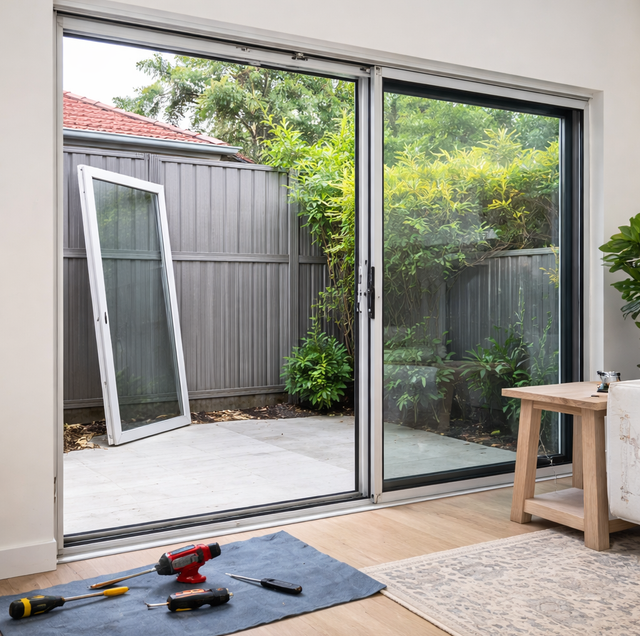
Quick Answer: Panel-only replacement is possible when the frame is square, undamaged, and the same or a compatible panel is still available. Full frame replacement becomes necessary when the frame itself is damaged, out of square, or when a matching panel is no longer manufactured.
The glass panel and the frame it slides in are two mechanically separate components, and a problem with one doesn't automatically mean the other one needs replacing too. Knowing which situation applies before calling anyone changes both the likely cost and the overall project timeline, and it's a distinction some contractors are considerably more upfront about than others.
What Panel-Only Replacement Actually Requires
A frame that's square and structurally sound: The rails and track the new panel will ride in need to be in good working condition, since a new panel installed into a frame that's shifted or out of square won't seat, seal, or slide correctly no matter how well the panel itself is made.
A compatible replacement panel still available: This is more often the limiting factor than frame condition. A panel from a discontinued product line, an older size no longer in standard production, or a proprietary track profile specific to one manufacturer's older series can be difficult or impossible to source as a standalone part.
A problem isolated to the glass or panel itself: A failed insulated glass seal (fogging between panes), a cracked pane, or worn panel-level hardware like rollers and the latch mechanism are panel-level problems that don't necessarily implicate the frame at all.
Ask specifically whether a quoted "panel replacement" includes matching the exact track profile and roller type the frame already uses, not just a same-size pane of glass. A mismatched roller type is a common reason a panel-only fix doesn't perform like the original.
What Points Toward Full Frame Replacement Instead
Visible frame damage, rot, or corrosion: Soft or discolored wood-adjacent framing, corroded aluminum, or any structural compromise at the sill or jamb means the frame itself, not just the panel, needs to be addressed, and a new panel installed into a compromised frame doesn't fix the underlying issue.
A frame that's out of square from settling or age: Panels that no longer align evenly when closed, or gaps that changed shape over time, usually point to the frame itself having shifted, which a new panel can't correct on its own regardless of how precisely it's manufactured.
No compatible panel available for the existing frame: When the specific track profile, panel size, or hardware system is discontinued, and no compatible replacement exists, full frame replacement becomes the only remaining option, even if the frame itself would otherwise have been fine to keep.
Installing a "close enough" panel into an incompatible frame, forcing a slightly different track profile or roller type to fit, is a repair that tends to fail faster than either a correct panel-only fix or a full frame replacement would, and it can be harder to diagnose later since the mismatch isn't always obvious on inspection.
How a Contractor Actually Determines Which Applies
Measuring and inspecting before quoting either option: A contractor who quotes panel-only or full-frame replacement without measuring the existing frame and checking it for square, level, and structural condition is estimating without the information that actually determines which option is correct.
Checking part availability against the specific existing frame, not just the brand name: Confirming a compatible panel is available for the specific track and roller system already installed, not just that the same brand still makes sliding doors in general, is what actually confirms panel-only replacement is viable.
Why the Cost Difference Matters Enough to Get This Right
Panel-only replacement, when it's a real option for a specific frame, typically costs meaningfully less than full frame replacement, since it avoids removing and reinstalling the sill pan, flashing, and surrounding trim work a full replacement involves. That gap is exactly why it's worth confirming which situation actually applies, in writing and before any work begins, rather than accepting either a panel-only quote that turns out to be inadequate or a full-frame quote for a smaller problem that never actually required it.
What This Decision Doesn't Change
Sill pan condition, head flashing, and air sealing at the rough opening are separate questions from panel versus frame, and they apply the same way regardless of which option a specific project ends up needing. A full frame replacement is a natural point to inspect and correct any sill or flashing issue while the opening is already open, since that work is happening anyway; a panel-only replacement doesn't touch the sill or flashing at all, which means an existing sill problem, if one exists, doesn't get addressed as a side effect of a panel-only fix and needs to be evaluated on its own.
Frequently Asked Questions
A manufacturer's name, series, and sometimes a date code are often stamped or etched directly on the frame, most commonly on the track itself or on a small metal or vinyl tag near one of the corners, and occasionally etched into a corner of the glass. Photographing that marking and searching the exact series name, rather than just the brand, gives a rough first read on whether the line is still in current production before a contractor even gets involved. However, a stamped series name alone doesn't confirm compatibility the way an in-person inspection of the actual track and roller system does.
This varies, and it's worth confirming directly rather than assuming. A new panel installed into an existing frame is sometimes covered under a more limited warranty than a complete new door unit would carry, since the frame itself, the part not being replaced, isn't new manufacturer stock with its own fresh warranty term.
Occasionally, if a frame retrofit kit exists for that specific track system, allowing a newer panel type to be adapted into an older frame without replacing the frame's structural members entirely. This isn't universally available and depends heavily on the specific manufacturer and product line involved, so it's worth asking about directly, ideally before assuming either the panel-only or full-frame extreme is the only option on the table.
In most cases, a full frame replacement includes replacing the sill pan and flashing as part of the same scope, since the old frame typically has to come out to install the new one, and reusing old flashing material after it's been disturbed generally isn't a reliable practice. An installer confirming this as part of the written scope, rather than leaving it ambiguous, is worth asking about directly.
Significantly, mainly through part availability rather than frame condition on its own. A door under roughly 10 years old more often has a panel still in production or readily sourced; a door older than 20 years is more likely to have a discontinued track system, which tips the decision toward full frame replacement by default, regardless of whether the existing frame is otherwise still sound. A door in the middle of that range, roughly 10 to 20 years old, is the hardest to predict without checking directly, since part availability at that age varies quite a lot by manufacturer and by how widely a specific series was originally sold.
Let the Frame, Not the Assumption, Decide
Panel-only replacement is the less expensive and less disruptive option when the frame actually supports it, and full frame replacement is the correct call when the frame itself is compromised, or a compatible panel simply isn't available. An honest, inspection-based answer settles which situation actually applies. Assuming either option by default, sight unseen, from a phone description of the symptoms alone, is how the wrong one gets picked.
Get a written assessment of which option actually applies to your specific door, based on a real inspection, not a guess from a description alone. VResh Construction serves the Portland metro. CCB #241979. Call (503) 272-6436.