Sliding Door Security in Portland: 5 Fixes That Stop Break-Ins
Quick Answer: A factory sliding door lock resists a shove, not a lift-and-pry attempt. An anti-lift block, an auxiliary lock, and a track security bar close the three ways a sliding door actually gets forced open.
A sliding door's factory latch is built to keep the door closed against wind and everyday use, not against someone who knows exactly where to apply pressure. Most forced entries through a patio door don't involve breaking glass at all. They involve lifting the panel slightly off its track, prying the latch, or working a thin tool through the gap at the lock. All three are fixable without a new door.
How Sliding Doors Get Forced Open
The lift-and-remove attack: Older sliding doors, and some economy panels still sold today, sit loosely enough in their track that the whole panel can be lifted an inch or two and tilted out of the frame, latch engaged or not. This doesn't require much strength. It requires knowing the door has enough vertical play to attempt it, which a few seconds of testing from outside reveals.
The pry attack on the latch: A standard hook latch engages a shallow catch in the frame. Enough pressure from a flat pry tool at the gap between the panels can pop it, especially on a door where years of settling have widened that gap slightly.
The smash-and-reach attack: Breaking a pane near the latch and reaching through to release it from inside skips the lock mechanism entirely. This is the attack a lock upgrade alone doesn't stop.
Five Fixes, Matched to the Attack They Stop
An anti-lift block or screw: A small block installed in the upper track, or a screw driven partway into the upper track above the panel, physically limits how far the door can be lifted before it hits resistance. This closes the lift-and-remove path directly, and it's inexpensive hardware relative to any other item on this list.
An auxiliary lock separate from the factory latch: A foot-operated floor bolt or a keyed auxiliary lock adds a second point of engagement the factory latch doesn't have. Forcing two separate mechanisms takes meaningfully longer than forcing one, and time is the variable that matters most to someone trying to get in unnoticed.
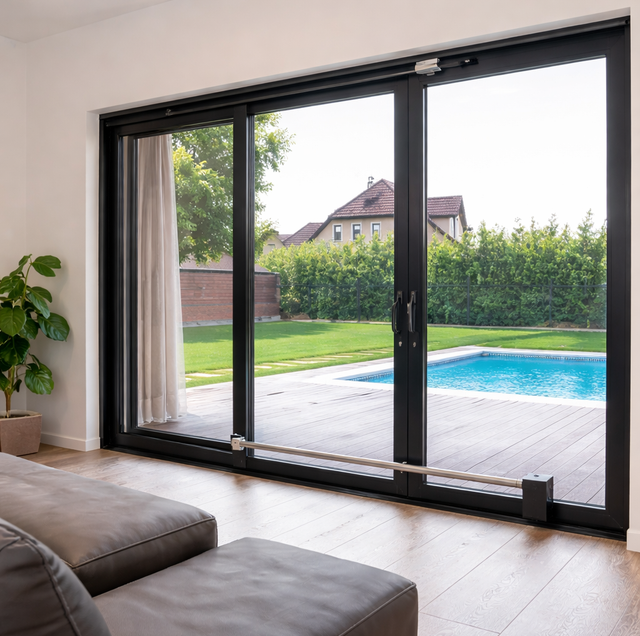
A security bar in the track: An adjustable bar or dowel cut to length and set in the interior track physically blocks the door from sliding open, independent of whatever happens to the latch. It's a low-cost, non-permanent option, though a bar resting loose in the track can sometimes be knocked out of position by force applied at the right angle, which is why it works best paired with an anti-lift fix rather than alone.
On some older sliding doors, the interior panel can be lifted completely out of the track from outside, latch and all, in under a minute by someone who's done it before. An anti-lift block closes that path specifically.
Shatterproof security film: A security-rated film applied to the glass doesn't make the pane unbreakable, but it holds shattered glass together long enough that a smash-and-reach attempt takes far longer and makes far more noise than a clean break. It's a glass-specific fix and doesn't address the lift or pry paths on its own.
A monitored glass-break sensor or door sensor: Hardware fixes slow down or block entry. A monitored sensor changes what happens after that: it triggers a response instead of relying on the physical barrier holding indefinitely. The two categories work best layered rather than as substitutes for each other.
Test lift resistance by hand before assuming an upgrade is unnecessary. Grip the closed, latched panel's edge and lift. Real resistance within about an inch means the track is doing its job.
Why Frame Condition Matters as Much as the Hardware
A lock or auxiliary bolt is only as good as the frame it's anchored into. A frame that's shifted slightly from settling, or one with early moisture damage at the sill, can throw off strike-plate alignment enough that even a correctly installed auxiliary lock doesn't fully engage. Hardware upgrades on a door with a compromised frame sometimes need to be re-fitted once the underlying alignment issue is corrected, which is worth checking before assuming new hardware alone solves the problem.
Frequently Asked Questions
Mostly the latter, and that's still useful. A bar seated correctly in the track resists the sliding motion itself, which stops a casual attempt outright. Against sustained force at the right angle, a metal or aluminum track bar tends to hold longer than a wooden dowel, which can bow or splinter under repeated pressure, but neither is designed to be the only line of defense.
The anti-lift block, the track security bar, and security film are reasonable do-it-yourself projects for someone comfortable with basic hand tools; none require altering the frame. A keyed auxiliary lock or a floor bolt sits closer to the middle: an easy install on a door with a sound, square frame, more likely to bind or fail to seat correctly on a frame that's already shifted. A monitored sensor's hardware install is typically simple, a few screws and a battery in most cases, but pairing it with an actual live monitoring service and setting up alerts is a separate step beyond just the physical mounting, and it's worth confirming that step is actually set up rather than assuming the sensor alone does the job.
No, and treating it as one leaves a gap. A sensor responds after an attempt is already underway; it doesn't make the door itself harder to force. Sensor placement matters more than most homeowners assume: a sensor mounted on the frame catches glass breakage reliably, but a separate contact sensor on the panel itself is what actually detects the door being forced open along the track rather than through the glass.
Several are fully non-permanent. A security bar or dowel in the track requires no drilling or hardware installation at all. An anti-lift block or screw is a small, reversible modification in most cases: it backs out cleanly and leaves a single small screw hole that's easy to fill or touch up later. Security film is the one exception worth flagging: it's designed to be difficult to remove cleanly once applied, which is part of what makes it effective, so it's a decision worth making with that permanence in mind on a rental specifically.
Most of them, yes. An anti-lift block, an auxiliary floor bolt, and a track security bar are all hardware added to the existing track and frame rather than components built into the door material itself, so they work across aluminum, vinyl, and composite frames alike. The one exception is security film, which needs a glass surface in reasonable condition to bond properly; a pane with existing scratches, pitting, or old adhesive residue left over from a prior film application may need cleaning or replacement before a new film will adhere correctly and stay clear.
Hardware Alone Doesn't Fix a Compromised Frame
The fixes above close the three ways a sliding door most commonly gets forced open, and most of them cost far less than a new door. What they can't do is compensate for a frame that's already shifted or started to fail underneath the hardware, which is why a security upgrade is worth pairing with an honest look at the frame it's being anchored into.
Get a professional assessment of the frame and opening behind your sliding door — whether it's sound enough for security hardware upgrades to actually hold, or whether the door itself is the weak point. VResh Construction serves the Portland metro. CCB #241979. Call (503) 272-6436.