
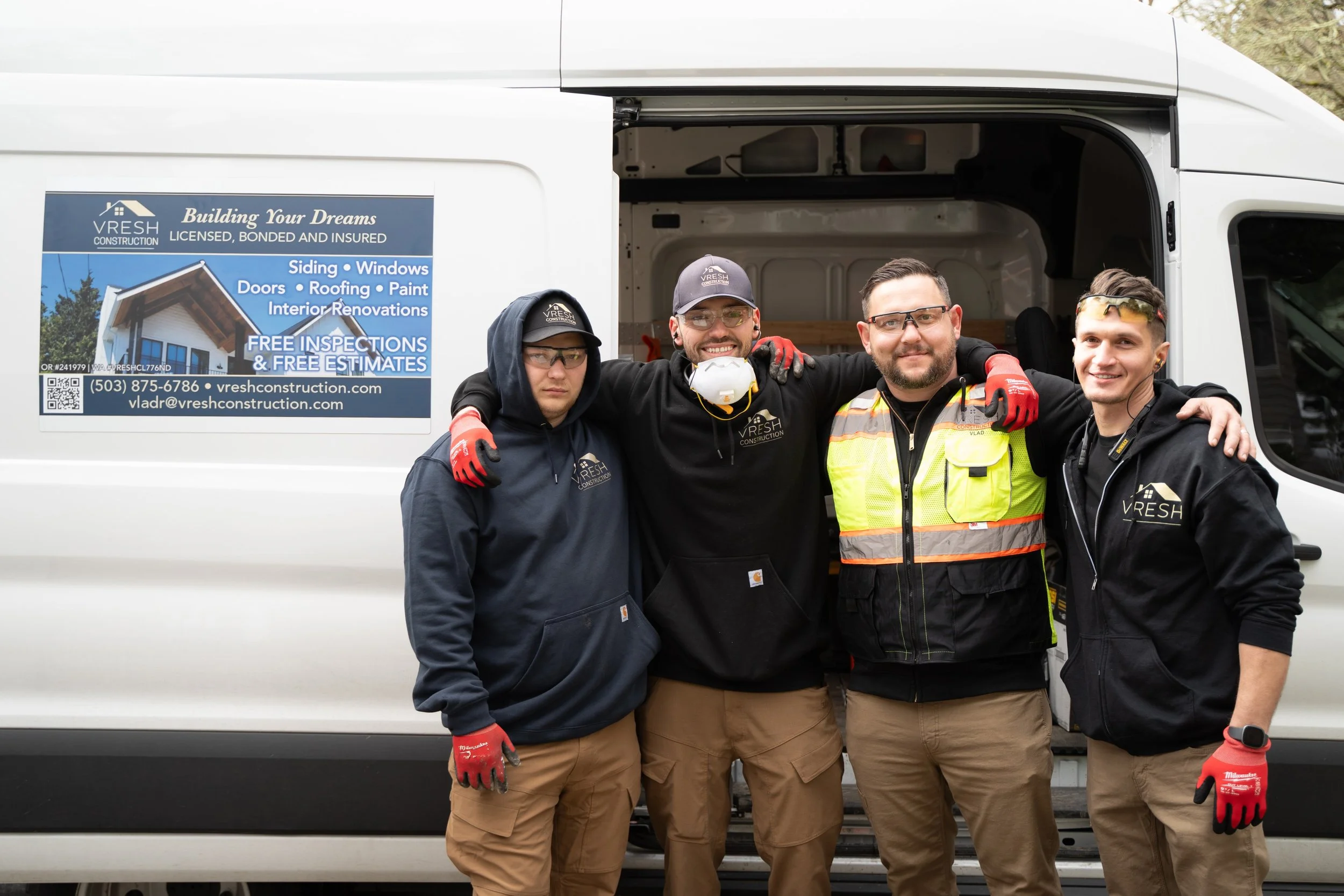
Lake Oswego Dry Rot Repair — Owner Finds the Source, Fixes the Structure, Backs the Work
Lake Oswego's combination of elevated Pacific moisture, dense residential tree canopy, hillside drainage patterns, and 42% pre-1978 housing stock creates one of the most favorable environments for structural dry rot of any Portland-metro city.

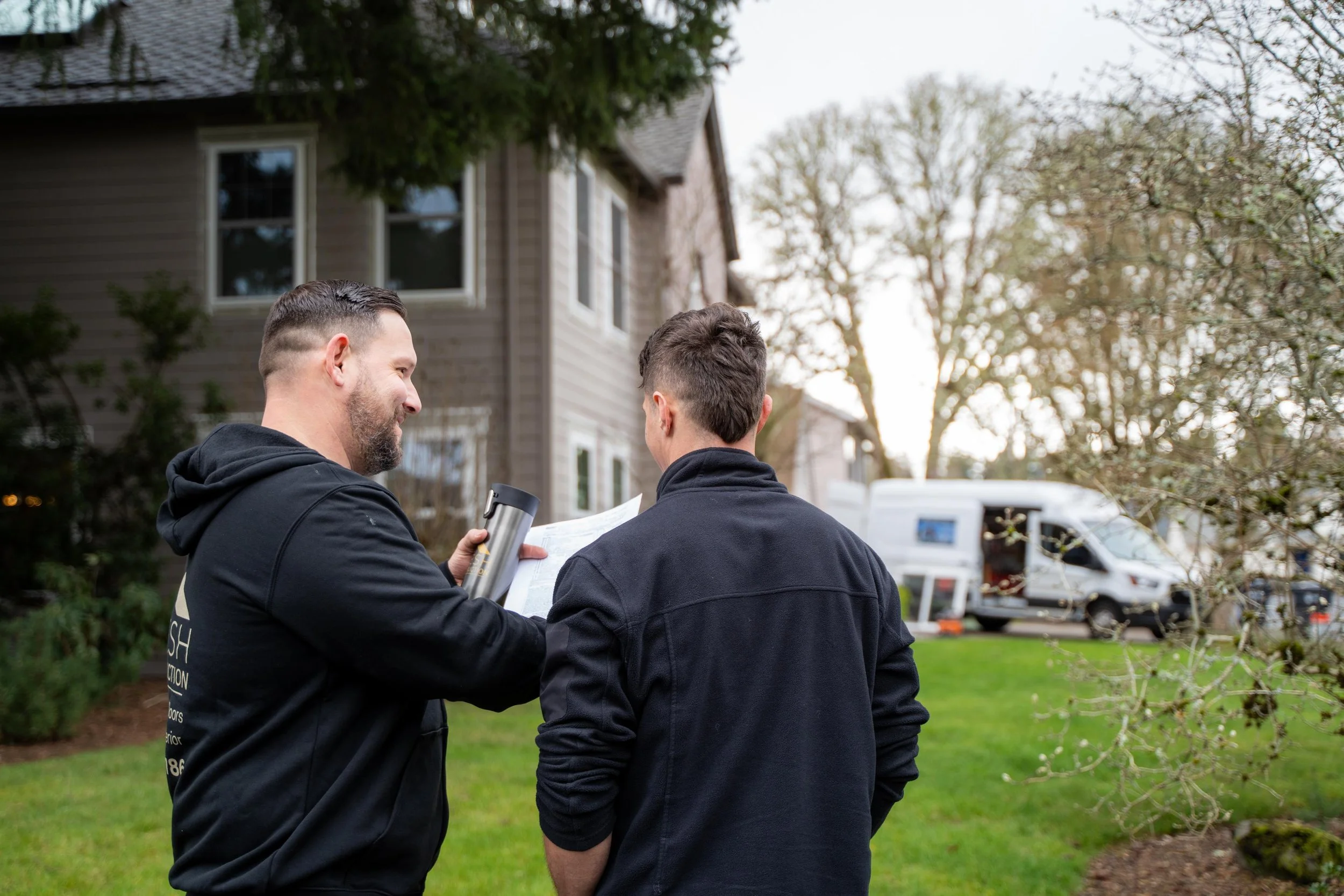
The missing flashing and absent sill pans that were standard practice on Lake Oswego's 1960s-80s construction have been delivering sustained moisture to framing for 40–60 years. In conditions where Pacific storm systems drop sustained rainfall over a 7-month wet season and tree canopy suppresses drying, the fungal organisms responsible for structural wood rot find exactly the sustained moisture and mild temperatures they require. VResh finds the moisture source first — always. No wood is replaced until the moisture entry point is identified and corrected. Then new dimensional lumber, not epoxy filler on structural members. EPA Lead-Safe Certified for pre-1978 homes. Licensed OR #241979 | WA #VRESHCL776ND. Free written estimates. (503) 272–6436.
VResh is owner-operated. Vlad personally oversees every Lake Oswego dry rot project — you know who is accountable for the outcome.
Why Dry Rot Is So Prevalent in Lake Oswego
Lake Oswego's specific combination of microclimate, housing age, and construction practices from the 1960s-80s creates the highest dry rot prevalence VResh encounters in the Portland metro. Understanding the causes is the first step in fixing it correctly.
The Missing Flashing Pattern on Lake Oswego's Oldest Homes
Standard practice in Lake Oswego's 1960s-80s construction omitted head flashing above windows and doors, kickout diverters at dormers and addition corners, and sill pan flashing at window rough openings.
On a home that is now 40–60 years old receiving sustained Pacific Northwest rainfall, 'at every rain event' means thousands of moisture delivery events over the life of the structure. The rot VResh finds at these locations is not recent — it is the accumulated result of decades of sustained moisture delivery to unprotected framing.
Tree Canopy, Drainage, and Hillside Moisture
Lake Oswego's hillside neighborhoods sit beneath significant Douglas fir and ornamental tree canopy that reduces UV exposure and air circulation — both primary drying mechanisms.
Hillside drainage patterns direct water toward structures rather than away from them on many Lake Oswego lots. The combination of inadequate original flashing, landscape drainage toward the structure, and suppressed drying from canopy creates conditions where framing moisture content at unprotected locations can remain above the 28% fungal threshold for extended periods. This is the structural dry rot formula.
Where VResh Finds Dry Rot on Lake Oswego Homes
VResh finds dry rot in predictable locations on Lake Oswego pre-1978 homes: fascia and soffit at gutter overflow points; window rough opening sill plates and jack studs from absent sill pans; wall framing at dormer and addition corners from missing kickout diverters.
Bottom plates and sheathing at grade-level siding on hillside lots with drainage toward the structure; deck ledger connections at the house rim joist; and at any location where Pacific storm runoff has been concentrated without a drainage path for decades.
What VResh Actually Does on a Lake Oswego Dry Rot Project
Source-first is the only approach that produces a repair that lasts. Here is the process.
Moisture Source Investigation Before Any Wood Work
Before any wood is removed, VResh investigates the moisture source. Visual inspection, moisture meter readings, water test where applicable. Every Lake Oswego repair starts with a documented answer to: where is the water coming from?
What VResh Consistently Finds as the Moisture Source on Lake Oswego Dry Rot Projects
- Missing kickout flashing at dormer and addition corners — the most common structural rot source on Lake Oswego 1970s-80s homes with dormers. After 30–50 years of delivering Pacific storm runoff directly into the wall-to-roof junction, the framing at these intersections is frequently compromised 18–24 inches into the wall cavity.
- Absent sill pans at window rough openings — universal on Lake Oswego pre-1978 installations. The 50+ year old sill plates on 1960s-70s Lake Oswego homes have been receiving water infiltration at every window location for decades. Extent of rot depends on window orientation and whether any maintenance caulking has been applied.
- Gutter overflow at fascia ends — a Lake Oswego-specific issue amplified by leaf litter from overhanging trees that clogs gutters repeatedly during the Pacific wet season. Concentrated overflow at clogged gutter end caps delivers water directly to the fascia board face and rafter tail.
- Grade-level siding contact on hillside lots — Lake Oswego hillside lots with landscape plantings at or above grade create sustained moisture contact at the base of the wall. Bottom-plate rot and sheathing degradation are the consistent findings at these locations on older Lake Oswego homes.
Fix the Moisture Source Before the Wood
Install the missing flashing, kickout diverter, sill pan, or gutter correction that is driving the rot. If this step is skipped, new wood will be in the same condition as the old wood within 5–10 years in Lake Oswego's microclimate.
What Contractors Get Wrong on Lake Oswego Dry Rot Repair
- Patching without fixing the source: replacing rot without correcting the moisture delivery mechanism is the most common dry rot repair error in Lake Oswego. In Pacific Northwest conditions with suppressed drying from canopy, new wood reaches fungal moisture thresholds faster than on more exposed sites. The patched location will be rotting again within years.
- Epoxy fillers on structural members: epoxy consolidants are appropriate for non-structural decorative trim. They are not appropriate for sill plates, jack studs, rim joists, or any load-bearing member. VResh replaces structural members with new dimensional lumber.
- Missing the full extent: rot that appears contained at the surface frequently extends further into the framing on Lake Oswego homes where sustained moisture has been present for decades. VResh probes until confirmed clean wood — not until the visible rot is removed.
Remove All Compromised Wood
Rot removed until clean wood confirmed. No partial rot left in place. Margin back to structurally sound material confirmed by probe and moisture meter.
New Dimensional Lumber, Reassembly, and Weather Seal
New dimensional lumber installed. New trim installed where decorative members were replaced. Full moisture barrier restored at the repair location. Written workmanship warranty issued at project completion.
Dry Rot Repair Services for Lake Oswego Homes
VResh handles dry rot repair across the full range of scope on Lake Oswego properties — from targeted single-location repairs to comprehensive exterior assessments on homes not touched in 20+ years:
Targeted Dry Rot Repair — Specific Locations, Confirmed Scope
Single fascia board at a gutter overflow. Window rough opening sill plate. One dormer intersection with kickout diverter installation. For Lake Oswego homeowners with a specific rot location identified, VResh provides a fixed-price estimate for confirmed-scope repair.
Multiple Location Dry Rot Repair
Multiple rot locations across the exterior of a Lake Oswego home — typical on a 1965–1985 property not had comprehensive exterior work in 20+ years. VResh documents each location, identifies each moisture source, and provides a consolidated estimate with priority sequencing.
Structural Dry Rot Repair
Rim joist, ledger, bottom plate, or structural framing repair — requiring building permits in Lake Oswego. These are structural repairs, not cosmetic maintenance. VResh handles permit coordination and provides engineering consultation where required.
Dry Rot Repair Requirements for Lake Oswego Homes
Lead Paint — What Lake Oswego Homeowners Need to Know
Approximately 42% of Lake Oswego's housing stock — more than four in ten homes — was built before 1978, the federal threshold for lead-based paint regulation. This is the highest pre-1978 proportion of any VResh core service city. The concentration spans multiple decades: 3.5% of Lake Oswego homes predate 1940, another 2.9% were built in the 1940s, 6.7% in the 1950s, 9.4% in the 1960s, and the pre-1978 portion of the 1970s cohort adds a further 19%. For a city with a 1982 median construction year, this means its oldest housing stock is genuinely old — some Lake Oswego homes have been standing and accumulating lead paint layers for 80–100 years. The EPA's Lead Renovation, Repair, and Painting (RRP) Rule requires contractors who disturb painted surfaces on pre-1978 homes to hold EPA Lead-Safe Certification, follow specific containment and work practice protocols, and provide written documentation. Violations reach $37,500 per day per violation.
⚠️ Before Hiring Any Dry Rot Repair Contractor in Lake Oswego for a Pre-1978 Home
Ask directly: "Are you currently EPA Lead-Safe Certified under the RRP Rule?" Then ask to see the certificate.
A contractor without current certification cannot legally disturb painted surfaces on a pre-1978 home, cannot provide the required compliance documentation, and exposes your family to lead dust contamination.
VResh Construction holds current EPA Lead-Safe Certification and provides written documentation at project completion.
Building Permits for Dry Rot Repair in Lake Oswego
Structural dry rot repair in Lake Oswego typically requires a building permit. Permits are handled through the Lake Oswego Building Department — 380 A Avenue, 2nd Floor, Lake Oswego, OR 97034; phone: 503–635-0390; email: permits@lakeoswego.city. ⚠️ The permit counter is open Monday through Friday, 8:00 AM–12:00 PM (noon) only — morning hours only. No applications accepted after 11:30 AM for NSFR or new commercial structural permits. VResh handles all permit coordination and scheduling on your behalf.
What Dry Rot Repair Costs in Lake Oswego, OR
Dry rot repair cost depends on location, extent, and whether structural members are involved. General planning ranges:
| Dry Rot Repair — General Cost Ranges (Labor + Materials) | Estimated Cost |
|---|---|
| Targeted repair — single location, surface members | $400–$1,500 |
| Multiple locations across exterior | $2,500–$8,000 |
| Extensive or structural repair | $8,000–$20,000+ |
| Note: Final scope confirmed at removal | rot on Lake Oswego pre-1978 homes frequently extends further than surface inspection indicates |
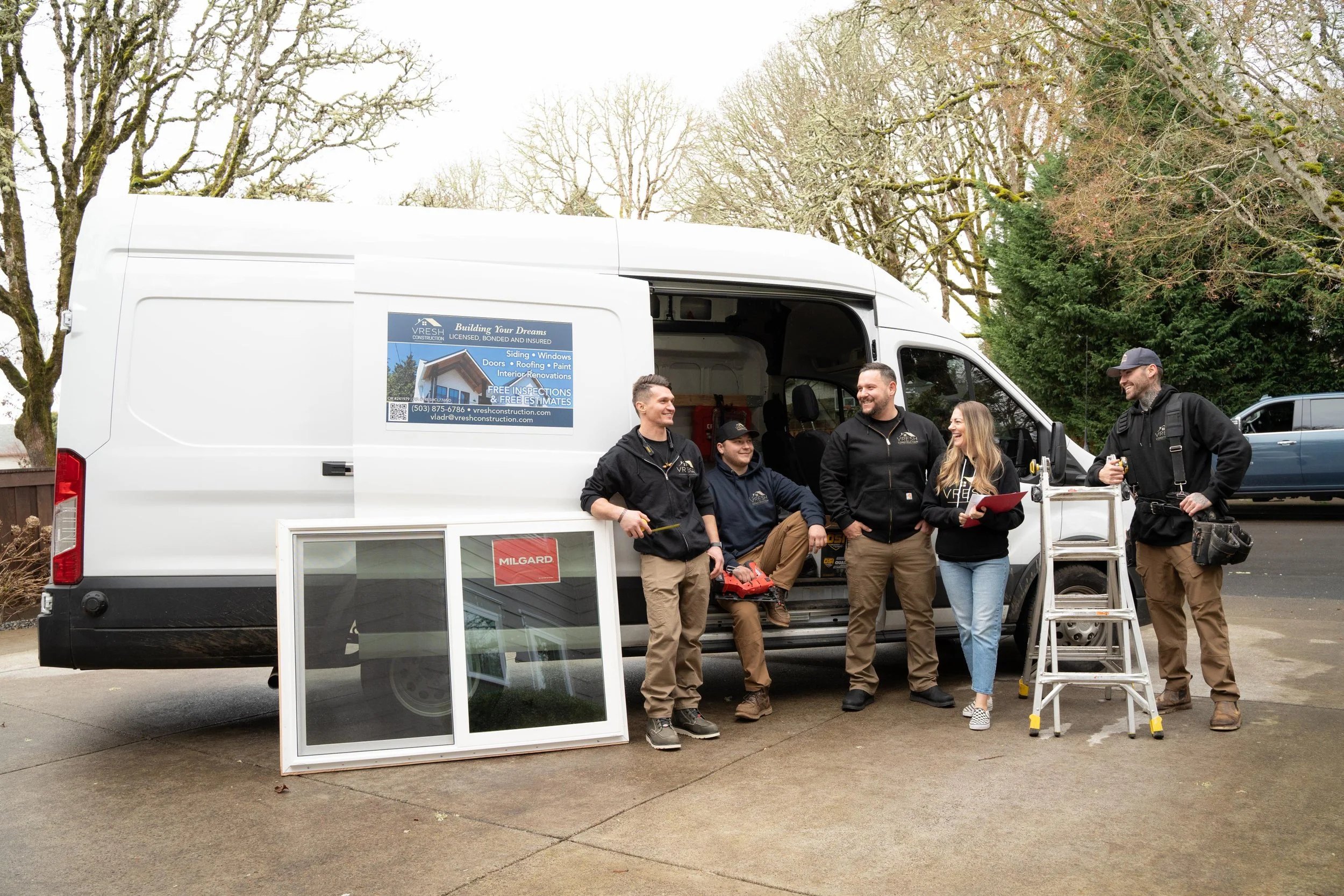
(503) 272-6436 — Call or Text, Available 24/7
We answer calls and texts at any hour. For storm damage, active leaks, or structural emergencies, calling directly is the fastest path to a response.
Dry Rot Repair FAQs — Lake Oswego, OR


Client's Talk
We have a wealth of experience working as main building contractors on all kinds of projects, big and small, from home maintenance and improvements to extensions, refurbishments and new builds.
Areas We Serve
VResh Construction provides window replacement, siding installation, roofing, dry rot repair and full exterior renovation services throughout the Portland metro area and Southwest Washington.
Portland Metro — Oregon
Southwest Washington
Extended Service Areas
Request Your Free Dry Rot Repair Estimate in Lake Oswego
Whether it is a soft fascia at the end of a gutter clogged with oak leaves, a spongy window sill on a 1963 Lake Oswego hillside home, a dormer corner that has been showing water staining for years, a pre-purchase exterior assessment on a lakeside property, or a comprehensive exterior moisture survey on a home not touched since the 1990s — VResh responds same-day or within 24 hours.