How Long Does a Roof Last? Lifespan by Material in Wet Climates
The roof is 22 years old, and the shingles are curling at the edges. Granules are appearing in the gutters whenever it rains. The question isn't whether the roof needs attention — it's whether this is the end of the line or just the beginning of a slow decline. The answer depends entirely on what's up there and how well it was installed.
Roofing materials don't fail on a fixed schedule. A 30-year shingle doesn't last exactly 30 years. In dry, mild climates, it might last 35. In a wet climate like Portland's — 37+ inches of rain annually, 25-40 freeze-thaw cycles per year, sustained wind-driven storms, and 7-8 months of damp conditions that accelerate moss and algae growth — that same shingle might give out at 22-28 years. Climate is the variable that manufacturer warranties don't fully account for.
Lifespan by Roofing Material
| Material | Manufacturer Warranty | Real-World Lifespan | Real-World in Wet Climate |
|---|---|---|---|
| Three-tab asphalt shingles | 20-25 years | 15-20 years | 12-18 years |
| Architectural asphalt shingles | 30-50 years | 25-35 years | 20-30 years |
| Premium asphalt (polymer-modified) | 30-50 years | 30-40 years | 25-35 years |
| Metal (standing seam) | 30-50 years | 40-70 years | 40-60 years |
| Metal (corrugated/exposed fastener) | 20-30 years | 20-40 years | 15-35 years |
| Wood shake | 30 years | 25-40 years | 20-30 years |
| Clay tile | 50 years+ | 50-100+ years | 50-80 years |
| Concrete tile | 50 years | 40-75 years | 35-60 years |
| Slate | 50-100 years | 75-200 years | 75-150+ years |
| TPO (flat roof) | 15-20 years | 15-25 years | 12-20 years |
| EPDM rubber (flat roof) | 15-20 years | 20-30 years | 15-25 years |
| PVC (flat roof) | 15-20 years | 20-30 years | 15-25 years |
The "wet climate" column reflects real-world performance in environments with sustained rainfall, freeze-thaw cycling, and high humidity — conditions that match the Pacific Northwest, the upper Midwest, and the Northeast. The numbers aren't guarantees — they're the range where most properly installed roofs of each type reach the end of serviceable life.
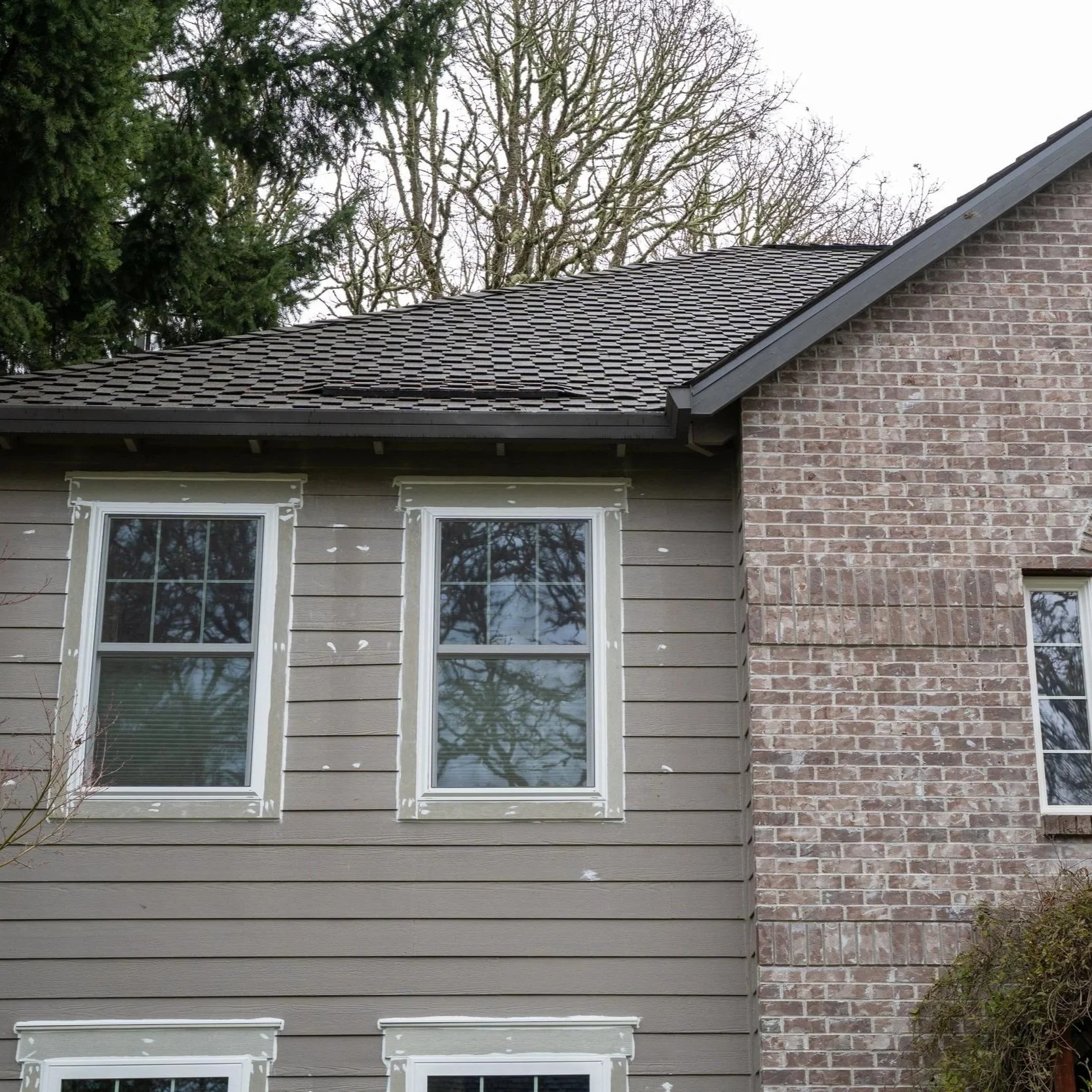
Aging asphalt shingle roof in a wet climate showing curling edges, granule loss, and visible wear after twenty two years.
Asphalt Shingles: The Most Common Roof in America
Asphalt shingles cover roughly 80% of residential roofs in the United States. Three product tiers exist, and the performance gap between them is significant — especially in wet climates.
Three-tab shingles are the budget tier. A single flat layer, limited wind resistance, and the shortest lifespan. In Portland's climate, three-tab shingles rarely last more than 18 years before the granules wear off, the asphalt dries out, and the shingles start cracking during freeze-thaw cycles. The manufacturer's warranty says 20-25 years. The roof says otherwise.
Architectural shingles are the current standard for residential roofing. Thicker, multi-layered, with better wind resistance and dimensional stability. In wet climates, a properly installed architectural shingle roof lasts 25-35 years. Manufacturer warranties range from 30 to 50 years, but those warranties prorate over time — the coverage at year 25 is a fraction of what it was at year 5.
Premium shingles with polymer-modified asphalt represent the top tier. Products like Malarkey's Vista and Legacy lines use polymer-modified asphalt that remains flexible through freeze-thaw cycles, unlike traditional asphalt, which can become brittle. Standard asphalt gets stiff in cold weather — that stiffness leads to cracking when temperatures swing between freezing overnight and above-freezing during the day. Polymer-modified asphalt withstands those swings without cracking, adding years to the roof's real-world lifespan in climates where freeze-thaw cycles are constant.
Algae-resistant granules extend the functional life of asphalt shingles in wet, overcast climates. Moss and algae colonize standard granules within a few years in environments with high humidity and limited UV exposure. The biological growth traps moisture against the shingle surface, accelerating granule loss and asphalt degradation. Products with algae-resistant granule technology — CertainTeed's StreakFighter and Malarkey's Scotchgard-treated granules — resist this colonization and perform noticeably longer in damp environments.
What Shortens a Roof's Life in Wet Climates
Sustained moisture exposure. In dry climates, rain falls, and the roof dries within hours. In Portland's climate, the roof can stay damp for days or weeks at a time from October through May. That sustained moisture accelerates every form of degradation — granule erosion, organic growth, underlayment deterioration, and fastener corrosion.
Freeze-thaw cycling. Portland experiences 25-40 freeze-thaw cycles per year. Water gets under shingles, freezes, expands, and lifts the shingle edge. The next day it thaws, and the shingle lies back down — but the seal is compromised. Over hundreds of cycles across a decade, the cumulative damage opens pathways for water to reach the underlayment and deck. This is the primary failure mechanism for asphalt shingles in the Pacific Northwest.
Moss and algae. Moss roots penetrate under shingle edges, lifting them and creating channels for water entry. Algae holds moisture against the granule surface. Both accelerate degradation. North-facing roof slopes in shaded locations are the worst — they get the least UV exposure and the slowest drying, creating ideal conditions for biological growth.
Inadequate ventilation. A poorly ventilated attic traps heat and moisture beneath the roof deck. In winter, that trapped moisture condenses on cold sheathing, creating conditions for mold and rot — from the inside. Proper ridge and soffit ventilation keeps air moving through the attic space and equalizes moisture levels. A roof with good ventilation outlasts the same roof with poor ventilation by 5-10 years.
Wind damage accumulation. Portland's southwest windstorms push past 60 mph regularly during fall and winter. Each storm event can lift shingle edges, loosen fasteners, and stress flashing connections. The damage is often invisible from the ground — a slightly lifted shingle that reseals on its own but has a weakened adhesive bond. Over the years, the cumulative effect of repeated wind events opens the roof to moisture entry at dozens of small points.
Metal Roofing: 40-70 Years
Metal is the long-game material. A standing seam steel roof lasts 40-60 years. Aluminum extends that to 40-70 years because it doesn't corrode. Copper can last 100+ years. The material simply doesn't degrade the way organic roofing materials do — it doesn't absorb moisture, doesn't support biological growth, and doesn't become brittle in freeze-thaw cycles.
Standing seam metal uses hidden fasteners that don't penetrate the panel surface. No exposed fasteners means no potential leak points from deteriorating washers. Corrugated metal with exposed fasteners has a shorter lifespan — 20-40 years — because the neoprene fastener washers deteriorate over 15-25 years, and every fastener becomes a potential leak.
Metal's disadvantage: cost. A standing seam roof costs roughly twice as much as an architectural asphalt roof. The 50-year math favors metal — one metal roof outlasts two asphalt roofs — but the upfront investment is significant.
Wood Shake: 25-40 Years (Climate-Dependent)
Wood shake performs best in dry climates, where it dries quickly between rain events. In wet climates, the lifespan of wood shakes drops to 20-30 years. The wood absorbs moisture, stays damp for extended periods, and becomes a host for moss, algae, and the fungi that cause rot. Cedar shake resists decay better than other species because of its natural oils, but those oils deplete over time — and Portland's sustained wet season depletes them faster than drier climates.
Wood shake also carries a higher fire risk than any other roofing material. Class B or Class C fire ratings are standard for treated wood shake. In areas near wildfire risk zones, some jurisdictions restrict or discourage wood shake installations.
Maintenance requirements are higher than for any other material. Wood shakes need periodic cleaning, treatment, and replacement of individual shakes as they crack or decay. A well-maintained wood shake roof reaches 30-35 years in a wet climate. A neglected one can fail at 15-20.
Tile and Slate: 50-200 Years
Clay tile, concrete tile, and natural slate are the century materials. Clay tile roofs on Mediterranean buildings have lasted 500+ years. Slate roofs on 19th-century buildings are still performing after 150 years. These materials simply don't degrade in the weather.
The roof structure beneath the tile or slate determines the true lifespan. The underlayment, flashing, and fasteners fail long before the tile or slate does. A 100-year-old slate roof typically needs underlayment replacement at the 60-80 year mark — the slate gets lifted, the underlayment is replaced, and the slate goes back on for another 60 years.
Clay tile: 50-100+ years. Concrete tile: 40-75 years. Slate: 75-200 years. In wet climates, the lifespan of concrete tile is shorter than that of clay because concrete absorbs more moisture and is more susceptible to freeze-thaw degradation.
These materials are heavy — 800-1,500+ pounds per roofing square compared to 200-300 for asphalt. Most residential framing isn't designed for that load without reinforcement. The structural upgrade adds to the already high cost of the materials.
Flat Roofing: TPO, EPDM, and PVC — 15-30 Years
Flat and low-slope roofs use different materials than pitched roofs. Portland has a significant stock of flat-roofed homes — mid-century modern, contemporary, and some commercial-to-residential conversions — where these materials are the standard.
TPO (thermoplastic polyolefin) is the most commonly installed flat roof membrane on newer construction. TPO seams are heat-welded, creating a continuous waterproof surface. In wet climates, TPO performs well against ponding water and sustained moisture. Real-world lifespan runs 15-25 years, with 12-20 years more typical in the Pacific Northwest, where UV degradation is lower but moisture exposure is constant.
EPDM (ethylene propylene diene monomer) is a synthetic rubber membrane that has been in use since the 1960s — the longest track record among flat roof materials. EPDM handles temperature swings and UV exposure well. Seams are adhesive-bonded rather than heat-welded, which makes them the most common failure point over time. Real-world lifespan is 20-30 years, with 15-25 years in wet climates where adhesive seams face more stress from sustained moisture and thermal cycling.
PVC (polyvinyl chloride) membranes are heat-welded like TPO and resist chemicals, grease, and standing water. PVC is common on flat roofs where mechanical equipment or rooftop access creates chemical exposure. Lifespan is similar to TPO — 20-30 years in general conditions, 15-25 years in wet climates.
The failure mode for all three flat roof membranes differs from that of pitched roofing. Flat roofs don't shed water — they manage it through slope-to-drain or internal drainage systems. When the membrane fails, water doesn't run off; it sits. In Portland's sustained wet season, a flat roof membrane failure can lead to ponding that accelerates the damage and can reach the interior within days rather than the weeks or months it might take for a pitched roof leak to show.
What Actually Determines Lifespan
The material sets the ceiling. Everything else determines where the roof falls within that material's range.
Installation quality is the single biggest variable. A properly installed budget shingle outlasts a poorly installed premium shingle. Correct nail placement (in the nailing strip, not above or below it), correct number of fasteners per shingle, starter strips at eaves and rakes, ice and water shield at valleys and eaves, step flashing at every roof-to-wall intersection, kickout flashing at the bottom of every roof-to-wall junction — these details separate a 30-year roof from a 20-year roof using identical materials.
Flashing system. Roofs fail at transitions, not in the field. Valleys, chimneys, skylights, pipe boots, and roof-to-wall intersections are where water concentrates and where leaks start. The quality and completeness of the flashing system at every one of these transitions determines whether the roof reaches 80% or 100% of the material's expected lifespan.
Ventilation. Ridge ventilation paired with soffit intake creates airflow that removes moisture and heat from the attic space. Without it, the underside of the roof deck stays warm and damp — conditions that accelerate sheathing deterioration and reduce shingle life from the bottom up.
Maintenance. Annual inspections catch small problems before they become big ones. A cracked pipe boot costs $150 to repair. A cracked pipe boot that leaks for 2 years is a $2,000 deck repair, plus the cost of the pipe boot. Moss removal, gutter cleaning, and flashing inspection are the maintenance items that protect the roof investment.
Get quote — How's the roof holding up? VResh Construction provides free roof inspections with written condition reports. CertainTeed, Owens Corning, and Malarkey certified. Call (503) 272-6436.
The Replacement Decision
The question isn't just "how old is the roof?" — it's what condition the roof is in today and how much useful life is left.
A roof showing widespread granule loss, multiple curling or cracked shingles, and dark streaking across the field is at the end of its functional life, regardless of age. A roof at 20 years that still has solid granule coverage, flat shingles, and no visible damage may have 5-10 years of life remaining.
Single-point failures — one leak at a flashing location, one cracked pipe boot, one damaged valley — are repairs, not replacements. Spending $400-$800 to fix a roof flashing failure with 10 years of life left is the right call. Spending $4,000 on multiple repairs to a 25-year-old roof that shows systemic wear is throwing money at a declining asset.
The most expensive roof replacement is always the one that got postponed until the deck rotted. A roof that's replaced at the end-of-life costs the price of the new roof. A roof that leaks for two or three extra years before replacement costs the new roof plus $2,000-$8,000+ in deck repairs and interior damage remediation.
Frequently Asked Questions
The Climate Factor
Wet climates accelerate every failure mode that limits a roof's life — moisture degradation, biological growth, freeze-thaw stress, and fastener corrosion. A roof installed in Phoenix and the same roof installed in Portland will not last the same number of years. The material choice should account for the climate the roof will actually face, not the warranty period printed on a brochure written for a national audience.
Shingles are rated in a laboratory; roofs fail at the eaves and the valleys. Ice and water shield where the water concentrates, and a full tear-off so nothing is laid over a failed layer, move the real number further than the rating does. Roof replacement in Beaverton, roof replacement in Salem. 10-year workmanship warranty: (503) 272-6436.