
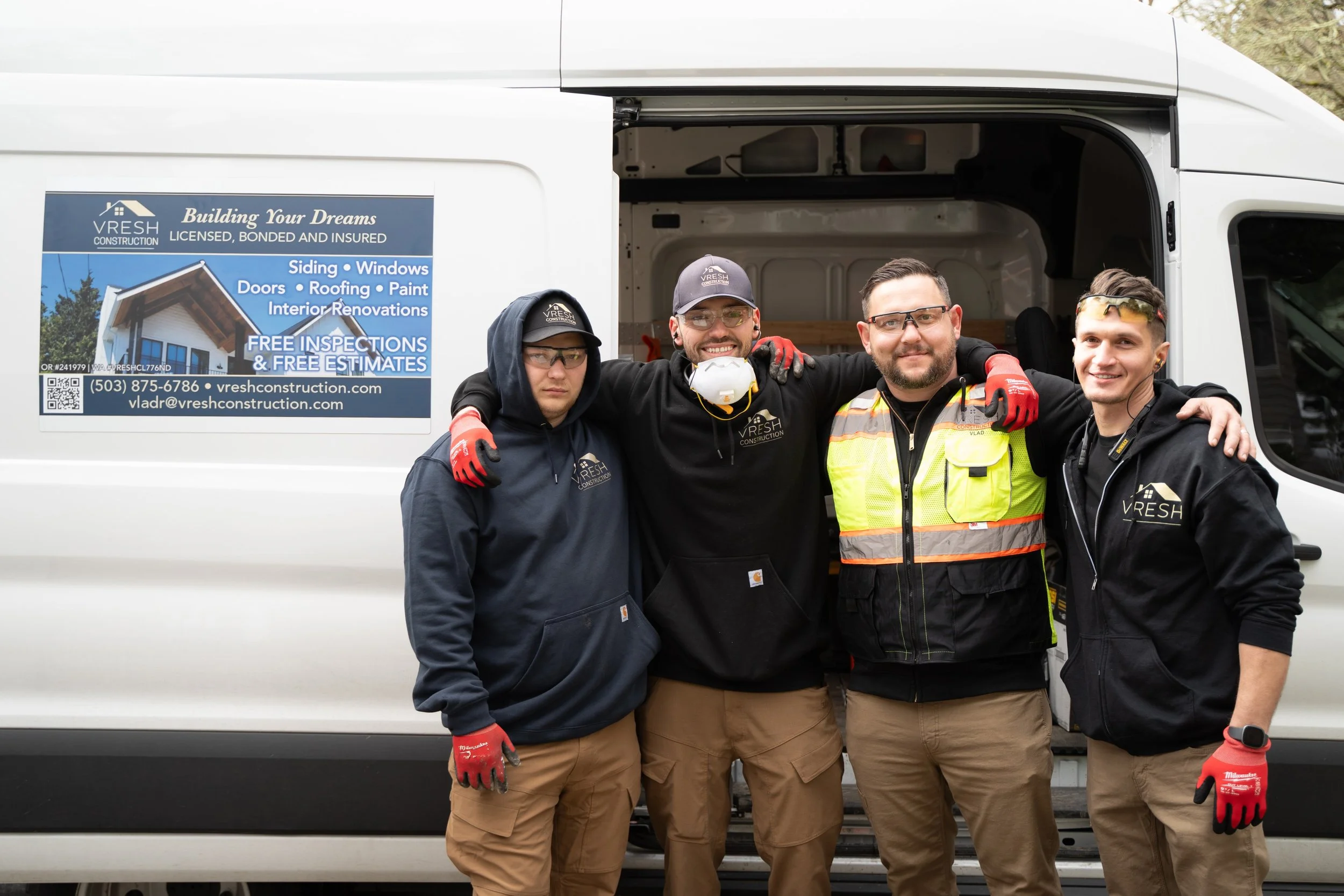
Salem’s Trusted Roof Replacement Contractor — Full Tear-Off, Certified Team & No Layover Excuses
Salem's 1980 median construction year means the city's two largest housing cohorts — the 1970s at 17.5% and the 1990s at 14.9% — are on opposite sides of the 25–30 year asphalt shingle service life. The 1970s homes are well past it; the 1990s homes are at or approaching it. In the Willamette Valley's Pacific marine climate, approximately 40 inches of annual rainfall falls through a sustained Pacific wet season from October through May with minimal drying opportunity between events.

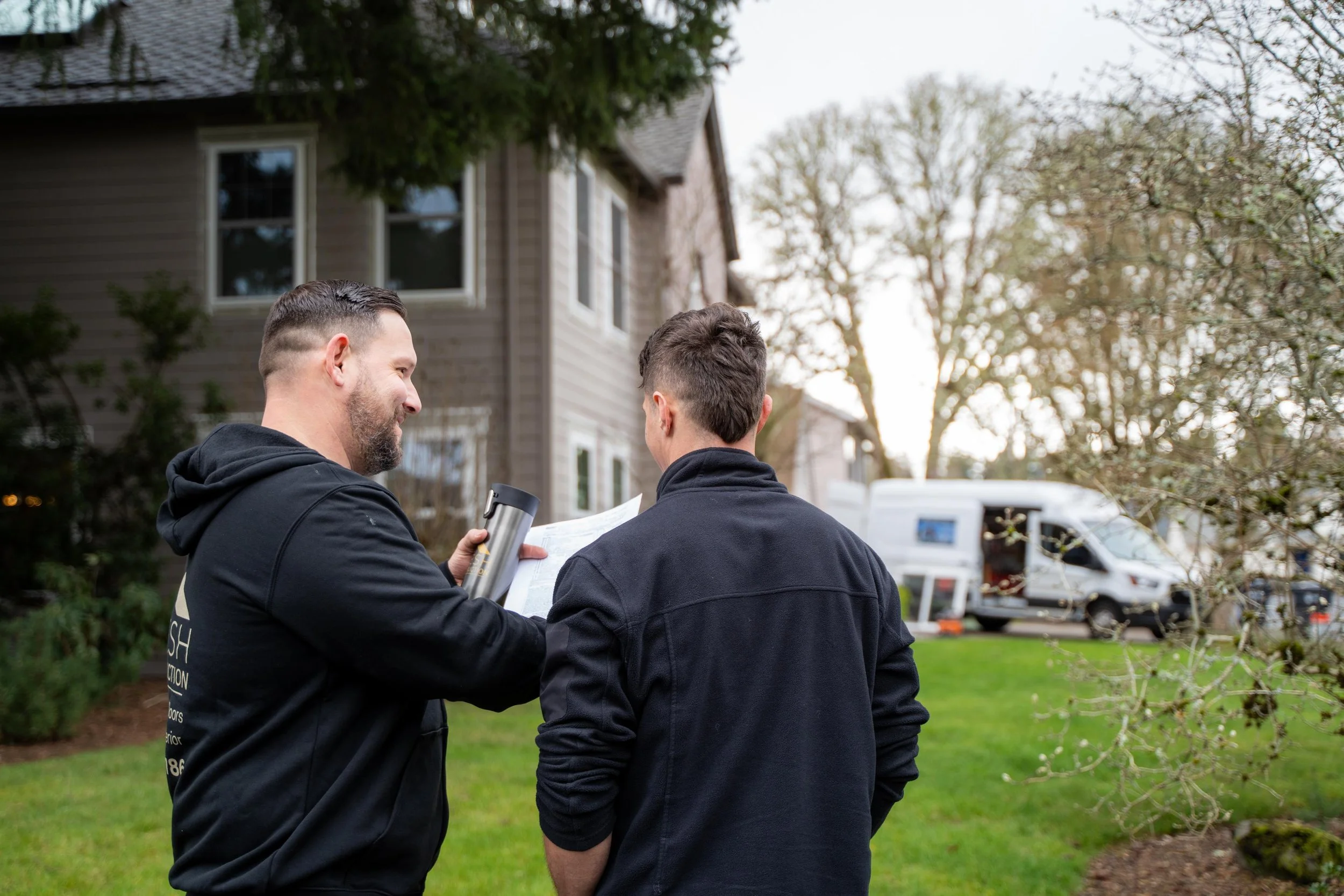
A Salem roof past its service life is not a cosmetic problem — it is a water management system that is actively failing through every Pacific storm from October through May. VResh performs full tear-off: old shingles off, decking inspected and repaired, new synthetic underlayment, Malarkey shingles manufactured in Portland for exactly these Willamette Valley conditions, all pipe boots replaced, kickout diverters at every dormer and addition corner. No layovers. EPA Lead-Safe Certified. Licensed OR #241979 | WA #VRESHCL776ND. Free written estimates. (503) 272–6436.VResh is owner-operated. Vlad personally oversees every Gresham roofing project and is on every significant job site.
Why Salem Roofs Are Failing Now
Salem's 1980 median construction year places the city's dominant housing cohort past the end of a standard shingle's service life. The 1970s roofs are several cycles deep — the 1990s roofs are at the end of their first.
Salem's 1970s Homes — Several Roof Cycles Deep
Salem's 1970s homes — 17.5% of the housing stock, the city's largest single cohort — are now around 50 years old and on their second or third roof covering.
What the estimate visit reads on a roof this age is consistent: granule loss collecting in the gutters, moss established on north-facing slopes, shingle edges curling where south-facing sections take the most UV, and pipe boots that have cracked or pulled away from the pipe.
Salem's 1990s Homes — End of the First Roof Cycle
Salem's 1990s homes — 14.9% of housing — received 25 to 30 year asphalt shingles as the standard specification. At 30-plus years, those roofs are at or past that service life.
A roof at the end of its first cycle often still looks serviceable from the street. The evidence is in the gutters and in the attic — granule accumulation, daylight at penetrations, and sheathing that has darkened where a boot has been leaking slowly.
What 40 Inches of Annual Rain Does to a Weak Roof
Salem takes roughly 40 inches of rain a year, and most of it arrives concentrated in the wet season rather than spread evenly across the calendar.
Sustained wet favours rapid moss colonisation on north-facing slopes, and every deficiency in the system — a failed pipe boot, a valley without ice and water shield, a missing kickout where the roof meets a wall — is tested repeatedly rather than occasionally.
What VResh Actually Does on a Salem Roof Project
Full tear-off on every Salem project. Here is the process.
Complete Tear-Off and Decking Inspection
All existing shingles removed down to decking — no layovers. Decking inspected for rot, delamination, and fastener pull-through.
What VResh Consistently Finds on Salem Tear-Off Projects
- Pipe boot failure — every 1970s-90s Salem roof has rubber pipe boots that are now 25–50 years old. Rubber at this age is brittle, cracked, and no longer seals. Every pipe boot on every Salem roof replacement is replaced as standard practice — not assessed and left in place.
- Missing kickout flashing at dormers and addition corners — the most common source of wall cavity water damage on Salem homes with dormers. After 25–50 years of Pacific storm runoff delivering water into unflashed wall-to-roof junctions during every wet season, the structural damage frequently extends deep into the wall cavity.
- North-section decking delamination — Salem's sustained overcast Pacific marine wet season promotes moss accumulation on north-facing roof sections. Moss retains moisture against the decking surface, accelerating OSB and plywood delamination. These sections require replacement before new roofing.
- Inadequate ridge ventilation — original ridge vents on Salem homes are frequently undersized or blocked, reducing attic ventilation and accelerating shingle aging from below and sheathing moisture from below.
Decking Repair and Synthetic Underlayment
All compromised decking replaced. New synthetic underlayment — not felt paper — over the full roof deck. Synthetic underlayment is meaningfully superior in Salem's 40-inch annual rainfall climate: water-resistant whether wet or dry, tear-resistant, and provides secondary protection if shingles are damaged.
Flashing, Pipe Boots, and Kickout Diverters
Step flashing at all wall-to-roof junctions. New pipe boots at all penetrations — every one replaced. Kickout diverters at all dormer sides and addition corners. Ice and water shield at all valleys, eaves, and critical junctions.
What Contractors Skip on Salem Roof Replacements
- Pipe boot replacement: a 25–50 year old rubber pipe boot assessed and left in place is a deferred failure in a 40-inch annual rainfall climate. Every pipe boot is replaced on every VResh Salem roof project.
- Kickout flashing at dormers: the small diverter that prevents major structural damage is missing on most Salem dormer and addition intersections. VResh installs it as standard on every project.
- Decking assessment: a layover on a Salem home masks decking problems that produce premature failure. Full tear-off with decking inspection is not optional.
Malarkey Installation, Permit Inspection, and Warranty
Malarkey shingles installed per manufacturer specification. Manufactured in Portland for the Pacific marine climate of the Willamette Valley and Oregon Coast ranges — Salem's wet season, Pacific storm conditions, and overcast growing seasons are what this product is spec'd for. Permit inspection scheduled and attended. Written workmanship warranty issued at project completion.
Malarkey Vista — Standard Specification for Salem Homes
Malarkey Vista SBS-modified architectural shingles: flexible in Pacific Northwest temperature cycling, ruby-infused granules that resist algae colonization on Salem's moss-prone north-facing sections, 30-year limited warranty from a Portland manufacturer spec'd for Willamette Valley Pacific marine conditions. For Salem homeowners, locally-manufactured product that understands the sustained wet season is the correct specification.
Roofing Materials for Salem Homes
VResh's standard specification for Salem roofs is Malarkey, manufactured in Portland. Options for Salem homeowners:
Malarkey Windsor — For Complex Rooflines and Higher-Value Salem Homes
Malarkey's premium heavy-gauge shingle for Salem homes with complex rooflines, multiple dormer configurations, or where extended service life is the priority. Greater thickness and granule depth mean better performance in sustained Pacific marine wet season conditions.
Malarkey Legacy — Impact-Resistant
Impact-resistant shingle for Salem homeowners with specific hail exposure concerns or seeking potential insurance premium impact. Ask VResh about current insurance carrier relationships in Marion County.
Roof Replacement Requirements for Salem Homes
Lead Paint Consideration
Approximately 46% of Salem's housing stock was built before 1978. Roof replacement on pre-1978 homes disturbs painted fascia, soffit, and trim at the eave. The EPA's RRP Rule requires EPA Lead-Safe Certified contractors for this work. VResh holds current EPA Lead-Safe Certification and provides written documentation at project completion.
Building Permits for Roof Replacement in Salem
Roof replacement in Salem requires a building permit. Permits are handled through the City of Salem Permit Application Center — 440 Church St SE, 5th Floor, Salem, OR 97301; Building and Safety phone: 503–588-6256; email: baspac@cityofsalem.net. Hours: Monday through Friday, 8:00 AM–5:00 PM for general questions; permit and license processing is 8:00 AM–4:00 PM; plans intake is 9:00 AM–4:00 PM. Permits can also be submitted and tracked through the City's online Permit Application Center portal at permits.cityofsalem.net. VResh handles all permit coordination and submission on your behalf.
What Roof Replacement Costs in Salem, OR
Roof replacement cost depends on roof area, pitch, material selected, and decking repair extent. General planning ranges for a Salem home:
| Roof Replacement — General Cost Ranges (Labor + Materials) | Estimated Cost |
|---|---|
| Standard ranch or two-story (moderate pitch, simple roofline) | $9,000–$16,000 |
| Complex roofline (dormers, multiple ridges, steep pitch) | $14,000–$25,000+ |
| Decking replacement | add $500–$3,000 depending on extent |
| All pipe boots replaced — included as standard on every VResh roof project | Included |
| Kickout diverters at dormers — included as standard | Included |
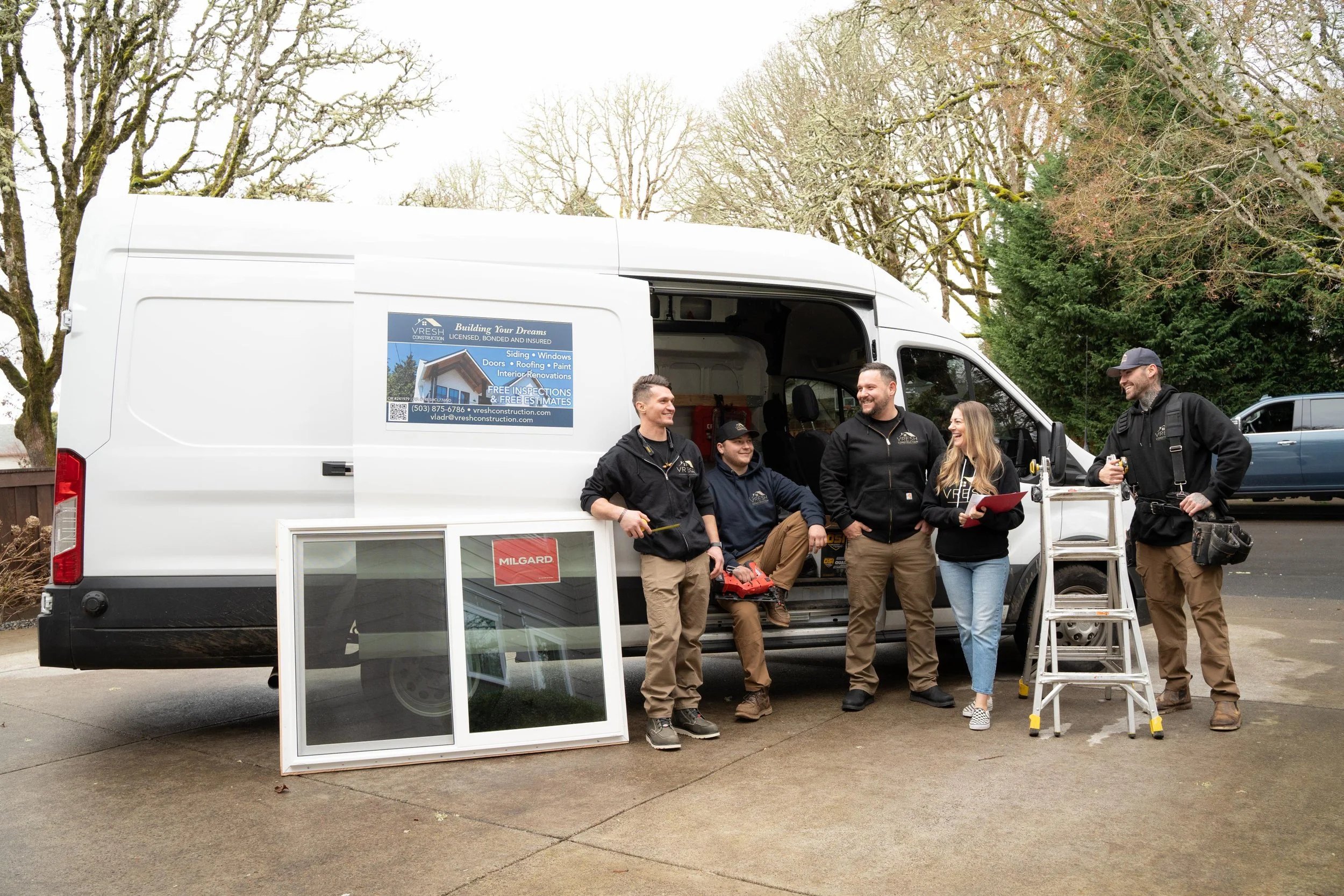
(503) 272-6436 — Call or Text, Available 24/7
We answer calls and texts at any hour. For storm damage, active leaks, or structural emergencies, calling directly is the fastest path to a response.
Roof Replacement FAQs — Salem, OR


Client's Talk
We have a wealth of experience working as main building contractors on all kinds of projects, big and small, from home maintenance and improvements to extensions, refurbishments and new builds.

Areas We Serve
VResh Construction provides window replacement, siding installation, roofing, dry rot repair and full exterior renovation services throughout the Portland metro area and Southwest Washington.
Portland Metro — Oregon
Southwest Washington
Extended Service Areas
Request Your Free Roof Replacement Estimate in Salem
Whether it is a full tear-off on a 1976 Salem ranch with moss-covered north sections and granule loss in the gutters, a dormer intersection repair with kickout diverters on a historic capitol-area property, a Malarkey installation on a 1990s south Salem home reaching end of first cycle, or a free structural assessment of a roof you know is past its lifespan — VResh responds same-day or within 24 hours.