
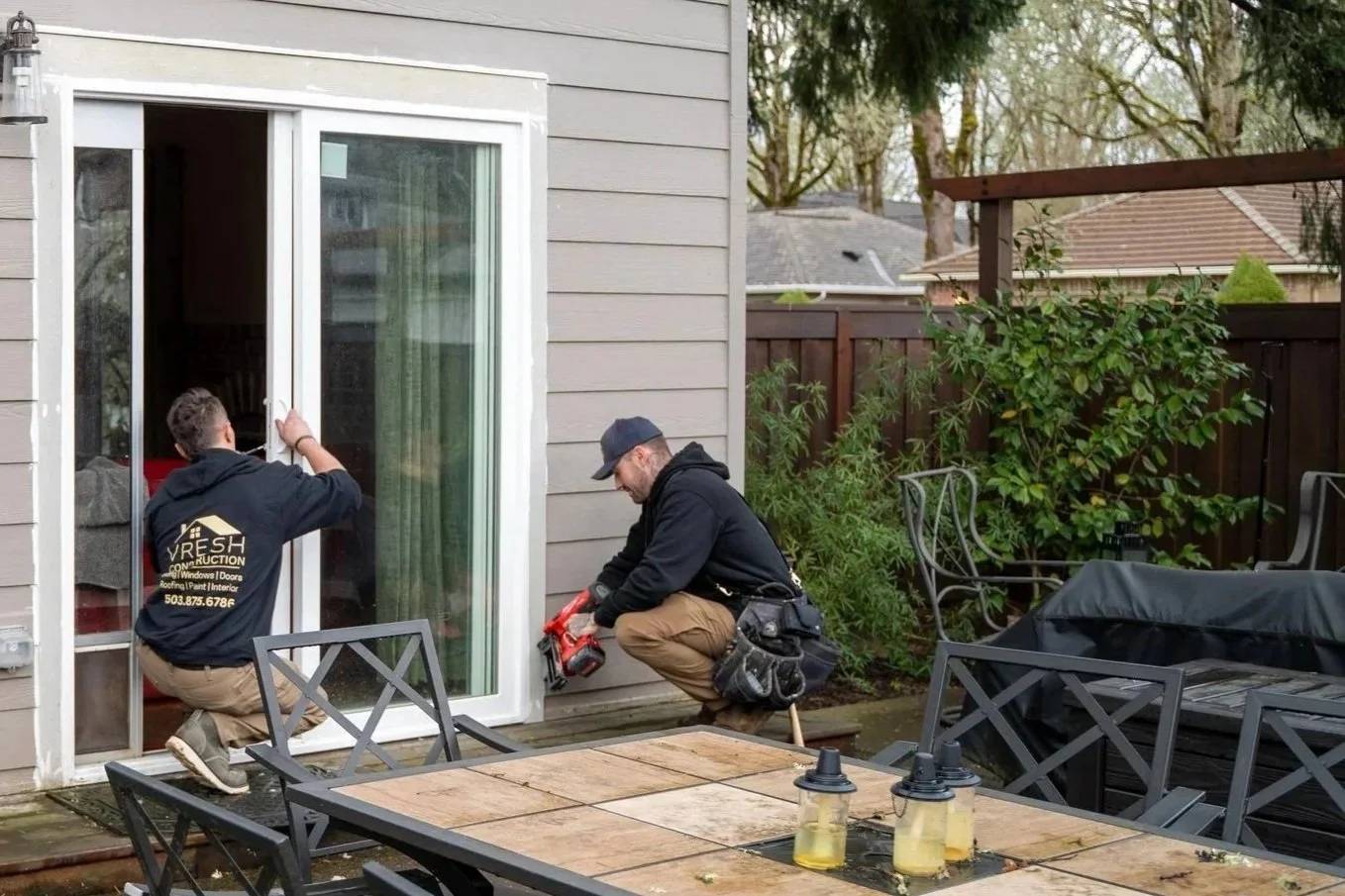
Bay Window Replacement in Portland, OR
30°, 45° & 90° Box Bay Configurations. Structural Support Assessment Included. Full Flashing at Every Junction. Period-Appropriate for Portland Victorians & Craftsman Homes. Licensed OR #241979.

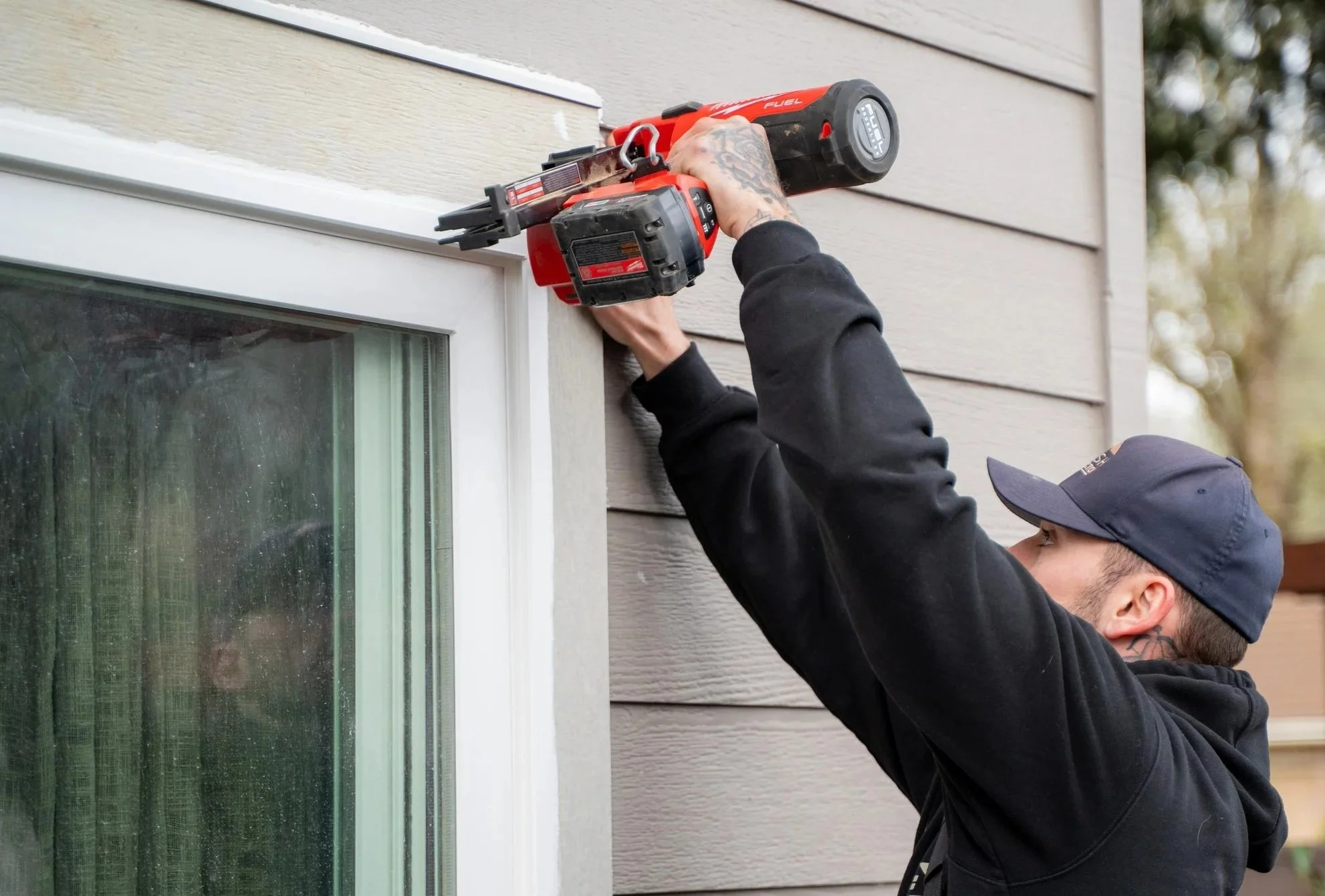
Bay windows project outward from the house wall — a central window section flanked by two angled side windows creates a wider interior view, a seat, and a distinctive exterior feature. Portland’s Victorian-era homes, colonial revivals, and many Craftsman bungalows were built with original bay windows that are now at the end of their lives. Bay window replacement is more complex than standard window replacement: the bay floor, seat, structural support, and rooflet above the projection all require assessment and often repair before a new window unit can be correctly installed. VResh handles the full scope.
The most common bay window failure pattern we see in Portland is not the window glass — it is the flashing. Head flashing at the wall junction above, seat flashing at the bay floor, and step flashing at the bay roof’s wall junction are all points where water infiltration occurs when the original installation was inadequate or when flashing materials have reached end of life. Replacing the window unit without addressing the flashing is a short-term fix. We assess the full flashing system at the estimate visit and include all necessary work in the written quote.
Bay Window Configurations for Portland Homes
|
30° Bay
|
The most common bay window configuration for Portland homes. Side windows are angled 30° off the wall plane, creating a modest projection (typically 14–18 inches) with a relatively shallow interior seat. The 30° bay suits tight lots where a deeper projection would encroach on walkways or landscaping, and is common on Victorian and colonial revival homes, where the bay is a visual feature rather than a major room expansion. |
|
45° Bay
|
A 45° angle creates a deeper projection (typically 18–24 inches) with a wider interior seat. The 45° configuration provides more usable interior width at the seat and a more expansive view angle from the flanking side windows. More common on larger Portland homes and in living rooms where the bay is a primary architectural feature. |
|
90° Box Bay (Oriel Bay)
|
The box bay projects at 90° from the wall — all three window sections are parallel or perpendicular to the wall plane, creating a rectangular projection. Common in Victorian-era Portland homes and Craftsman-era commercial storefronts. Box bays typically have more usable interior seat depth and a stronger architectural presence. The flat side windows simplify structural support compared to angled configurations. |
|
Operating Windows in a Bay
|
The side windows in a bay can be casement, double-hung, or fixed. Casements are the most functional choice for ventilation — they open fully outward and seal tightly when closed. Double-hung side windows are more common in colonial revival applications where the double-hung profile is architecturally consistent. Fixed side windows are specified when ventilation is not needed, and maximum glass area is the priority. |
|
Bay Window Seat and Knee Wall
|
The floor of a bay window projection typically sits on a knee wall below the bay. The knee wall, seat board, and the junction between the bay floor and the house wall below are among the most common moisture failure points in Portland bay windows. Proper flashing of the seat, adequate slope for drainage, and correct integration with the WRB below the bay are as important as the window installation itself. |
|
Bow Window
|
A bow window uses four to six equal-width window sections set at shallow angles to form a gentle curve, instead of the three angled sections of a bay. A bow spans a wider stretch of wall with a softer projection, which suits long living room walls and Queen Anne-style Victorians in Portland. Most bows combine fixed and casement sections. The support system and the small roof above need the same assessment as a bay, and the curved seat and roof take more custom framing and flashing. |
|
Energy Performance — Seat, Roof and Glass
|
A bay or bow adds glass plus a projecting floor and roof, so its energy performance depends on more than the window rating. Original Portland bays often have little or no insulation in the seat platform or the small roof above, which makes the bay the coldest spot in the room. When the seat and roof cavities are open during replacement, we insulate them, air seal every window section, and specify ENERGY STAR-rated low-E glass, so the bay stops being a winter cold spot. |
Bay Window Replacement — What the Project Involves
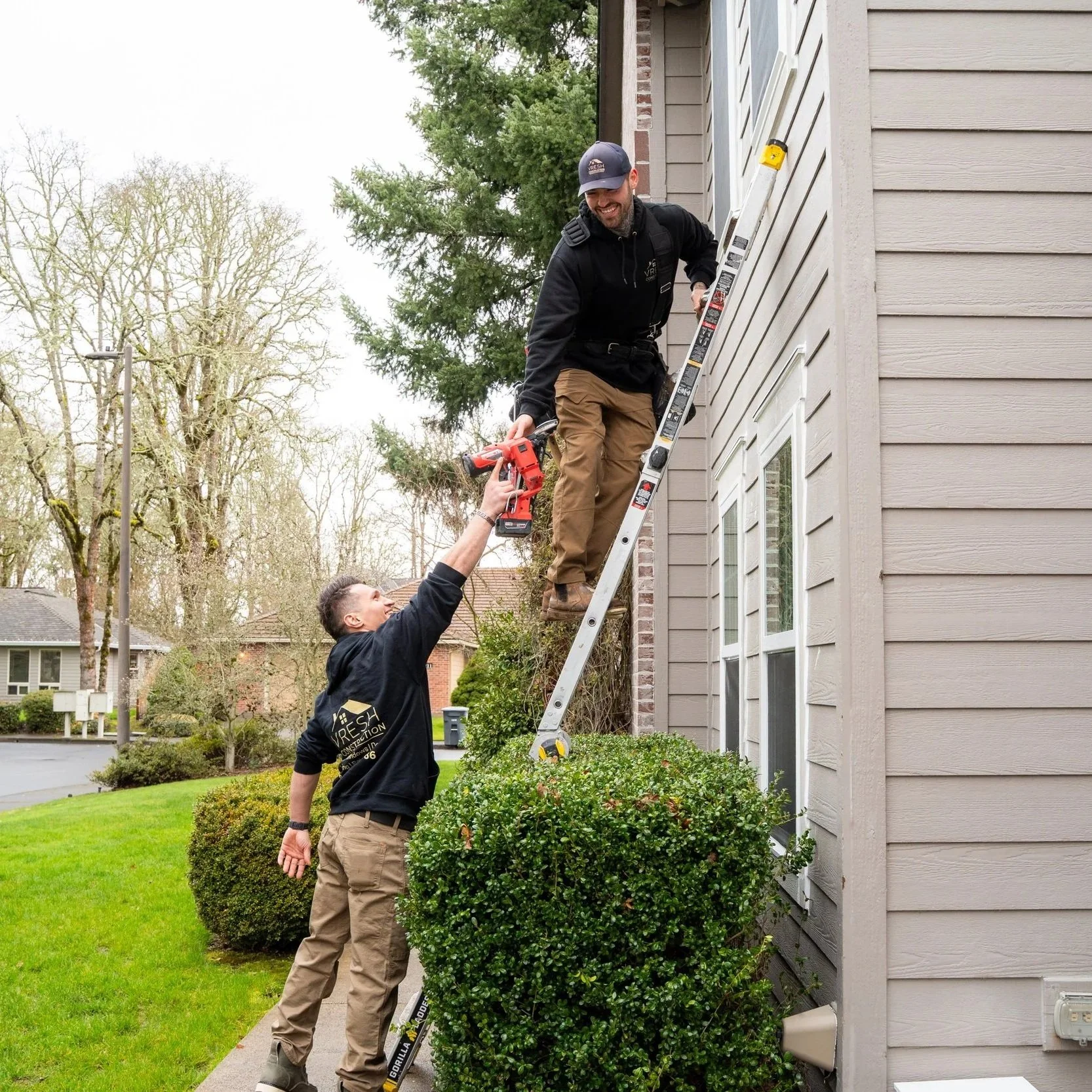
Where Bay Window Leaks Start — And How We Prevent Them
Head Flashing — Where Most Bay Window Leaks Start
The most common bay window leak in Portland is at the head — the junction between the top of the bay and the house wall above. Water that runs down the house wall above the bay hits the bay casing or roof and must be directed outward and away from the wall junction. Without proper head flashing integrated into the WRB above, water tracks into the wall assembly and reaches the framing and interior finishes over time. This failure is slow, often invisible for years, and the damage is typically well advanced by the time it is discovered.
Seat Flashing — The Most Commonly Skipped Detail
The bay seat board — the horizontal surface at the bottom of the bay window projection — must be flashed to direct water away from the wall and framing below. An unflashed seat collects water and holds it against the house wall. In Portland’s climate, a poorly flashed bay seat is almost guaranteed to produce rot in the knee wall or house wall framing below within 10–15 years of installation. Seat flashing is a detail that many installers skip or execute poorly — it is standard on every VResh bay window installation.
Bay Roof Flashing — Required Where the Bay Roof Meets the House Wall
The small roof over a bay window projection requires its own step flashing at the wall junction, cap flashing over the step flashing, and proper integration with the WRB above the bay roof line. Failed step or cap flashing at the bay roof is a primary moisture failure mode in Portland’s pre-war housing stock. When replacing a bay window, we inspect the bay roof condition and include any necessary flashing repair in the project scope.
Structural Support — Bay Floor Must Be Properly Supported
A bay window projection is cantilevered from the house wall — the bay floor must be supported either by a knee wall below, a cable or rod tension system from the header above, or by corbels at the sides. Failed or deteriorated support allows the bay to sag or tilt, which stresses the window frames and can crack the seat and open gaps in the flashing. We check the support system at the estimate visit and repair or reinforce it before the new window goes in.
Serving Portland Metro Area
VResh Construction provides window replacement, siding installation, roofing, dry rot repair and full exterior renovation services throughout the Portland metro area and Southwest Washington.
Portland Metro — Oregon
Southwest Washington
Extended Service Areas
(503) 272-6436 — Call or Text, Available 24/7
We answer calls and texts at any hour. For storm damage, active leaks, or structural emergencies, calling directly is the fastest path to a response.
Bay Window FAQs — Portland Homeowners


Client's Talk
We have a wealth of experience working as main building contractors on all kinds of projects, big and small, from home maintenance and improvements to extensions, refurbishments and new builds.
Get a Free Window Estimate
Vlad comes out, assesses every opening, and gives you a straight written quote — no sales pressure, no commitment required.
✓ Same-day response on all estimate requests
✓ No commission-based sales — just honest quotes
✓ Licensed OR #241979 · WA #VRESHCL776ND
✓ EPA Lead-Safe Certified for pre-1978 homes
✓ All major window brands available — we let you choose