

Beaverton’s Go-To Dry Rot Repair Contractor — We Fix the Source, Not Just the Surface
In Beaverton's 1970s and 1980s ranch neighborhoods, dry rot follows a specific and predictable pattern: Masonite siding absorbs moisture through its edges, directs it into the sheathing for decades, and the rot spreads into the framing while the exterior appears merely weathered.

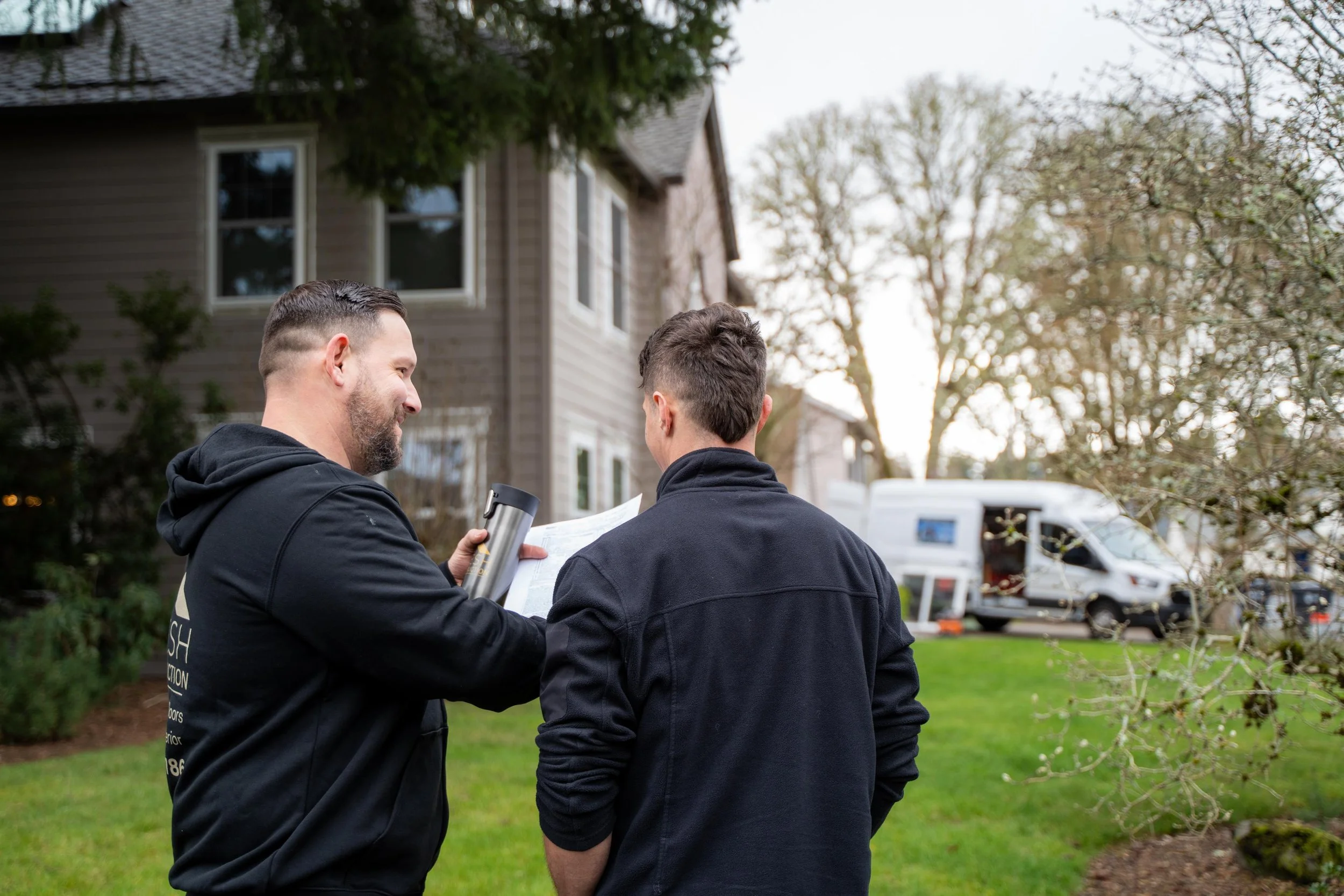
By the time it is visible — siding bubbling and delaminating, trim soft at the base, door frames shifting — the structural damage in the framing behind it has been building for years. VResh identifies the moisture source first, removes all compromised material back to sound wood, corrects the water entry, and reinstalls correctly. No epoxy fillers on structural elements. No working around rot to reduce project scope. EPA Lead-Safe Certified. Licensed OR #241979. Free written estimates. (503) 272–6436.
VResh is owner-operated. Vlad personally oversees every Beaverton dry rot assessment and repair.
Why Beaverton Homes Have Dry Rot Problems
Dry rot requires only moisture content above approximately 19–20% to grow. Beaverton's sustained Pacific wet season — 39 inches of rain over 151 days per year — combined with failed 1970s-80s siding and absent flashing details creates exactly the moisture threshold fungal growth needs.
Masonite Hardboard — 40 Years of Moisture Delivery to the Sheathing
Beaverton's 1970s ranch neighborhoods were built with Masonite hardboard siding at scale. Masonite fails by absorbing moisture through its edges and bottom surface, directing it into the sheathing behind it. After 40+ years of this cycle in Beaverton's wet climate, the sheathing damage on these homes is frequently extensive — but invisible from the exterior, because the Masonite face may still look merely weathered rather than structurally failed. VResh has found sheathing so saturated that it had lost all structural integrity — not visibly apparent until a screwdriver entered it without resistance — on homes where the Masonite surface looked only aged.
The Three Moisture Pathways Behind Beaverton Dry Rot
Missing window head flashing: absent on the majority of Beaverton 1970s-80s installations, the single most common moisture source for window corner rot on these homes. Water enters the rough opening from above the window at every rain event, saturates the jack studs and rough sill, and spreads into adjacent framing. Kickout flashing absent at roof-to-wall intersections: every dormer, addition corner, and garage-to-house roofline connection without kickout has been sending all roof runoff into the wall cavity for decades. Deck ledger without through-wall flashing: the ledger board attached to the house without proper flashing is a documented source of rim joist and floor framing rot on Beaverton homes from the 1970s-80s.
Why Patches Do Not Work in Beaverton's Climate
Epoxy filler on a rotted structural framing member has not repaired the member — it has concealed it. The moisture source is still active; the adjacent framing continues to absorb moisture. In Beaverton's wet climate, patched rot typically returns to the point requiring proper repair within 3–7 years, and by that point the rot has spread to additional members that were sound at the time of patching, making the proper repair substantially more expensive than the original scope would have been.
How VResh Repairs Dry Rot on Beaverton Homes
VResh does not start a dry rot repair by removing wood. We start by identifying the moisture source. Without that step, the rot returns.
Moisture Source Identification Before Any Material Is Removed
Before probing or opening any material, VResh inspects for the water entry pathway at the damage location.
What VResh Looks For Before Opening Any Rot on a Beaverton Home
- Masonite siding condition adjacent to the rot — if original Masonite is still on the wall at or above the damage location, it is almost certainly contributing moisture. The full extent of damage cannot be known until the siding is removed.
- Head flashing condition above the damage location — absent head flashing above a window is the most common single moisture source for window-corner rot on Beaverton homes. Visible by looking at the window top exterior trim from the correct angle.
- Kickout flashing at any roof-to-wall intersection near the damage — if a roofline meets the wall within several feet of the rot, absent kickout is almost certainly involved.
- Deck ledger flashing — if rim joist or floor framing rot is found near a deck attachment, the ledger must come off to assess the moisture source and full structural extent.
Full Extent Assessment
Probe all adjacent materials until sound wood is confirmed on all four sides of the damage. Rot travels along grain — the visible surface damage is reliably smaller than the full compromised area. VResh provides a written assessment before repair work begins.
Complete Removal and Structural Repair
Remove 100% of structurally compromised material. No epoxy fillers on structural elements. Cut back to sound wood and install new framing per Oregon residential code requirements.
What Happens When Beaverton Dry Rot Is Patched Instead of Repaired
- The moisture source is still active. Adjacent framing continues to absorb moisture behind the patch. Patched rot in Beaverton's wet climate typically returns to proper-repair-requiring condition within 3–7 years.
- Rot spreads along grain to adjacent members that appeared sound at the time of patching. The proper repair cost 3–7 years later is substantially higher than the original scope would have been.
- A non-certified contractor who patches rot on a pre-1978 Beaverton home cannot provide EPA RRP compliance documentation, creating legal exposure for the homeowner.
Moisture Pathway Correction and Reinstallation
Correct the Masonite siding, flashing, WRB, ledger flashing, or caulking failure that created the moisture entry. Install or replace head flashing, kickout flashing, sill pans, WRB sections, or ledger flashing as required. Then reinstall the cladding, window, or component with correct flashing details. The reinstallation must prevent recurrence — a repair without moisture pathway correction is a delay.
Where VResh Finds Dry Rot on Beaverton Homes
These are the most consistent locations VResh finds structural dry rot on Beaverton siding, window, deck, and door replacement projects:
Bottom Siding Courses and Grade-Level Sheathing — The Most Widespread
Masonite absorbs moisture through its bottom edge and wicks it into the sheathing. After 40+ years of this on a Beaverton ranch, the bottom-course sheathing is frequently deeply saturated. The damage at grade level is the most extensive and most consistent finding on Beaverton Masonite removal projects.
Roof-to-Wall Intersections — The Most Expensive Location
Missing kickout at dormers, additions, and garage-to-house roofline connections allows roof runoff to enter the wall cavity. On Beaverton homes where this has been occurring for 40+ years, rim joist, sill plate, and floor framing damage at these intersections can require $6,000-$15,000+ in structural repair.
Window and Door Corners — The Most Common Structural Finding
Missing head flashing above windows and doors on 1970s-80s Beaverton construction means water has been entering the rough opening at every rain event for decades. Jack stud and rough sill rot at window and door corners is found on the majority of Beaverton exterior projects from this era.
Deck Ledger Connections — Rim Joist Rot
Deck ledgers attached to the house without through-wall flashing direct water at fastener locations directly into the rim joist and floor framing. Standard on 1970s-80s Beaverton construction. VResh assesses rim joist condition as part of every Beaverton deck estimate.
Dry Rot Repair Requirements for Beaverton Homes
Lead Paint — What Beaverton Homeowners Need to Know
Approximately 34% of Beaverton's housing stock — about one-third — was built before 1978, the federal threshold for lead-based paint regulation. That proportion is concentrated in Beaverton's 1960s and 1970s ranch neighborhoods: the 1960–1969 cohort represents 10.1% of the city's homes, and the pre-1978 portion of the 1970s cohort adds another 15.9%. The EPA's Lead Renovation, Repair, and Painting (RRP) Rule requires contractors who disturb painted surfaces on pre-1978 homes to hold EPA Lead-Safe Certification, follow specific containment and work practice protocols, and provide written documentation. Violations reach $37,500 per day per violation.
⚠️ Before Hiring Any Dry Rot Repair Contractor in Beaverton for a Pre-1978 Home
Ask directly: "Are you currently EPA Lead-Safe Certified under the RRP Rule?" Then ask to see the certificate.
A contractor without current certification cannot legally disturb painted surfaces on a pre-1978 home, cannot provide the required compliance documentation, and exposes your family to lead dust contamination.
VResh Construction holds current EPA Lead-Safe Certification and provides written documentation on every qualifying project.
Building Permits for Dry Rot Repair in Beaverton
Dry rot repairs involving structural framing — sill plates, sheathing replacement, or framing members — require a building permit in Beaverton. Permits are handled through the Beaverton Building Division — The Beaverton Building, 12725 SW Millikan Way, 4th Floor, Beaverton, OR 97005; phone: 503–526-2403; email: BuildingPlanSubmit@BeavertonOregon.gov. ⚠️ The permit counter is open Monday through Thursday, 8:30am–4:30pm only — the counter is closed Fridays and all City holidays. Permits can also be submitted and tracked online through BEPS, the Beaverton Electronic Permitting System. VResh handles all permit coordination on your behalf.
What Dry Rot Repair Costs in Beaverton, OR
Dry rot repair cost depends entirely on extent. The only accurate estimate requires an on-site assessment. General ranges:
| Dry Rot Repair — General Cost Ranges (Labor + Materials) | Estimated Cost |
|---|---|
| Targeted repair at a single window corner (limited structural involvement) | $400–$1,200 |
| Multiple window corners or bottom siding course sheathing replacement | $2,000–$6,000 |
| Roof-to-wall intersection rot (rim joist, sill plate, floor framing) | $6,000–$15,000+ |
(503) 272-6436 — Call or Text, Available 24/7
We answer calls and texts at any hour. For storm damage, active leaks, or structural emergencies, calling directly is the fastest path to a response.
Dry Rot Repair FAQs — Beaverton, OR


Client's Talk
We have a wealth of experience working as main building contractors on all kinds of projects, big and small, from home maintenance and improvements to extensions, refurbishments and new builds.
Areas We Serve
VResh Construction provides window replacement, siding installation, roofing, dry rot repair and full exterior renovation services throughout the Portland metro area and Southwest Washington.
Portland Metro — Oregon
Southwest Washington
Extended Service Areas
Request Your Free Dry Rot Repair Estimate in Beaverton
Whether it is bottom-course sheathing damage from 40 years of Masonite siding on a 1975 Beaverton ranch, window corner framing rot from missing head flashing, rim joist repair at a deck ledger connection, or a free assessment of soft spots you noticed — VResh responds same-day or within 24 hours.