
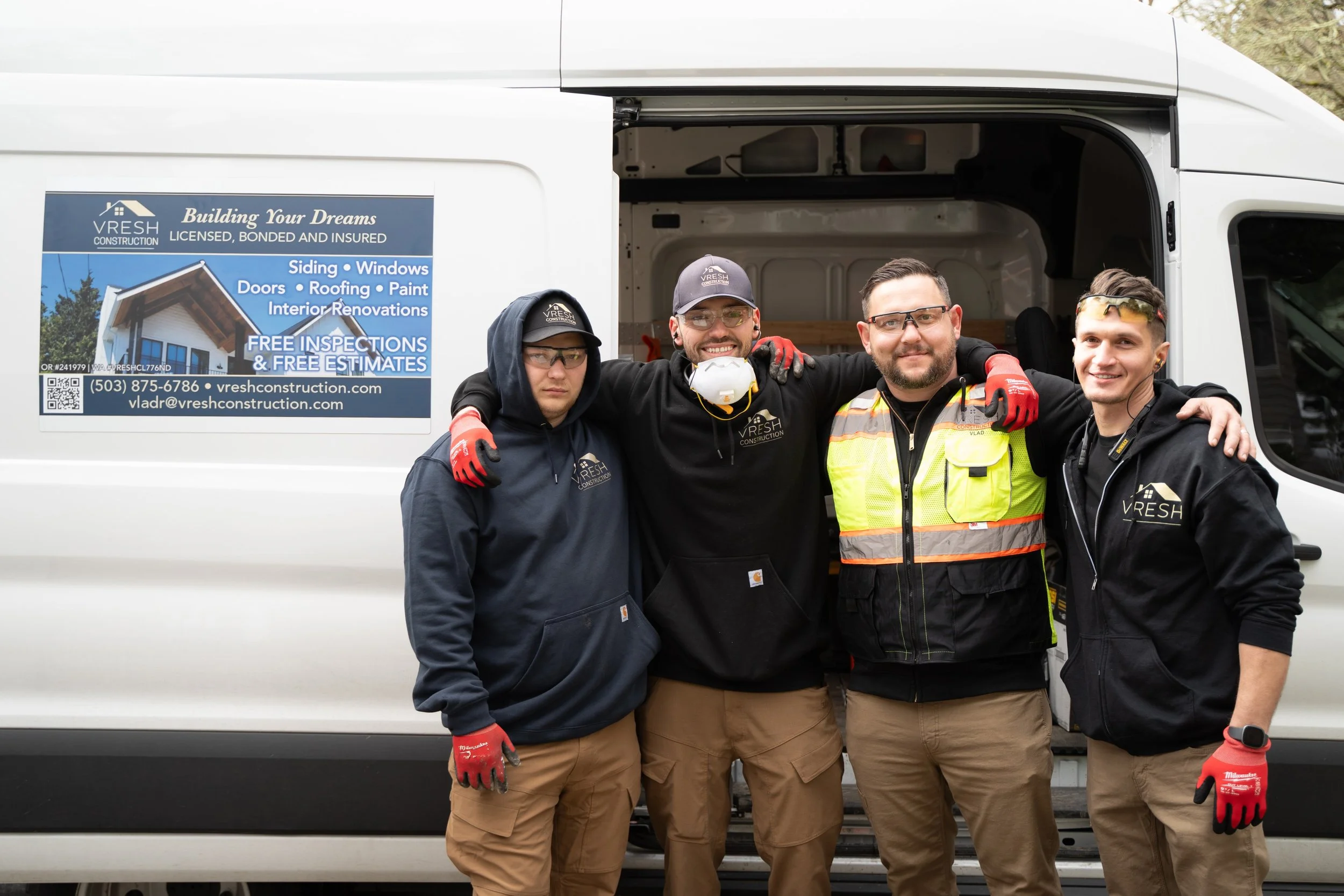
Salem Deck Installer That Shows Up, Gets the Flashing Right & Stands Behind the Work
The ledger is the structural connection between the deck and the house. In Salem's Willamette Valley Pacific marine climate — approximately 40 inches of annual rainfall through a sustained wet season from October through May — a ledger bolted through the siding without through-wall flashing has been delivering Pacific storm moisture to the rim joist at every fastener penetration through every wet season since installation.

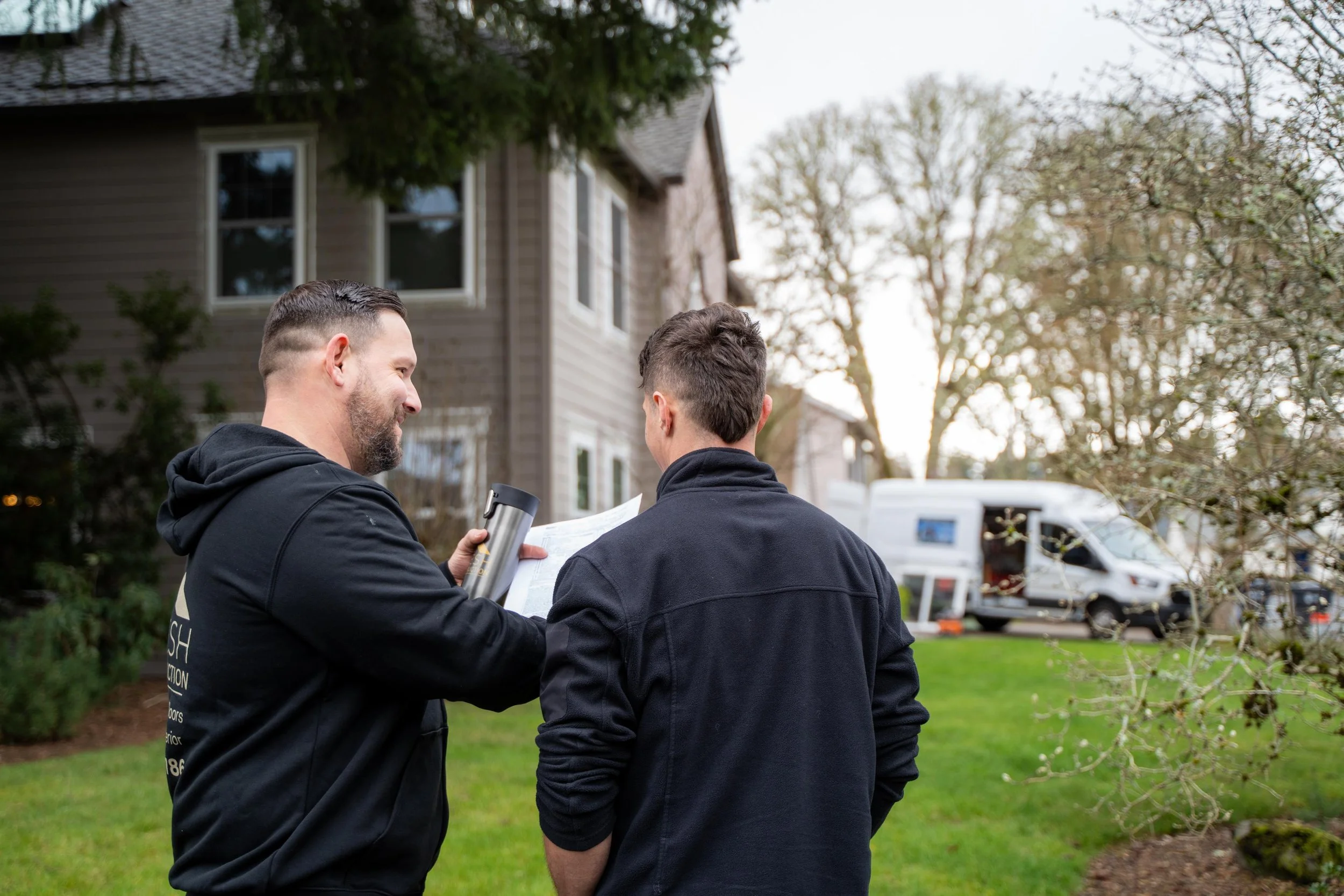
On Salem's large stock of 1970s-90s homes where deck ledger connections were made without through-wall flashing, the rim joist and surrounding framing at these connections is frequently compromised after 25–50 years of sustained Pacific marine wet season moisture delivery. VResh properly flashes every ledger: through-wall flashing between the siding and ledger face, standoff drainage gap, correctly sized and spaced fasteners into a confirmed-sound rim joist. Every deck VResh installs in Salem gets a permit — the permit creates the inspection record that matters at sale and provides structural confirmation of ledger connection quality. EPA Lead-Safe Certified. Licensed OR #241979 | WA #VRESHCL776ND. Free written estimates. (503) 272–6436.
VResh is owner-operated. Vlad personally oversees every Salem deck project — you know who is accountable for the outcome.
Why Salem Deck Connections Are Failing Now
Salem's 1970s-90s housing stock shares consistent deck installation practices that produce ledger failures in the Willamette Valley's Pacific marine climate.
The Ledger Problem on Salem's 1970s-90s Decks
A ledger bolted directly through the siding into the rim joist without through-wall flashing creates a moisture trap at every fastener penetration. In Salem's Pacific marine environment — approximately 40 inches of annual rainfall delivered through sustained wet season events — this moisture delivery mechanism operates from October through May at every Pacific storm event.
After 25–50 years, the rim joist at these penetrations shows moisture damage concentrated at each fastener location, and the surrounding framing extends the compromise into the wall cavity in a significant proportion of Salem deck ledger assessments.
Unpermitted Decks and the Salem Sale Problem
A significant proportion of Salem decks from the 1970s-90s were built without permits. An unpermitted deck surfaces in inspection reports when a Salem home is listed for sale, and may require resolution before or after closing.
VResh pulls permits on every Salem deck project. For existing unpermitted decks, VResh evaluates whether retroactive permitting is feasible or whether permitted rebuild is the correct scope.
Willamette Valley Climate and Salem Deck Material Longevity
Salem's Pacific marine climate with approximately 40 inches of annual rainfall makes deck material selection consequential. Pressure-treated framing with above-grade post bases can last 40+ years in Willamette Valley conditions.
Pressure-treated wood decking at the surface requires annual cleaning and sealing in Salem's Pacific marine wet season to reach its potential lifespan. Composite decking requires none of that maintenance.
What VResh Actually Does on a Salem Deck Project
Ledger first. Permit always. Here is the process on a Salem deck installation or rebuild.
Site Assessment and Ledger Evaluation
For rebuilds and replacements, existing ledger assessed — or disconnected and inspected if rim joist condition is uncertain. For new installations, mounting location assessed for rim joist condition and framing adequacy.
What VResh Consistently Finds at Salem Deck Ledger Connections
- Rim joist moisture damage at fastener penetrations — on Salem ledger connections without through-wall flashing, the rim joist shows moisture damage at each fastener location after 25–50 years of Pacific marine wet season moisture infiltration.
- No drainage gap between ledger face and LP or Masonite siding — direct contact between ledger and siding on Salem homes traps moisture and accelerates rot at both surfaces in the Willamette Valley's 40-inch annual rainfall climate.
- Caulk-only ledger weather seal — failed on a majority of Salem 1980s-90s ledger connections, providing no meaningful weather protection at the ledger face for the past 15–30 years.
- Post bases embedded in concrete — original post bases from Salem 1970s-90s decks show wood rot at the concrete-post interface in the Willamette Valley's Pacific marine conditions. Above-grade post bases with standoff are the current standard.
Ledger Preparation and Through-Wall Flashing
Siding cut back at ledger location. Through-wall flashing installed between the siding and ledger face — full-width, lapped into the WRB above, sealed. Ledger installed with standoff clips for drainage gap. Fasteners correctly sized and spaced per current IRC requirements.
Framing, Footings, and Post Installation
Perimeter beam and joist framing per IRC-compliant span design. Concrete footings at all post locations. Post bases above grade — no wood-to-concrete contact in Salem's Pacific marine conditions.
What Contractors Skip on Salem Deck Installations
- Through-wall ledger flashing: the most common deck structural deficiency on Salem homes. In a 40-inch annual rainfall Pacific marine climate, a ledger without through-wall flashing fails the rim joist within 15–25 years. VResh installs through-wall flashing on every ledger connection.
- Permit: an unpermitted Salem deck is a future sale problem and a structural risk. Every VResh deck gets a permit.
- Post bases embedded in concrete: posts in direct concrete contact rot at the interface within 15–20 years in Salem's Willamette Valley marine conditions. Above-grade post bases with standoff are the correct installation.
Decking, Railings, and Permit Inspection
Decking installed — composite or pressure-treated per scope. Railing system per IRC height and baluster spacing requirements. Permit inspection scheduled and attended. Written workmanship warranty issued at project completion.
Deck Options for Salem Homes
VResh installs composite and pressure-treated decks on Salem properties. For the Willamette Valley's Pacific marine climate, material guidance:
Composite Decking — The Right Choice for Most Salem Homes
Composite decking — Trex, TimberTech, or equivalent — does not rot, does not require annual sealing, and holds color for 20–25 years. For Salem's Willamette Valley Pacific marine climate with approximately 40 inches of annual rainfall, the material that requires no annual maintenance to stay intact is the cost-effective choice over the full ownership period.
Pressure-Treated Wood — Value Option With Active Maintenance
Pressure-treated framing is the structural standard regardless of decking choice. Pressure-treated decking at the surface requires annual cleaning and sealing in Salem's Pacific marine wet season to reach its potential service life. Appropriate for owners with a confirmed annual maintenance commitment.
Cedar — Character With Salem's Marine Climate Maintenance Requirements
Western red cedar is appropriate for specific Salem character home applications. In the Willamette Valley's 40-inch annual rainfall, cedar decking without regular sealing will check and grey within 3–5 years. VResh installs cedar where the owner commits to the maintenance schedule.
Deck Installation Requirements for Salem Homes
Lead Paint Note
Deck installation on pre-1978 Salem homes — approximately 46% of the housing stock — may disturb painted surfaces at the ledger connection area. VResh holds current EPA Lead-Safe Certification and follows RRP protocols where applicable.
Building Permits for Deck Installation in Salem
Deck installation in Salem requires a building permit. Permits are handled through the City of Salem Permit Application Center — 440 Church St SE, 5th Floor, Salem, OR 97301; Building and Safety phone: 503–588-6256; email: baspac@cityofsalem.net. Hours: Monday through Friday, 8:00 AM–5:00 PM for general questions; permit and license processing is 8:00 AM–4:00 PM; plans intake is 9:00 AM–4:00 PM. Permits can also be submitted and tracked through the City's online Permit Application Center portal at permits.cityofsalem.net. VResh handles all permit coordination and submission on your behalf.
What Deck Installation Costs in Salem, OR
Deck cost depends on size, material, elevation, and ledger repair extent. General planning ranges:
| Deck Installation — General Cost Ranges (Labor + Materials) | Estimated Cost |
|---|---|
| Standard ground-level or low-elevation deck (composite decking) | $8,000–$15,000 |
| Complex or elevated deck (multiple levels) | $15,000–$40,000+ |
| Rim joist or structural repair at ledger | add $1,500–$5,000 depending on extent |
| Permit | included in every VResh Salem deck project |
(503) 272-6436 — Call or Text, Available 24/7
We answer calls and texts at any hour. For storm damage, active leaks, or structural emergencies, calling directly is the fastest path to a response.
Deck Installation FAQs — Salem, OR


Client's Talk
We have a wealth of experience working as main building contractors on all kinds of projects, big and small, from home maintenance and improvements to extensions, refurbishments and new builds.
Areas We Serve
VResh Construction provides window replacement, siding installation, roofing, dry rot repair and full exterior renovation services throughout the Portland metro area and Southwest Washington.
Portland Metro — Oregon
Southwest Washington
Extended Service Areas
Request Your Free Deck Installation Estimate in Salem
Whether it is a ledger assessment and repair on a 1978 Salem home with a Pacific-marine-saturated rim joist, a new composite deck on a south Salem property for year-round Willamette Valley outdoor living, a retroactive permit assessment on an existing deck, or a free site evaluation for a deck you are planning — VResh responds same-day or within 24 hours.