

Beaverton Deck Installation Built to Last — Owner-Supervised, Properly Flashed & Warranted
Beaverton's 1970s-80s ranch neighborhoods contain thousands of attached decks built during an era when ledger flashing standards were not consistently required or enforced.

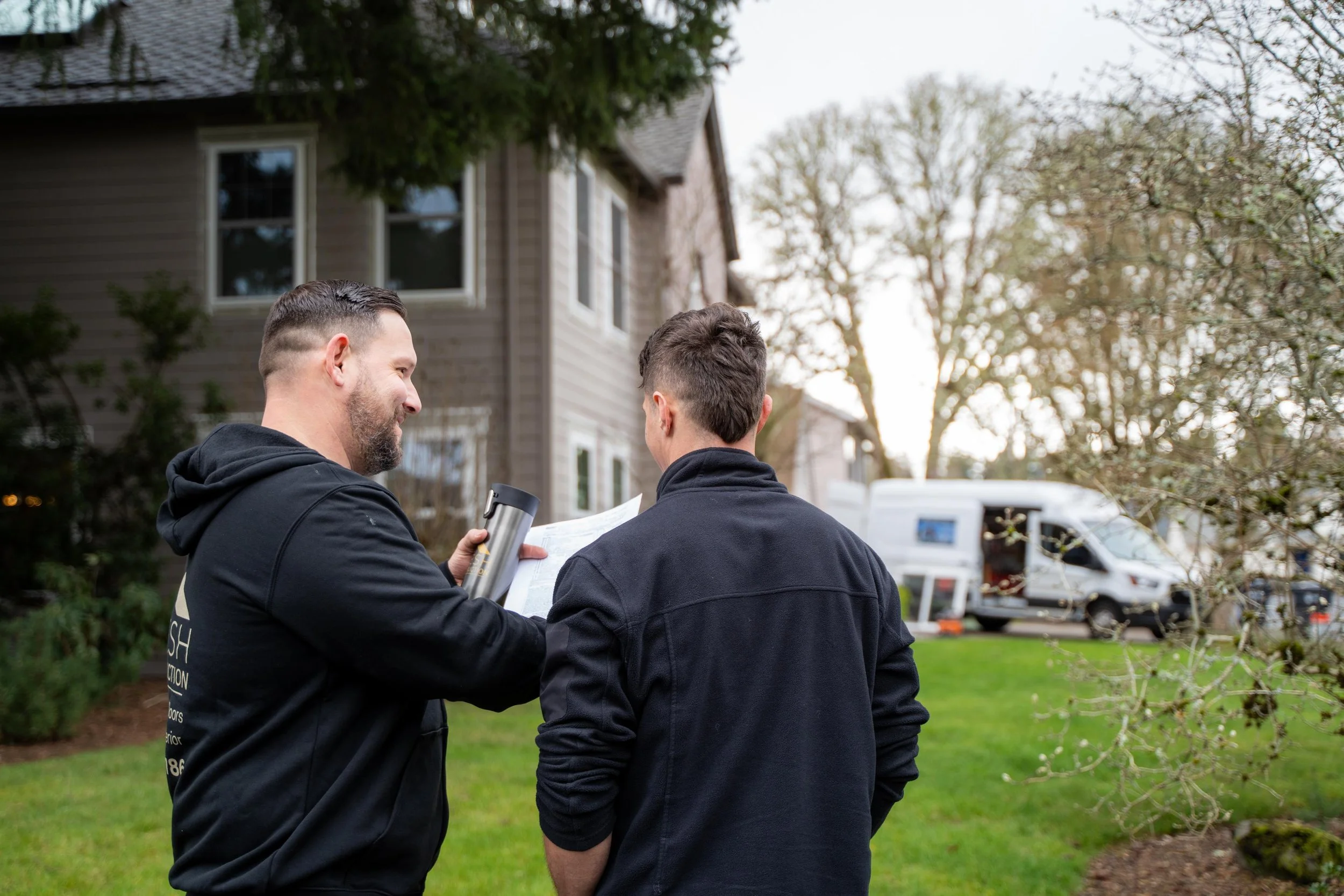
The ledger board attaches the deck to the house at the rim joist — and without proper through-wall flashing, water enters at every fastener location and saturates the rim joist and floor framing adjacent to it. After 35–40 years of Tualatin Valley rain at these unflashed connections, the structural damage ranges from significant to serious. VResh removes old ledgers, assesses the rim joist and floor framing, repairs what the absent flashing created, and installs the new ledger with a through-wall flashing assembly that prevents it from happening again. Every Beaverton deck gets a permit — no exceptions. Licensed OR #241979. Free written estimates. (503) 272–6436.
VResh is owner-operated. Vlad personally oversees every Beaverton deck project.
Why Beaverton Decks Need Attention Now
The 1970s and 1980s constructed approximately 38% of Beaverton's housing stock — and a significant portion of those homes have attached decks that were built without through-wall ledger flashing. Those decks are now 35–50 years old.
The Beaverton 1970s-80s Deck Ledger Problem
Deck ledger flashing standards in Washington County residential construction were not consistently detailed or enforced through the 1970s and 1980s. Many Beaverton decks from this era have ledger boards lag-bolted through the siding directly to the rim joist without any through-wall flashing assembly. At every fastener location, water enters, saturates the rim joist, and spreads into the sill plate and floor framing. After 35–50 years of sustained Tualatin Valley rain at these connections, VResh has found rim joist damage so extensive that floor framing repair requirements exceeded the cost of the deck itself on several Beaverton projects.
Deck Surface Failure vs. Structural Failure
The visible deck failure — cracked and weathered decking boards, rotting railings, or a surface that feels soft underfoot — often leads homeowners to think they need a deck replacement when the issue is surface boards over solid framing. But the structural failure — rotted rim joist and sill plate from unflashed ledger connections — is invisible from above and from below if debris has accumulated under the deck. VResh assesses both the surface and the structure at the free estimate visit and advises honestly on which scope is actually needed.
First-Time Deck Addition on a Beaverton Home
For Beaverton homeowners adding a deck for the first-time, the ledger detail is the most consequential installation decision. VResh installs through-wall ledger flashing on every new deck — the flashing assembly that diverts water away from the fastener locations and prevents the rim joist damage that defines most Beaverton deck repair projects.
What VResh Actually Does on a Beaverton Deck Project
A deck built correctly starts with a properly flashed ledger and ends with a permit inspection.
Site Assessment and Ledger Evaluation
Assess the existing ledger condition, rim joist, and adjacent siding at the attachment point. For existing decks, assess the full deck structure — framing, posts, joists, and surface — before specifying scope.
What VResh Finds When Removing Beaverton Deck Ledgers
- Rim joist rot — the most consistent finding. After 35–50 years of water entry at unflashed fastener locations on 1970s-80s Beaverton decks, the rim joist has been repeatedly saturated. Severity ranges from surface softness to complete structural compromise requiring full replacement.
- No through-wall flashing assembly — the ledger is lag-bolted through the siding to the rim joist with no flashing of any kind. The most common finding on Beaverton decks built before the 1990s.
- Masonite siding damage at the ledger — where the ledger was installed through Masonite or LP siding, water backup at the ledger-to-siding interface has also caused siding damage and sheathing saturation around the ledger perimeter.
- ACQ hardware compatibility — current pressure-treated lumber uses ACQ treatment; standard zinc-coated hardware corrodes rapidly in contact with ACQ. All hardware specified by VResh is hot-dip galvanized, stainless, or ACQ-rated.
Rim Joist Repair and Ledger Installation with Through-Wall Flashing
All rot-compromised rim joist material is replaced before the new ledger is installed. The new ledger is then installed with proper through-wall flashing: metal flashing extending up behind the siding above the ledger and down over the ledger face, with standoffs or flashing washers at each fastener location, integrated with the WRB behind the siding.
What Most Beaverton Deck Installers Skip at the Ledger Connection
- Through-wall flashing assembly: metal flashing that extends up behind the siding above the ledger and down over the ledger face. Peel-and-stick tape applied to the ledger face is not through-wall flashing.
- Fastener standoffs or flashing washers: each fastener through a flat ledger face creates a water collection point. Standoffs create drainage space; flashing washers seal the penetration.
- Integration with the WRB: the flashing must be lapped into the weather-resistive barrier behind the siding so water drains outward and is not trapped between the flashing and the sheathing.
Permit, Footings, and Framing
Pull permit — VResh does not build attached decks without permits. Concrete footings to depth required by Washington County frost depth and soil conditions. Structural posts, beams, and joists per structural design. Joist hangers at all joist-to-beam connections.
Decking, Railing, Stairs, and Inspection
Decking installed with appropriate fasteners per material. Code-compliant railing: 36 inches minimum under 30 inches above grade, 42 inches higher, balusters max 4 inches apart. Code-compliant stairs. Permit inspection scheduled and attended. Written workmanship warranty.
Deck Materials for Beaverton's Climate
Beaverton's 39-inch annual rainfall and sustained wet season require careful material and fastener selection:
Pressure-Treated Lumber — Best Value for Most Beaverton Decks
Current ACQ or CA-B pressure-treated lumber with hot-dip galvanized, stainless, or ACQ-rated hardware. Cost-effective and structurally sound for most Beaverton applications. The standard specification for most Beaverton deck framing regardless of what surface material is chosen.
Cedar — For Beaverton Homeowners Who Prioritize Wood Appearance
Western red cedar provides visual character. Requires sealing or staining every 2–3 years in Beaverton's wet climate. Cedar's natural rot resistance does not extend to posts and beams in high-moisture applications — structural members near grade or water contact should still be pressure-treated.
Composite Decking (Trex, TimberTech, Fiberon) — Lowest Maintenance in a Wet Climate
Modern capped composite does not require sealing, does not splinter, and resists fading significantly better than original 1990s-era composites. The right choice for Nike employees and other Beaverton homeowners who want a low-maintenance outdoor surface that holds up through Beaverton's sustained wet season.
Deck Installation Requirements for Beaverton Homes
Lead Paint Note
Deck ledger removal on pre-1978 Beaverton homes — approximately 34% of the housing stock — may disturb lead-painted trim and siding at the ledger area. VResh is EPA Lead-Safe Certified and follows RRP protocols when pre-1978 painted surfaces are disturbed.
Building Permits for Deck Installation in Beaverton
All attached decks above 30 inches in height require a building permit in Beaverton. Permits are handled through the Beaverton Building Division — The Beaverton Building, 12725 SW Millikan Way, 4th Floor, Beaverton, OR 97005; phone: 503–526-2403; email: BuildingPlanSubmit@BeavertonOregon.gov. ⚠️ The permit counter is open Monday through Thursday, 8:30am–4:30pm only — the counter is closed Fridays and all City holidays. Permits can also be submitted and tracked online through BEPS, the Beaverton Electronic Permitting System. VResh handles all permit coordination on your behalf.
What Deck Installation Costs in Beaverton, OR
Deck cost depends on size, complexity, material, and extent of ledger and structural repair. General planning ranges:
| Deck Installation — General Cost Ranges (Labor + Materials) | Estimated Cost |
|---|---|
| Standard ground-level or low-elevation deck (12'×16', pressure-treated, rectangular) | $8,000–$15,000 |
| Cedar or capped composite decking | adds 30–50% to material cost |
| Multi-level or elevated deck with tall posts and cross-bracing | $15,000–$40,000+ |
| Rim joist and ledger structural repair (found at ledger removal) | add $1,500–$10,000 depending on extent |
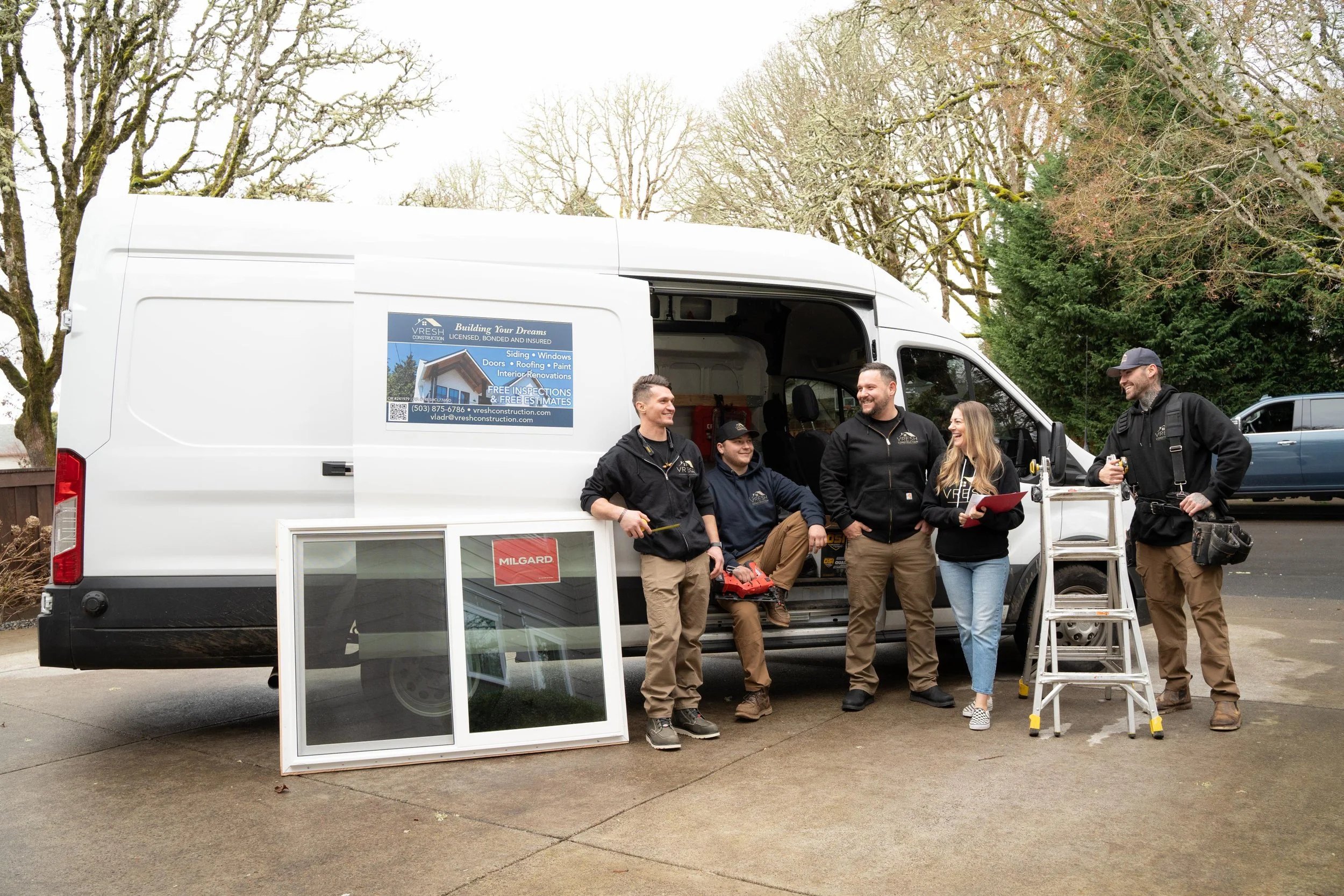
(503) 272-6436 — Call or Text, Available 24/7
We answer calls and texts at any hour. For storm damage, active leaks, or structural emergencies, calling directly is the fastest path to a response.
Deck Installation FAQs — Beaverton, OR


Client's Talk
We have a wealth of experience working as main building contractors on all kinds of projects, big and small, from home maintenance and improvements to extensions, refurbishments and new builds.
Areas We Serve
VResh Construction provides window replacement, siding installation, roofing, dry rot repair and full exterior renovation services throughout the Portland metro area and Southwest Washington.
Portland Metro — Oregon
Southwest Washington
Extended Service Areas
Request Your Free Deck Installation Estimate in Beaverton
Whether it is a new deck with a properly flashed ledger on a 1975 Beaverton ranch, composite board replacement on a 1990s deck with solid framing, rim joist and ledger structural repair before a new deck is attached, or an assessment of soft decking near the house — VResh responds same-day or within 24 hours.