
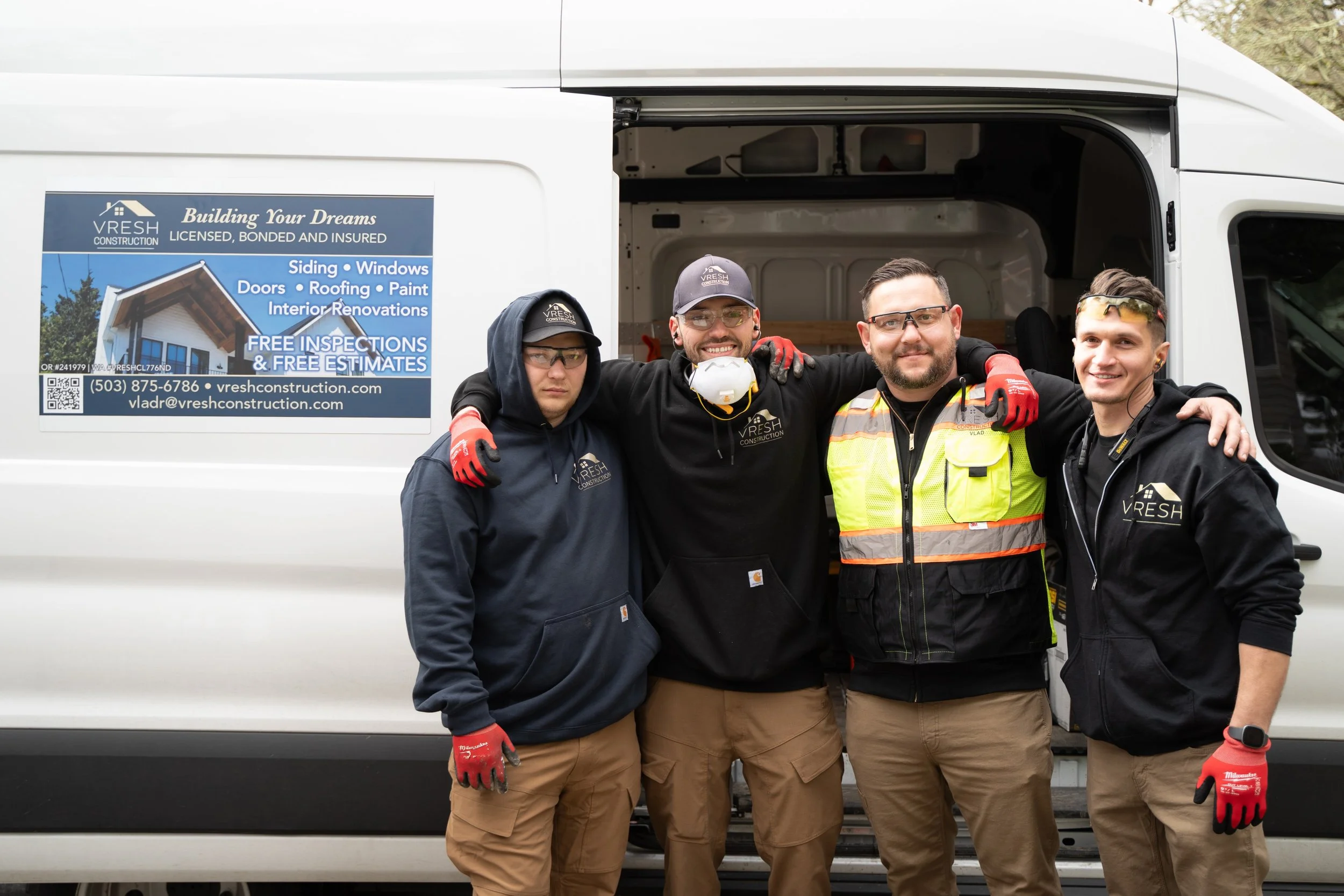
Beaverton Siding Replacement Done Right — Proper Flashing, No Shortcuts, EPA Certified
Beaverton's housing stock tells two overlapping stories: the 1970s ranches with Masonite hardboard siding that failed quietly over decades, and the 1980s-90s homes that received LP Inner-Seal during the windows of its worst performance.

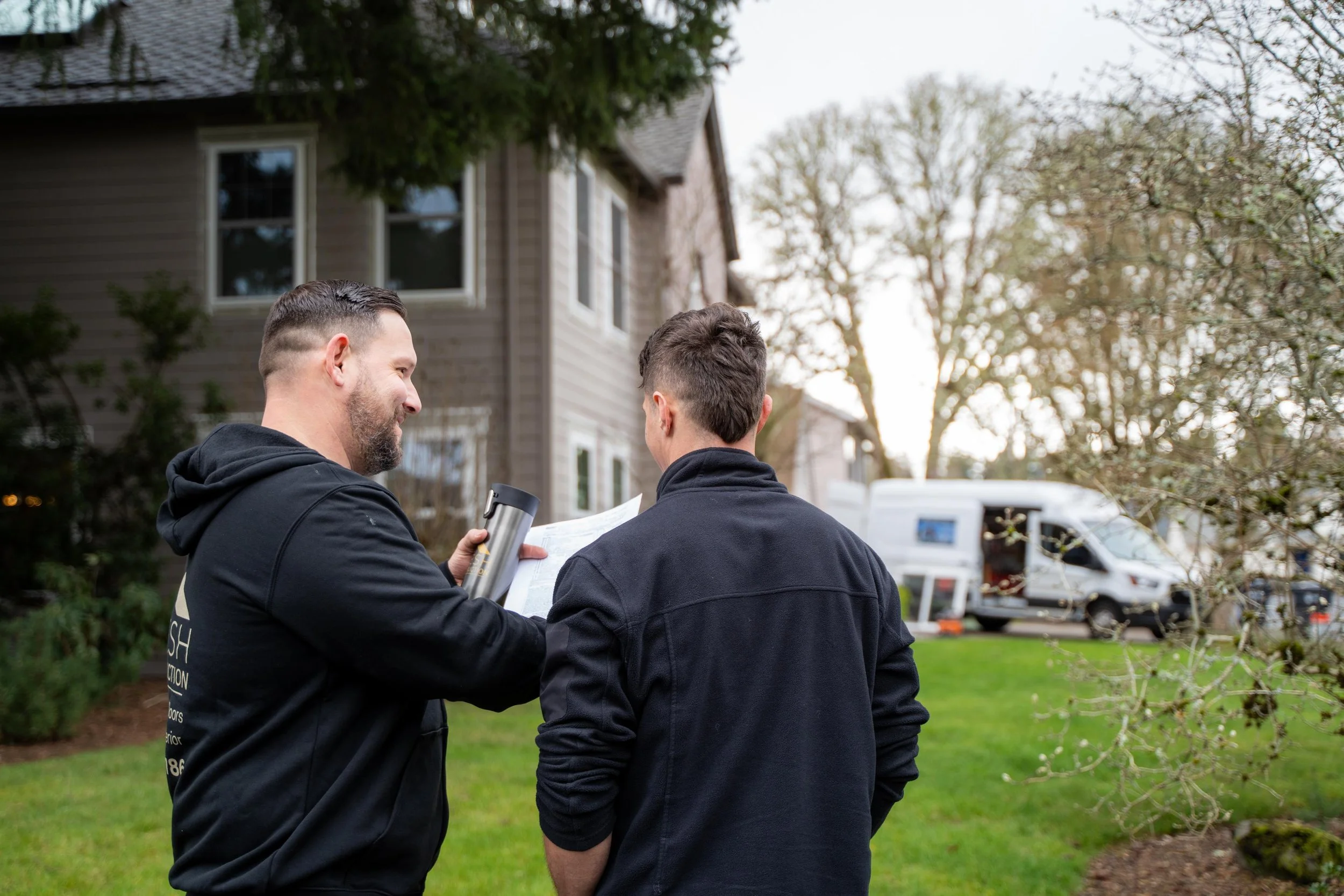
Both are now in active failure across the city's residential neighborhoods — and both fail in the same direction: moisture into the sheathing, rot in the framing, damage that is invisible from the street until it is expensive. VResh removes all of it, inspects every inch of substrate, repairs what the siding failure left behind, and installs the new material correctly: proper drainage plane, correct flashing at every opening, correct grade clearance, correct fastening. James Hardie fiber cement, LP SmartSide, cedar, and vinyl — all installed with the same standard. EPA Lead-Safe Certified. Licensed OR #241979 | WA #VRESHCL776ND. Free written estimates. (503) 272–6436.
VResh is owner-operated. Vlad personally oversees every Beaverton siding project — you know who is accountable for the outcome.
Why Beaverton Siding Is Failing Now
Beaverton has a median construction year of 1987, but the city's housing story is dominated by two distinct decades: the 1970s, which produced 19.9% of the city's total housing stock, and the 1980s, which added another 18%. Together, these two decades account for nearly 40% of Beaverton's homes — and both cohorts received siding materials that are now in active failure across the city.
Masonite Hardboard — The 1970s-80s Failure That Defines Beaverton Ranches
Masonite hardboard siding was the dominant material on Beaverton's 1970s and early 1980s construction — the sprawling ranch subdivisions that grew up west of Portland during that decade. Masonite is pressed wood fiber bonded with adhesive resin; it absorbs moisture from the cut edges, from unsealed nail holes, and from the bottom edge when grade clearance is insufficient. Once moisture absorption begins, the material swells, the face layer bubbles and peels, and within a few seasons the sheathing behind it has been repeatedly saturated. On most Beaverton Masonite homes, the visible surface damage is several years behind the actual substrate damage. VResh removes all of it and inspects the full substrate before any new material is specified.
LP Inner-Seal — The Recall-Era Product on Beaverton's 1980s-90s Homes
Louisiana-Pacific's original Inner-Seal siding, installed widely from the late 1980s through approximately 2000, was the subject of a class-action settlement and is known to fail in Pacific Northwest damp conditions. Beaverton's 1980s construction boom and early 1990s growth received LP Inner-Seal at scale. The product swells and cracks at the board edges, absorbs moisture through its textured face, and directs sustained moisture into the sheathing behind it. VResh identifies LP Inner-Seal by its heavily striated texture and characteristic edge swelling; on the majority of projects, sheathing moisture damage is found at the bottom courses and window corners once the LP comes off.
Tualatin Valley Climate and Beaverton's Proximity to the West Hills
Beaverton sits at the eastern edge of the Tualatin Valley, positioned where the valley meets the Tualatin Mountains (West Hills) to the east. This geography creates a specific moisture pattern: approximately 39 inches of annual rainfall and 151 rainy days per year from sustained Pacific storms, with relatively low UV during the long overcast wet season. Failed siding materials — Masonite and LP in particular — allow moisture to reach the sheathing and sit there through long overcast periods without drying. The sustained wet season is what makes moisture management so consequential on Beaverton's 1970s-80s housing stock.
What VResh Actually Does on a Beaverton Siding Project
On a Beaverton Masonite or LP siding project, the real work happens before the first board of new siding goes on the wall. Here is the process.
Full Removal and Substrate Inspection
Complete removal of all existing siding — no installation over failing material, no partial removal to reduce cost. Once the old siding comes off, VResh inspects every square foot of substrate for moisture damage, rot, and structural compromise.
What VResh Consistently Finds Behind Beaverton Masonite and LP Siding
- Bottom-course sheathing saturation — the most consistent finding on both Masonite and LP projects. Moisture absorbed through the bottom edge of each board concentrates in the lower 12–24 inches of the wall. After 30–40 years (Masonite) or 25–35 years (LP), the sheathing in this zone is frequently degraded to the point where it no longer provides structural fastening.
- Window corner framing rot — missing head flashing above windows in original construction is standard on Beaverton homes from the 1970s-80s. Water has been entering the rough opening from above the window at every rain event. Jack studs and rough sill plates at window corners show rot on a majority of projects.
- Absent or degraded WRB (weather-resistant barrier) — building paper from 1970s-80s construction has typically degraded completely after 40+ years. LP Inner-Seal was frequently installed over degraded building paper or no paper at all. Without a functioning WRB, moisture from behind failed siding goes directly to the sheathing.
- Kickout flashing absent at roof-to-wall intersections — dormers, addition corners, and garage-to-house rooflines without kickout diverters have been sending all roof runoff directly into the wall cavity at these intersections for decades.
Structural Repair Before Any New Siding
All compromised sheathing is replaced — no epoxy fillers, no working around rot. Framing members found to be structurally compromised are sistered or replaced. The repair scope is documented and agreed before the repair begins. VResh does not discover rot mid-project and invoice it without prior disclosure.
Building the Moisture Management System
New WRB over the full wall, lapped correctly. Head flashing and kickout flashing at every window, door, and roof-to-wall intersection. Kickout diverters at all dormers and addition corners.
The Three Steps Most Beaverton Siding Contractors Skip
- WRB replacement: most Beaverton Masonite replacement projects require a full WRB replacement — the original building paper is completely degraded and cannot provide drainage plane function. New housewrap installed over the full wall, lapped correctly, is not optional.
- Head flashing above every window and door: the kickout piece that directs water from the wall surface away from the rough opening. Absent on the majority of 1970s-80s Beaverton installations. The source of interior staining above windows on these homes.
- Kickout flashing at every roof-to-wall intersection: dormers, additions, and garage-to-house rooflines. After 30–40 years of wall cavity infiltration at unflashed intersections, the structural damage at these locations is frequently the most expensive item on the project.
Installation, Permit Inspection, and Warranty
New siding installed per manufacturer specification: correct grade clearance, correct fastener type, correct nailing pattern, back-primed field cuts. Corner trim, window and door trim, frieze board, caulking. Permit inspection scheduled and attended. Written workmanship warranty issued at project completion.
Siding Materials for Beaverton Homes
For Beaverton's 1970s-80s housing stock, material selection for the second or third exterior cycle matters. VResh's honest assessment for each option in the Tualatin Valley climate:
James Hardie Fiber Cement — The Right Long-Term Choice for Most Beaverton Homes
Fiber cement is the definitive replacement choice for Masonite and LP-sided Beaverton homes. It does not rot, does not swell, does not absorb moisture, and holds paint for 10–15 years. The 30-year limited manufacturer's warranty when installed by a certified installer is meaningful on a home where the previous siding failed in 20–30 years. For Nike and Analog Devices employees and other Beaverton homeowners planning to hold their home for 15+ years, the total cost of ownership calculation strongly favors fiber cement over any moisture-sensitive alternative.
Cedar — For Specific Beaverton Applications
Western red cedar is appropriate for specific Beaverton applications where architectural character is the priority and the owner is committed to repainting or restaining every 5–7 years. Not recommended for homes with drainage plane history of issues — cedar's natural rot resistance does not replace proper moisture management.
LP SmartSide — Current Product, Not the Recalled Inner-Seal
The current LP SmartSide is a zinc borate-treated engineered wood siding with a 50-year limited warranty — a fundamentally different product from the original recalled Inner-Seal. VResh installs SmartSide on Beaverton homes where wood-grain character is important and the homeowner understands it requires the same WRB and flashing standard as fiber cement. When replacing original LP Inner-Seal, VResh confirms what generation of LP is being removed and explains the difference.
Vinyl — Cost-Effective for Rental Properties and Budget Projects
Vinyl does not rot, but the sheathing and framing behind improperly installed vinyl does. VResh installs vinyl with the same WRB and flashing standard as fiber cement — the material does not change the installation protocol.
Siding Replacement Requirements for Beaverton Homes
Lead Paint Consideration
Roofing work on pre-1978 Beaverton homes — approximately 34% of the housing stock, in the 1960s-70s ranch neighborhoods — may disturb lead-painted fascia, trim, and exterior wall surfaces at roof penetrations. VResh is EPA Lead-Safe Certified and follows RRP protocols when pre-1978 painted surfaces are disturbed.
⚠️ Before Hiring Any Siding Replacement Contractor in Beaverton for a Pre-1978 Home
Ask directly: "Are you currently EPA Lead-Safe Certified under the RRP Rule?" Then ask to see the certificate.
A contractor without current certification cannot legally disturb painted surfaces on a pre-1978 home, cannot provide the required compliance documentation, and exposes your family to lead dust contamination.
VResh Construction holds current EPA Lead-Safe Certification and provides written documentation at project completion.
What Siding Replacement Costs in Beaverton, OR
Siding replacement cost depends on home size, material selected, extent of dry rot and structural repair, and roofline complexity. General planning ranges for a Beaverton home:
| Siding Replacement — General Cost Ranges (Labor + Materials) | Estimated Cost |
|---|---|
| Vinyl, full home (standard Beaverton ranch) | $12,000–$22,000 |
| LP SmartSide, full home | $16,000–$28,000 |
| James Hardie HardiePlank, primed, full home | $18,000–$35,000 |
| James Hardie ColorPlus (factory finish), full home | $22,000–$45,000+ |
| Dry rot structural repair | $2,000–$12,000 depending on extent |
| Spring Special | $500 off siding projects over $8,000 with free moisture and dry rot inspection |
(503) 272-6436 — Call or Text, Available 24/7
We answer calls and texts at any hour. For storm damage, active leaks, or structural emergencies, calling directly is the fastest path to a response.
Siding Replacement FAQs — Beaverton, OR


Client's Talk
We have a wealth of experience working as main building contractors on all kinds of projects, big and small, from home maintenance and improvements to extensions, refurbishments and new builds.

Areas We Serve
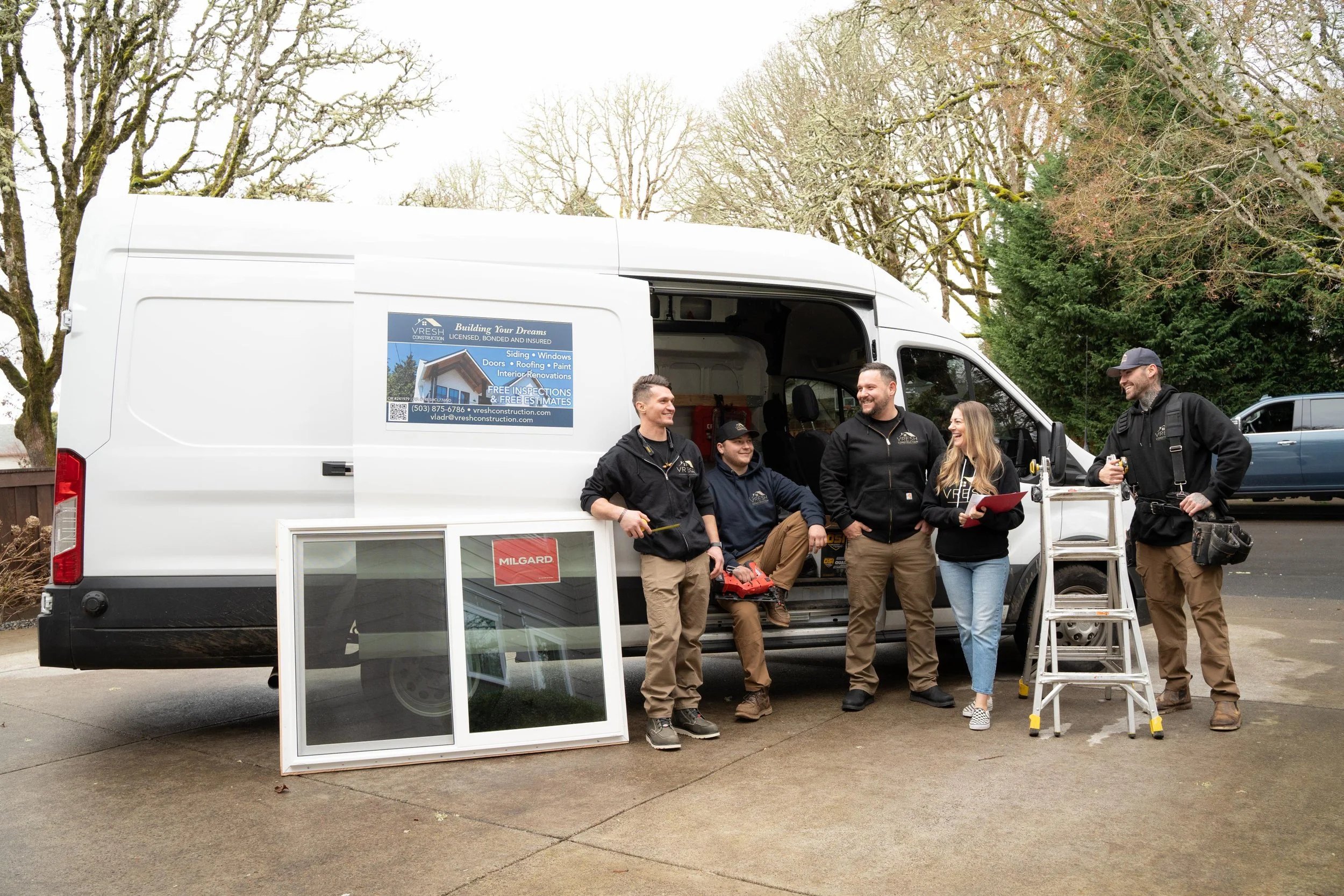
VResh Construction provides window replacement, siding installation, roofing, dry rot repair and full exterior renovation services throughout the Portland metro area and Southwest Washington.
Portland Metro — Oregon
Southwest Washington
Extended Service Areas
Request Your Free Siding Replacement Estimate in Beaverton
Whether it is Masonite removal on a 1974 Beaverton ranch with west-facing wall damage, LP Inner-Seal replacement on a 1989 two-story, James Hardie installation with full moisture barrier system, or an honest free assessment of siding you have been watching and wondering about — VResh responds same-day or within 24 hours.