

Oregon City’s Trusted Deck Installer — Properly Flashed, Owner on Every Job & Built to Last
Oregon City's 1990s housing boom — which produced the city's two largest decade cohorts along the bluffs above the Willamette River — delivered deck installations that followed the same builder-grade convention as every other exterior detail of that era: ledger connections without through-wall flashing.

The ledger is the structural board that attaches the deck to the house; without flashing between the ledger face and the siding, water runs down the siding and into the rim joist at every fastener penetration at every Pacific rain event. Oregon City receives 44.81 inches of annual rainfall. That is 44.81 inches per year, concentrated in a Pacific wet season, delivering moisture to an unflashed ledger connection that has been operating continuously for 25–35 years on a 1990s deck. VResh properly flashes every ledger connection and pulls a permit on every deck project. Every deck. No exceptions. EPA Lead-Safe Certified for pre-1978 homes. Licensed OR #241979 | WA #VRESHCL776ND. Free written estimates. (503) 272–6436.
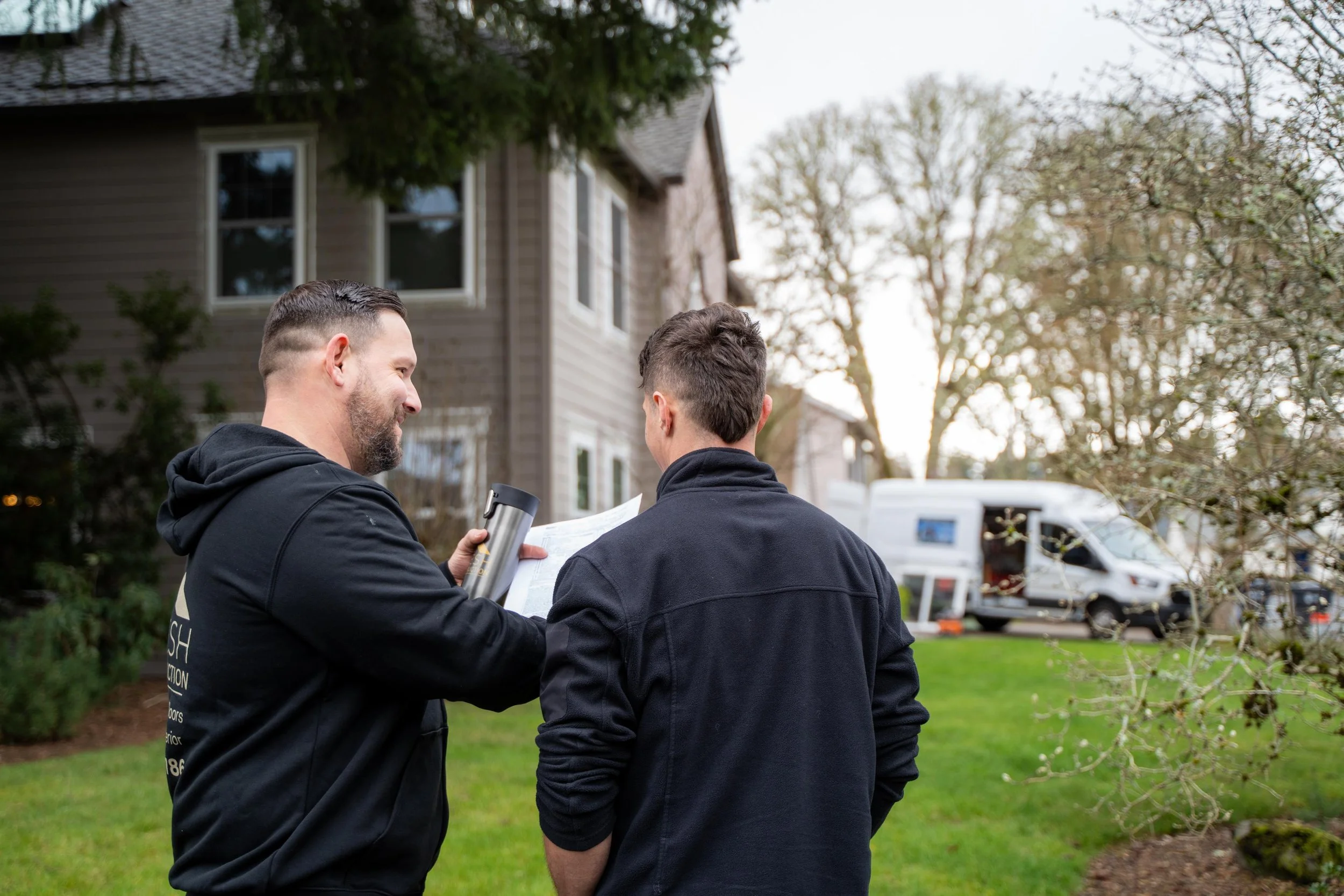
VResh is owner-operated. Vlad personally oversees every Oregon City deck project — you know who is accountable for the outcome.
Why Oregon City Deck Connections Are Failing Now
Oregon City's 1990s housing cohort — 20.6% of all homes — delivered decks with builder-grade ledger connections that are now 25–35 years into their Pacific Northwest exposure. The failure is predictable and consistent.
The Ledger Problem on Oregon City's 1990s Decks
A ledger bolted through the siding into the rim joist without through-wall flashing creates a moisture trap at every fastener penetration. In Oregon City, with 44.81 inches of annual Pacific rainfall and a sustained wet season that runs November through March, this moisture delivery mechanism operates for 5–6 months per year. After 25–35 years, the rim joist at these fastener penetrations is frequently compromised — and on Oregon City's bluff-top homes where deck views over the Willamette River valley are a primary feature, the deck has typically been maintained cosmetically while the structural connection to the house has been quietly degrading.
Unpermitted Decks and the Oregon City Sale Problem
A proportion of Oregon City decks from the 1990s were installed without permits. In a city where the Willamette Falls Legacy Project and I-205 corridor growth continue to drive property transactions, an unpermitted deck surfaces at sale — buyers' inspectors flag it, lenders may require resolution, and the seller bears the cost of retroactive permitting or rebuild. VResh pulls permits on every Oregon City deck project. For existing unpermitted Oregon City decks, VResh evaluates retroactive permitting feasibility or rebuild scope at the estimate visit.
Pacific Rainfall and Deck Material Longevity on Oregon City Homes
Oregon City's 44.81 inches of annual Pacific rainfall makes composite decking the correct specification for most Oregon City homes. Pressure-treated wood decking requires annual sealing to reach its potential lifespan in a climate that delivers 6.54 inches in January and 7.20 inches in December. The sustained wet season creates conditions where wood decking that is not actively maintained will show weathering and checking within 3–5 years. Composite decking does not rot, does not require sealing, and carries a 20–25 year appearance warranty — the appropriate long-term specification for Oregon City's Pacific conditions.
What VResh Actually Does on an Oregon City Deck Project
Ledger first. Permit always. Here is the process.
Site Assessment and Ledger Evaluation
For rebuilds and replacements, existing ledger connection assessed or disconnected and inspected. For Oregon City bluff-top homes with elevated decks, site conditions — slope, soil bearing, existing retaining structures — are part of the initial assessment.
What VResh Consistently Finds at Oregon City Deck Ledger Connections
- Rim joist moisture damage at fastener penetrations — on 1990s Oregon City ledger connections without through-wall flashing, the rim joist shows moisture damage concentrated at each fastener location after 25–35 years of Pacific wet season exposure.
- No drainage gap between ledger face and siding — direct contact between ledger and siding on Oregon City homes traps moisture and accelerates rot at both surfaces. Standoff clips that create a drainage gap were not standard on 1990s Oregon City builder-grade deck installations.
- Failed caulk as the primary ledger weather seal — original caulk between ledger and siding on Oregon City 1990s decks has been failing since the 2000s, providing no meaningful weather protection at the ledger face for 20+ years.
- Post bases embedded in concrete — original post bases from 1990s Oregon City decks embedded in concrete footings show wood rot at the post-to-concrete interface. Current code requires above-grade post bases with standoff from the concrete surface.
Ledger Preparation and Through-Wall Flashing
Siding cut back at ledger location. Through-wall flashing installed between the siding and ledger face — full width, lapped into the WRB above, sealed at all edges. Ledger installed with standoff clips for drainage gap. Fasteners correctly sized and spaced per current IRC.
Framing, Footings, and Post Installation
Perimeter beam and joist framing per IRC-compliant span design. Concrete footings at all post locations — sized for site soil conditions, with adequate depth for Oregon City Willamette River valley soils. Post bases above grade at all posts — no wood-to-concrete contact.
What Contractors Skip on Oregon City Deck Installations
- Through-wall ledger flashing: the single most common structural deficiency on Oregon City 1990s deck installations. In 44.81 inches of annual Pacific rainfall, a ledger without through-wall flashing fails the rim joist within 20–30 years. VResh installs through-wall flashing on every ledger connection.
- Permit: an unpermitted Oregon City deck creates a sale problem and a structural risk — no inspection means no confirmation of ledger connection quality. Every VResh deck gets a permit.
- Post bases embedded in concrete: wood posts in direct contact with concrete in Oregon City conditions rot at the soil-concrete interface within 15–20 years in a climate receiving 44.81 inches of annual rainfall. Above-grade post bases are the correct installation.
Decking, Railings, and Permit Inspection
Decking installed — composite or pressure-treated per scope. Railing system per IRC height and baluster spacing requirements. Permit inspection scheduled and attended. Written workmanship warranty issued at project completion.
Composite Decking — The Right Choice for Oregon City Homes
Composite decking does not rot, does not require annual sealing, and carries a 20–25 year appearance warranty. For Oregon City's 44.81 inches of annual Pacific rainfall concentrated in a sustained wet season, composite is the long-term specification that makes economic sense over the full ownership period. For bluff-top Oregon City homes where deck views over the Willamette River are a primary feature, composite's 25-year appearance warranty protects the investment.
Deck Options for Oregon City Homes
VResh installs composite and pressure-treated decks on Oregon City properties. For Pacific rainfall conditions and bluff-top homes:
Cedar — Character With Pacific Maintenance Requirements
Western red cedar is appropriate for specific Oregon City applications where natural wood appearance matches the home's architecture. In Oregon City's 44.81-inch annual rainfall climate, cedar decking without annual sealing will show weathering and surface checking within 3–5 years. VResh installs cedar on Oregon City decks where the owner commits to the maintenance schedule.
Pressure-Treated Wood — Value Option With Maintenance Commitment
Pressure-treated framing is the structural standard regardless of decking choice. Pressure-treated wood decking at the surface is appropriate for Oregon City homeowners with a confirmed annual sealing commitment or for rental properties on a defined capital cycle.
Deck Installation Requirements for Oregon City Homes
Lead Paint Note
Deck installation on pre-1978 Oregon City homes — approximately 37% of the housing stock — may disturb painted surfaces at the ledger connection area. VResh holds current EPA Lead-Safe Certification and follows RRP protocols where applicable.
Building Permits for Deck Installation in Oregon City
Deck installation in Oregon City requires a building permit. Permits are handled through the Oregon City Building Division — 695 Warner Parrott Rd, Oregon City, OR 97045; phone: 503–722-3789; email: permits@orcity.org. ⚠️ The permit counter is open Monday through Thursday, 9:00 AM–3:30 PM only — the counter is closed Fridays and all City holidays. Permits can also be submitted through Oregon's E-Permits online system. VResh handles all permit coordination on your behalf.
What Deck Installation Costs in Oregon City, OR
Deck cost depends on size, material, elevation, site conditions, and ledger repair extent. General planning ranges:
| Deck Installation — General Cost Ranges | Estimated Cost |
|---|---|
| Standard ground-level or low-elevation deck | $8,000–$15,000 |
| Elevated or bluff-top deck with views | $15,000–$40,000+ |
| Rim joist or structural repair at ledge | +$1,500–$5,000 depending on extent |
| Permit | Included in every VResh Oregon City deck project |
(503) 272-6436 — Call or Text, Available 24/7
We answer calls and texts at any hour. For storm damage, active leaks, or structural emergencies, calling directly is the fastest path to a response.
Deck Installation FAQs — Oregon City, OR


Client's Talk
We have a wealth of experience working as main building contractors on all kinds of projects, big and small, from home maintenance and improvements to extensions, refurbishments and new builds.

Areas We Serve
VResh Construction provides window replacement, siding installation, roofing, dry rot repair and full exterior renovation services throughout the Portland metro area and Southwest Washington.
Portland Metro — Oregon
Southwest Washington
Extended Service Areas
Whether it is a ledger evaluation and repair on a 1996 Oregon City bluff deck with the original unflashed connection, a new elevated composite deck with Willamette River valley views, a retroactive permit assessment on an existing unpermitted deck, a backyard family deck on a 1990s I-205 corridor home, or a pre-purchase deck assessment on an Oregon City property you are considering — VResh responds same-day or within 24 hours.