
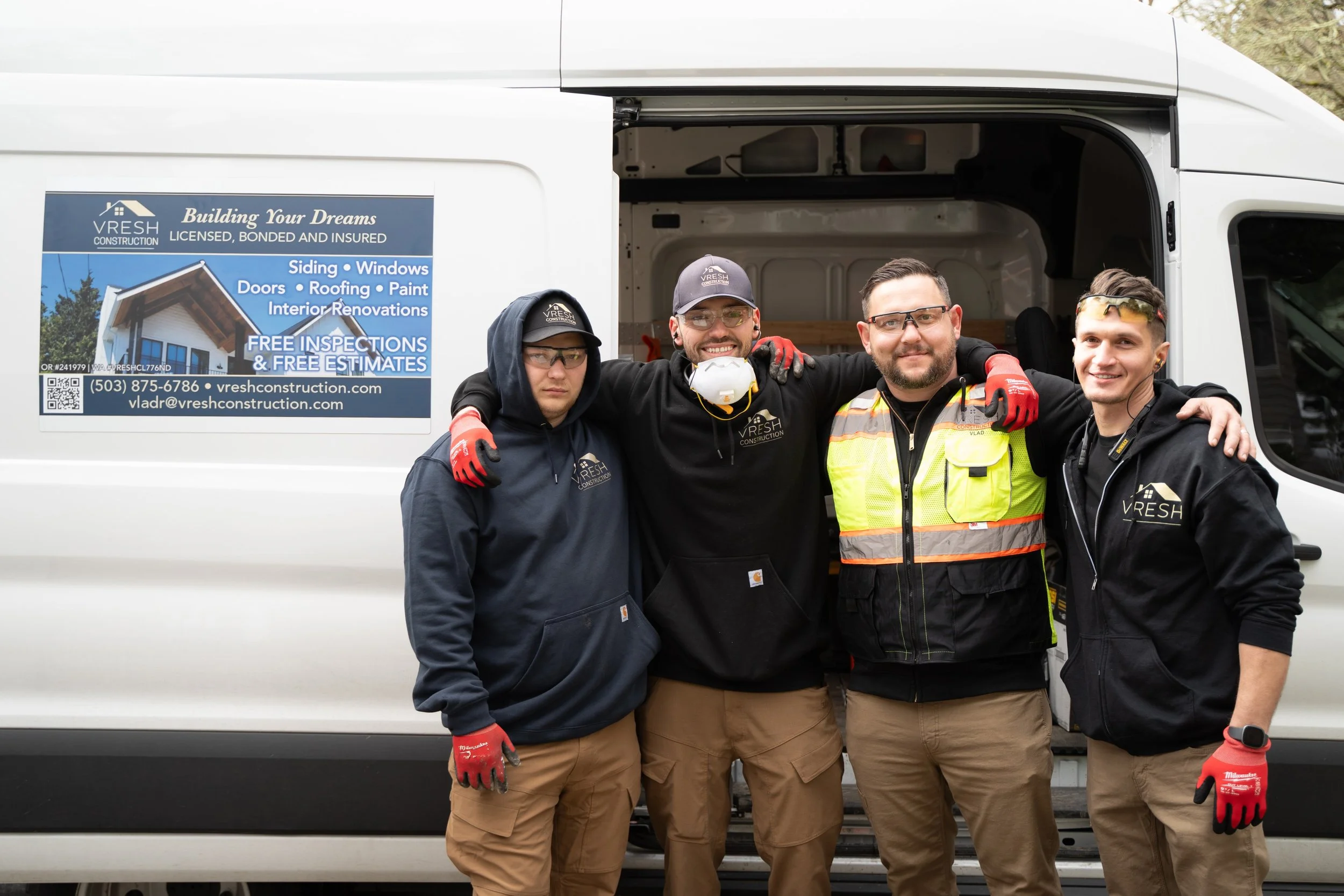
Oregon City Dry Rot Repair That Goes to the Source — Licensed, Owner-Run & Fully Warranted
Dry rot on an Oregon City home is always a secondary problem. The primary problem is a moisture delivery mechanism — a missing kickout flashing, an absent sill pan, a failed caulk joint that was the only barrier between the wall cavity and 44.81 inches of annual Pacific Northwest rainfall — that has been sending sustained moisture to wood framing for years or decades.

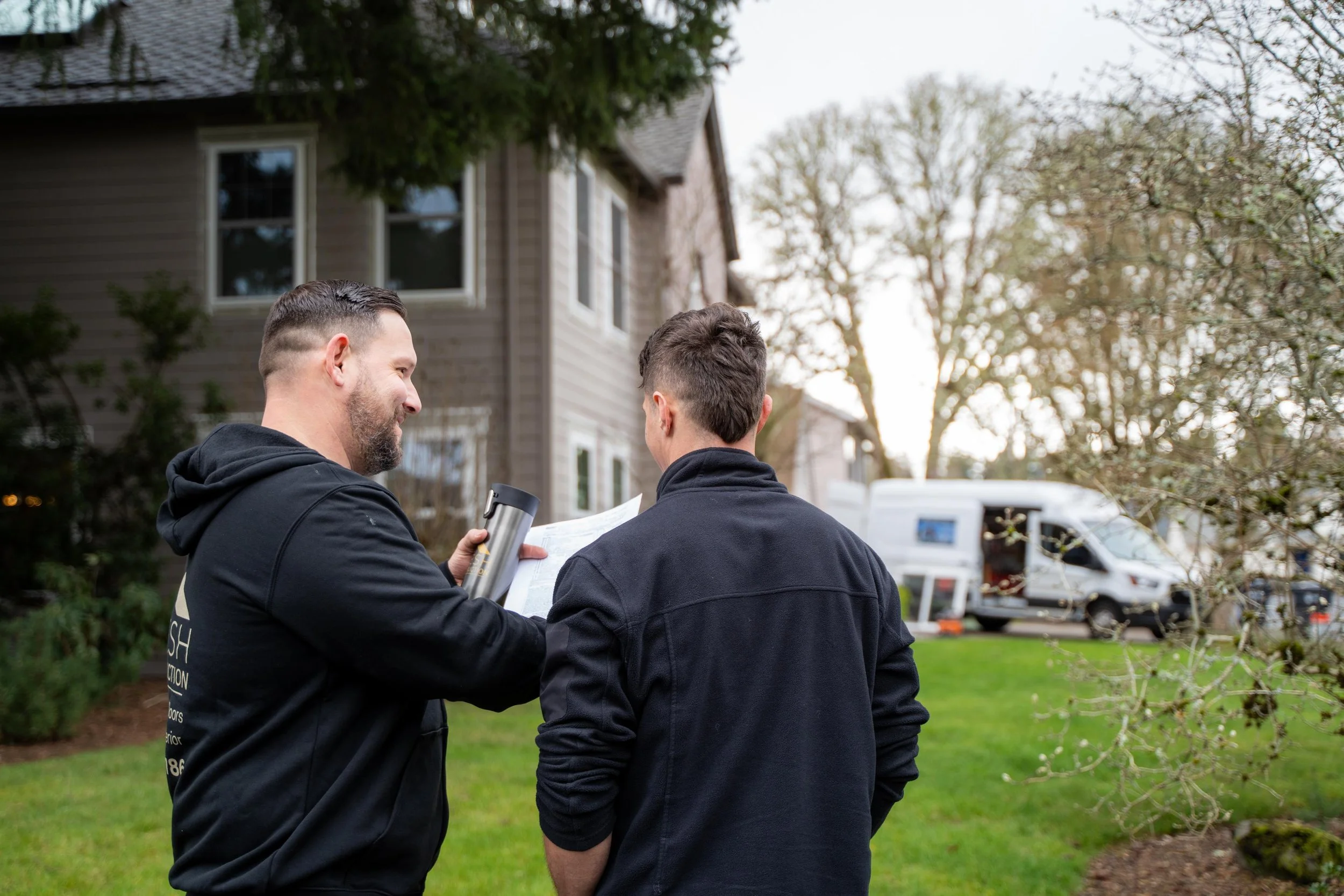
In Oregon City's Willamette River valley, the sustained Pacific wet season runs from November through March and delivers moisture continuously without the drying interruption that breaks the moisture-wood contact cycle. Under these conditions, wood that is receiving sustained moisture reaches and maintains the fungal threshold that drives structural rot. Finding and fixing the moisture source before touching the wood is not an optional preliminary step — it is the only thing that separates a repair that lasts from one that repeats in 5 years. VResh identifies the moisture source first. Then replaces structural members with new dimensional lumber — not epoxy filler. EPA Lead-Safe Certified for pre-1978 Oregon City homes. Licensed OR #241979 | WA #VRESHCL776ND. Free written estimates. (503) 272–6436.
VResh is owner-operated. Vlad personally oversees every Oregon City dry rot project — you know who is accountable for the outcome.
Why Dry Rot Appears on Oregon City Homes
Oregon City's housing distribution — 10.6% pre-1940 historic homes, 19.1% 1970s construction, and 20.6% 1990s tract development — creates three distinct dry rot patterns, each driven by a different combination of construction practice and Pacific Northwest climate.
Oregon City's 1990s Tract Homes — LP Siding and Missing Flashing
Oregon City's dominant housing cohort — the 1990s at 20.6% — was built during the I-205 corridor growth boom when builder-grade construction practices were standard: absent sill pans at window rough openings, no head flashing above windows and doors, no kickout diverters at dormers and addition corners.
After 25–35 years of Oregon City's 44.81-inch annual Pacific rainfall, the moisture delivery mechanism at these unprotected locations has been operating continuously through every wet season. The dry rot VResh finds at these locations on 1990s Oregon City homes is not isolated — it is the cumulative result of 25–35 Pacific wet seasons of uninterrupted moisture delivery.
Pre-1940 Historic Homes — Decades of Moisture Entry
Oregon City's 10.6% pre-1940 housing stock — the highest of any VResh core city — carries structures that have been receiving Pacific Northwest rainfall since the Oregon Trail era.
The historic lower town along the Willamette River bench is particularly susceptible: original cedar and fir siding that has gone extended periods without maintenance, flashings that were never installed or have long since failed, and in many cases framing members that have been receiving intermittent moisture for 80–100 years. Dry rot assessment on a pre-1940 Oregon City home requires a different approach than on a 1990s tract home: the rot may be structural and longstanding rather than surface and recent.
Pacific Rainfall and Oregon City's Sustained Wet Season
Oregon City receives 44.81 inches of annual precipitation with January being the wettest month (7.20 inches) and December close behind (7.20 inches).
This sustained winter moisture delivery — combined with mild temperatures that favor fungal growth and minimal freeze-dry interruption — means that wood reaching the fungal moisture threshold in October stays at or above that threshold through May. In this climate, a compromised moisture barrier on any Oregon City home vintage delivers sustained rather than intermittent moisture — the worst-case scenario for structural dry rot progression.
What VResh Actually Does on an Oregon City Dry Rot Project
Source identification first — always. Here is the process.
Moisture Source Investigation Before Any Wood Removal
Before any wood is touched, VResh investigates the moisture source. Visual inspection, moisture meter readings at the affected area and surrounding zones, water test where applicable. The documented answer to 'where is the water coming from?' drives the entire project scope.
What VResh Consistently Finds as the Moisture Source on Oregon City Dry Rot Projects
- Missing kickout flashing at dormer and addition corners — on Oregon City 1990s tract homes with dormers, 25–35 years of Pacific storm runoff delivering directly into the wall-to-roof junction has compromised the framing at these intersections into the wall cavity. This is the most expensive dry rot finding on Oregon City projects.
- Absent sill pans at window rough openings — universal on Oregon City 1990s builder-grade construction. After 25–35 Pacific wet seasons of moisture infiltration at each window location, sill plate and jack stud rot is found at a significant proportion of window positions on homes not yet repaired.
- Gutter overflow at fascia ends — Oregon City homes with gutters that overflow at clogged ends deliver concentrated Pacific rainfall directly to the fascia board face at the overflow point. Fascia rot at these locations is a direct consequence of gutter maintenance history.
- LP Inner-Seal siding moisture delivery — Oregon City's dominant siding material (1990s LP Inner-Seal) absorbs moisture through board edges and directs it into the sheathing. On projects where siding replacement reveals the substrate, bottom-course sheathing saturation is found consistently.
Fix the Moisture Source Before the Wood
Install the missing flashing, kickout diverter, sill pan, or gutter correction that is driving the rot. This step is non-negotiable. In Oregon City's 44.81-inch annual rainfall climate, new wood installed without fixing the moisture source will be in the same condition as the old wood within 5–7 years.
What Contractors Get Wrong on Oregon City Dry Rot Repair
- Patching without fixing the source: replacing rot without correcting the moisture delivery mechanism is the most common dry rot repair error. In Oregon City's Pacific Northwest climate, the replacement wood reaches the fungal moisture threshold faster than in drier regions. The patched location will be rotting again within a few years.
- Epoxy fillers on structural members: epoxy consolidants are appropriate for non-structural decorative trim. They are not appropriate for sill plates, jack studs, rim joists, or any member that carries load. VResh replaces structural members with new dimensional lumber.
- Missing the full extent: rot that appears contained at the surface frequently extends further into the framing on Oregon City homes where sustained Pacific wet season moisture has been present for decades. VResh probes until confirmed clean wood — not until visible rot is removed.
Remove All Compromised Wood
Rot removed until clean wood is confirmed. No partial rot left in place. Margin back to structurally sound material confirmed by probe and moisture meter.
New Dimensional Lumber, Reassembly, and Weather Seal
New dimensional lumber installed where structural members were removed. New trim where decorative members were replaced. Full moisture barrier restored at the repair location. Written workmanship warranty issued at project completion.
Targeted Dry Rot Repair — Single Location, Confirmed Scope
Fascia board at a gutter overflow point. Window rough opening sill plate at a single location. One dormer intersection with kickout diverter installation. For Oregon City homeowners with a specific rot location identified, VResh provides a fixed-price estimate for confirmed-scope repair.
Dry Rot Repair Services for Oregon City Homes
VResh handles dry rot repair across the full scope spectrum in Oregon City:
Structural Dry Rot Repair on Historic Oregon City Homes
Rim joist, ledger, bottom plate, or structural framing repair on Oregon City's pre-1940 historic homes — where rot may have been progressing for decades. These projects require building permits and structural assessment. VResh handles permit coordination and provides engineering consultation where required.
Multiple Location Dry Rot Repair
Multiple rot locations across the exterior of an Oregon City 1990s home — typical on properties where LP Inner-Seal removal reveals accumulated substrate moisture damage. VResh documents each location, identifies each moisture source, and provides a consolidated estimate with priority sequencing.
Dry Rot Repair Requirements for Oregon City Homes
Lead Paint — What Oregon City Homeowners Need to Know
Approximately 37% of Oregon City's housing stock was built before 1978, the federal threshold for lead-based paint regulation. Oregon City's pre-1978 proportion is notably concentrated in the older cohorts: the city has the highest pre-1940 housing percentage of any VResh core service city at 10.6% — a reflection of its status as the first incorporated city west of the Rocky Mountains, with genuine Victorian and Craftsman-era construction in the historic lower town. The pre-1940 cohort (10.6%), 1940s (1.9%), 1950s (4.0%), 1960s (5.2%), and pre-1978 portion of the 1970s (15.3%) together account for approximately 37% of Oregon City's total housing stock. The EPA's Lead Renovation, Repair, and Painting (RRP) Rule requires contractors who disturb painted surfaces on pre-1978 homes to hold EPA Lead-Safe Certification, follow specific containment and work practice protocols, and provide written documentation. Violations reach $37,500 per day per violation.
Ask directly: “Are you currently EPA Lead-Safe Certified under the RRP Rule?” Then request to see the certificate.
A contractor without current certification cannot legally disturb painted surfaces on a pre-1978 home, cannot provide required compliance documentation, and may expose occupants to lead dust contamination during demolition and repair work.
:contentReference[oaicite:0]{index=0} holds current EPA Lead-Safe Certification and provides written documentation at project completion.
Building Permits for Dry Rot Repair in Oregon City
Structural dry rot repair in Oregon City typically requires a building permit. Permits are handled through the Oregon City Building Division — 695 Warner Parrott Rd, Oregon City, OR 97045; phone: 503–722-3789; email: permits@orcity.org. ⚠️ The permit counter is open Monday through Thursday, 9:00 AM–3:30 PM only — the counter is closed Fridays and all City holidays. Permits can also be submitted through Oregon's E-Permits online system. VResh handles all permit coordination on your behalf
What Dry Rot Repair Costs in Oregon City, OR
Dry rot repair cost depends on location, extent, and whether structural members are involved. General planning ranges:
| Dry Rot Repair — General Cost Ranges (Labor + Materials) | Estimated Cost |
|---|---|
| Targeted repair — single location, surface members | $400–$1,200 |
| Multiple locations across exterior | $2,000–$6,000 |
| Extensive or structural repair | $8,000–$15,000+ |
| Note | Final scope confirmed at removal — rot on Oregon City LP siding projects frequently extends further than surface inspection indicates |
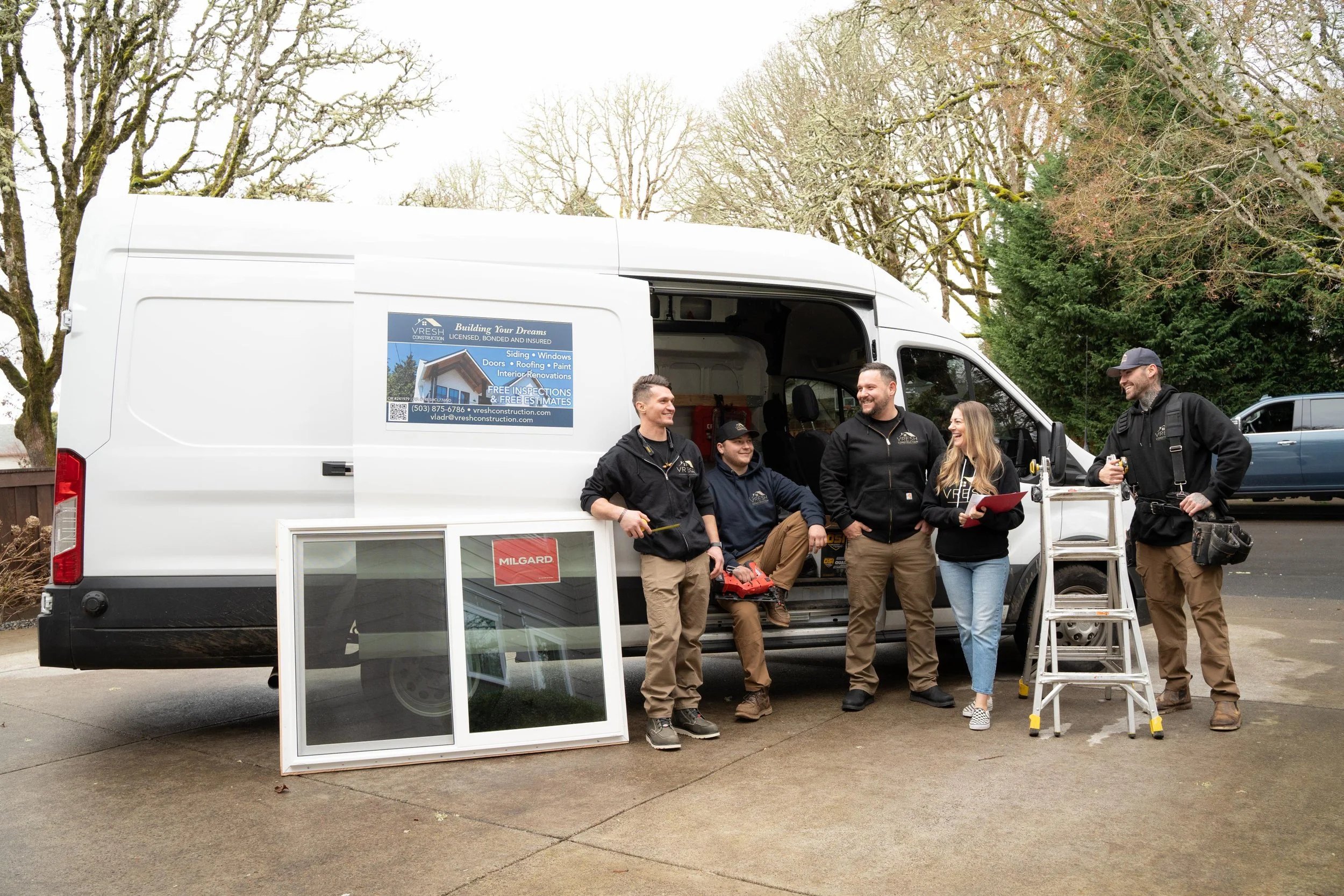
(503) 272-6436 — Call or Text, Available 24/7
We answer calls and texts at any hour. For storm damage, active leaks, or structural emergencies, calling directly is the fastest path to a response.
Dry Rot Repair FAQs — Oregon City, OR


Client's Talk
We have a wealth of experience working as main building contractors on all kinds of projects, big and small, from home maintenance and improvements to extensions, refurbishments and new builds.
Areas We Serve
VResh Construction provides window replacement, siding installation, roofing, dry rot repair and full exterior renovation services throughout the Portland metro area and Southwest Washington.
Portland Metro — Oregon
Southwest Washington
Extended Service Areas
Whether it is a sill plate repair at a window on a 1993 Oregon City bluff home, a dormer corner that has been showing wall staining for years on the Oregon Trail corridor, a comprehensive exterior moisture assessment on a pre-1940 historic lower-town home, a pre-purchase inspection on a 1990s LP-sided property, or a single-point repair estimate — VResh responds same-day or within 24 hours.