
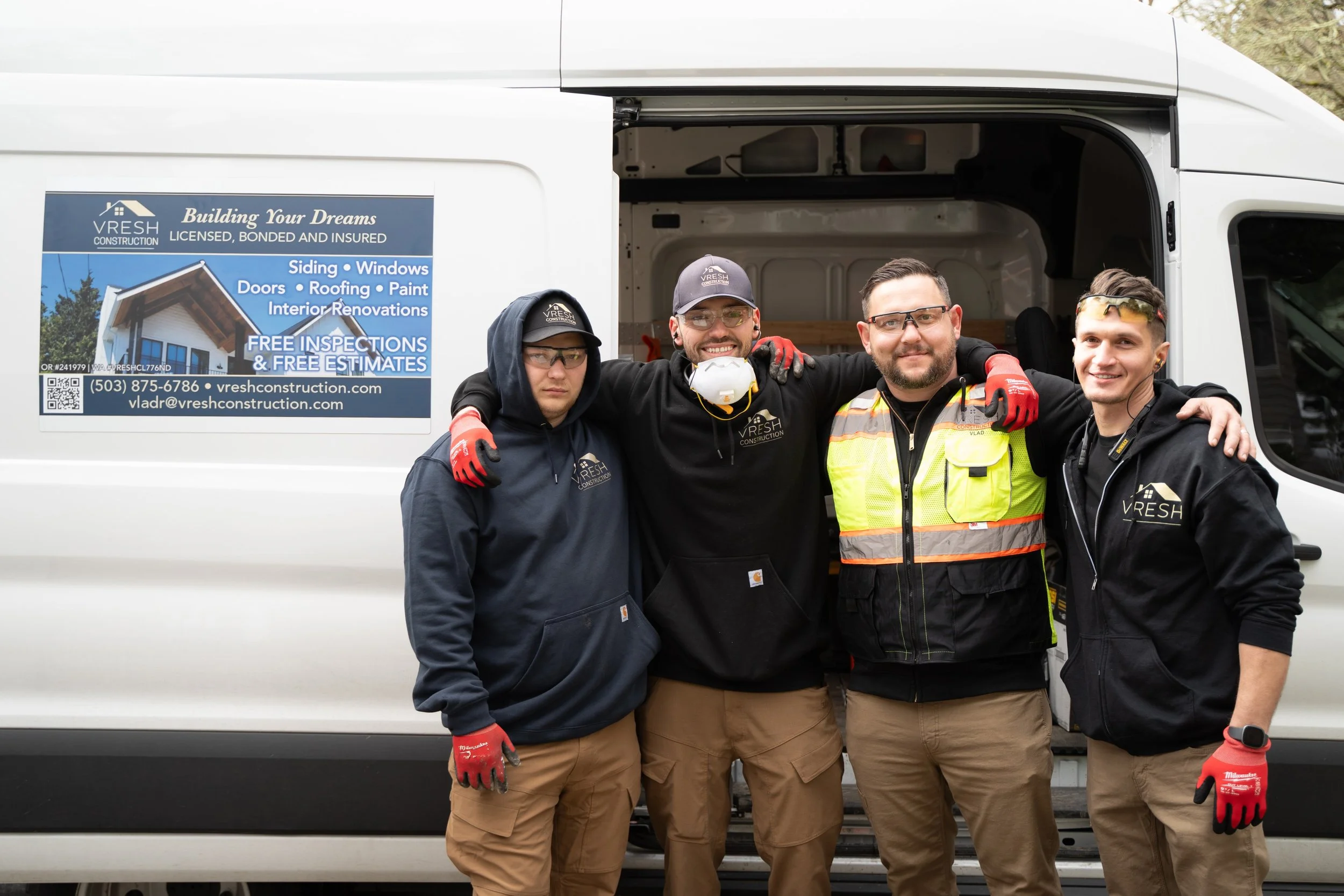
Oregon City’s Reliable Roof Replacement Contractor — Full Tear-Off, No Layovers, Written Warranty
Oregon City's 1992 median construction year means the city's largest housing cohorts — the 1990s at 20.6% and 2000s at 20.4% — are now at or approaching the end of their original 25–30 year shingle cycle.

A roof installed in 1993 on a home in the Willamette River valley receiving 44.81 inches of annual Pacific rainfall is at 33 years — well past the intended service life of a 25-year architectural shingle. At this age, the indicators are consistent: granule loss accumulating in gutters and at downspout splashblocks, algae and moss covering on north-facing sections, curling and cupping at shingle edges, and dark staining from embedded algae granule. Oregon City's Willamette River valley setting delivers sustained Pacific moisture through a 7-month wet season — conditions that accelerate shingle aging from moss colonization and sustained moisture cycling. VResh performs full tear-off: old shingles off, decking inspected and repaired, new synthetic underlayment, Malarkey shingles manufactured in Portland for exactly these conditions, all pipe boots replaced, kickout diverters at every dormer and addition corner. No layovers. EPA Lead-Safe Certified. Licensed OR #241979 | WA #VRESHCL776ND. Free written estimates. (503) 272–6436.
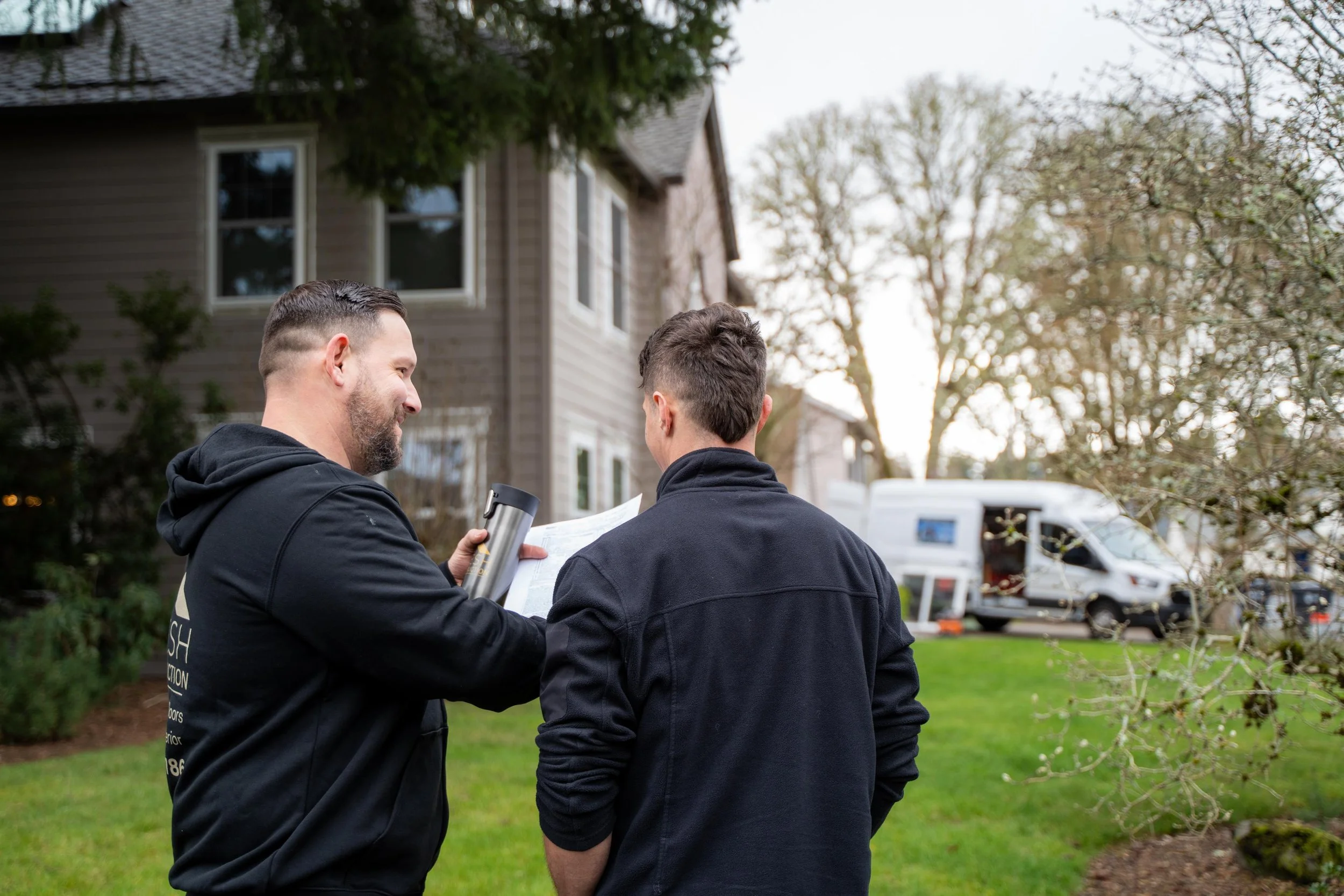
VResh is owner-operated. Vlad personally oversees every Oregon City roof project — you know who is accountable for the outcome.
Why Oregon City Roofs Are Failing Now
Oregon City's 1990s and 2000s housing cohorts together account for 41% of all homes — and both are entering the critical 25–35 year zone where shingle systems reach or exceed their intended service life. The Pacific wet season accelerates this timeline.
1990s Oregon City Homes — End of First Roof Cycle
The 1990s cohort at 20.6% of Oregon City's housing received 25–30 year asphalt shingles as the standard specification. At 25–35 years, these roofs are at or past the end of that service life. The visual indicators are consistent: granule loss documented in gutters, algae and moss coverage on north-facing sections (Oregon City's Pacific wet season favors rapid moss colonization), curling shingle edges at south-facing high-UV sections, and in many cases pipe boots that are now 25–35 years old and have cracked or separated from the penetration pipe. Oregon City's 44.81 inches of annual rainfall means every deficiency in the roofing system has been tested continuously for three decades.
1970s Oregon City Homes — Well Past First Cycle
Oregon City's 1970s homes at 19.1% are on their second or third roofing cycle, and those that received replacements in the early 2000s are now approaching end of second-cycle service life. These homes frequently carry additional complexity: the bluff-and-lower-town topography of Oregon City creates varied roof pitches, dormers added at different periods, and in some cases original structural decking from the 1970s that has cycled through multiple wetting periods. VResh inspects all original decking on tear-off and documents findings before replacement scope is finalized.
Pacific Rainfall and Oregon City Roof Longevity
Oregon City receives 44.81 inches of annual rainfall with a concentrated Pacific wet season from November through March. This sustained moisture creates conditions where moss and algae colonize north-facing roof sections aggressively, physically lifting shingle edges, breaking adhesive strips, and accelerating granule loss. A shingle that might last 28 years in a drier climate may functionally fail in 22–25 years in Oregon City's Pacific conditions. The Willamette River valley setting provides no barrier to Pacific storm systems — moisture flows continuously through the wet season without the orographic interruption that affects some Portland-metro locations.
What VResh Actually Does on an Oregon City Roof Project
Full tear-off on every project. Here is the process on an Oregon City roof replacement.
Complete Tear-Off and Decking Inspection
All existing shingles removed to decking. No layovers — installing a second layer of shingles over a failing first layer voids manufacturer warranties, adds weight, and masks decking problems. Decking inspected for rot, delamination, and fastener pull-through.
What VResh Consistently Finds on Oregon City Tear-Off Projects
- Pipe boot failure — every 1990s Oregon City roof has rubber pipe boots that are now 25–35 years old. Rubber at this age is brittle, cracked, and no longer seals. Every pipe boot on every Oregon City roof replacement is replaced as standard — not assessed, replaced.
- Missing kickout flashing at dormers and addition corners — the most common source of wall cavity water damage on Oregon City homes with dormers. Without a kickout diverter, 44.81 inches of annual Pacific rainfall delivers water directly into the wall-to-roof junction rather than off the roof edge.
- North-face decking moisture damage — Oregon City's sustained Pacific wet season creates elevated moisture on north-facing roof sections under colonized shingles. OSB and plywood decking from 1990s construction shows delamination and moisture damage at these locations on a meaningful proportion of Oregon City tear-off projects.
- Inadequate ridge ventilation — original 1990s ridge vents on Oregon City homes frequently show restricted or blocked ventilation from debris accumulation, reducing attic air circulation and accelerating shingle aging from below.
Decking Repair and Synthetic Underlayment
All compromised decking replaced before new material goes on. New synthetic underlayment over the full roof deck. Synthetic underlayment is the correct specification for Oregon City's Pacific conditions: water-resistant whether wet or dry, tear-resistant, and provides secondary protection that felt paper cannot match in a sustained rainfall climate.
Flashing, Pipe Boots, and Kickout Diverters
Step flashing at all wall-to-roof junctions. New pipe boots at all penetrations. Kickout diverters at all dormer sides and addition corners. Ice and water shield at all valleys, eaves, and roof-to-wall junctions.
What Contractors Skip on Oregon City Roof Replacements
- Pipe boot replacement: a 25–35 year old rubber pipe boot assessed and left in place is not a roofing standard — it is a deferred failure waiting for the first Pacific wet season. VResh replaces every pipe boot on every Oregon City roof project.
- Kickout flashing at dormers: the $15 diverter that prevents thousands in wall cavity damage is missing on most Oregon City dormer and addition intersections. VResh installs it as standard on every project.
- Decking assessment on layover proposals: a layover proposal on an Oregon City 1990s home masks 35 years of decking moisture exposure. Full tear-off with decking inspection is the only way to know what you are roofing over.
Malarkey Installation, Permit Inspection, and Warranty
Malarkey shingles installed per manufacturer specification. Manufactured in Portland for Pacific Northwest conditions — Oregon City's 44.81 inches of annual rainfall, sustained wet season, and moss-favorable damp conditions are exactly what Malarkey is spec'd for. Permit inspection scheduled and attended. Written workmanship warranty issued at project completion.
Malarkey Vista — Standard Specification for Oregon City Homes
Malarkey Vista SBS-modified architectural shingles: flexible in Pacific Northwest temperature cycling, ruby-infused granules that slow algae colonization on north-facing Oregon City roof sections, 30-year limited warranty from a Portland manufacturer spec'd for this climate. For Oregon City homes receiving 44.81 inches of annual rainfall, locally-manufactured product with algae-resistant granule formulation is the appropriate standard specification.
Roofing Materials for Oregon City Homes
VResh's standard specification for Oregon City roofs is Malarkey, manufactured in Portland. Options for Oregon City homeowners:
Malarkey Legacy — Impact-Resistant for Specific Applications
Impact-resistant shingle for Oregon City homeowners with specific exposure concerns or seeking potential insurance premium reduction. Ask VResh about current insurance carrier relationships in Clackamas County.
Malarkey Windsor — Heavy Gauge for Complex Rooflines
Malarkey's premium heavy-gauge shingle for Oregon City homes with complex rooflines, dormer-heavy upper-bluff properties, or high-value homes where extended service life is the priority. Greater thickness and granule depth mean better performance under Oregon City's sustained Pacific wet season.
Roof Replacement Requirements for Oregon City Homes
Lead Paint Consideration
Approximately 37% of Oregon City's housing stock was built before 1978. Roof replacement on pre-1978 homes disturbs painted fascia, soffit, and trim at the eave. The EPA's RRP Rule requires EPA Lead-Safe Certified contractors for this work. VResh holds current EPA Lead-Safe Certification and provides written documentation at project completion.
Building Permits for Roof Replacement in Oregon City
Roof replacement in Oregon City requires a building permit. Permits are handled through the Oregon City Building Division — 695 Warner Parrott Rd, Oregon City, OR 97045; phone: 503–722-3789; email: permits@orcity.org. ⚠️ The permit counter is open Monday through Thursday, 9:00 AM–3:30 PM only — the counter is closed Fridays and all City holidays. Permits can also be submitted through Oregon's E-Permits online system. VResh handles all permit coordination on your behalf.
What Roof Replacement Costs in Oregon City, OR
Roof replacement cost depends on roof area, pitch, material, and decking repair extent. General planning ranges:
| Roof Replacement — General Cost Ranges (Labor + Materials) | Estimated Cost |
|---|---|
| Standard ranch or two-story (moderate pitch, simple roofline) | $9,000–$16,000 |
| Complex roofline (dormers, multiple ridges, steep pitch) | $14,000–$25,000+ |
| Decking replacement | $500–$3,000 depending on extent |
| Pipe boot replacement | included as standard on every VResh roof project |
| Kickout diverters at dormers | included as standard |
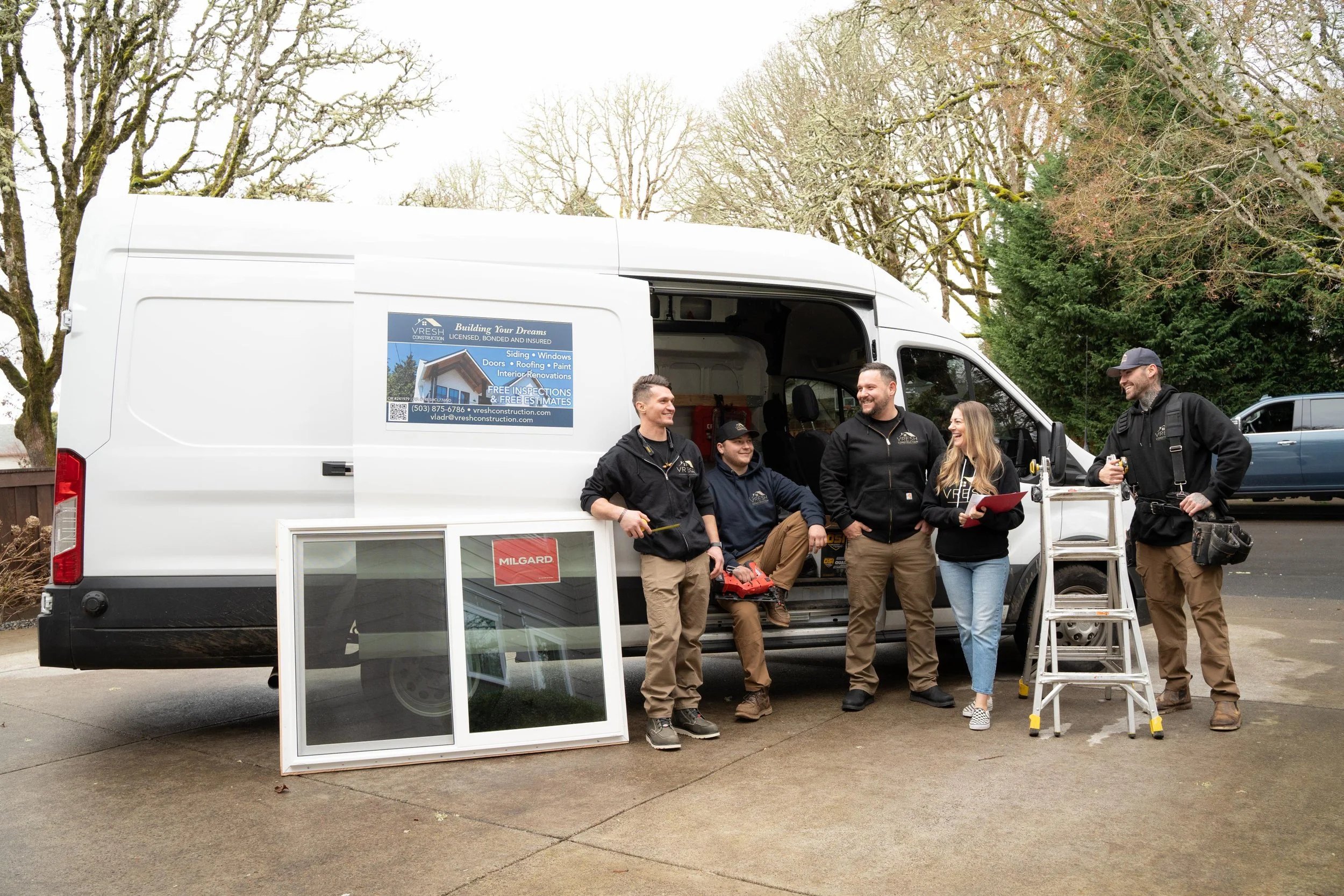
(503) 272-6436 — Call or Text, Available 24/7
We answer calls and texts at any hour. For storm damage, active leaks, or structural emergencies, calling directly is the fastest path to a response.
Roof Replacement FAQs — Oregon City, OR


Client's Talk
We have a wealth of experience working as main building contractors on all kinds of projects, big and small, from home maintenance and improvements to extensions, refurbishments and new builds.

Areas We Serve
VResh Construction provides window replacement, siding installation, roofing, dry rot repair and full exterior renovation services throughout the Portland metro area and Southwest Washington.
Portland Metro — Oregon
Southwest Washington
Extended Service Areas
Whether it is a full tear-off on a 1994 Oregon City bluff home with granule loss and moss coverage on the north face, a dormer intersection repair with kickout diverters that should have been there from the start, a 1975 ranch near the Clackamas River on its third roofing cycle, or a free structural assessment of a roof you know is past its lifespan — VResh responds same-day or within 24 hours