
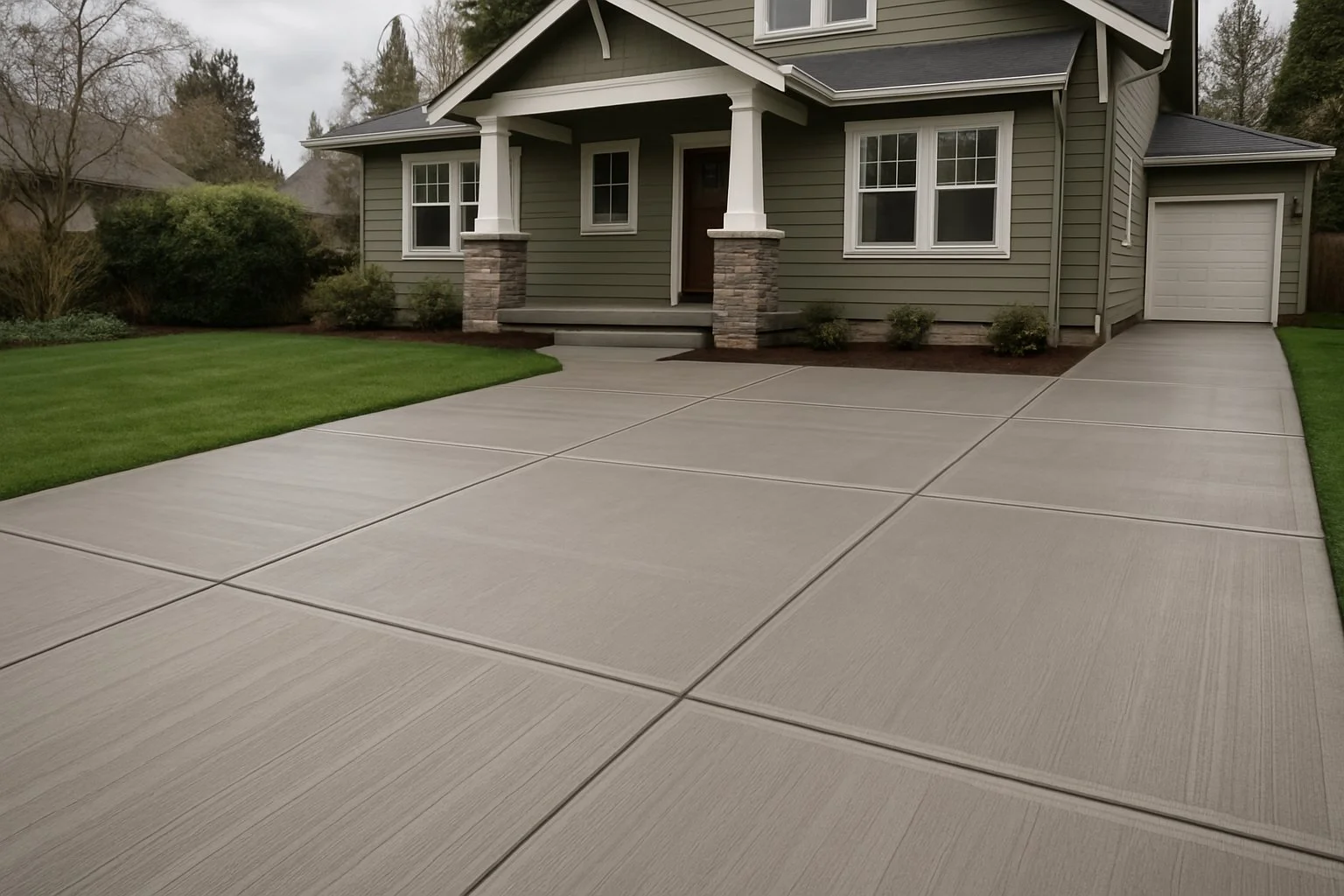
Concrete Driveway Installation in Portland, OR
Compacted Base & Proper Thickness. Rebar or Mesh Reinforcement. Control Joints Placed Right. Graded & Sealed for Portland Rain. Licensed OR #241979 | WA #VRESHCL776ND.

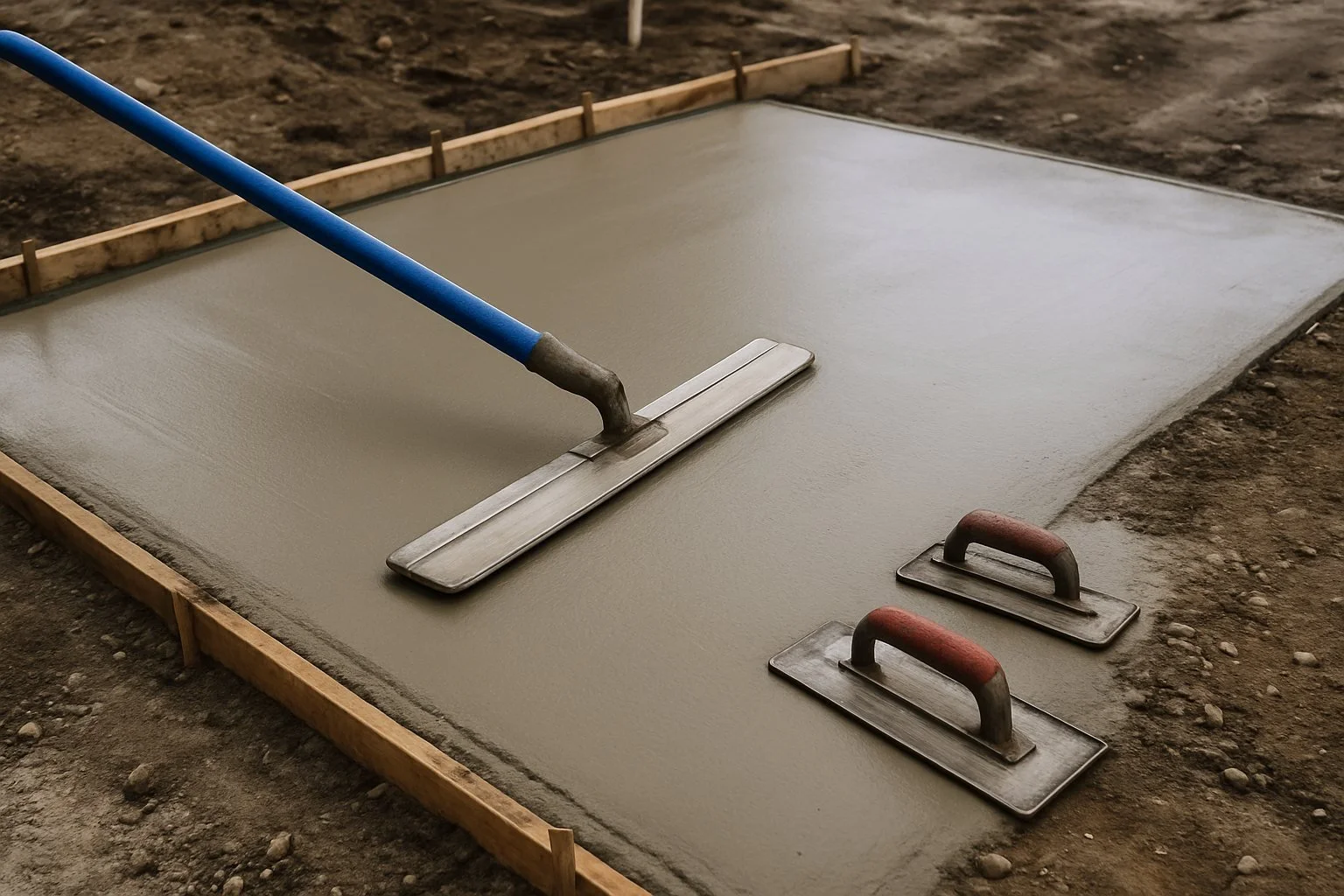
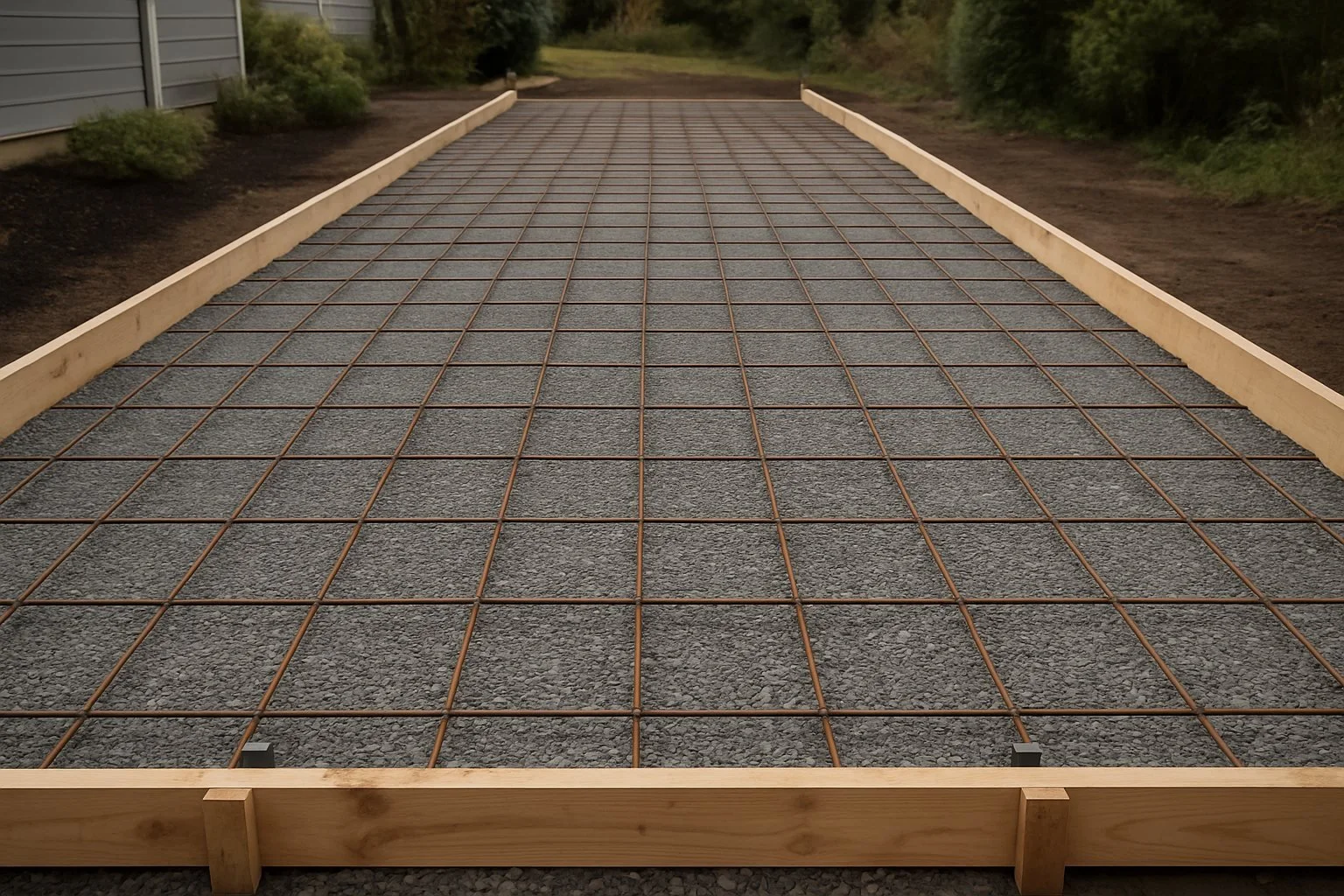
A concrete driveway is one of the most durable surfaces you can put in front of a house, and one of the most commonly poured wrong. A driveway that cracks apart, settles, or holds water almost always failed underneath, before the concrete was ever placed: too little base, not enough thickness or reinforcement, or control joints that were skipped or misplaced. VResh manages your driveway project end to end, and the concrete work is performed by the licensed, insured flatwork contractor we partner with. The crew excavates and compacts a proper gravel base, pours to the right thickness with reinforcement, cuts control joints where the slab needs to move, and grades it so Portland's rain runs off instead of pooling. Then we finish it the way you want, from a clean broom texture to stamped and colored concrete.
Managed by VResh
Poured by a licensed, insured concrete contractor
Compacted Base & Thickness
So the slab does not crack apart or settle
Reinforced & Jointed
Rebar or mesh, with control joints to manage cracking
Graded & Sealed
Built for Portland's rain and moss
Broom, Aggregate & Stamped
Finish options by a licensed concrete crew
Written Estimates Only
Scope and cost confirmed before any work begins
(503) 272-6436 — Call or Text, Available 24/7
We answer calls and texts at any hour. For storm damage, active leaks, or structural emergencies, calling directly is the fastest path to a response.
What Makes a Driveway Last: Base, Thickness, and Joints
A concrete driveway is only as good as the three things buried under it. Get these right and a driveway lasts for decades. Get them wrong and no finish will save it.
The Base
The concrete does not carry the load on its own; the compacted gravel base under it does. We excavate to the right depth, remove soft or organic soil, and lay and compact a crushed-rock base that drains and supports the slab evenly. A driveway poured on loose or unprepared ground settles and cracks no matter how good the concrete is.
Thickness and Reinforcement
A residential driveway is typically poured at least 4 inches thick, and thicker where it carries an RV, trailer, or heavy vehicles. We reinforce the slab with a rebar grid or wire mesh, or fiber-reinforced concrete, so that when stress builds, the slab holds together instead of separating. Skimping on thickness or leaving out reinforcement is a common way to save a little now and pay for it later.
Control Joints
Concrete shrinks as it cures and moves with temperature, and it will crack; the only question is where. Control joints are cut into the slab at planned spacing to steer that cracking into straight, hidden lines instead of random ones across the surface. We place control joints and expansion joints correctly so the driveway relieves stress the way it is supposed to.
This is also why a hairline crack in a well-built driveway is normal and not a failure. Proper base, thickness, reinforcement, and joints do not prevent all movement; they control it so the driveway stays sound and looks intentional.
Finish Options: Broom, Exposed Aggregate, and Stamped
Once the structure is right, the finish sets the look and the traction. These are the finishes we pour.
01
Broom Finish
The classic driveway finish: a light broom texture dragged across the surface for slip resistance. It is the most economical, the most practical in a rainy climate, and the standard for good reason.
02
Exposed Aggregate
The top layer is washed away to reveal the stone in the concrete for a textured, decorative, and very grippy surface that hides wear well. It is a popular step up from a broom finish that still handles weather beautifully.
03
Stamped and Colored Concrete
Concrete stamped and colored to mimic brick, stone, or pavers, for a high-end custom look at less than the cost of the real thing. Stamped concrete needs sealing and a little more care in a wet climate, and we will walk you through the trade-offs so it performs as well as it looks.
04
Built for Portland's Rain
In our climate, water is what wears a driveway down, so drainage and sealing are not afterthoughts. We build them in.
Grading and slope: we pitch the driveway so water runs off and away from your garage and foundation, not toward them or into standing puddles.
Sealing: a quality concrete sealer helps the surface shed water, resist stains, and hold up to our wet winters, and we recommend resealing on a schedule to keep it protected.
Moss and algae: Portland's damp, shaded driveways grow moss and algae, which we account for in the finish and sealing, and which routine cleaning keeps in check.
05
What This Means for You
A driveway that drains and is kept sealed handles Portland winters far better than one that just sheds water off a flat, bare slab.
How a Concrete Driveway Project Works
A driveway is built in a set order, and most of the durability is set before the concrete truck arrives. The concrete crew we coordinate follows this sequence under VResh's management. Here is the sequence.
What's Included in a Concrete Driveway Project
Every driveway project with VResh includes the items below. Add-ons and conditional work are noted so there are no surprises on the estimate. Site conditions vary. We scope your driveway around its soil, slope, and drainage and tell you honestly what it needs to last.
What a Concrete Driveway Costs in Portland
Driveway cost depends on the square footage, the thickness and reinforcement, the finish, and the site work involved, including removing an old driveway and any soil or drainage issues. A standard broom-finish driveway on good soil is the most economical, while exposed aggregate and especially stamped, colored concrete cost more, as does extra thickness for heavy vehicles or difficult site prep. Because sites differ so much, we price each driveway after seeing it.
What Drives the Price
- Square footage and the slab thickness
- Reinforcement and the amount of base and grading the soil requires
- Finish: broom, exposed aggregate, or stamped and colored
- Demolition and haul-away of an existing driveway
- Drainage work and any right-of-way permit at the street
You will get a written, itemized estimate before any work begins, with no verbal numbers and no pressure. To price your driveway, request a free estimate or call or text (503) 272-6436.
Caring for Your Concrete Driveway
A well-built driveway needs little, and a couple of habits keep it looking good and lasting in our climate.
Reseal on a schedule, roughly every couple of years or as the sealer wears, to keep the surface shedding water and resisting stains. Stamped concrete benefits most from staying sealed.
Rinse or pressure-wash off moss, algae, and leaf stains before they build up, since a shaded Portland driveway grows them readily.
Clean up oil and fluid leaks promptly so they do not soak in and stain.
Avoid deicing salts, which can damage concrete; use sand for traction instead, and never use metal blades or chains that gouge the surface.
Kept sealed and clean, a properly built concrete driveway holds up for decades of Portland weather.


What Portland Homeowners Say
VResh Construction has completed more than 500 projects across the Portland metro with a 5.0 rating on Google. The reviews below are pulled live from our Google Business Profile, so what you see is current and unfiltered.
Serving Portland Metro Area
VResh Construction provides window replacement, siding installation, roofing, dry rot repair and full exterior renovation services throughout the Portland metro area and Southwest Washington.