
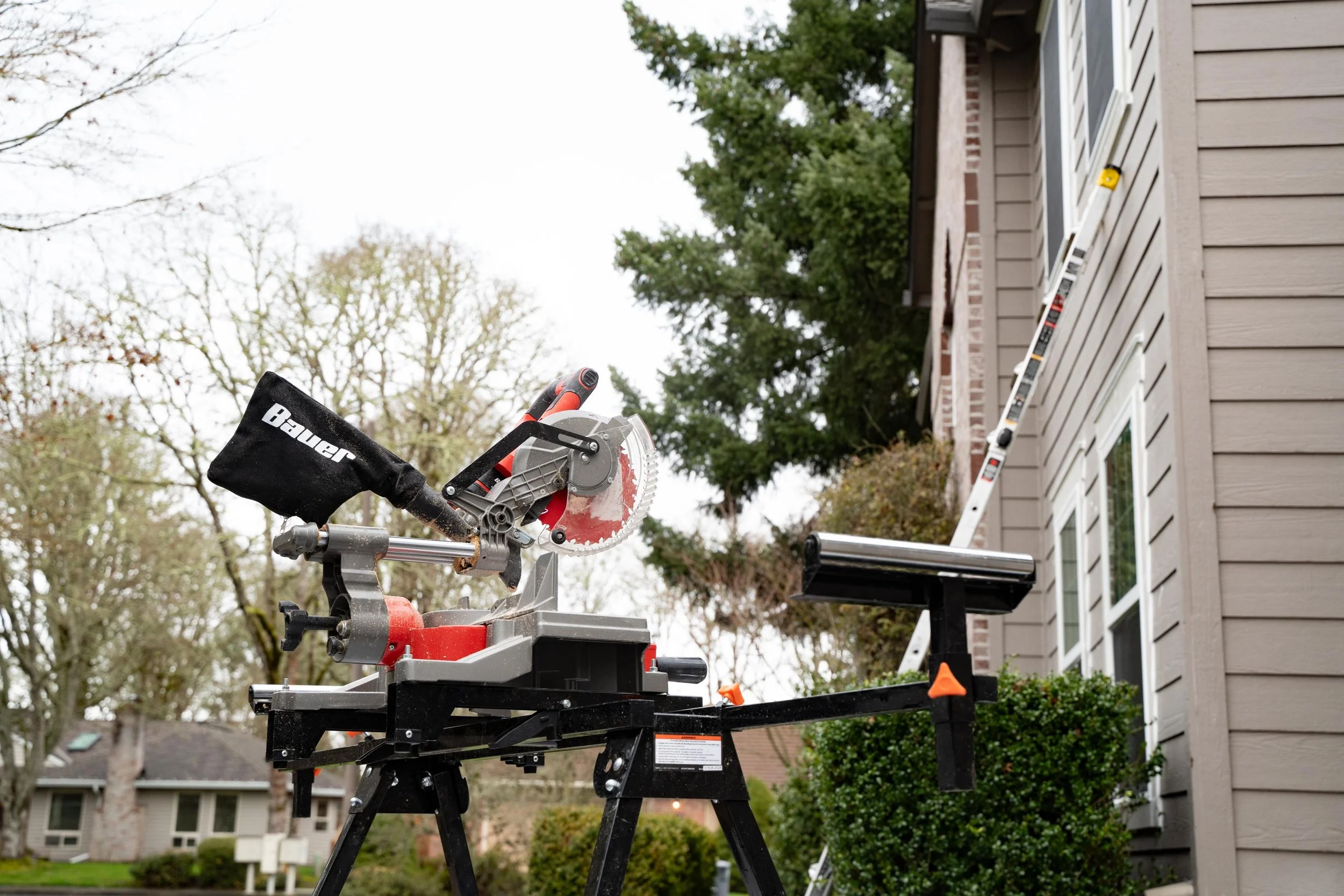
Sliding Door Replacement in Hillsboro, OR


Hillsboro Airport handled about 180,000 aircraft operations in 2023, which makes it the second-busiest airport in Oregon, and in the noise model the Port of Portland ran for its master plan, more than half of all operations were "local," the aviation word for a plane that takes off, flies a lap and lands again. That is flight training, and the Federal Aviation Administration's page for the airport says where it is heard: "noise sensitive areas border the airport to the west, south and east." A patio door is usually the largest single piece of glass on a Hillsboro house. For the ones under the pattern, from Orenco and Brookwood down through Cornell and the older blocks toward downtown, it is also the largest hole in the wall for sound, and the choice of glass in it is the one thing about airport noise a homeowner can control. No federal or city program is going to control it for you, which is the point this page makes first.
What the airport's own documents say
What the glass can do
A standard patio door consists of two panes of the same thickness with an air or argon gap between them, and the two identical panes share the same weak frequencies. The two changes that affect a door's sound rating are panes of different thicknesses, so no single frequency passes through both, and a laminated pane, two sheets of glass bonded to a plastic interlayer that dampens vibration instead of ringing. Manufacturers publish sound ratings for their glass packages, usually as an STC number for speech-range sound and an OITC number weighted toward the lower frequencies of aircraft and traffic; the OITC figure is the one to compare for a house under the pattern. VResh lists the glass options and their published ratings on the estimate for a Hillsboro door, and the main sliding door page describes what does not change with the glass: the sill pan, the head flashing and the air sealing, which on a sound-rated door matter twice, because air leaks are sound leaks.
Two limits come with that choice. A laminated or asymmetric glass unit is heavier, and on a wide slider the panel weight goes up with it, so the rollers and track are specified for the heavier panel. And no door quiets a room whose other wall has a 1990s single-glazed window; the door is the largest opening, so it is where the change is most noticeable, but the estimate makes it plain when a bedroom window is the bigger leak.
The 1990s door
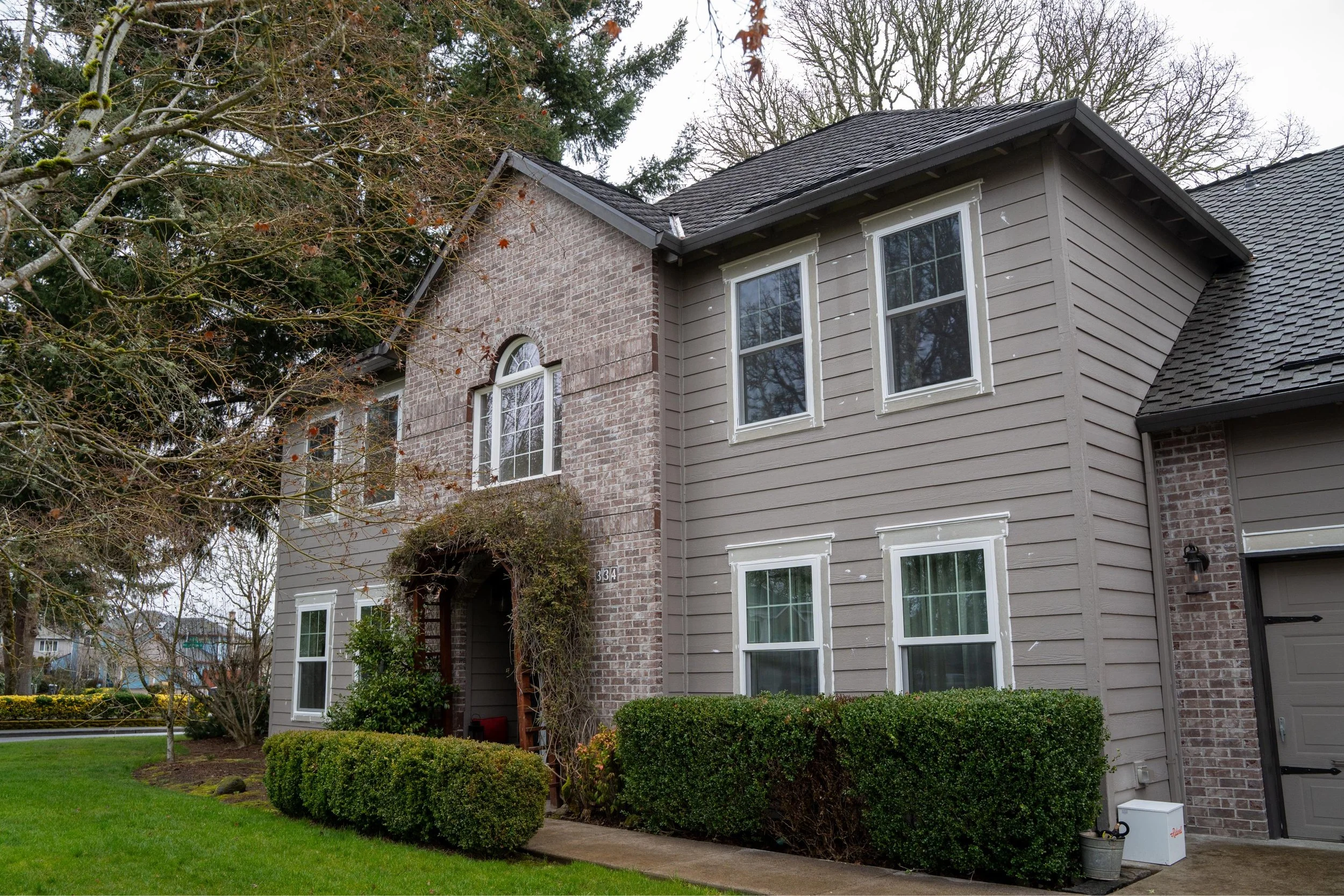
Hillsboro is a young city in housing terms. Just under half of Hillsboro's homes were built between 1990 and 2009, in the subdivisions that followed the chip fabs out Cornell Road and later filled Witch Hazel and South Hillsboro, and only about one home in eight predates 1970. So the patio door that fails in Hillsboro is usually not the 1970s aluminum unit that fails in older cities. It is a first-generation builder-grade vinyl slider from 1995 or 2003: 23 to 31 years old, with rollers that have worn flat, a track that has cracked at the corners, an interlock that no longer meets, and an insulated glass unit whose seal has failed and let moisture fog the space between the panes. Those doors were the lowest line on a production builder's window schedule, and the fog is the seal giving out in public.
Sound glass and a low U-factor are separate line items on the estimate, and the choice between them, or both, is the homeowner's. The code sets only the second, and it sets it twice: the existing-building table lists windows and glazed doors at U-0.30, and 0.27 is the new-window figure. A patio door is more than a third glass, so which line it falls under is confirmed with the Building Division, and no Oregon incentive has offset either since the start of 2026.
Where the door has to match
Most Hillsboro houses can take any frame color and grid pattern their owner likes. Three groups of houses cannot. In the old Orenco Townsite, the small neighborhood of nursery-workers' houses near the rail line that the city zones as a conservation district, the development code says "window and door reconstruction or replacement shall be consistent with structural character and style. Use of wood is encouraged." In Reed's Crossing and the rest of South Hillsboro, the houses sit under a declaration and an architectural review committee, and the city itself requires "Architectural Review Compliance" with building permits for new houses in the plan district; a replacement door in the same opening needs no permit, but a change of frame color or style is the committee's question before it is the city's. And in Orenco Station, 377 homes sit under a master association with four sub-associations, whose rules on exterior changes are the first question before a door is ordered. VResh asks which of the three a house is in at the first call.
No permit, unless the wall changes
The state's list of work that needs no residential permit includes "replacing doors and windows with no structural changes." Hillsboro's own permit page does not repeat that sentence; what it says is that "removal of a portion of a structure is defined as an alteration and requires a building permit." A slider set back into its own opening is the first case. Widening the opening for an 8-foot or multi-panel door removes wall and is the second, submitted through the city's permit portal with the header on the plans. A new deck outside the door is exempt up to 30 inches above grade and permitted above it, and a deck in one of the city's natural resource or floodplain overlays is a land-use question as well as a building one.

Serving Portland Metro Area
VResh Construction provides window replacement, siding installation, roofing, dry rot repair and full exterior renovation services throughout the Portland metro area and Southwest Washington.
Portland Metro — Oregon
Southwest Washington
Extended Service Areas
(503) 272-6436 — Call or Text, Available 24/7
We answer calls and texts at any hour. For storm damage, active leaks, or structural emergencies, calling directly is the fastest path to a response.
Sliding door questions from Hillsboro, OR


Client's Talk
We have a wealth of experience working as main building contractors on all kinds of projects, big and small, from home maintenance and improvements to extensions, refurbishments and new builds.
Listen from the back door
Stand at the back door on a weekday afternoon, and you will know whether the subject here is your house. If it is, the glass rating should be included on the quote. Call or text (503) 272-6436.