
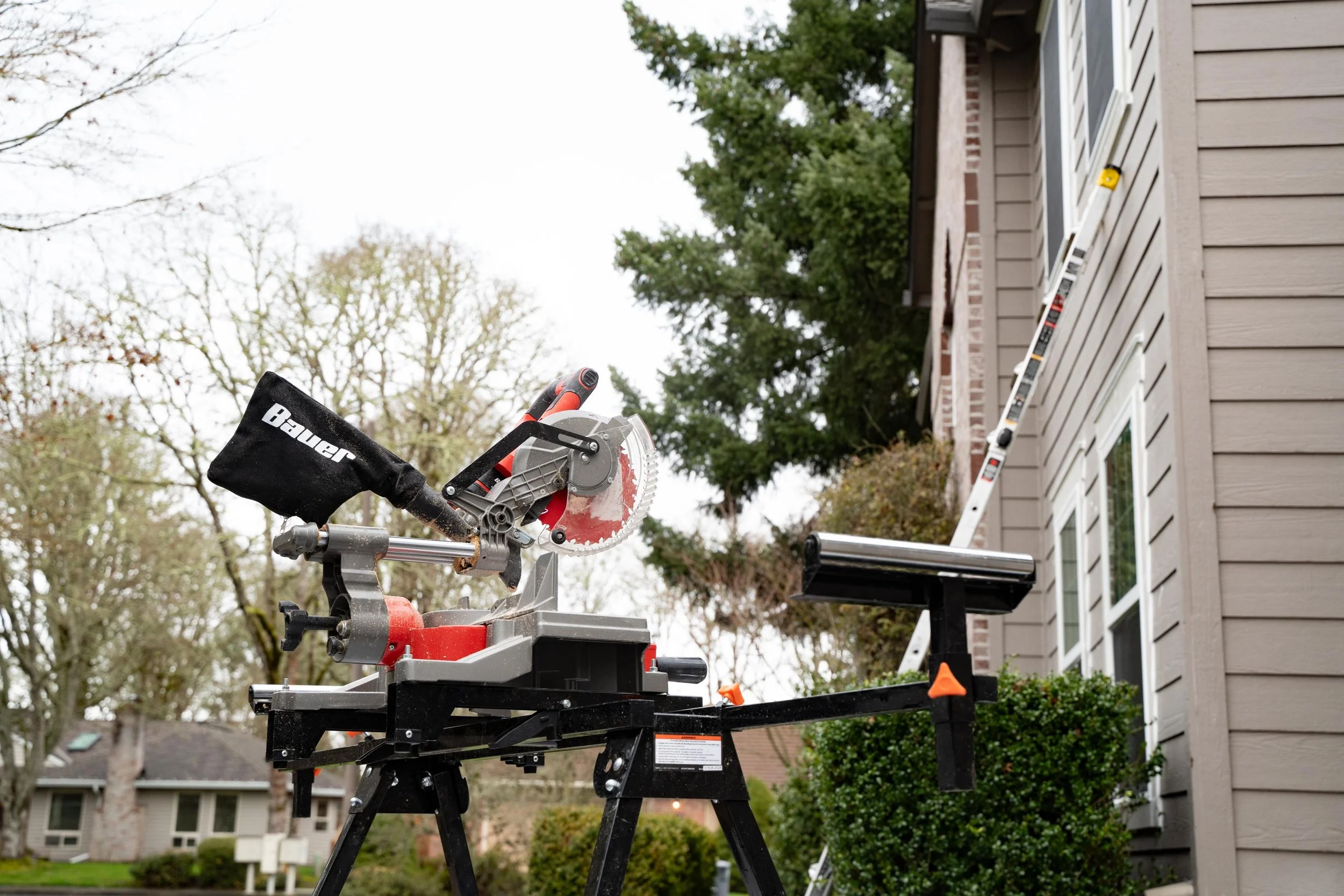
Exterior Painting in Milwaukie, OR
Fogged Glass Replacement. Hardware & Lock Repair. Draft Fixes. Caulking & Seal Repair. Free Estimates. Licensed OR #241979..

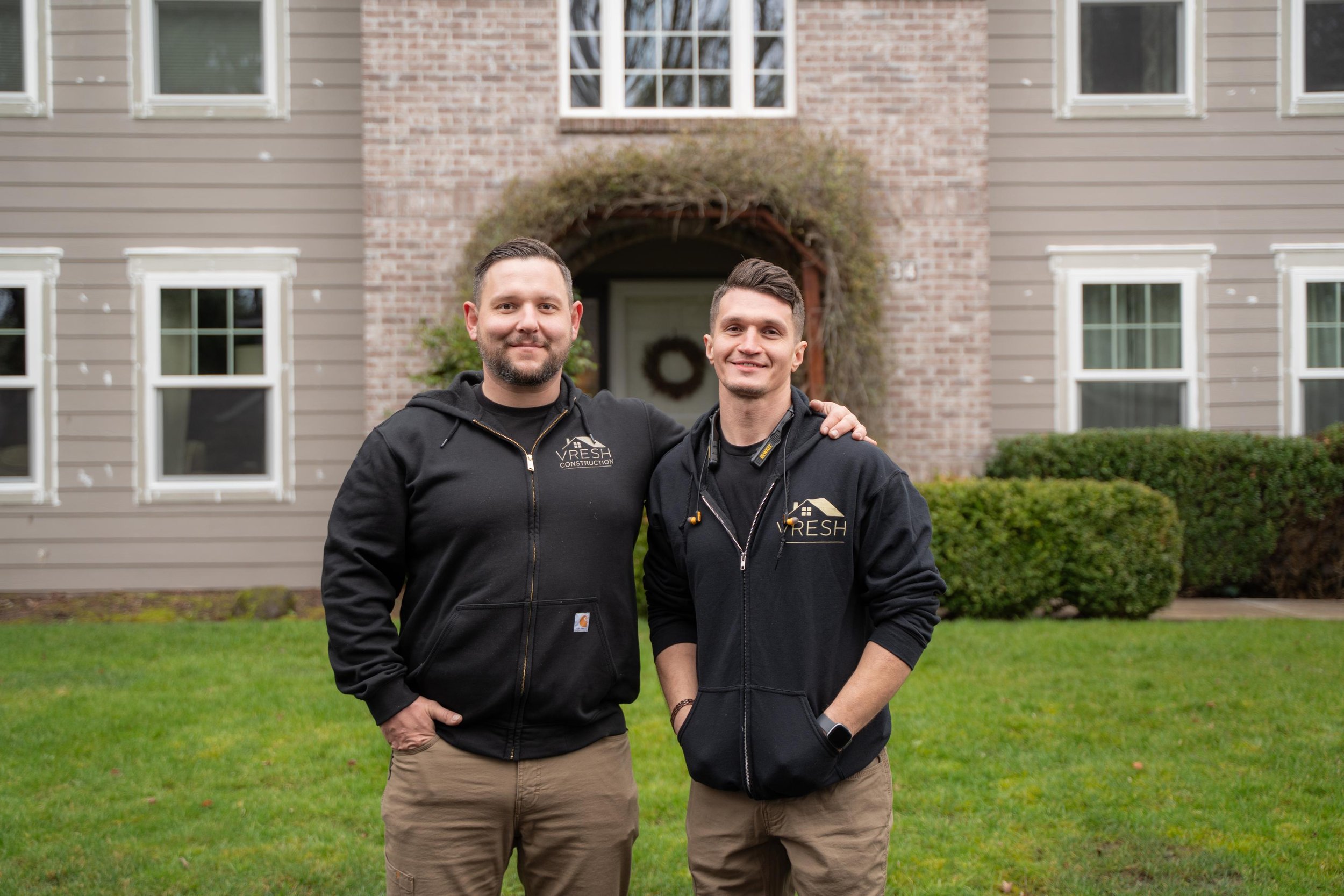
Three sidings went onto Milwaukie houses in the years around 1967, the city's median build year: cedar, hardboard lap, and grooved plywood panel, often on the same house. Each of the three takes paint in its own way and fails under it in its own way. On the two factory sidings, the failure starts low, at an edge you have to bend down to see, and the walk at the bottom edge is where a VResh Construction estimate starts on all three.
Cedar
Cedar is the main exterior painting page's material: it holds paint well, it rots where water sits, and prep is scraping to a sound surface, replacing soft boards, and priming bare wood. On a 1960s Milwaukie house with cedar lap, the main page's process applies without changes, and the only Milwaukie addition is the number of paint layers a house that age carries has, which determines how much scraping the estimate allows for.
Hardboard
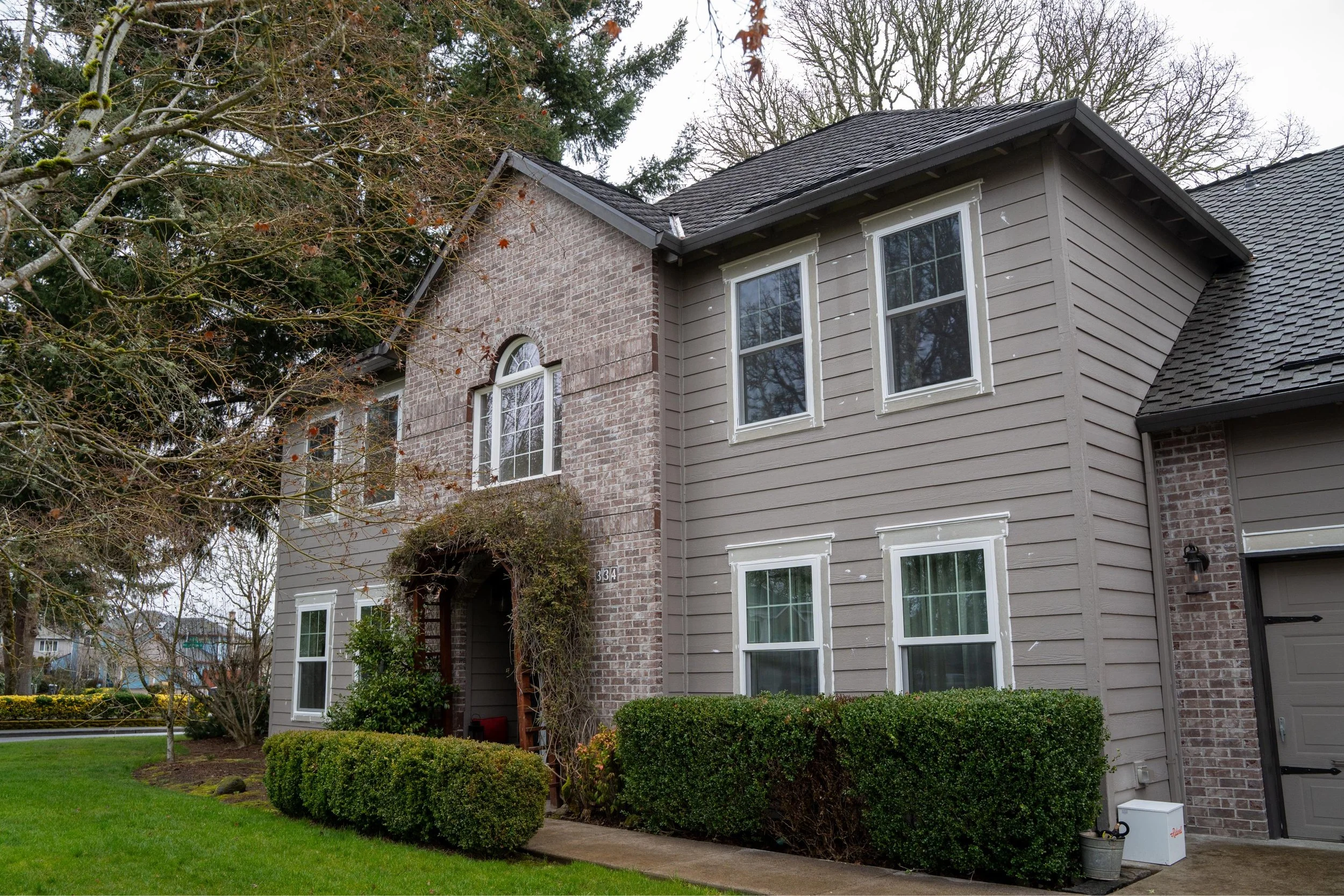
Hardboard lap siding is pressed wood fiber with a factory-primed face, and it went onto a large share of houses from the 1960s on because it was straight, plentiful, and took paint evenly. Its weakness is every unsealed edge: the bottom edge first, then the butt joints where two boards meet end to end, then the nail holes. The face sheds water; the edges take it in. Once the paint film at an edge or a nail head has cracked, the fiber behind it swells, the paint lifts along the swelling, and the board thickens there in a way it does not shrink back from when it dries. A wall of hardboard that has been repainted several times without sealing the edges usually has a row of fat lower edges beneath the fresh paint.
Paint over a swollen board lift again. On a hardboard wall, the prep decision is made board by board: sound edges and butt joints are primed and sealed; swollen boards are replaced, with the cut edges of the new boards primed before they go up; nails are left flush, never driven below the face, and rusted heads are spot-primed with a rust-inhibiting primer or replaced with galvanized nails. The estimate lists the replacements by count.
Grooved plywood panel
The vertical-groove plywood panel, sold under the T1-11 name and others, was used on split-levels, garages, and additions during the same years. It fails mainly in two places: in the grooves, where the outer layer of wood is thinnest and water runs, and along the bottom edge of the sheet, which is end grain and wicks. A panel wall painted with a roller has often been painted on its faces and starved in its grooves, and the first sign is the lowest few inches of each sheet going soft and the layers starting to part.
The prep on panel siding is the grooves and the bottom edge: a brush, a primer that will soak into end grain, and the part of the wall you cannot see from the sidewalk. Where a sheet has rotted at the bottom, the usual cause is that its edge sits on or near the ground or a slab. The sheet is cut back to sound wood, the strip below the cut is replaced with a new panel or a flashed trim board so the joint sheds water, and the new bottom edge is sealed and held clear of the ground. On many houses of this age, the panel is also the wall's sheathing, and the replacement strip is nailed as sheathing, not as trim.
Written by siding first
A VResh painting estimate for an older Milwaukie house names what each wall is sided with, because a house from those years is often a mix: cedar on the front, hardboard on the sides, panel on the garage. Each material gets its own prep line, and each wall is walked at the bottom edge before the line is written, so that the count of boards to replace and sheets to cut back is on paper before day one.
Because the median Milwaukie house predates 1978, the scraping and cutting in most of these jobs disturbs old paint. The Milwaukie hub page covers the federal lead-safe rule and VResh's certification under it. For a pre-1978 house, containment and cleanup practices apply to every wall where paint is disturbed, and they are part of each wall's prep line.
Serving Portland Metro Area
VResh Construction provides window replacement, siding installation, roofing, dry rot repair and full exterior renovation services throughout the Portland metro area and Southwest Washington.
Portland Metro — Oregon
Southwest Washington
Extended Service Areas
(503) 272-6436 — Call or Text, Available 24/7
We answer calls and texts at any hour. For storm damage, active leaks, or structural emergencies, calling directly is the fastest path to a response.
Painting questions from Milwaukie, OR


Client's Talk
We have a wealth of experience working as main building contractors on all kinds of projects, big and small, from home maintenance and improvements to extensions, refurbishments and new builds.
What the first visit is
The first visit is a walk-around of the house at the height of the lowest board, with a probe and a pad, naming the siding on each wall and counting what needs to come off before anything gets primed. The estimate follows from the count. Call or text (503) 272-6436.