Window Repair in Vancouver, WA
Balances and Casement Operators Restored. Fogged Sealed Units Swapped Into the Old Sash. Drafts and Frame Leaks Sealed. Rotted Wood Sash Spliced in Kind.
A window repair call tends to begin with a short list of faults: a sash that slides shut once released, a crank that turns without moving the casement, a haze between two panes, cold air at the casing, or a stain under the sill after rain. Two Vancouver code chapters bear on that work. VMC 17.14, the city's minimum maintenance standard, carries the model property maintenance code's expectation that an opening window stays put on its own hardware. VMC 17.39, the historic preservation chapter, covers houses on the Clark County Heritage Register and other listings, and there the repair material decides who reviews the job.
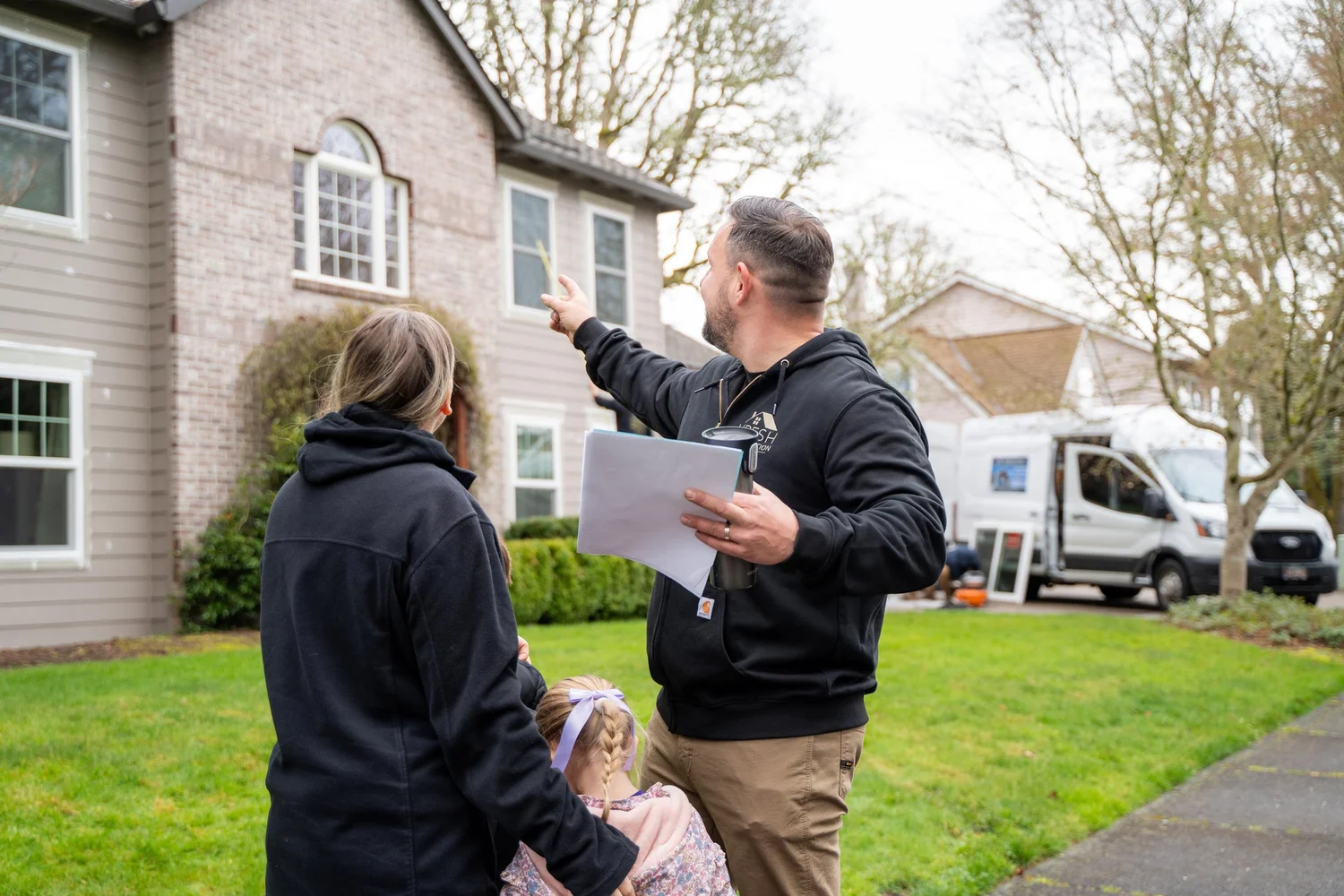
Vlad raises, lowers, and locks each problem window, looks for a broken seal in the glass, and probes the sill and bottom rail for soft wood, then shows the owner what he finds.

(503) 272-6436 — Call or Text, Available 24/7
We answer calls and texts at any hour. For storm damage, active leaks, or structural emergencies, calling directly is the fastest path to a response.
Common Window Problems We Fix in Vancouver
01. A Double-Hung Sash That Will Not Stay Up
In most double-hung windows, a coil spring, a spiral rod, or a block-and-tackle balance in the jamb carries the sash. When a cord snaps or a spring loses tension, the lower sash drops the moment someone lets go. Vancouver's maintenance code, like the model code it follows, wants an opening window "capable of being held in position by window hardware." VResh identifies the balance type and length, replaces the failed unit, checks its partner on the opposite jamb, and sets the tension.
02. A Casement Crank That Spins Without Moving the Sash
A casement depends on its operator and hinge arms to hold the sash open against wind. Stripped gears, a cracked arm, or a gritty hinge track let the sash swing loose or stop short of a tight close. With no balances in a casement, the city's hold-in-position standard falls on the operator. VResh sources one made for the window's brand, cleans the hinge track, and adjusts the sash until it closes evenly against its weatherstrip.
03. Fog That Wipes Off Neither Side of the Glass
A haze that no cloth reaches sits inside the insulated unit, where the seal around its edge has given out. The frame and sash usually stay sound, so the fix is glass only: a new insulated unit built to the old one's measurements and glazed into the same sash. Being a Milgard warranty service provider lets VResh check whether the maker's warranty covers a Milgard owner's failed seal before VResh orders glass. A photo of the frame label helps identify the product.
04. Drafts Behind the Interior Casing
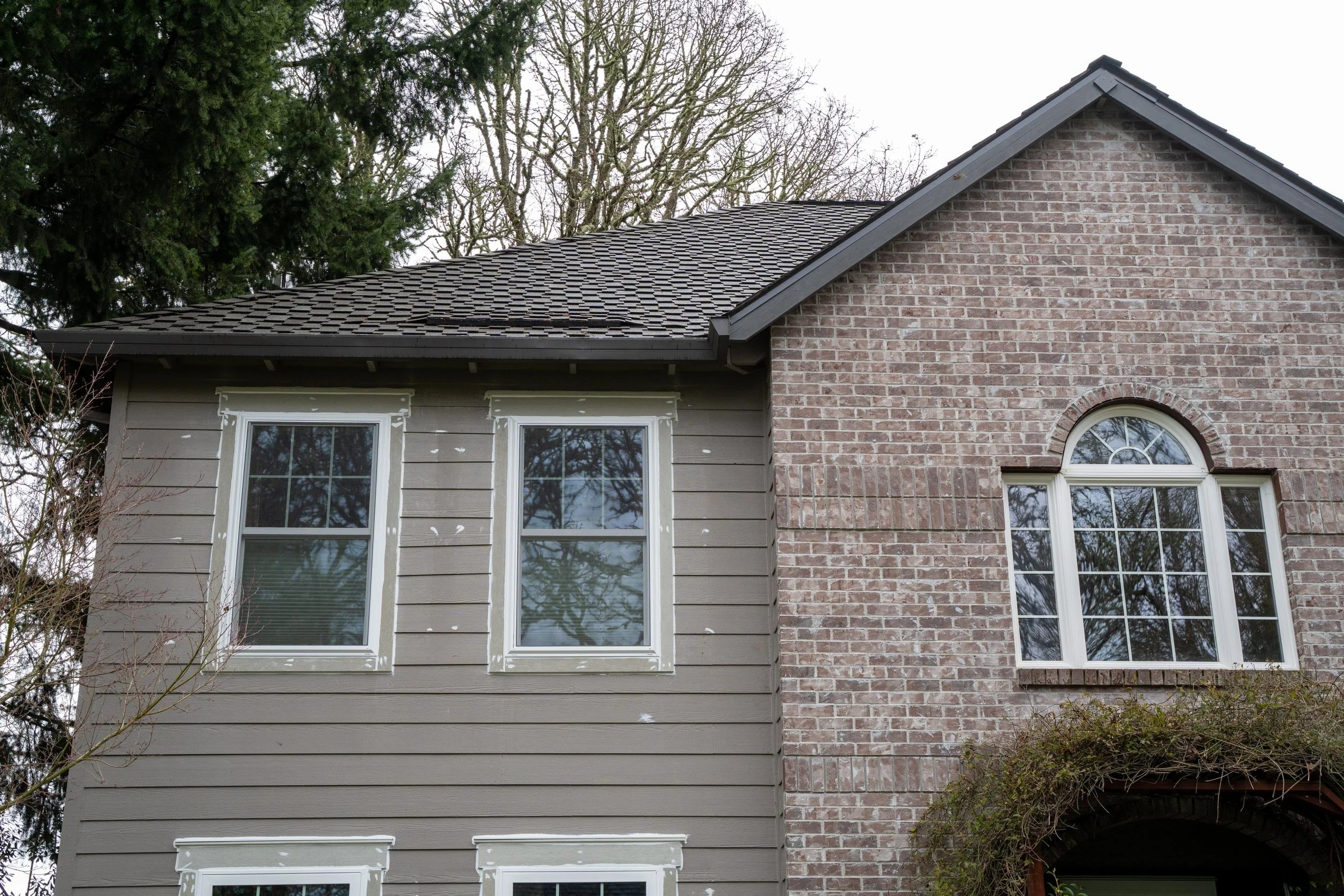
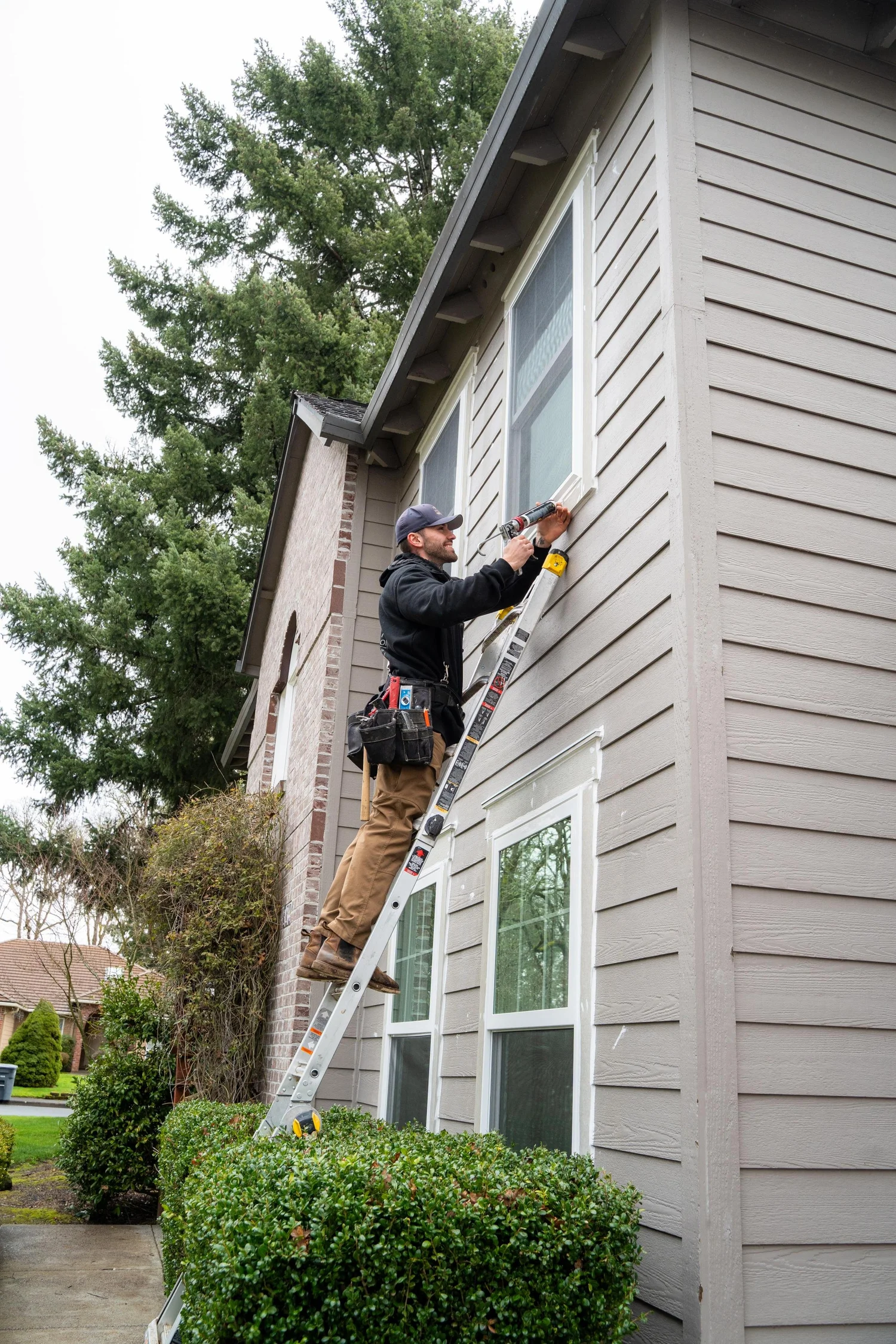
A cold spot beside a closed window means air is moving through the gap between the frame and the rough opening or past weatherstrip that has gone flat. VResh pulls the inside casing, seals that gap with low-expansion foam, replaces the weatherstrip, and nails the casing back. Vancouver's rehab specifications, written for jobs its Housing Rehabilitation Program funds and binding only those, ask that a sash fit tightly in its frame "to prevent infiltration of dust, water, and wind."
05. Water Running Onto the Stool After Rain
Rain inside a frame usually enters through split caulk, a missing head flashing, or a sill sloped toward the wall. VResh traces the path, reseals the joints, and corrects the flashing. A leak that has run for several seasons can soften the framing under the sill, so Vlad probes that wood before VResh closes anything up.
06. Rot in the Bottom Rail of an Original Wood Sash
Old wood sashes tend to fail first at the bottom rail and the lower stile ends, where water sits against cracked putty. VResh cuts out the decayed wood, splices in wood of matching species and profile, reglazes the pane, and primes and paints the bare surfaces. On a heritage-listed house, that in-kind repair fits the ordinary-maintenance tier VMC 17.39 excuses from a certificate, provided the sash looks the same afterward and no city permit is needed. Commission staff settles any doubt.
Window Repair Symptoms, Causes, and What Vancouver's Rules Mean
On a heritage-listed house, the material each repair uses also settles which review, if any, it needs.
The lower sash slides down once released
A snapped balance cord or a spring that has lost tension
A new balance meets the VMC 17.14 hold-in-position line and ends the daily nuisance at the same time.
An open casement swings in a gust
Stripped operator gears or a bent hinge arm
A brand-matched operator leaves the window's look from the street unchanged.
A milky film between two panes
A failed edge seal on the insulated glass unit
A new sealed unit set into the existing sash leaves a listed window's frame and profile as they were.
Soft, flaking wood along the bottom rail
Water held against the rail by failed putty
A splice in matching wood avoids review on a listed house, while a PVC part in a significant window goes to a commission hearing.
A brown stain on the wall below the window
Open joints in the exterior caulk, or no flashing above the window head
VMC 17.14 holds window frames to a weathertight standard, and a leak that has run for years can mean wet framing behind the drywall.
A sash painted shut along the stops
Layers of paint sealing the sash to the stop and parting bead
Freeing the sash and repainting in the existing color leaves a listed window's appearance unchanged.
Window Repair in Vancouver: What the Project Involves
Heritage-Listed Windows in Vancouver: How the Repair Material Sets the Review
VMC 17.39 sorts work on a listed property into three levels, and window repair can land in any of them depending on the material.
Ordinary Repair With No Certificate
The chapter excuses "Ordinary repairs and maintenance which do not alter the appearance of a significant feature and do not utilize substitute materials" from the certificate of appropriateness. It defines ordinary repair as work needing no city permit that fixes decay or damage and returns the feature, as nearly as practicable, to its prior condition. For windows, that definition fits reglazing a pane in glass and putty, splicing a rotted rail in wood, renewing a sash cord, freeing a painted-shut sash, and repainting in the existing color. Commission staff decides where a particular job falls.
Staff Review for In-Kind Work Beyond the Routine
The next level is an administrative review by commission staff for "Repairs (other than ordinary repair and maintenance) using the same materials and design as the original" and for replacements in kind. A new wood sash built to match one too decayed to splice, or a sill rebuilt in the original profile and species, belongs here.
A Commission Hearing for Substitute Materials
Work that alters the appearance of a significant contributing feature, or replaces historic material in a significant feature with something other than in kind, needs a commission review for a certificate of appropriateness. In a significant window, that reaches a vinyl insert set into the old frame, a clad sash, and PVC stops or sills. The property's designation decides which windows count as significant.
When Repair Beats Replacement in Vancouver, and When It Does Not
Repair Is Usually the Right Call When
The failed part comes out of a sound, dry frame: a balance, an operator, a sash lock, a sealed glass unit, weatherstrip, or a short length of wood rail. On a heritage-listed house, ordinary repair in the original material stays in the tier with no certificate, and the owner's maintenance duty under VMC 17.39 points the same way.
Replacement Is Usually the Better Value When
Rot has gone through the sill and up the jambs, the sash has decayed past what a splice can hold, or the maker no longer produces parts for an older product line. A vinyl window whose frame has warped out of square is another case. On a listed house, a replacement in kind goes to commission staff, and one in a different material in a significant window goes before the commission. Outside the heritage rules, the main window repair page sets out how to tell a finished window from a tired one.


Client's Talk
Serving Portland Metro Area
VResh Construction provides window replacement, siding installation, roofing, dry rot repair and full exterior renovation services throughout the Portland metro area and Southwest Washington.
Portland Metro — Oregon
- Portland, OR
- Oak Grove, OR
- Cedar Mill, OR
- King City, OR
- Happy Valley, OR
- Clackamas, OR
- Milwaukie, OR
- Gresham, OR
- Wood Village, OR
- Scappoose, OR
- Sandy, OR
- Newberg, OR
- Estacada, OR
- Lake Oswego, OR
- Beaverton, OR
- Hillsboro, OR
- Tigard, OR
- Sherwood, OR
- West Linn, OR
- Oregon City, OR
Southwest Washington
Extended Service Areas
Window Repair FAQs for Vancouver Property Owners and Landlords
Our house is on the heritage register. Do we have to keep the old windows in repair?
VMC 17.39 says the owner "must provide ordinary repair and maintenance to ensure protection of the contributing historic features of the property as defined in the historic designation." Whether the windows are among those features depends on the designation for the house, so the designation document is the place to start.
We are fixing up a house with a city rehab loan. Who approves the window work?
The Housing Rehabilitation Program specifications state, "The Rehab Program Staff must approve window repairs." The same section calls for weatherstrip on all sashes and screens on all opening windows, so those items belong in the scope of a program-funded job.
Is a clip-in spring a proper fix for an old one-over-one sash?
On program-funded work, the rehab specifications call for spring or tension counter-balances on new one-over-one sashes and accept quick-install spring controls only when the existing operating mechanism is unusable. On other jobs, VResh matches the balance system already in the window if its maker still supplies parts.
The one window in a rental bedroom is stuck shut. Does Vancouver's code say anything about that?
VMC 17.14 requires at least one openable window in every habitable space. A jammed or painted-shut window in a one-window bedroom is the first one VResh frees, and the city's building official decides any compliance question under VMC 17.14.
Water runs down the inside of our windows on winter mornings. Is the glass failing?
Water on the room-side glass comes from indoor humidity meeting cold glass. Running bath and kitchen fans and opening blinds so room air reaches the glass usually cut it back. Fog that stays between the panes when both sides are dry is the sign of a failed seal.
Our vinyl sash will not tilt in for cleaning anymore. Can that be fixed?
A tilt-in sash is held in its track by a small spring latch at each top corner, and a cracked or jammed latch either lets the sash lean into the room or keeps it from tilting at all. VResh replaces the pair to match the window's make.
One pane of our double-pane window has cracked. Does the whole window go?
A crack in either pane breaks the insulated unit's seal, so VResh replaces the whole sealed unit as one piece. The sash and frame stay where they are.
Get a Free Window Repair Estimate
Start your request with the window that worries you most and the room it serves, so Vlad can begin there. For a house on the Clark County Heritage Register, have the designation paperwork ready, since it names the features the owner must maintain.
- Same-day response on all estimate requests
- No commission-based sales, just honest quotes
- Licensed OR #241979 · WA #VRESHCL776ND
- EPA Lead-Safe Certified for pre-1978 homes
- Written workmanship warranty on our repairs