
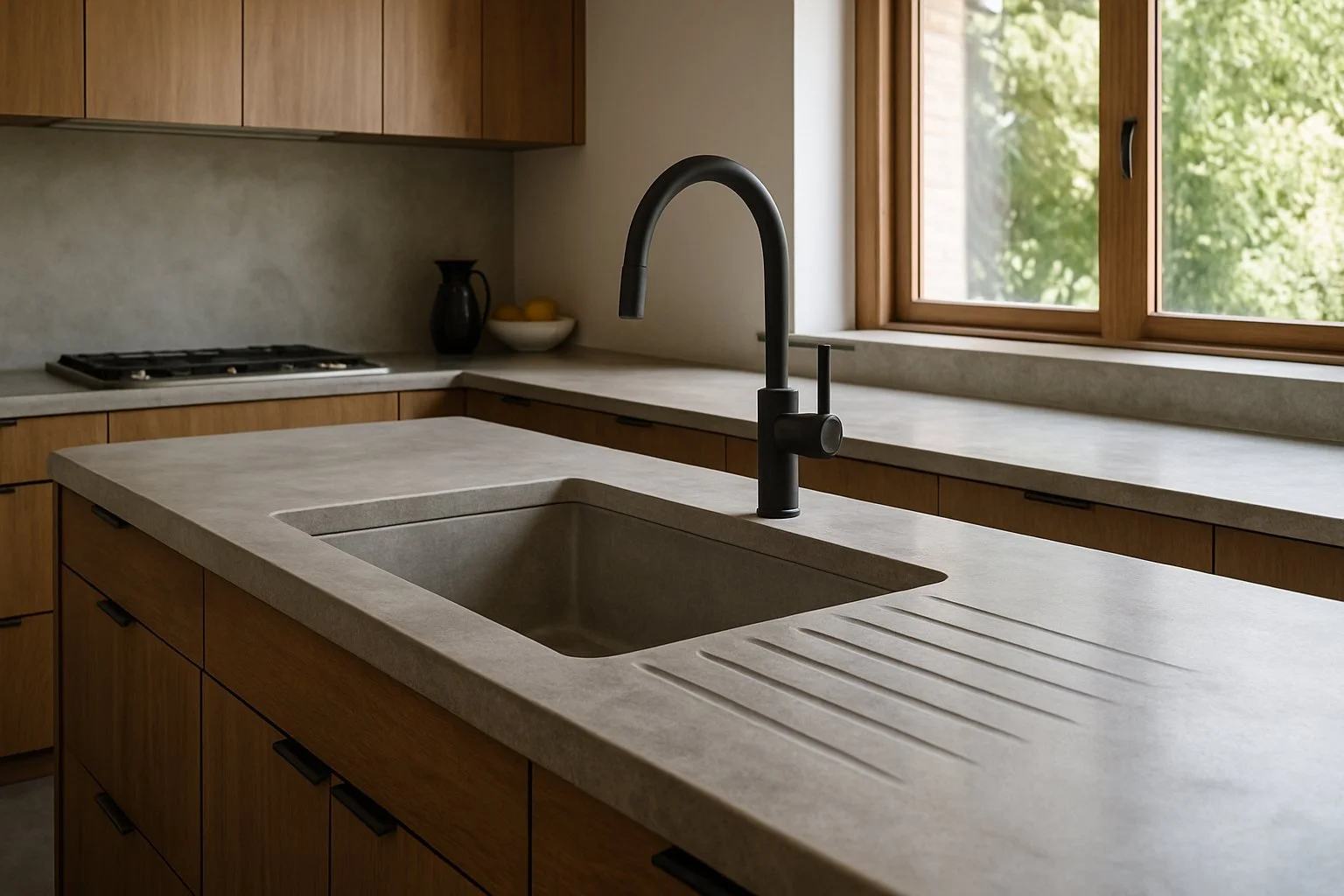
Concrete Countertops in Portland, OR
Your Color, Shape & Edge. Integral Sinks & Drainboards. Cast, Reinforced & Sealed. A Look No Slab Can Match. Owner-Supervised. Licensed OR #241979 | WA #VRESHCL776ND.

Concrete is the most customizable countertop there is. It is cast, not cut, so the color, shape, edge, and even an integral sink are made to your design, and the surface carries a hand-finished, industrial-organic character that engineered slabs imitate but cannot reproduce. It is also a handmade material: it is heavy, it needs sealing, and fine hairline lines and a living patina are part of its character rather than defects. VResh handles the design and installation and coordinates the casting, so the counter is reinforced to carry its own weight, sealed properly, and finished the way you pictured it.
Owner-Supervised Always
Vlad is on every project, start to finish
Fully Custom
Your color, shape, edge, and integral features
Reinforced & Sealed
Built to carry its weight and resist stains
Handmade, One of a Kind
Cast for a look no manufactured slab can match
Licensed & Insured
OR #241979 | WA #VRESHCL776ND
Written Estimates Only
Scope and cost confirmed before any work begins
(503) 272-6436 — Call or Text, Available 24/7
We answer calls and texts at any hour. For storm damage, active leaks, or structural emergencies, calling directly is the fastest path to a response.
Color
Color comes from integral pigment mixed through the concrete or from stains and dyes applied to the cured surface. The range runs from soft grays and warm earth tones to bold custom colors. Because each batch is hand-mixed, the color carries subtle depth and variation instead of a flat, printed look.
What Makes Concrete Different: Color, Shape, and Finish
Concrete is the one countertop you design rather than select off a rack of slabs. Three dimensions of customization set it apart, and together they let you build a counter that exists nowhere else.
Shape and Integral Features
Concrete can be formed into almost any shape, curved or angled, with the edge profile you want, from a simple eased edge to a dramatic waterfall. It is the only countertop that can include an integral sink or drainboard cast right into the top for a seamless basin, and it can carry embeds like glass, stone, or recycled aggregate.
Finish and Texture
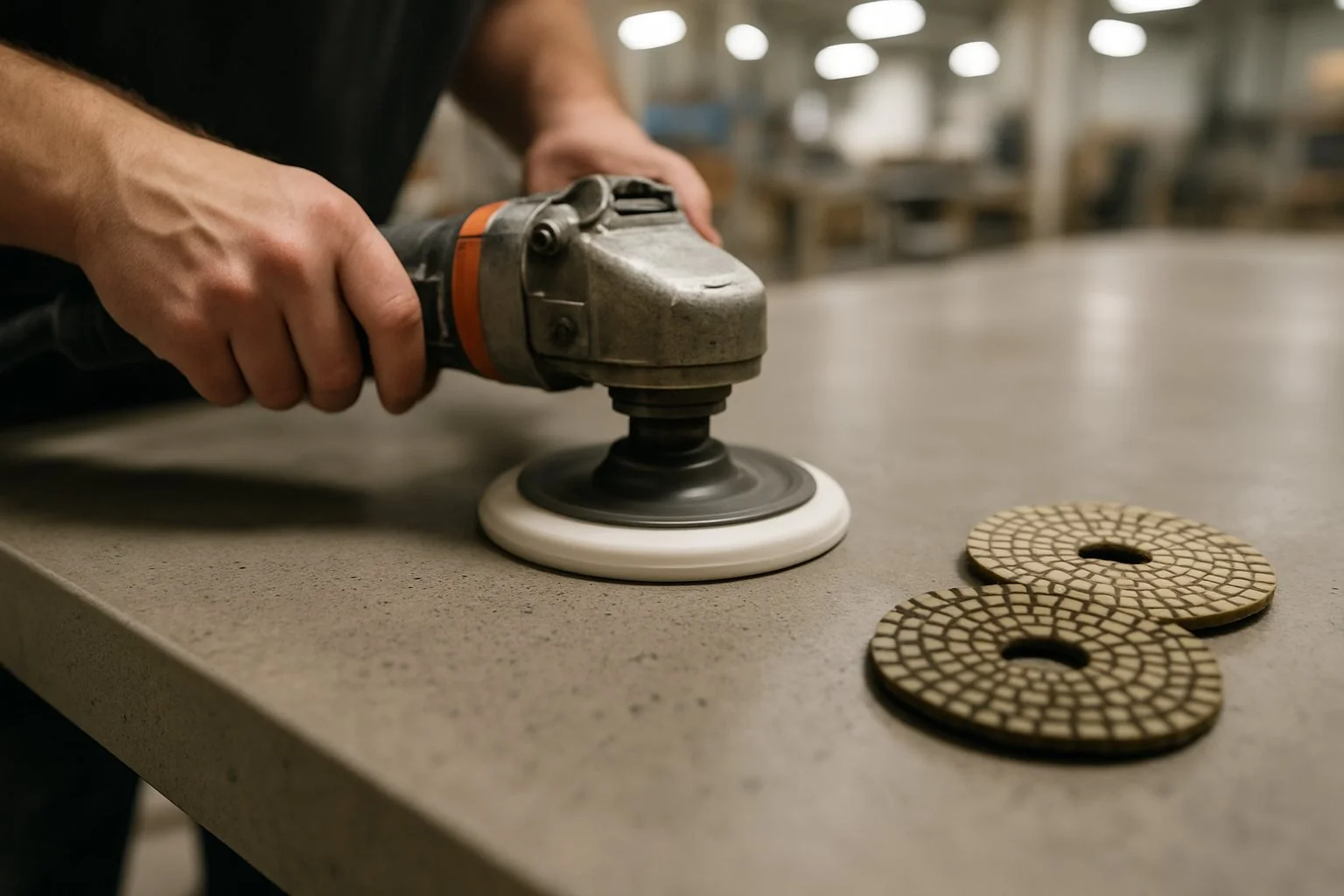
The surface can be troweled smooth for a soft matte, ground and polished to expose the sand and aggregate for a terrazzo-like speckle, or lightly textured. Sheen ranges from a natural matte to a honed, satin glow, all sealed to protect the surface.
Precast or Cast-in-Place
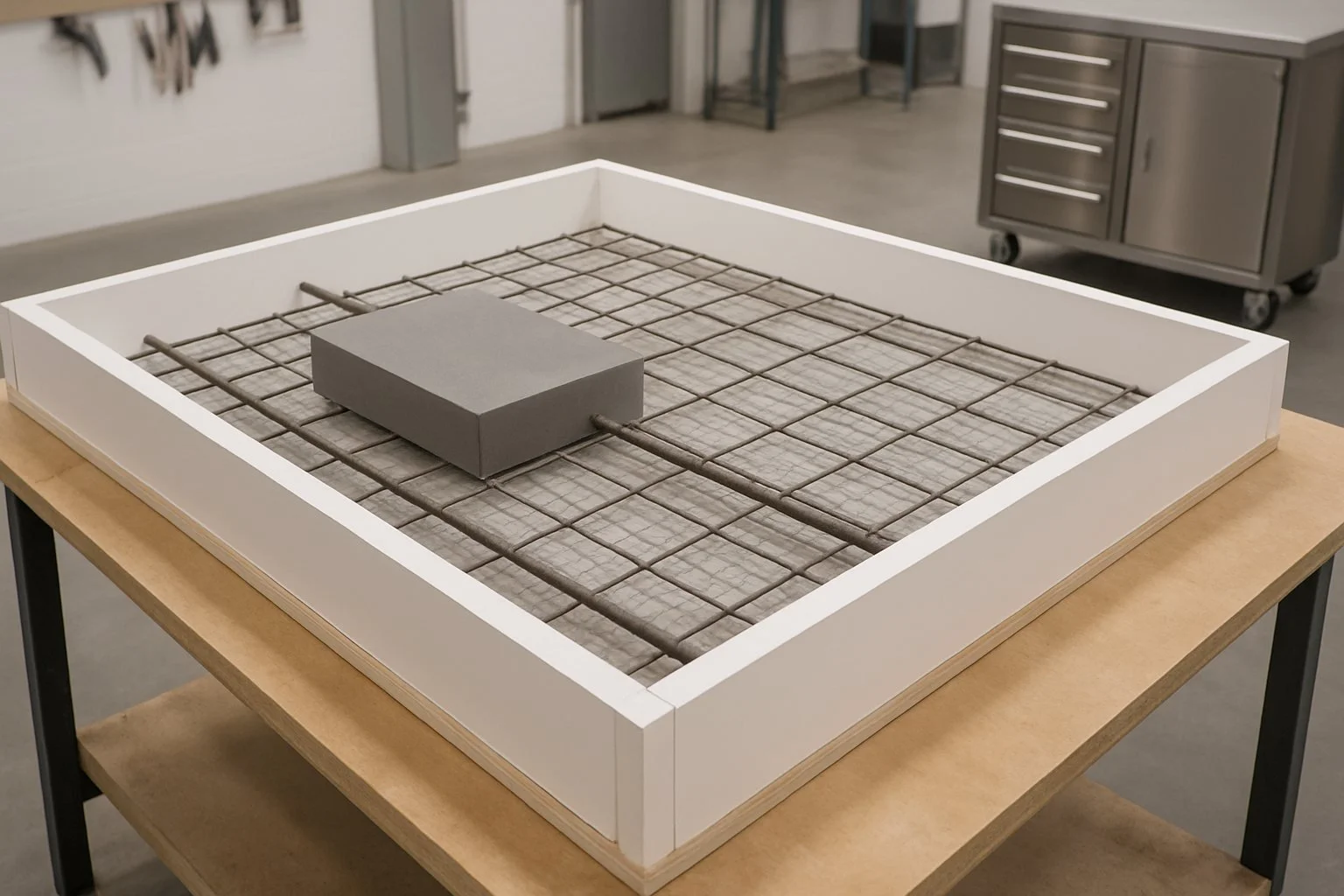
Concrete counters are made two ways. Precast tops are formed, poured, cured, and sealed in a shop, then delivered and set, which gives the most finish control and keeps the mess and downtime out of your kitchen. Cast-in-place tops are formed and poured directly on your cabinets for a seamless, monolithic look, but the work is messier, takes longer, and ties up the kitchen while the concrete cures. We advise which fits your design and your patience for on-site work.
How Concrete Compares to Stone and Quartz
Concrete trades uniformity for total customization and a handmade look you cannot get from a slab. Quartz and granite come in fixed slabs, are lower-maintenance, more uniform, and lighter, and they do not develop hairline lines or a patina. Concrete lets you dictate the exact color, shape, and integral features, but it is heavier, needs sealing and occasional waxing, sits at the higher end on price, and embraces natural variation. If your kitchen leans modern, industrial, or Scandinavian and you want a true one-off, concrete delivers; if you want consistency and minimal upkeep, engineered or natural stone is the safer call.
Where Concrete Countertops Work
Concrete is not only a kitchen counter. Because it is cast to any shape and holds up to the elements better than engineered stone, it works in places quartz cannot. In the kitchen it makes counters and statement islands. In bathrooms it forms vanities with integral sinks and no seams. Outdoors it is one of the few surfaces suited to a covered outdoor kitchen, where quartz would fade and fail in the sun. And it makes a natural fireplace surround or hearth. If you are building an indoor kitchen and an outdoor kitchen that should match, concrete can carry the same look through both.
How a Concrete Countertop Project Works
Concrete is the most design-heavy countertop and it is cast rather than cut, so the timeline is longer than a stone job. Here is what it looks like from the first call to the final walkthrough.
What's Included in a Concrete Countertop Installation
Every concrete project with VResh includes the items below. Add-ons and coordinated trades are noted so there are no surprises on the estimate. A like-for-like countertop replacement usually does not require a permit. Projects that relocate the sink, move plumbing, or change the kitchen layout may need one, and we flag that during the estimate and handle any permit as part of the work.
What Concrete Countertops Cost in Portland
VResh installs concrete countertops from $80 to $150 per square foot, installed. Concrete sits at the higher end of countertop options because every piece is handmade and fully custom, from the mix and color to the form and finish. Where a project lands depends on how much of that customization you use.
What Drives the Price
- Precast or cast-in-place: on-site casting is more labor and downtime
- Integral features: cast sinks, drainboards, and embeds add forming and finishing time
- Color and finish: a straightforward troweled gray costs less than a multi-color ground-and-polished surface
- Edge profile: eased edges are included; waterfall and custom profiles add work
- Size and support: larger tops need more reinforcement and structural support for the weight
- Removal and disposal: included with us, but worth confirming on any quote you compare
What moves the price within that range: You will get a written, itemized estimate before any work begins, with no verbal numbers and no pressure. To price your specific kitchen, request a free estimate or call or text (503) 272-6436.
Caring for Your Concrete Countertops
Concrete is durable, but the sealer is really what you maintain, and a simple routine keeps it looking its best.
Sealing
We apply the first seal, and wax where the sealer calls for it, at install. Plan to reseal periodically and re-wax more often, on a schedule we set based on your sealer.
Wipe up acidic spills like wine, citrus, and vinegar promptly. If the sealer wears thin, acids can etch the surface.
Sealer types
Penetrating sealers soak in and keep the most natural look, but give less surface protection and need more frequent upkeep.
Topical or film sealers sit on top for stronger stain and water resistance, with a slightly more coated look. We match the sealer to how you use the kitchen.
Everyday care
Clean with a pH-neutral cleaner or mild soap and water. Skip abrasive pads and harsh chemicals that break down the sealer.
Use trivets. Concrete tolerates heat, but the sealer and wax do not, so a hot pan can mark the finish.
Use a cutting board, since cutting on the surface scratches the sealer.
Expect a patina. Concrete mellows and gains character with use, and minor marks become part of the look.
If you want a counter that ages into something with character, that patina is the point. If you want it to look factory-new for 20 years, concrete is not the material.
What to Expect From Concrete Over Time
Hairline Lines and Patina Are Part of Concrete
Fine, non-structural hairline lines appear in nearly all concrete counters as the material cures, and concrete develops a patina as it is used. Proper reinforcement and mix design keep the lines to a minimum, and we build for it, but concrete is chosen by people who want a living, natural surface, not a flawless factory finish. If you want zero variation, quartz is the better fit.


What Portland Homeowners Say
VResh Construction has completed more than 500 projects across the Portland metro with a 5.0 rating on Google. The reviews below are pulled live from our Google Business Profile, so what you see is current and unfiltered.
Serving Portland Metro Area
VResh Construction provides window replacement, siding installation, roofing, dry rot repair and full exterior renovation services throughout the Portland metro area and Southwest Washington.