
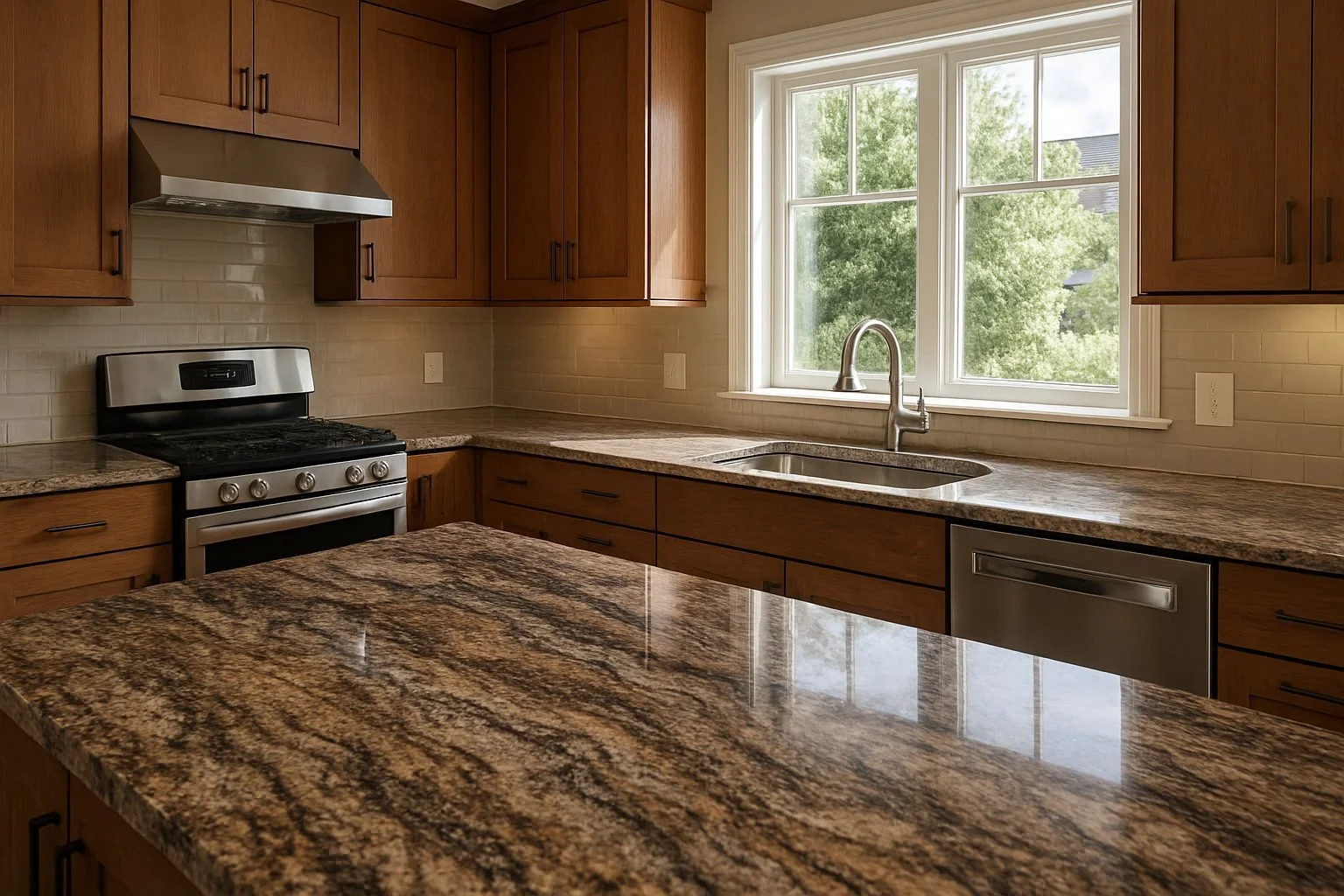
Granite Countertops in Portland, OR
One-of-a-Kind Veining. Cut to a Cabinet-Height Template. Sealed on Install Day. Heat-Tolerant & Hard-Wearing. Owner-Supervised. Licensed OR #241979 | WA #VRESHCL776ND.

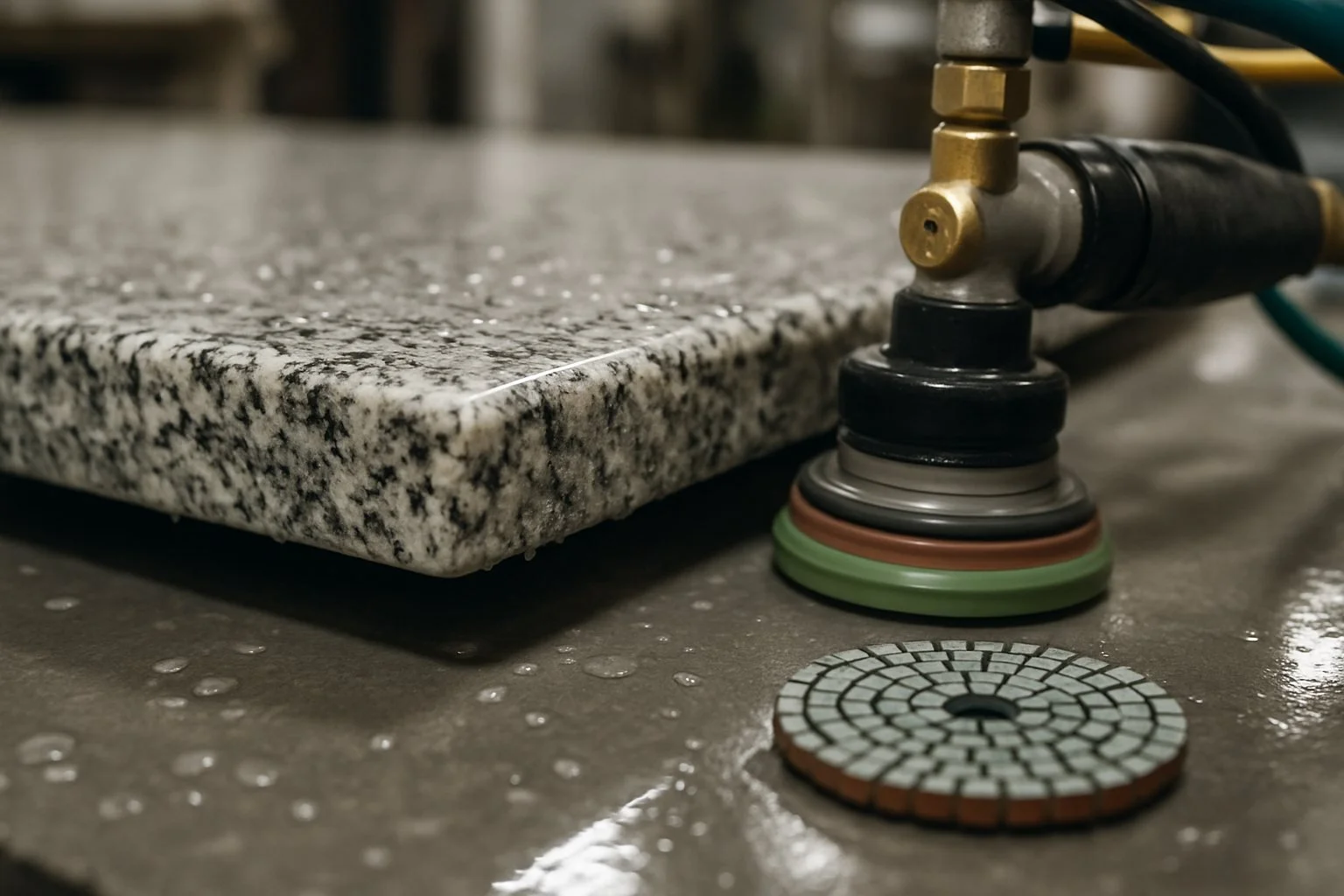
Granite is natural stone quarried in slabs, which means no two pieces are identical. It is one of the hardest, most heat-tolerant surfaces you can put in a kitchen, and its depth of color and movement is something engineered stone imitates but never quite matches. Because it is natural, granite is porous and needs sealing, and the quality of the finished top comes down to details a homeowner rarely watches go in: a template taken once the cabinets are level, and tight, well-planned seams. VResh handles the countertop directly and works hand in hand with a trusted stone fabricator, so one contractor stays accountable from the slab you pick at the yard to the first coat of sealer.
Owner-Supervised Always
Vlad is on every project, start to finish
In-House Crew & Vetted Fabricator
No rotating strangers in your kitchen
Sealed on Install Day
With a simple yearly water test to keep it protected
Heat-Tolerant & Hard-Wearing
Natural stone that stands up to a working kitchen
Licensed & Insured
OR #241979 | WA #VRESHCL776ND
Written Estimates Only
Scope and cost confirmed before any work begins

(503) 272-6436 — Call or Text, Available 24/7
We answer calls and texts at any hour. For storm damage, active leaks, or structural emergencies, calling directly is the fastest path to a response.
Granite Grades Explained: Level 1, 2, and 3+
Granite is priced in grade levels, and understanding them is the key to reading any granite quote. The grade is set mostly by how common the color and pattern are, where the stone is quarried, and the quality and thickness of the slab. It is not a measure of durability: all granite is hard, heat-tolerant natural stone. Grade is about rarity and looks, not strength.
Level 1 (Entry Grade)
The most common and widely stocked colors, usually with a more uniform pattern and often a thinner slab. Level 1 granite is the most affordable and a solid choice for budget kitchens and rentals. The look is simpler, with less dramatic movement.
- Lowest cost, widely available colors
- More uniform, less dramatic pattern
- Good fit for budget kitchens and rental properties
Level 2 (Mid Grade)
More color range and visible movement, sourced from a wider set of quarries. Level 2 is the sweet spot for many Portland kitchens: enough character to stand out, without the price of a rare exotic.
- More veining, color, and movement than Level 1
- Mid-range cost, the most popular tier for full kitchens
Level 3 and Up (High Grade and Exotic)
Rare colors, bold veining, and imported exotics. These slabs carry the highest cost because the material is harder to source, and they are chosen for statement islands and high-end kitchens where the stone is the centerpiece.
One granite we install often is Pearl Black, a deep, dramatic stone that works in both modern and traditional kitchens. Ask us to see it alongside the other colors your fabricator stocks.
- Dramatic, rare patterns and exotic imports
- Highest cost, best for statement islands and premium kitchens
Finishes: polished, honed, and leathered
Granite comes in three finishes. Polished is the familiar glossy surface that deepens the color and is the easiest to wipe down. Honed is a smooth matte finish with a softer, more natural look, though it can show fingerprints and oil marks and benefits from staying sealed. Leathered has a subtle texture that hides smudges and is popular on darker granites. Confirm your slab is available in the finish you want, since not every color offers all three.
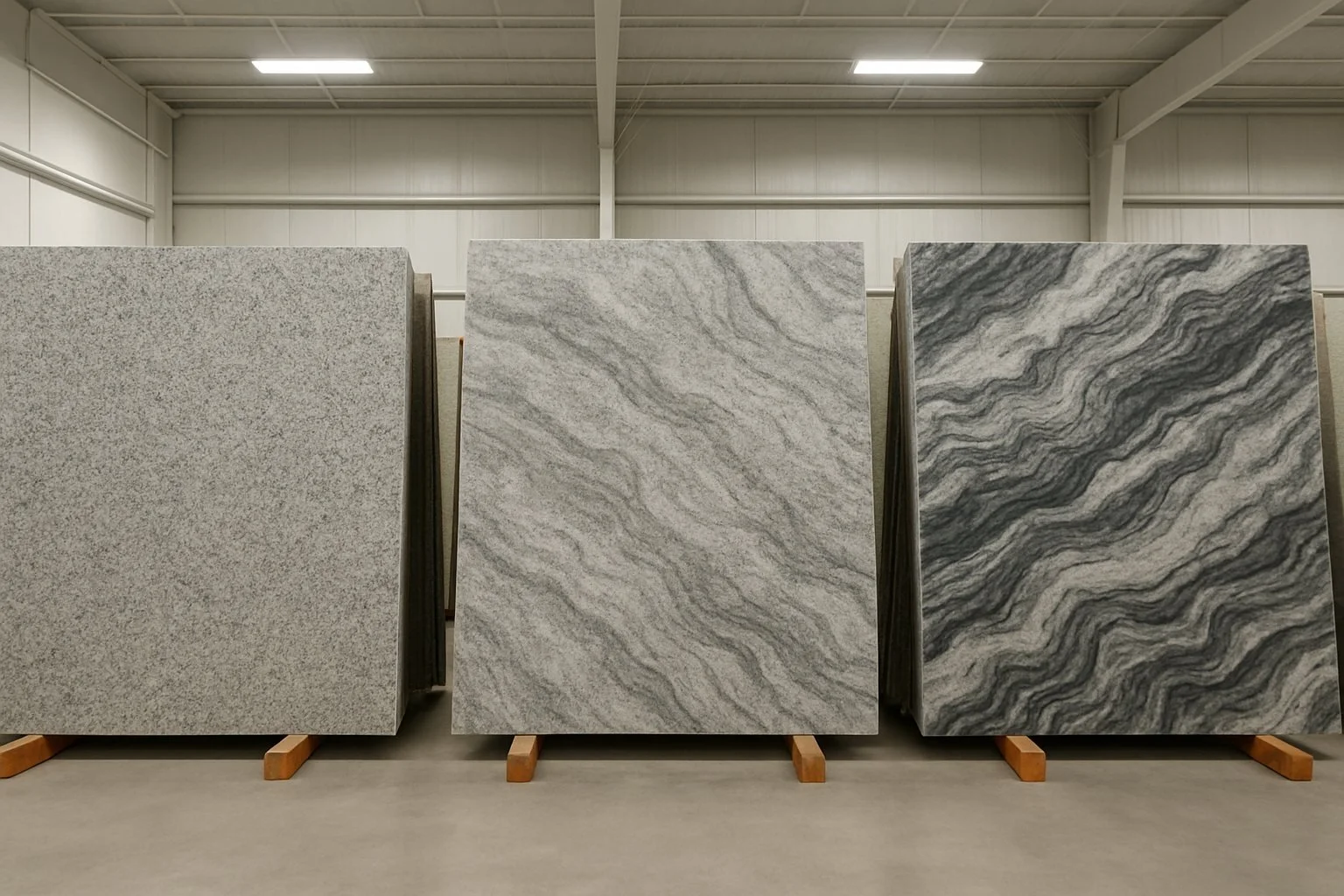
How Granite Compares to Quartz, Marble, and Quartzite
Most homeowners choosing granite are also weighing other surfaces, so here is the honest difference. Quartz is engineered stone that never needs sealing and looks more consistent slab to slab, but it is less heat-tolerant and more uniform; granite gives you natural, one-of-a-kind character and takes heat better, at the cost of a yearly sealing check. Marble has a softer look but is soft in fact too, etching from lemon, wine, and vinegar, so granite is the far more practical natural stone for a working kitchen. Quartzite is also natural stone, even harder than granite and also in need of sealing, but it usually costs more and comes in a narrower color range. If you are cross-shopping any of these, tell us which one, and we will price and template the job accordingly.
How a Granite Countertop Project Works
Granite is fabricated off-site from the exact slab you choose, then installed and sealed in a single visit. Here is what the process looks like from the first call to the final walkthrough.
What's Included in a Granite Countertop Installation
Every granite project with VResh includes the items below. Add-ons and coordinated trades are noted so there are no surprises on the estimate. A like-for-like countertop replacement usually does not require a permit. Projects that relocate the sink, move plumbing, or change the kitchen layout may need one, and we flag that during the estimate and handle any permit as part of the work.
What Granite Countertops Cost in Portland
VResh installs granite countertops from $60 to $130 per square foot, installed. The single biggest factor in where a project lands is the granite grade you choose, followed by the fabrication details. A typical countertop-only update, new granite with a new sink and faucet and the cabinets staying, runs about $2,000 to $6,000 for most Portland kitchens.
What Drives the Price
- Granite grade: Level 1 sits at the low end; Level 2 mid; Level 3 and exotics at the high end
- Edge profile: standard eased and bullnose edges are included; ogee, mitered, and waterfall edges add fabrication time
- Cutouts: each sink, cooktop, and pop-up outlet cutout adds labor
- Seams: larger kitchens and islands may need seams, which add fabrication and finishing
- Removal and disposal: included with us, but worth confirming on any quote you compare
- Backsplash: a full-height granite slab backsplash uses more material than a tile run
What moves the price within that range: You will get a written, itemized estimate before any work begins, with no verbal numbers and no pressure. To price your specific kitchen, request a free estimate or call or text (503) 272-6436.
Caring for Your Granite Countertops
Granite is tough and heat-tolerant, but because it is natural stone it is porous, so sealing is the one habit that keeps it looking new.
Sealing
We apply the first seal on install day. After that, plan to reseal about once a year, or whenever the water test tells you to.
We offer a paid resealing service if you would rather we keep it maintained for you, or you can reseal it yourself.
The water test: put a few drops of water on the counter and wait about 15 minutes. If the water beads, the seal is fine. If it darkens or soaks in, it is time to reseal.
Everyday care
Clean with warm water and a pH-neutral stone cleaner or mild dish soap. Skip vinegar, lemon, and other acids, which break down the sealer over time.
Wipe up spills like wine, oil, and citrus promptly, especially on lighter granites.
You can set a hot pan on granite, but a trivet protects the sealer and is the safer habit.
Use a cutting board. Granite will dull your knives, and cutting on the bare surface wears the sealer.
Sealed granite is easy to live with and hygienic, and the yearly test takes about two minutes.
A Note on Slab Thickness
A Note on Slab Thickness: 2cm vs 3cm
Granite slabs come in two common thicknesses. Three-centimeter (3cm) is the standard we install for kitchen counters: it is strong enough to span the cabinet run and carry a normal island overhang on its own, and it gives the substantial edge most homeowners want. Two-centimeter (2cm) costs less but is thinner and needs a plywood build-up or brackets to support any overhang. Any island seating overhang beyond about 10 to 12 inches needs corbels or steel support at either thickness.


What Portland Homeowners Say
VResh Construction has completed more than 500 projects across the Portland metro with a 5.0 rating on Google. The reviews below are pulled live from our Google Business Profile, so what you see is current and unfiltered.

Serving Portland Metro Area
VResh Construction provides window replacement, siding installation, roofing, dry rot repair and full exterior renovation services throughout the Portland metro area and Southwest Washington.