
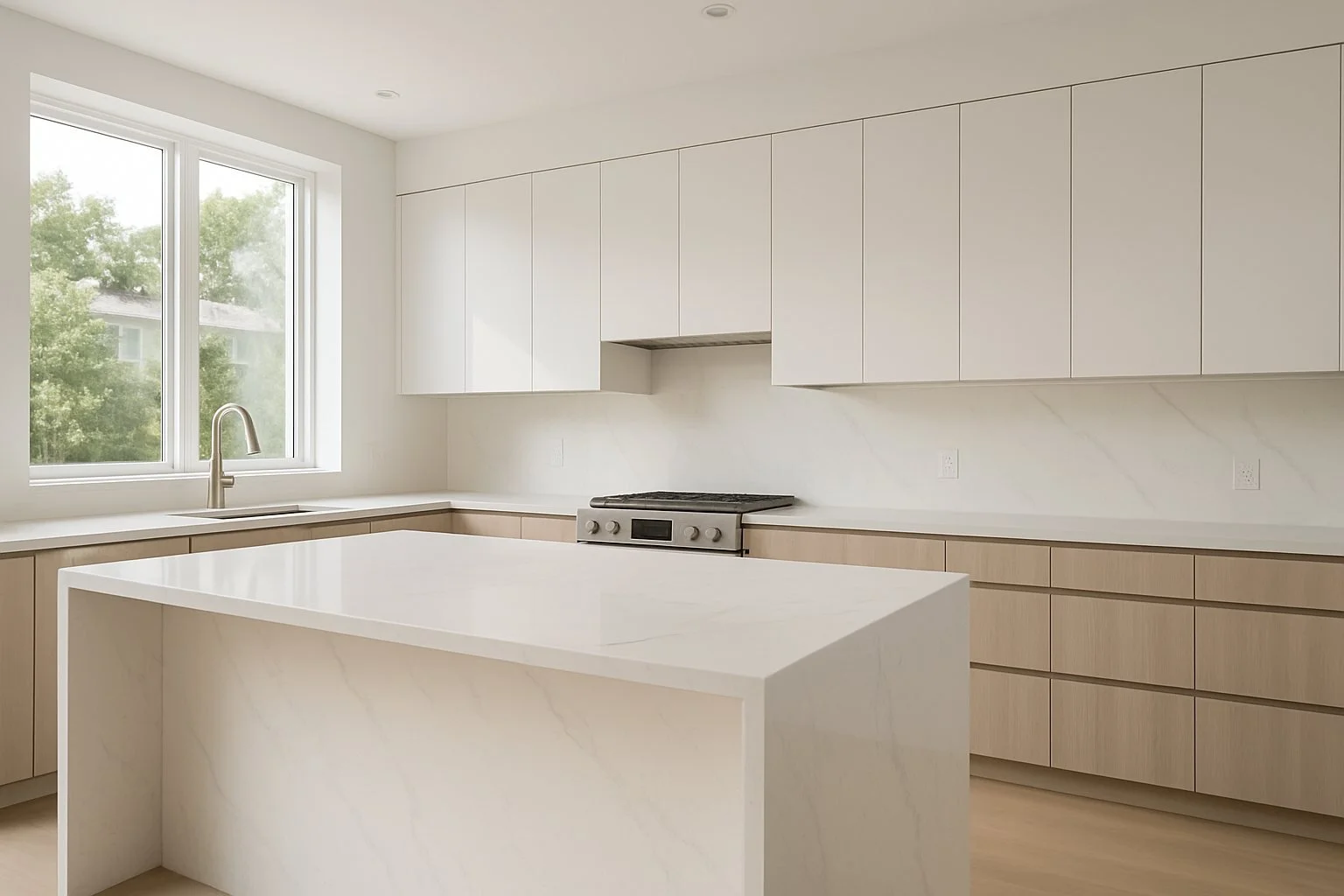
Quartz Countertops in Portland, OR
Marble Looks Without the Upkeep. Polished or Honed. Cabinet-Height Template. Coordinated Fabrication. Owner-Supervised. Licensed OR #241979 | WA #VRESHCL776ND.

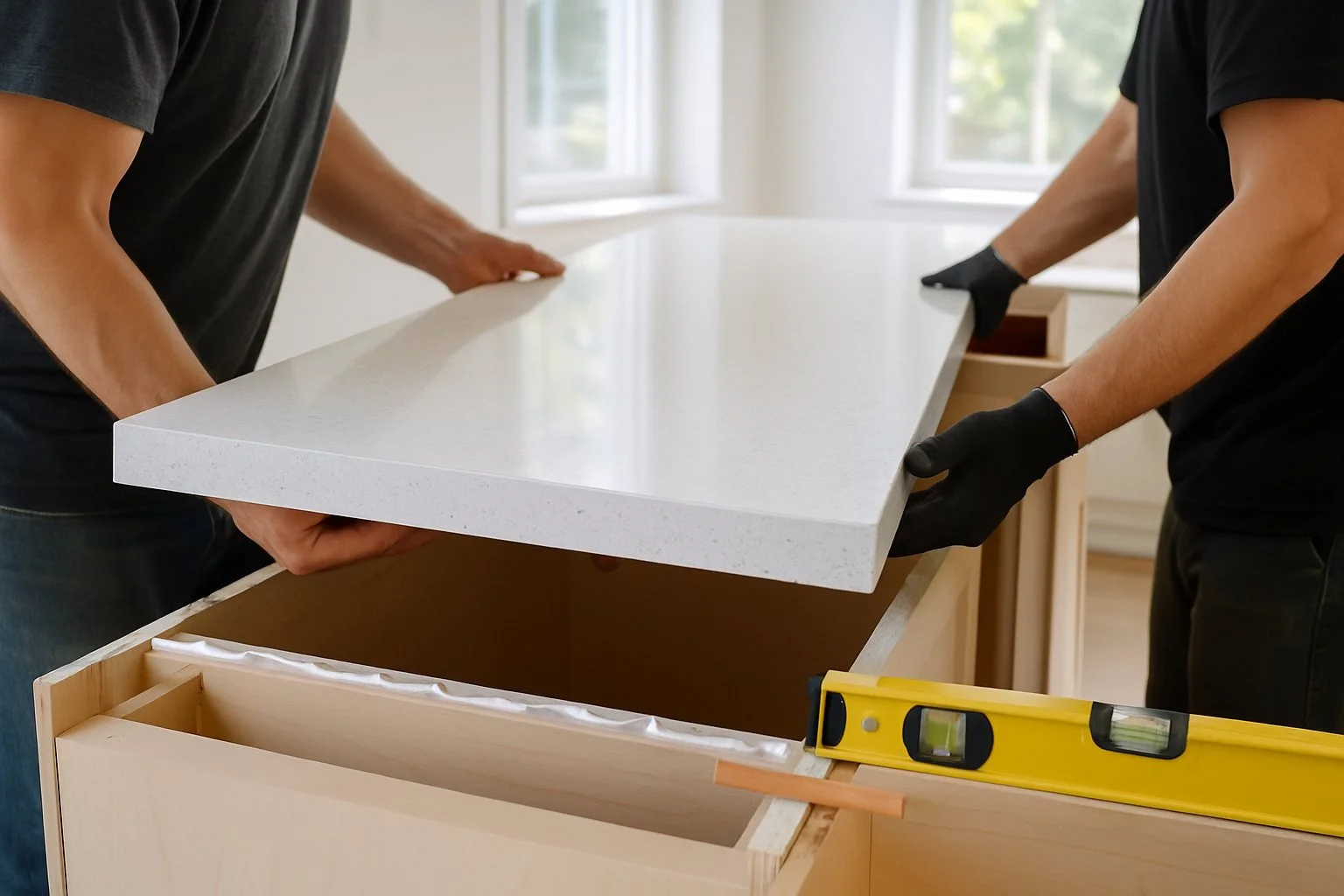
Quartz has become the default countertop for Portland kitchen renovations, and for good reason. It gives you the look of natural stone, resists the stains and scratches that plague other surfaces, and never needs sealing. But the finished result depends almost entirely on the two steps most homeowners never see: an accurate template taken after the cabinets are set and level, and clean fabrication and seam work at install. VResh Construction handles the countertop directly and coordinates fabrication with our stone shop, so one contractor owns the outcome from measure to final caulk line.
Owner-Supervised Always
Vlad is on every project, start to finish
In-House Crew & Vetted Fabricator
No rotating strangers in your kitchen
No Sealing, No Upkeep
Engineered quartz is non-porous by design
Marble Looks, Less Worry
The veined look without the etching and staining
Licensed & Insured
OR #241979 | WA #VRESHCL776ND
Written Estimates Only
Scope and cost confirmed before any work begins

(503) 272-6436 — Call or Text, Available 24/7
We answer calls and texts at any hour. For storm damage, active leaks, or structural emergencies, calling directly is the fastest path to a response.
What Quartz Is, and the Finishes to Choose From
Quartz countertops are an engineered stone: roughly 90 percent ground natural quartz bound with resin and pigment, then formed into slabs. That manufacturing is what gives quartz its two signature advantages over natural stone. The surface is non-porous, so it does not need to be sealed and does not absorb wine, oil, or coffee the way granite and marble can. And because the color and pattern are engineered, you get consistency from slab to slab and a huge range of looks, including convincing marble veining that a natural marble owner would have to baby for years.
The one trade-off worth knowing up front: the resin that makes quartz non-porous is not as heat-tolerant as solid stone. A hot pan set directly on the surface can scorch or discolor it, so quartz kitchens live with trivets. We cover that and the rest of the honest trade-offs in the FAQ below.
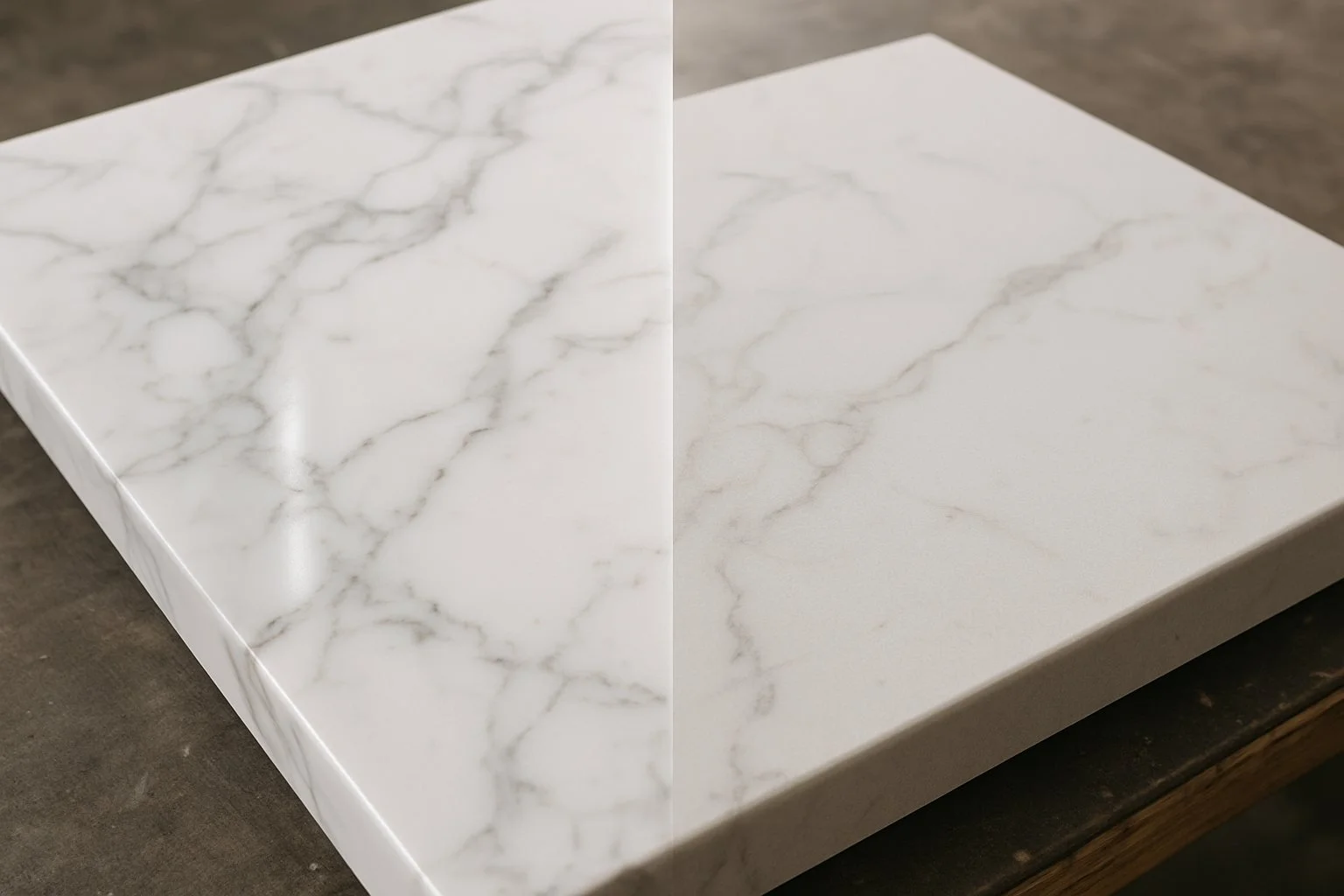
Once you have settled on quartz, the first real decision is the finish. The same slab color can be ordered in a polished or a honed finish, and the choice changes how the counter looks, feels, and shows daily use.
Polished Finish
The familiar glossy, reflective surface. Polished quartz makes colors read deeper and brighter, bounces light around the kitchen, and is the easiest to wipe down. It is the most widely stocked finish and the safe choice for most Portland kitchens.
- Glossy, light-reflecting surface that makes small kitchens feel brighter
- Shows fingerprints and water spots more readily on very dark colors
- Most available finish across brands and colors
Honed (Matte) Finish
A smooth, low-sheen surface with no gloss. Honed quartz reads soft and contemporary and is popular for the marble-look whites and grays that define modern Portland kitchens. It hides water spotting better than polished, though on dark colors it can show fingerprints and dry marks that a quick wipe clears.
We install quartz from the major brands, including Caesarstone, Cambria, Silestone, and MSI, so you can match a specific line or color you have in mind.
- Soft, non-reflective look that suits modern and transitional kitchens
- Pairs especially well with marble-look white and gray slabs
- May require a bit more routine wiping on very dark colors
How Thick Should Your Quartz Be? 2cm vs 3cm
Quartz slabs come in two common thicknesses, and it is worth deciding early because it changes both the look and the price. Three-centimeter (3cm) slabs are the standard we install for kitchen countertops: they are strong enough to span the cabinet run and carry a normal island overhang on their own, and they give the substantial, high-end edge most homeowners picture. Two-centimeter (2cm) slabs are thinner and cost less, but they are more fragile and need a plywood build-up or brackets to carry any overhang safely.
We confirm the thickness with you at the estimate and build any island support into the plan, so a breakfast bar does not crack under weight.
- 3cm: the kitchen standard, self-supporting for typical overhangs, with a thicker high-end edge
- 2cm: lower material cost, but needs added support at overhangs and seating areas
- Any island seating overhang beyond about 10 to 12 inches needs corbels or steel support, whatever the thickness
How Quartz Compares to Granite, Marble, and Quartzite
Most homeowners choosing quartz are also weighing natural stone, so here is the honest difference. Granite gives one-of-a-kind veining and takes heat better, but it is porous and needs resealing about once a year; quartz never needs sealing and looks more consistent from slab to slab. Marble has the look people love but is soft and acid-sensitive, so lemon, wine, and vinegar etch dull marks into it, which is why marble-look quartz is the practical way to get that bright, veined kitchen without the upkeep. Quartzite sounds similar but is a different, natural stone that is very hard yet porous and needs periodic sealing. If you are cross-shopping any of these, tell us which one, and we will price and template the job accordingly.
How a Quartz Countertop Project Works
Quartz is fabricated off-site to a precise template, then installed in a single visit. Here is what the process looks like from the first call to the final walkthrough.
What's Included in a Quartz Countertop Installation
Every quartz project with VResh includes the items below. Add-ons and coordinated trades are noted so there are no surprises on the estimate. A like-for-like countertop replacement usually does not require a permit. Projects that relocate the sink, move plumbing, or change the kitchen layout may need one, and we flag that during the estimate and handle any permit as part of the work.
What Quartz Countertops Cost in Portland
VResh installs quartz countertops from $75 to $150 per square foot, installed. Where a project lands in that range depends on the slab you choose and the complexity of the fabrication, not on markup games. A typical countertop-only update (new quartz with a new sink and faucet, cabinets staying) runs about $2,000 to $6,000 for most Portland kitchens.
What Drives the Price
- Slab tier: builder-grade colors sit at the low end; designer and marble-look slabs at the high end
- Edge profile: standard eased and bullnose edges are included; ogee, mitered, and waterfall edges add fabrication time
- Cutouts: each sink, cooktop, and pop-up outlet cutout adds labor
- Seams: larger kitchens and islands may need seams, which add fabrication and finishing
- Removal and disposal: included with us, but worth confirming on any quote you compare
- Backsplash: a full-height quartz slab backsplash uses more material than a tile run
What moves the price within that range: You will get a written, itemized estimate before any work begins, with no verbal numbers and no pressure. To price your specific kitchen, request a free estimate or call or text (503) 272-6436.
Caring for Your Quartz Countertops
Quartz is one of the lowest-maintenance surfaces you can put in a kitchen, and a few simple habits keep it looking new.
Everyday care
Wipe with warm water and mild dish soap on a soft cloth. Because quartz is non-porous, that is all routine cleaning takes, with no sealing to keep up with.
Lift dried or stuck-on spots with a plastic putty knife, then finish with a gentle surface or glass cleaner.
What to avoid
Abrasive pads, scouring powders, bleach, and oven cleaner. Harsh, high-alkaline products can dull the finish over time.
Direct heat. Always use a trivet or hot pad, since a hot pan or slow cooker can scorch or discolor the resin that binds the stone.
Cutting on the bare surface. Quartz resists scratches, but knives dull fast and can mark some finishes, so use a board.
Sitting or standing on the counter, especially near seams and the cooktop cutout, where the slab is most vulnerable.
That is the full routine. No annual sealing, no special polish, and no re-oiling the way butcher block needs.


What Portland Homeowners Say
VResh Construction has completed more than 500 projects across the Portland metro with a 5.0 rating on Google. The reviews below are pulled live from our Google Business Profile, so what you see is current and unfiltered.

Serving Portland Metro Area
VResh Construction provides window replacement, siding installation, roofing, dry rot repair and full exterior renovation services throughout the Portland metro area and Southwest Washington.